Profit (AQA A Level Business): Exam Questions

Exam code: 7132

Syllabus Edition

First teaching 2026

First exams 2028

2 hours16 questions
1
6 marks

Source A: Greggs plc

Greggs plc is the UK's largest food-to-go retailer. It began as a single bakery in Newcastle upon Tyne and floated on the London Stock Exchange in 1984. It is now part of the FTSE 250 and is led by chief executive Roisin Currie.

Greggs sells sausage rolls, bakes, sandwiches, hot drinks and sweet items at prices deliberately set below those of most high street rivals. It calls itself a value retailer, but says that value comes from quality as well as price, and points to freshly prepared food, hot options and the ability for customers to customise their order. In December 2025 it held 8.6% of all visits in the UK food-to-go market and was rated the country's leading food-to-go brand.

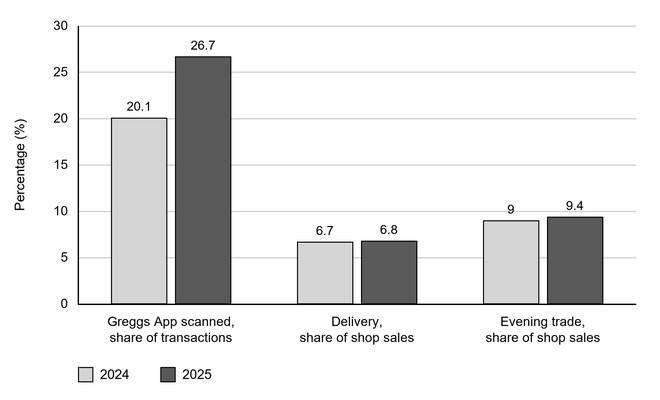
The business has grown by making itself easier to reach. It opened 121 net new shops in 2025, ending the year with 2 739, and says there is a clear opportunity for significantly more than 3 000 UK shops in the longer term. Alongside the shops it has pushed three other ways to reach the customer. Delivery now accounts for 6.8% of sales in company-managed shops. Evening trade is the fastest growing part of the day. The Greggs App was scanned in 26.7% of transactions in 2025, up from 20.1% in 2024, and customers who use the App shop at Greggs more often. The company has also started selling through grocers, launching a Bake-at-Home range with Tesco and widening its range in Iceland.

That growth has been expensive. Capital spending peaked at £287.5 million in 2025 as Greggs built two new national distribution centres, at Derby and Kettering, lifting its logistics capacity to 3 500 shops. Capital spending is expected to fall to around £200 million in 2026. Greggs also made £13.0 million of structural cost savings during 2025 and holds a net cash position of £45.8 million.

The company says its key focus is restoring its return on capital employed to a target of around 20%.

Source: Greggs plc preliminary results, 3 March 2026

Appendix A: Greggs plc selected financial results

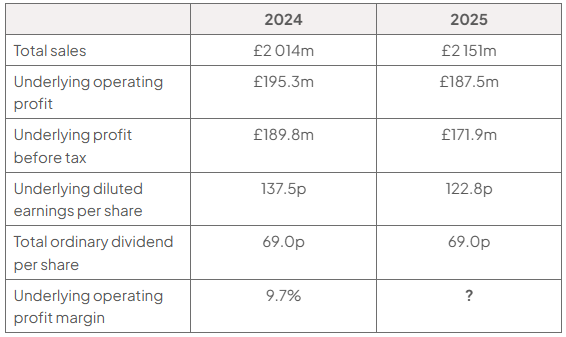
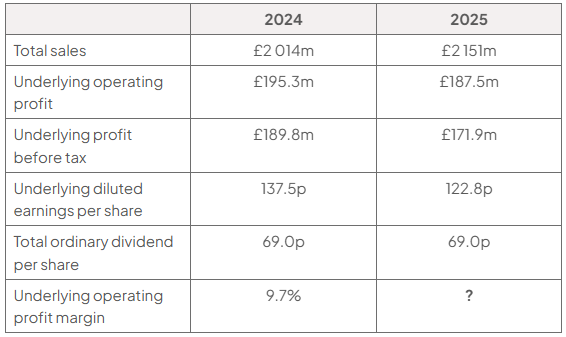
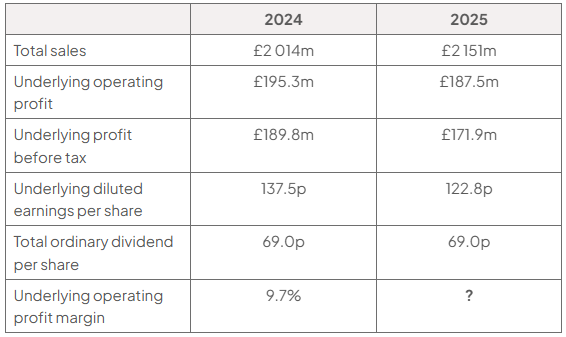
Table comparing Greggs’ 2024 and 2025 results: sales £2,014m/£2,151m; operating profit £195.3m/£187.5m; profit before tax £189.8m/£171.9m; EPS 137.5p/122.8p; dividend 69.0p/69.0p; margin 9.7%/?.

Source: Greggs plc

Greggs plc's total sales rose by 6.8% in 2025 while its underlying operating profit fell by 4.0%.

Analyse one reason why Greggs plc's sales could rise while its profit falls.

2
6 marks

Source A: Good Energy Group plc

Good Energy Group plc sells electricity and gas to homes and businesses, and it installs solar panels, heat pumps and batteries. It is a public limited company and its shares are traded on AIM.

The electricity it sells is bought from a community of more than 2 500 independent renewable generators, many of them small: wind turbines, solar farms and hydro schemes. Good Energy is an accredited B Corp, the only domestic energy supplier in the United Kingdom to hold that certification, with an impact score of 118.5. B Corp certification is awarded to companies that meet standards on social and environmental performance, and it has to be re-earned.

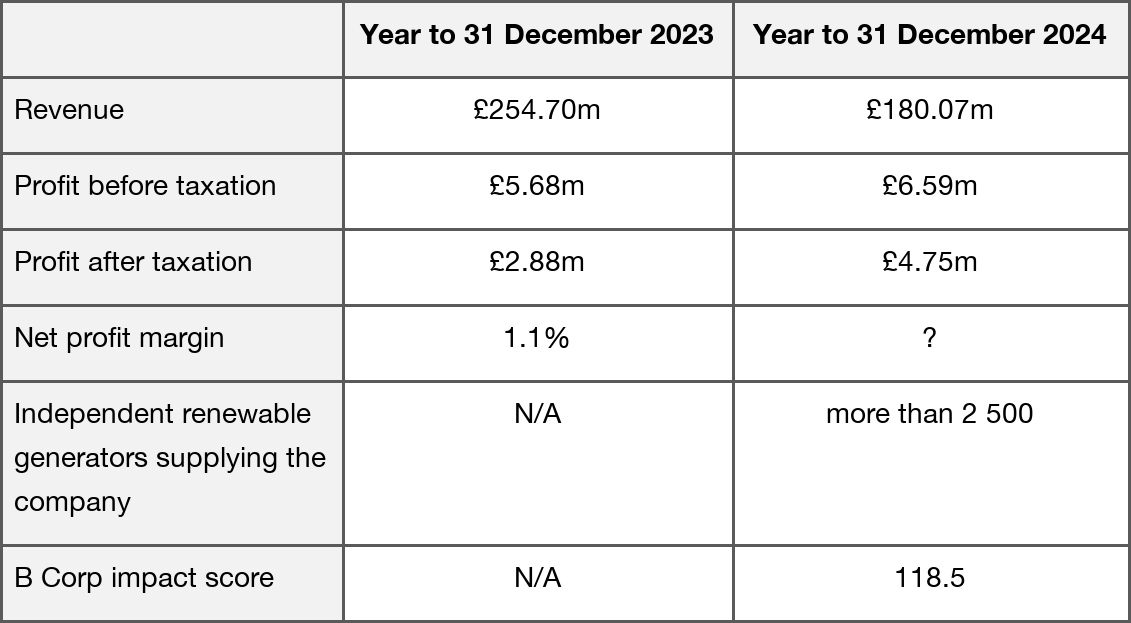
The year to 31 December 2024 looked strange on the face of it. Revenue fell 29.3% to £180.07 million, down from £254.7 million. Profit before tax rose 16.0% to £6.59 million, and profit after tax rose 64.9% to £4.75 million. The company took less money and kept more of it.

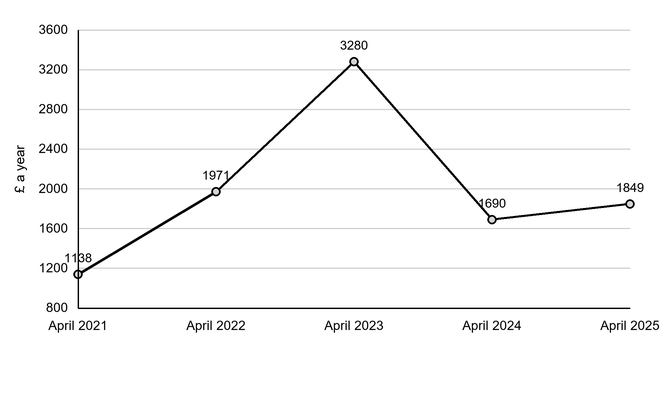
The explanation lies outside the business. Wholesale energy prices rose sharply after Russia's invasion of Ukraine and then fell back, and the Ofgem price cap on what a domestic supplier may charge followed them up and down. Appendix B shows the cap. When the price a supplier charges falls, its revenue falls with it, even if it is serving exactly the same customers.

The company is also changing what it does. During the year it bought JPS, which installs heat, solar and storage across southern England, and it completed the acquisition of Amelio Enterprises Limited. Installing equipment is a different business from supplying energy: it is a one-off sale rather than a monthly bill, and it is not capped by Ofgem.

One thing sits awkwardly alongside the B Corp badge. Good Energy also sells gas, which is a fossil fuel, to customers who have gas boilers. It cannot make gas renewable in the way it can make electricity renewable, and every gas customer it keeps is a household it is not selling a heat pump to.

Source: information sourced from Good Energy Group plc results for the year ended 31 December 2024

Appendix A: Good Energy Group plc selected results

Selected results table for years to 31 December 2023 and 2024: revenue £254.70m to £180.07m, profit before tax £5.68m to £6.59m, and profit after tax £2.88m to £4.75m. Net margin is 1.1% in 2023 and unknown in 2024.

Source: Good Energy Group plc

Appendix B: The Ofgem energy price cap

Line chart of Ofgem’s domestic energy price cap, in pounds per year, rising from £1,138 in April 2021 to £3,280 in April 2023, then falling to £1,690 in April 2024 and £1,849 in April 2025.
  • The figures are the cap that applied in April of each year for a typical household paying by direct debit. In April 2023 the government's Energy Price Guarantee meant most households actually paid about £2 500 rather than the capped £3 280.

  • Ofgem reduced its assumption of typical household consumption in late 2023, so figures either side of that point are not perfectly comparable.

Source: Ofgem

Good Energy Group plc's revenue fell 29.3% while its profit before tax rose 16.0%.

Analyse one reason why Good Energy Group plc's profit could rise in a year when its revenue fell.

3
6 marks

Source B: Wetherby Green Garden Centre

Wetherby Green is a garden centre on the edge of a market town, owned and run by Priya Sharma as a sole trader. The business has no separate legal identity from her, so she keeps all of the profit and is personally responsible for all of its debts.

The business sells plants it grows itself in polytunnels behind the site, plants bought in from nurseries, plus compost, tools, pots and garden furniture. There is a small coffee hut. Twelve people work there, most of them part time and most of them only from March to June.

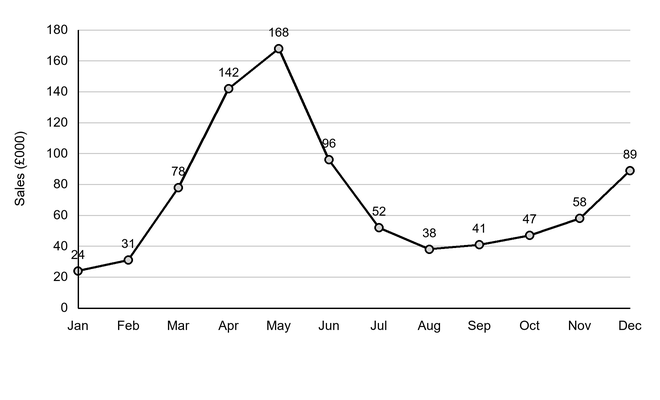
The business took £864 000 last year. Appendix E shows when. April and May alone take £310 000 of it, and the whole of July to October together comes to £178 000, barely more than May on its own.

The difficulty is the inventory. A pot of compost keeps. A shrub does not. Plants have to be bought or sown months before anybody wants them, they need watering and space while they wait, and if they are not sold in their season they either have to be discounted heavily or kept through the winter. Kept plants take up space, need heating in a cold snap, and a proportion of them die.

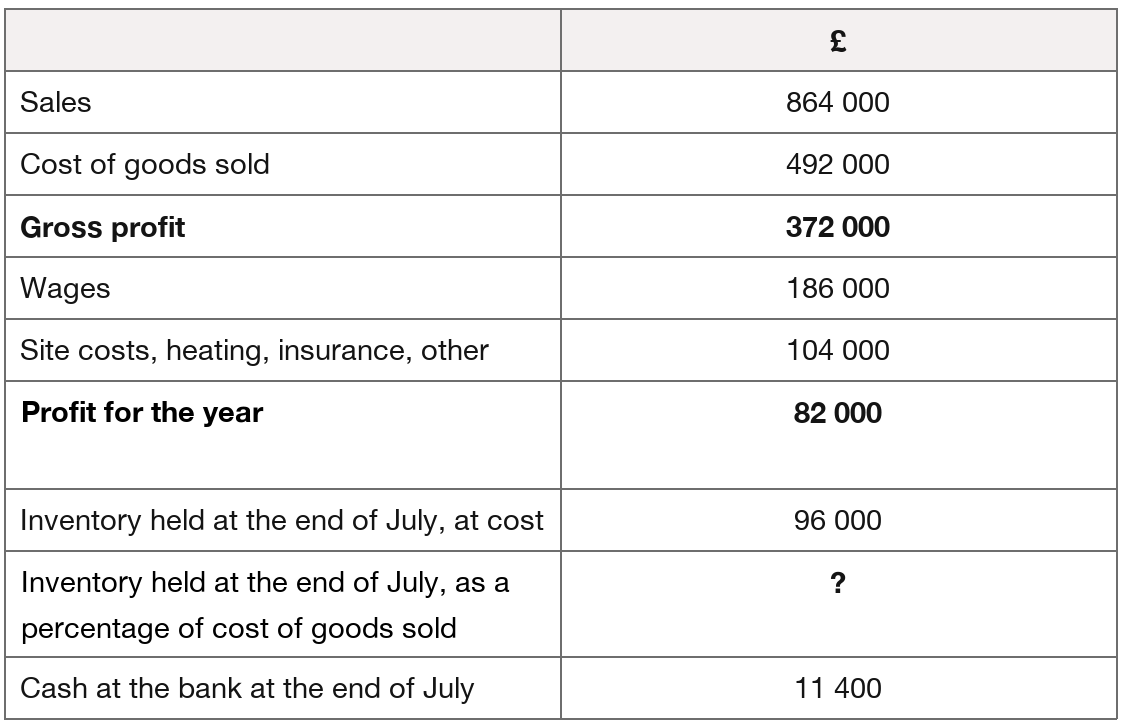
At the end of last July the business was holding £96 000 of unsold plants at cost. Appendix F sets out the two things it could do with them.

Appendix D: Wetherby Green Garden Centre, summary of last year

Table of last year’s summary: sales £864,000; cost of goods sold £492,000; gross profit £372,000; wages £186,000; other costs £104,000; profit £82,000; July inventory £96,000, percentage unknown; bank cash £11,400.

Source: Analyst

Appendix E: Wetherby Green Garden Centre monthly sales

Line chart of monthly sales (£000), with months January to December on the x-axis and sales from £0 to £180 000 on the y-axis: 24, 31, 78, 142, 168, 96, 52, 38, 41, 47, 58 and 89 respectively.

Source: Analyst

Most of Wetherby Green Garden Centre's staff work only from March to June.

Analyse one way in which employing staff for part of the year might affect Wetherby Green Garden Centre's costs.

4
6 marks

Source A: Softcat plc

Softcat plc sells technology to other organisations. If a company needs 400 laptops, a new firewall, a cloud contract and someone to set it all up, it can deal with a dozen manufacturers or it can deal with Softcat. It is a public limited company listed in London, and it sells to about 10 200 customers: businesses of every size and a large amount of public sector work.

Softcat does not describe its own size the way most companies do, and the reason is worth understanding. When it sells a laptop it buys the laptop and sells it on, so the whole price counts as its revenue. When it sells a software licence it is acting more as an agent for the software company, and accounting rules require it to count only the commission it keeps, not the price the customer paid. Two sales of exactly the same value to the customer therefore appear in Softcat's accounts at completely different sizes.

That is why it publishes a third figure. Gross invoiced income is the total value of everything it invoiced, whichever way the accounting treats it, and Softcat regards gross profit as its main measure of scale.

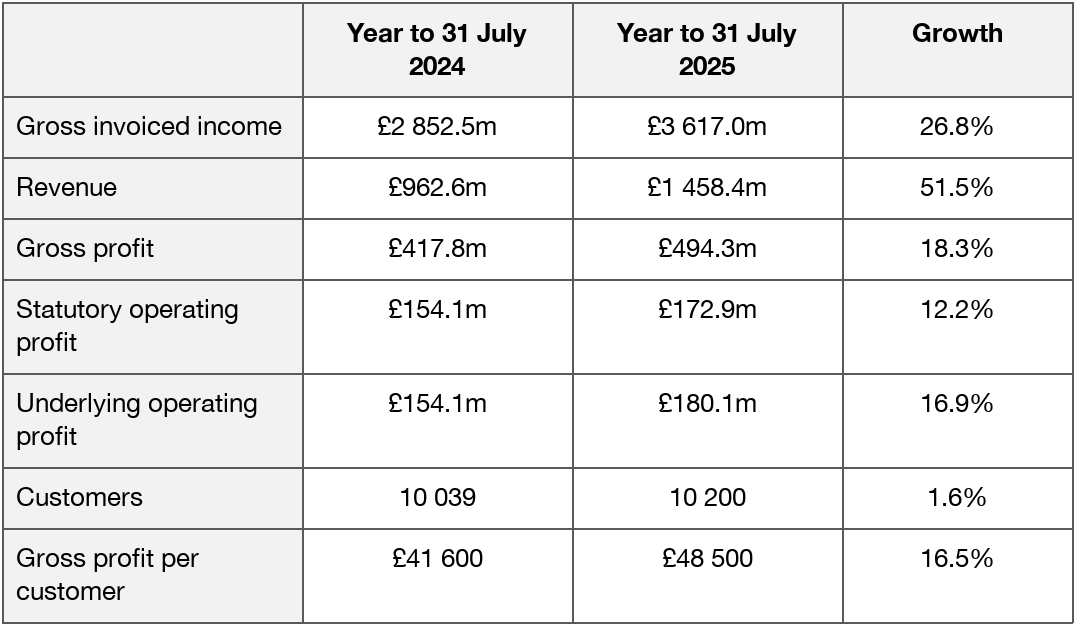
In the year to 31 July 2025 all three grew, and none of them agreed with the others. Gross invoiced income rose 26.8% to £3 617.0 million. Revenue rose 51.5% to £1 458.4 million. Gross profit rose 18.3% to £494.3 million. Statutory operating profit rose 12.2% to £172.9 million and underlying operating profit rose 16.9% to £180.1 million. Appendix B shows the three top-line measures together.

Behind all of it, the customer numbers barely moved. Softcat served 10 200 customers, 1.6% more than the year before, and gross profit per customer rose 16.5% to £48 500. It also completed its first acquisition.

Source: information sourced from Softcat plc preliminary results for the year ended 31 July 2025

Appendix A: Softcat plc selected results

Table comparing Softcat results for years to 31 July 2024 and 2025: 2024 gross invoiced income £2,852.5m, revenue £962.6m, gross profit £417.8m, operating profits £154.1m, 10,039 customers and £41,600 gross profit per customer.

Source: Softcat plc

Softcat plc's gross profit rose 18.3% while its statutory operating profit rose 12.2%.

Analyse one reason why Softcat plc's operating profit could grow more slowly than its gross profit.

5
6 marks

Source B: Marlowe Joinery Ltd

Marlowe Joinery Ltd makes bespoke staircases in a workshop outside Shrewsbury. It is a private limited company run by Gethin Marlowe, the third generation of his family to run it, and it employs 17 people, nine of them joiners who served apprenticeships there.

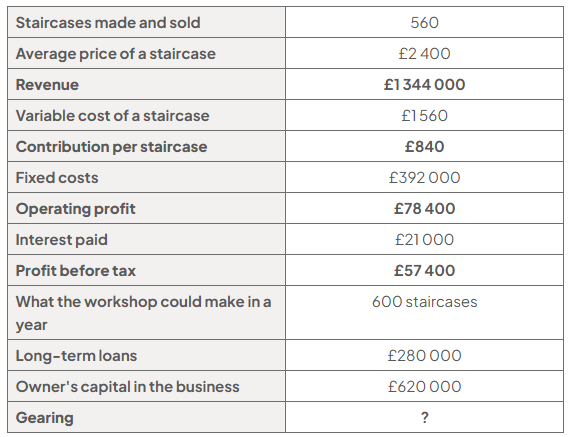
Every staircase is different. An architect or a builder sends drawings, Gethin Marlowe quotes a price, and if the quote is accepted the workshop builds it. Last year it made 560 staircases at an average price of £2 400, which is revenue of £1 344 000. Timber, fittings and the joiners' time on the job come to £1 560 a staircase. Everything else, meaning the workshop, the machinery, insurance, administration and the wages of people not on a job, comes to £392 000 a year.

The quoting is done by eye. Gethin Marlowe has forty years of it and is good at it, but each quote is its own small budget and nobody adds them up until the year end.

He is considering a computer-controlled cutting machine costing £340 000. It would cut the cost of a staircase to £1 410 and raise the workshop's fixed costs by £68 000 a year once depreciation and finance are counted. It would also lift what the workshop could make in a year from 600 staircases to 900.

The machine would be paid for by borrowing. Marlowe Joinery Ltd already has £280 000 of long-term loans against £620 000 of Gethin Marlowe's own money in the business.

Appendix D: Marlowe Joinery Ltd, summary of last year

Appendix D summary table: contribution per staircase £840; interest paid £21,000; profit before tax £57,400; annual capacity 600 staircases; long-term loans £280,000; owner’s capital £620,000; gearing unknown.

Source: Analyst

Marlowe Joinery Ltd made an operating profit of £78 400 last year on revenue of £1 344 000.

Analyse one way in which knowing the contribution each staircase makes might tell Gethin Marlowe something the operating profit does not.

6
6 marks

Source A: Greggs plc

Greggs plc is the UK's largest food-to-go retailer. It began as a single bakery in Newcastle upon Tyne and floated on the London Stock Exchange in 1984. It is now part of the FTSE 250 and is led by chief executive Roisin Currie.

Greggs sells sausage rolls, bakes, sandwiches, hot drinks and sweet items at prices deliberately set below those of most high street rivals. It calls itself a value retailer, but says that value comes from quality as well as price, and points to freshly prepared food, hot options and the ability for customers to customise their order. In December 2025 it held 8.6% of all visits in the UK food-to-go market and was rated the country's leading food-to-go brand.

The business has grown by making itself easier to reach. It opened 121 net new shops in 2025, ending the year with 2 739, and says there is a clear opportunity for significantly more than 3 000 UK shops in the longer term. Alongside the shops it has pushed three other ways to reach the customer. Delivery now accounts for 6.8% of sales in company-managed shops. Evening trade is the fastest growing part of the day. The Greggs App was scanned in 26.7% of transactions in 2025, up from 20.1% in 2024, and customers who use the App shop at Greggs more often. The company has also started selling through grocers, launching a Bake-at-Home range with Tesco and widening its range in Iceland.

That growth has been expensive. Capital spending peaked at £287.5 million in 2025 as Greggs built two new national distribution centres, at Derby and Kettering, lifting its logistics capacity to 3 500 shops. Capital spending is expected to fall to around £200 million in 2026. Greggs also made £13.0 million of structural cost savings during 2025 and holds a net cash position of £45.8 million.

The company says its key focus is restoring its return on capital employed to a target of around 20%.

Source: Greggs plc preliminary results, 3 March 2026

Appendix A: Greggs plc selected financial results

Table of Greggs’ selected results for 2024 and 2025: sales £2,014m and £2,151m; operating profit £195.3m and £187.5m; profit before tax £189.8m and £171.9m; EPS 137.5p and 122.8p; dividend 69.0p each year; 2025 margin unknown.

Source: Greggs plc

Appendix A shows Greggs plc's underlying operating profit and its underlying profit before tax for 2025.

Analyse one way in which looking at both of these figures, rather than operating profit alone, might affect what Greggs plc understands about its own performance.

7
6 marks

Source B: Cranswick plc

Cranswick plc makes food. It is a public limited company listed on the London Stock Exchange and it supplies fresh pork, poultry, cooked meats, pastry, sandwiches and pet food to supermarkets, to foodservice customers such as restaurant chains, and to export markets.

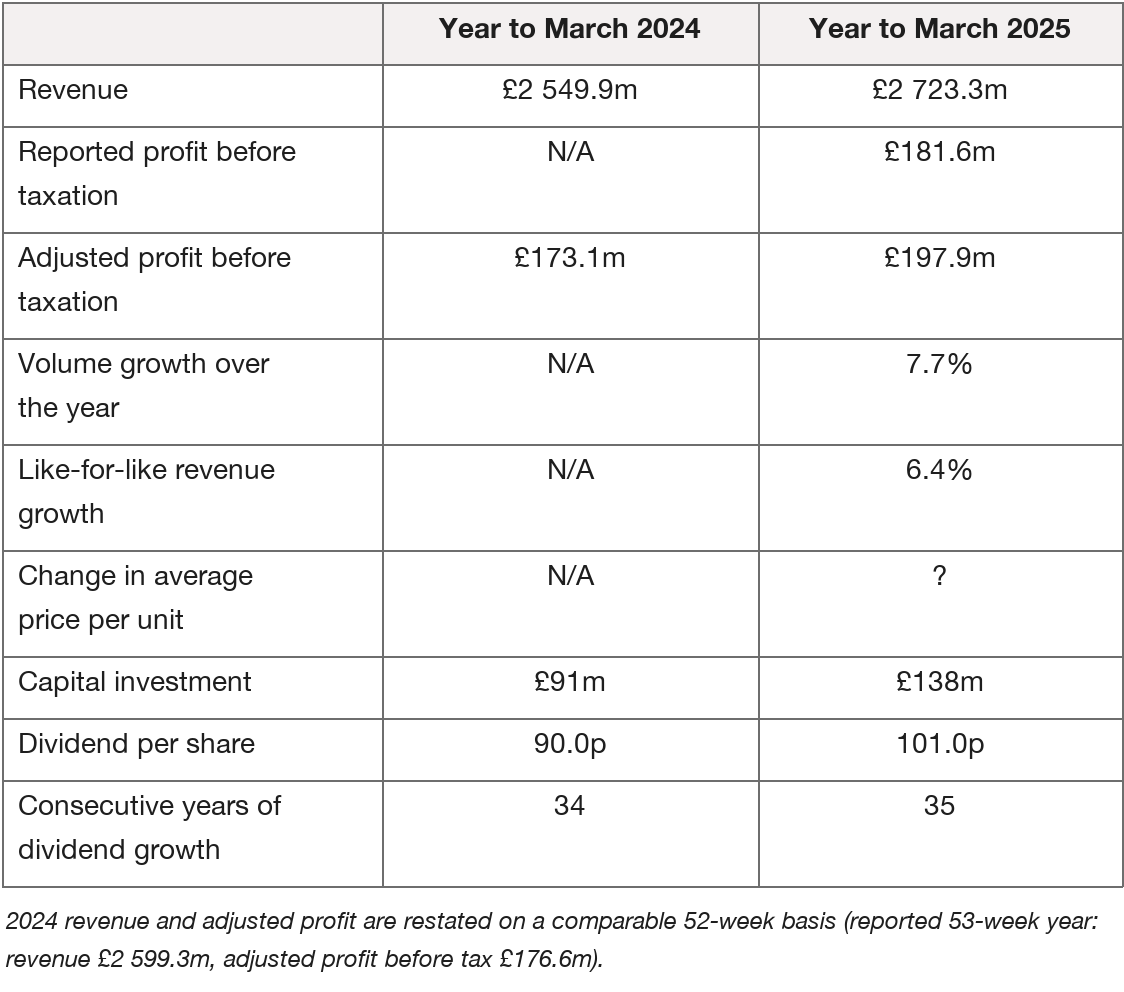
The year to March 2025 was a strong one. The previous financial year was 53 weeks long, so the company compares the two years on a 52-week basis. On that basis, revenue rose 6.8% to £2 723.3 million and adjusted profit before tax rose 14.3% to £197.9 million. Reported profit before tax was £181.6 million. Like-for-like revenue, which strips out the effect of businesses bought or sold, rose 6.4%.

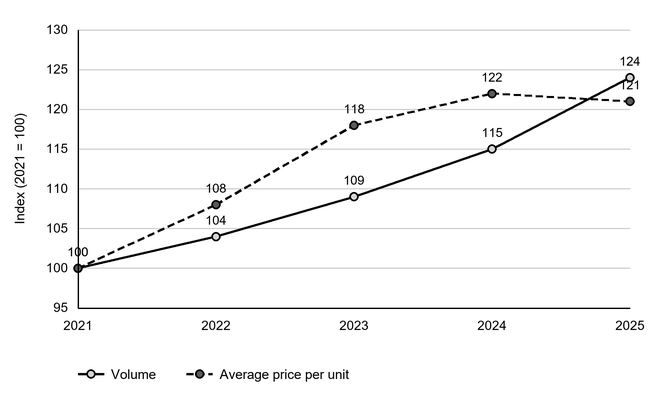
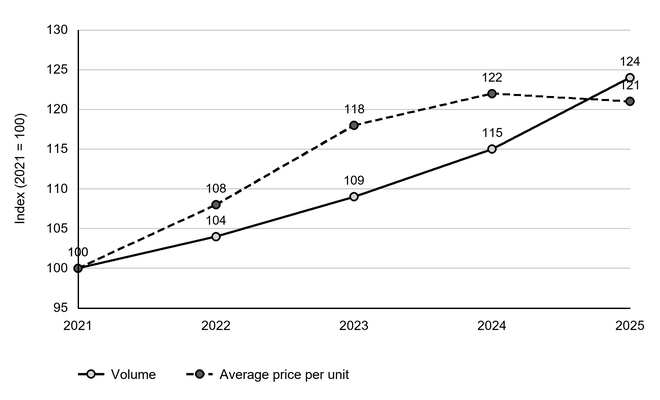
The volume figure is the interesting one. Cranswick sold 7.7% more food than the year before, which is more than its revenue grew. Appendix E shows what has been happening to volumes and to the average price of a unit over five years: prices rose steeply through the inflation of 2022 and 2023, and have now started to come back down while volumes keep climbing.

The company has been spending. Capital investment reached a record £138 million, up from £91 million, going into extra capacity and into making its existing factories more efficient. Its largest customers are a small number of supermarkets, each of which buys in enormous quantities and negotiates hard.

Cranswick has raised its dividend every year for 35 years, and raised it again this year by 12.2% to 101.0p a share.

Source: information sourced from Cranswick plc preliminary results for the year ended March 2025

Appendix D: Cranswick plc selected results

Table comparing years to March 2024 and 2025: revenue £2,549.9m to £2,723.3m; adjusted profit before tax £173.1m to £197.9m; volume growth 7.7%; average price change shown as “?”.

Source: Cranswick plc

Appendix E: Cranswick plc volume and average price per unit, analyst estimates

Line chart of Cranswick’s volume and average price per unit index (2021 = 100): volume rises from 100 to 124 between 2021 and 2025, while price peaks at 122 in 2024 then falls to 121.

Source: Analyst

Cranswick plc's revenue rose 6.8% during the year to March 2025, while the volume of food it sold rose 7.7%.

Analyse one way in which selling more food at a lower average price per unit might affect Cranswick plc's profit.

1
9 marks

Source A: Greggs plc

Greggs plc is the UK's largest food-to-go retailer. It began as a single bakery in Newcastle upon Tyne and floated on the London Stock Exchange in 1984. It is now part of the FTSE 250 and is led by chief executive Roisin Currie.

Greggs sells sausage rolls, bakes, sandwiches, hot drinks and sweet items at prices deliberately set below those of most high street rivals. It calls itself a value retailer, but says that value comes from quality as well as price, and points to freshly prepared food, hot options and the ability for customers to customise their order. In December 2025 it held 8.6% of all visits in the UK food-to-go market and was rated the country's leading food-to-go brand.

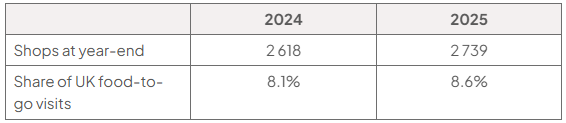
The business has grown by making itself easier to reach. It opened 121 net new shops in 2025, ending the year with 2 739, and says there is a clear opportunity for significantly more than 3 000 UK shops in the longer term. Alongside the shops it has pushed three other ways to reach the customer. Delivery now accounts for 6.8% of sales in company-managed shops. Evening trade is the fastest growing part of the day. The Greggs App was scanned in 26.7% of transactions in 2025, up from 20.1% in 2024, and customers who use the App shop at Greggs more often. The company has also started selling through grocers, launching a Bake-at-Home range with Tesco and widening its range in Iceland.

That growth has been expensive. Capital spending peaked at £287.5 million in 2025 as Greggs built two new national distribution centres, at Derby and Kettering, lifting its logistics capacity to 3 500 shops. Capital spending is expected to fall to around £200 million in 2026. Greggs also made £13.0 million of structural cost savings during 2025 and holds a net cash position of £45.8 million.

The company says its key focus is restoring its return on capital employed to a target of around 20%.

Source: Greggs plc preliminary results, 3 March 2026

Appendix A: Greggs plc selected financial results

Greggs plc selected results table, 2024 versus 2025: sales £2,014m/£2,151m; operating profit £195.3m/£187.5m; profit before tax £189.8m/£171.9m; diluted EPS 137.5p/122.8p; dividend 69.0p/69.0p; margin 9.7%/?.

Source: Greggs plc

Appendix B: Greggs plc shops and sales channels

Table comparing Greggs’ 2024 and 2025 figures: shops at year-end increased from 2,618 to 2,739, while its share of UK food-to-go visits rose from 8.1% to 8.6%.
Bar chart of Greggs channel data, with percentage on the vertical axis from 0 to 30: App scans rose from 20.1% in 2024 to 26.7% in 2025; delivery rose 6.7% to 6.8%, and evening trade 9% to 9.4%.

Source: Greggs plc, Circana

Assess whether opening around 120 more shops in 2026 is likely to increase Greggs plc's profits.

2
9 marks

Source A: Games Workshop Group PLC

Games Workshop Group PLC designs, makes and sells fantasy miniatures, and the games and stories that go with them. Its main brand is Warhammer. The company is based at Willow Road in Nottingham, where it makes its models, and it is a public limited company whose shares are traded on the London Stock Exchange. Kevin Rountree is the chief executive. It employs about 3 000 people.

The company earns money in two quite different ways. Most of it comes from the core business: selling miniatures and books through its own shops, through independent retailers it calls trade accounts, and through its own website. The rest comes from licensing, which means letting other companies pay to use Warhammer characters and worlds in their own products, such as video games and television.

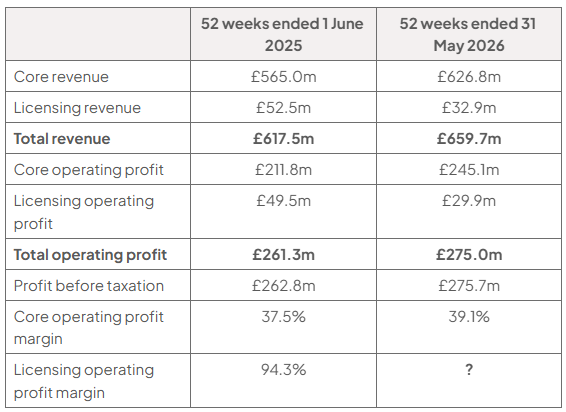
In the 52 weeks to 31 May 2026 the core business had its best year yet. Core revenue rose 10.9% to £626.8 million and core operating profit rose to £245.1 million. Licensing went the other way. Licensing revenue fell from £52.5 million to £32.9 million, and licensing operating profit fell from £49.5 million to £29.9 million.

Licensing matters more than its size suggests. It costs very little to run, because the company is selling permission rather than a product, so almost all of the revenue it brings in becomes profit.

Total revenue still reached a record £659.7 million and profit before tax a record £275.7 million. Earnings per share rose from 594.9p to 624.0p. Even so, the dividend paid during the year fell from 520p a share to 485p.

Games Workshop says its decisions are focused on long-term success rather than short-term gains, and that it intends to carry on making the best fantasy miniatures in the world forever.

Source: Games Workshop Group PLC results, 28 July 2026

Appendix A: Games Workshop Group PLC selected financial results

Table comparing 2025 and 2026 results: licensing revenue falls from £52.5m to £32.9m and licensing operating profit from £49.5m to £29.9m; 2026 licensing margin is marked “?”.

Source: Games Workshop Group PLC

Assess whether Games Workshop Group PLC should be concerned about the fall in its licensing revenue.

Calculate Games Workshop Group PLC's licensing operating profit margin in 2026 to support your answer.

Give your answer to one decimal place.

3
9 marks

Source B: Center Parcs

Center Parcs runs five holiday villages in the United Kingdom: Sherwood Forest in Nottinghamshire, Elveden Forest in Suffolk, Longleat Forest in Wiltshire, Whinfell Forest in Cumbria and Woburn Forest in Bedfordshire. Woburn Forest, which opened in 2014, is the newest. Guests stay in lodges set in woodland and pay separately for activities, restaurants and the spa.

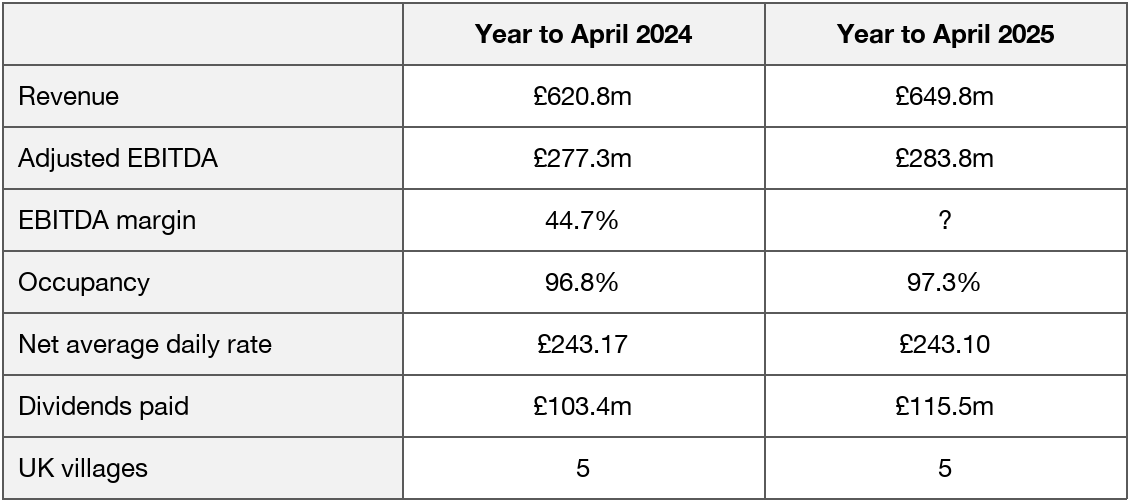
It is a private limited company, so it has no shares traded on any exchange and no share price. During the 53 weeks to 24 April 2025 it paid dividends of £115.5 million to its owner.

The business is close to full. Occupancy for the year was 97.3%, up from 96.8%, and Appendix E shows that it is not full only in summer: in every month of the year the villages run at or above 93%. Revenue rose 4.7% to £649.8 million and adjusted EBITDA rose to £283.8 million from £277.3 million.

The number that stands still is the price. The net average daily rate was £243.10, against £243.17 the year before. Across a year in which costs rose, Center Parcs took seven pence a night less than it had the year before.

That leaves the company in an unusual position. It cannot sell many more nights, because it has almost no empty ones. It has not raised its daily rate for two years. Growth has therefore had to come from somewhere other than filling lodges or charging more for them, and the directors must decide where the next stage of growth is going to come from. Building a sixth village would take years and a great deal of money. Raising the price would work immediately, if guests accepted it.

Source: information sourced from the Center Parcs (Holdings 1) Limited annual report and financial statements for the 53 weeks ended 24 April 2025, which cover the five UK villages only

Appendix D: Center Parcs selected results

Table comparing Center Parcs results for years to April 2024 and 2025: revenue, adjusted EBITDA, EBITDA margin (44.7% and an unknown value), occupancy, net average daily rate, dividends paid and five UK villages.

Source: Center Parcs

Assess whether Center Parcs traded more profitably in the year to April 2025 than in the year before.

Calculate the percentage change in Center Parcs' adjusted EBITDA between the year to April 2024 and the year to April 2025 to support your answer.

Give your answer to one decimal place.

4
9 marks

Source B: Cranswick plc

Cranswick plc makes food. It is a public limited company listed on the London Stock Exchange and it supplies fresh pork, poultry, cooked meats, pastry, sandwiches and pet food to supermarkets, to foodservice customers such as restaurant chains, and to export markets.

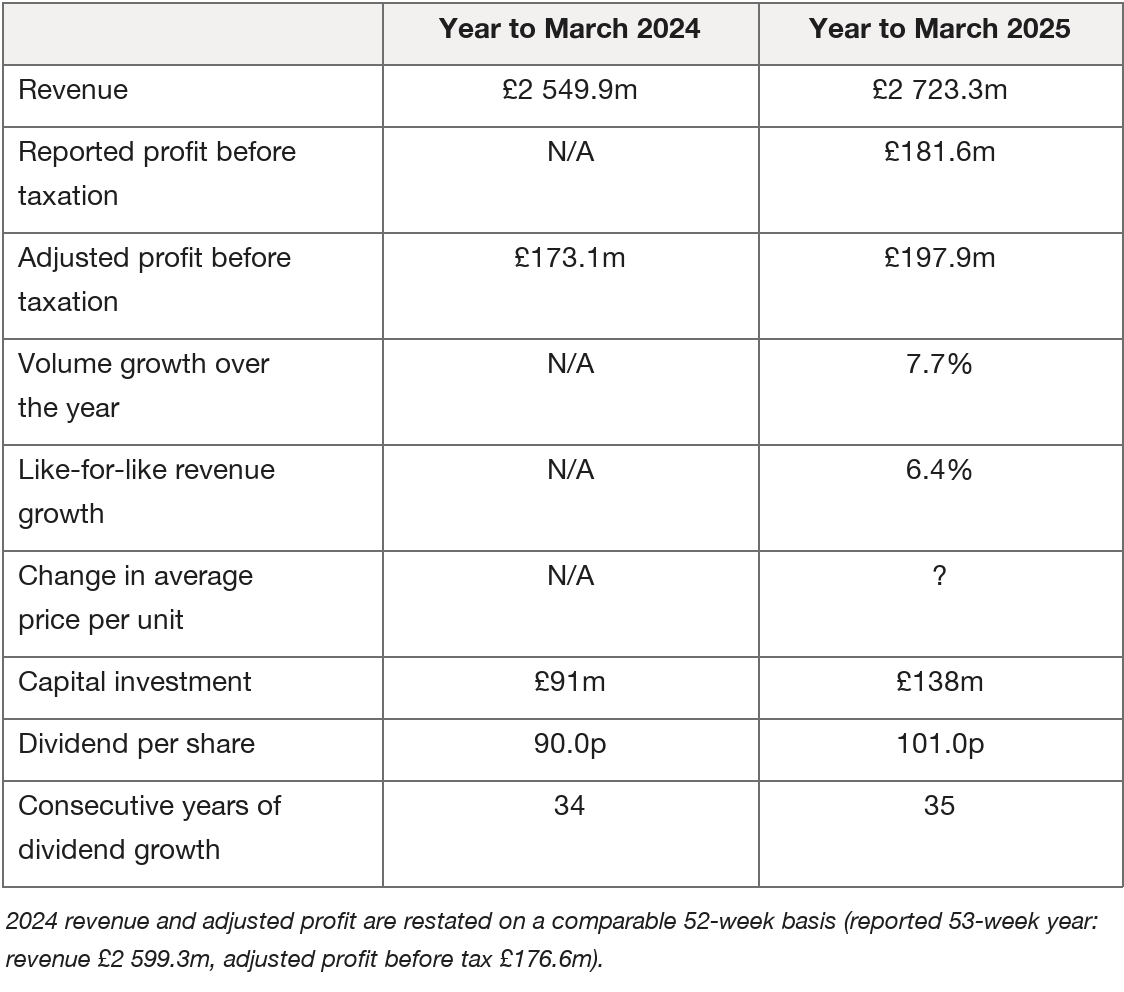
The year to March 2025 was a strong one. The previous financial year was 53 weeks long, so the company compares the two years on a 52-week basis. On that basis, revenue rose 6.8% to £2 723.3 million and adjusted profit before tax rose 14.3% to £197.9 million. Reported profit before tax was £181.6 million. Like-for-like revenue, which strips out the effect of businesses bought or sold, rose 6.4%.

The volume figure is the interesting one. Cranswick sold 7.7% more food than the year before, which is more than its revenue grew. Appendix E shows what has been happening to volumes and to the average price of a unit over five years: prices rose steeply through the inflation of 2022 and 2023, and have now started to come back down while volumes keep climbing.

The company has been spending. Capital investment reached a record £138 million, up from £91 million, going into extra capacity and into making its existing factories more efficient. Its largest customers are a small number of supermarkets, each of which buys in enormous quantities and negotiates hard.

Cranswick has raised its dividend every year for 35 years, and raised it again this year by 12.2% to 101.0p a share.

Source: information sourced from Cranswick plc preliminary results for the year ended March 2025

Appendix D: Cranswick plc selected results

Table comparing Cranswick’s 2024 and 2025 results, including revenue, profit, growth, average price per unit, investment, dividend and dividend-growth years; some entries are N/A or “?”.

Source: Cranswick plc

Appendix E: Cranswick plc volume and average price per unit, analyst estimates

Line chart of Cranswick’s volume and average price per unit index (2021 = 100): volume rises from 100 to 104, 109, 115 and 124 (2021–25); price rises to 108, 118, 122, then falls to 121.

Source: Analyst

Assess whether Cranswick plc is likely to be able to keep growing its revenue without raising its prices.

Calculate the percentage change in Cranswick plc's average price per unit index between 2024 and 2025 to support your answer.

Give your answer to one decimal place.

5
9 marks

Source A: Bunzl plc

Bunzl plc is a distribution and services group. It does not make much: it buys products from manufacturers, holds them, and delivers them to businesses that need them regularly but do not want to manage the supply themselves. Its customers are in cleaning and hygiene, safety, healthcare, foodservice and grocery, and they are spread across more than 30 countries.

A hospital does not want to negotiate with forty suppliers for gloves, wipes and aprons. Bunzl sells it one relationship. That is the business.

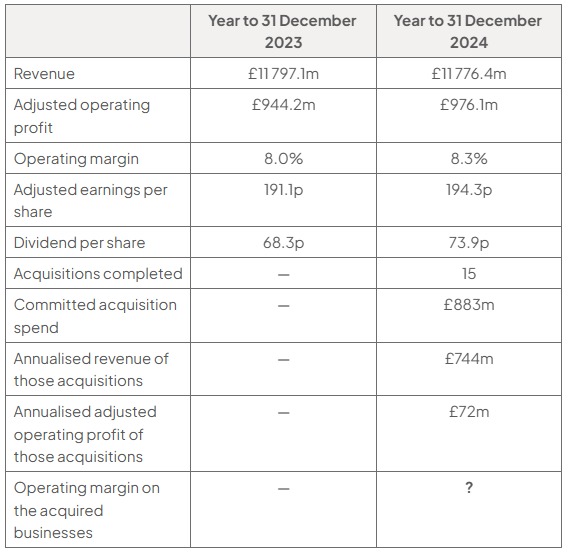
The year to 31 December 2024 produced an odd set of numbers. Revenue was £11 776.4 million against £11 797.1 million, which is a fall of 0.2%. But at constant exchange rates, which strips out the effect of the pound moving against other currencies, revenue rose 3.1%. Adjusted operating profit rose 3.4% as reported and 7.2% at constant rates. Appendix B shows the two measures side by side.

The operating margin improved, from 8.0% to 8.3%. Bunzl puts that down partly to selling more of its own brand products, which it sources itself rather than buying from a manufacturer whose name is on the box, and partly to the businesses it has bought.

Buying businesses is how Bunzl grows. During 2024 it completed 15 acquisitions, 13 of them announced, and committed a record £883 million to them. Those businesses are expected to add £744 million of revenue and £72 million of adjusted operating profit in a full year.

Adjusted earnings per share reached 194.3p and the dividend rose 8.2% to 73.9p. Cash conversion was 93%.

Source: information sourced from Bunzl plc annual results for the year ended 31 December 2024

Appendix A: Bunzl plc selected results

Table of Bunzl plc selected results for years to 31 December 2023 and 2024. For 2024, acquisitions completed: 15; committed spend: £883m; annualised acquisition revenue: £744m; adjusted operating profit: £72m; operating margin: ?.

Source: Bunzl plc

Assess whether the businesses Bunzl plc bought in 2024 were a good use of £883 million.

Calculate the operating profit margin on the businesses Bunzl plc acquired during the year to support your answer.

Give your answer to one decimal place.

6
9 marks

Source B: Wetherby Green Garden Centre

Wetherby Green is a garden centre on the edge of a market town, owned and run by Priya Sharma as a sole trader. The business has no separate legal identity from her, so she keeps all of the profit and is personally responsible for all of its debts.

The business sells plants it grows itself in polytunnels behind the site, plants bought in from nurseries, plus compost, tools, pots and garden furniture. There is a small coffee hut. Twelve people work there, most of them part time and most of them only from March to June.

The business took £864 000 last year. Appendix E shows when. April and May alone take £310 000 of it, and the whole of July to October together comes to £178 000, barely more than May on its own.

The difficulty is the inventory. A pot of compost keeps. A shrub does not. Plants have to be bought or sown months before anybody wants them, they need watering and space while they wait, and if they are not sold in their season they either have to be discounted heavily or kept through the winter. Kept plants take up space, need heating in a cold snap, and a proportion of them die.

At the end of last July the business was holding £96 000 of unsold plants at cost. Appendix F sets out the two things it could do with them.

Appendix D: Wetherby Green Garden Centre, summary of last year

Table of last year’s summary: sales £864,000; cost of goods sold £492,000; gross profit £372,000; wages £186,000; other costs £104,000; profit £82,000; July inventory £96,000, percentage unknown; bank cash £11,400.

Source: Analyst

Assess whether Wetherby Green Garden Centre should stop growing its own plants and buy them all in from nurseries.

1
15 marks

Source A: Softcat plc

Softcat plc sells technology to other organisations. If a company needs 400 laptops, a new firewall, a cloud contract and someone to set it all up, it can deal with a dozen manufacturers or it can deal with Softcat. It is a public limited company listed in London, and it sells to about 10 200 customers: businesses of every size and a large amount of public sector work.

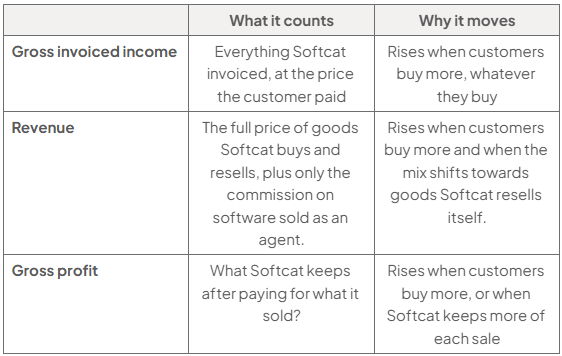
Softcat does not describe its own size the way most companies do, and the reason is worth understanding. When it sells a laptop it buys the laptop and sells it on, so the whole price counts as its revenue. When it sells a software licence it is acting more as an agent for the software company, and accounting rules require it to count only the commission it keeps, not the price the customer paid. Two sales of exactly the same value to the customer therefore appear in Softcat's accounts at completely different sizes.

That is why it publishes a third figure. Gross invoiced income is the total value of everything it invoiced, whichever way the accounting treats it, and Softcat regards gross profit as its main measure of scale.

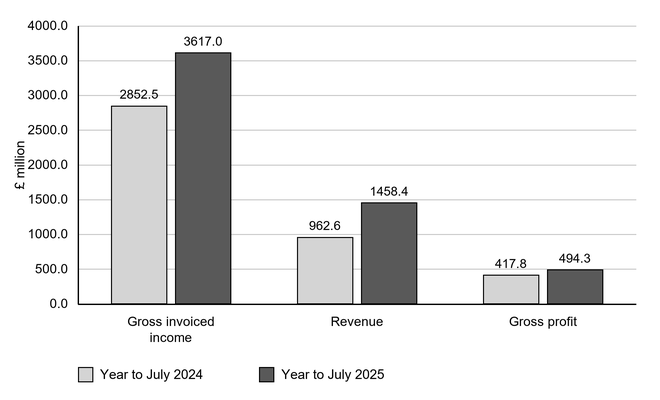
In the year to 31 July 2025 all three grew, and none of them agreed with the others. Gross invoiced income rose 26.8% to £3 617.0 million. Revenue rose 51.5% to £1 458.4 million. Gross profit rose 18.3% to £494.3 million. Statutory operating profit rose 12.2% to £172.9 million and underlying operating profit rose 16.9% to £180.1 million. Appendix B shows the three top-line measures together.

Behind all of it, the customer numbers barely moved. Softcat served 10 200 customers, 1.6% more than the year before, and gross profit per customer rose 16.5% to £48 500. It also completed its first acquisition.

Source: information sourced from Softcat plc preliminary results for the year ended 31 July 2025

Appendix A: Softcat plc selected results

Table comparing Softcat results for years to 31 July 2024 and 2025: 2024 gross invoiced income £2,852.5m, revenue £962.6m, gross profit £417.8m, operating profits £154.1m, 10,039 customers and £41,600 gross profit per customer.

Source: Softcat plc

Appendix B: Three measures of Softcat plc's size

Bar chart of Softcat’s size measures, in £ million, for years to July 2024 and 2025. Gross invoiced income rises from 2,852.5 to 3,617.0, revenue from 962.6 to 1,458.4, and gross profit from 417.8 to 494.3.

Source: Softcat plc

Appendix C: Why the three figures differ

Table explaining the three measures: gross invoiced income counts everything invoiced and rises with total customer purchases; revenue counts resold goods plus software commission; gross profit is what Softcat keeps and rises with sales value or margin.

Source: Analyst

Softcat plc's revenue rose 51.5% while its gross profit rose 18.3%.

Evaluate whether revenue or gross profit is the better measure of how much Softcat plc grew during the year.

2
15 marks

Source B: Thorne Valley Orchards Ltd

Thorne Valley Orchards Ltd grows apples on 180 acres in Herefordshire and turns them into juice and chutney in a press and kitchen on the same site. It is a private limited company run by Marianne Vance, whose family has farmed the land since 1954, and it employs 26 people, more in the picking season.

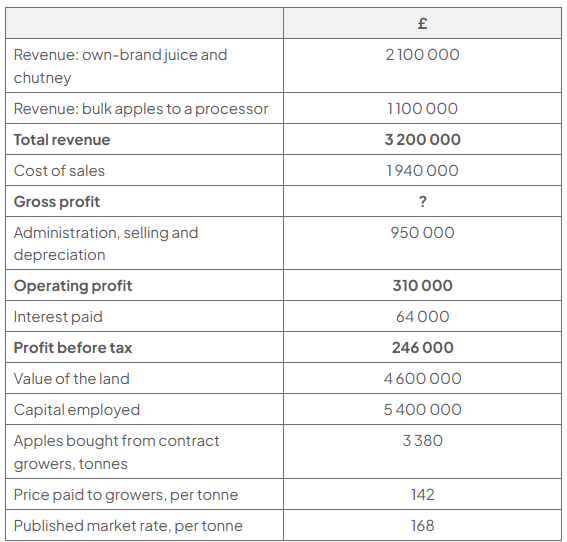
It sells in two ways. Its own-brand juice and chutney go to farm shops, delicatessens and garden centres, and brought in £2.1 million last year. Bulk apples it does not need go to a large juice processor, which brought in £1.1 million. Total revenue was £3.2 million.

Its own orchards do not produce enough. Thorne Valley Orchards Ltd buys a further 3 380 tonnes of apples a year from fourteen contract growers, all of them small farms within thirty miles. It pays them £142 a tonne. The published market rate last year was £168 a tonne, and Appendix E shows how that gap has widened. The growers accept it because Thorne Valley Orchards Ltd takes the whole crop, pays within fourteen days and has done so for years. Its own customers, the farm shops and delicatessens, take about 45 days to settle.

The land is worth £4.6 million. Together with the buildings, press and kitchen, capital employed is £5.4 million. Against that, operating profit last year was £310 000 and profit before tax, after £64 000 of interest, was £246 000.

Marianne Vance has been offered a contract by a supermarket for 900 000 bottles of own-label juice a year at £1.10 a bottle. Her own brand sells at £2.40. The press currently runs at about 40% of what it could do.

Appendix D: Thorne Valley Orchards Ltd, summary of last year

Appendix D summary: revenue £3.2m (£2.1m own-brand, £1.1m bulk), cost of sales £1.94m, operating profit £310 000, profit before tax £246 000; capital employed £5.4m; 3 380 tonnes bought at £142 versus £168 market rate.

Source: Analyst

Appendix F: Data for the supermarket own-label contract

Appendix F compares a two-year renewable contract: 900,000 bottles at £1.10, £0.86 variable cost and £0.24 contribution each, £216,000 extra annually, press use 95%; or own-brand only at £2.40, £1.54 contribution, 40% use.

Source: Analyst

Appendix F shows the own-label contract a supermarket has offered Thorne Valley Orchards Ltd.

Evaluate whether Thorne Valley Orchards Ltd should accept the own-label contract or stay with its own brand only.

3
15 marks

Source B: Ashgrove Print Ltd

Ashgrove Print Ltd is a commercial printer in Dewsbury. Ken Ashgrove started it in 1994 after fifteen years at a firm that lost its only large customer and closed in a fortnight, and he told his daughter Nadia more than once that he built Ashgrove Print Ltd so that nobody would ever again be able to tell him what to charge. Nadia Ashgrove has run it since 2021. It is a private limited company and employs 34 people.

The work comes in two kinds. Long-run work is leaflets and shelf-edge cards for Fenwold Stores, a supermarket group: high volume, printed to a price Fenwold Stores fixes, and paid for in 74 days. It brought in £2 472 000 last year and cost £2 100 000 in paper, ink, plates and press time. Short-run work is menus, packaging, programmes and art prints for about 300 small local customers: low volume, priced job by job, and paid for in 21 days, often on collection. It brought in £1 648 000 and cost £784 000.

Across all its customers, Ashgrove Print Ltd waits an average of 53 days to be paid. It buys paper from two mills on 30-day terms. Its agreed terms with its own smaller suppliers, the plate makers, the bindery, the finishers and the courier, are also 30 days. Last year it paid them on average in 61 days. Its overdraft facility is £150 000 and it was £96 000 into it at the year end.

Fenwold Stores has now offered Ashgrove Print Ltd all of its print work on a three-year contract. It would need a new press costing £340 000, which the bank will lend against. Appendix F sets out that future and the one Nadia Ashgrove has been building towards instead.

Appendix D: Ashgrove Print Ltd, income statement for last year

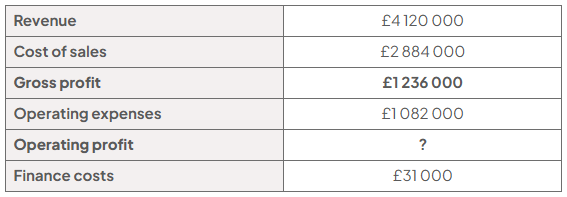
Income statement: revenue £4,120,000; cost of sales £2,884,000; gross profit £1,236,000; operating expenses £1,082,000; operating profit shown as “?”; finance costs £31,000.

Source: Analyst

Appendix E: Ashgrove Print Ltd, where the revenue is and where the profit is

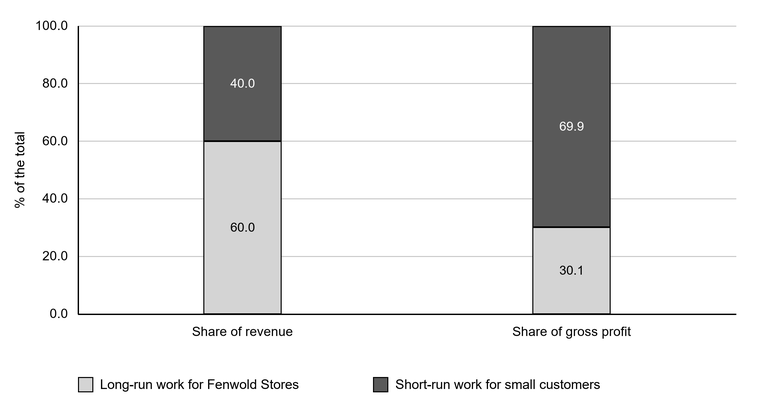
Stacked bar chart of Ashgrove Print Ltd’s shares of revenue and gross profit: long-run work 60.0% of revenue and 30.1% of gross profit; short-run work 40.0% and 69.9%.

Source: Analyst

Long-run work for Fenwold Stores earns Ashgrove Print Ltd 15.0p of gross profit in every pound. Short-run work for its small customers earns 52.4p.

Evaluate whether Ashgrove Print Ltd should increase its profit by reducing the cost of its long-run work or by raising the price of its short-run work.