Elizabeth I: Society - Continuity, Change & Rebellion (AQA A Level History: Component 1: Breadth study): Revision Note
Exam code: 7042

Summary
Elizabethan society was built on a rigid social hierarchy
This structure changed little, but its composition shifted as the gentry grew in wealth and influence
Rising trade, land purchases and access to education increased the numbers of the gentry and their role in local government
The Northern Rebellion (1569) was the most serious large-scale domestic rebellion of the reign
It was led by the Catholic Earls of Northumberland and Westmorland and collapsed without a major battle
Poverty and vagrancy were persistent problems throughout the reign
A series of Poor Laws between 1563 and 1601 gradually built a national system of poor relief
The Oxfordshire Rising (1596) was a product of harvest failures, enclosure and wartime hardship
It attracted only around four men at its meeting pooint but alarmed the Privy Council
Historians debate how serious social discontent really was
The Northern Rebellion failed quickly; popular unrest in the 1590s was real but limited in scale
Social Continuity & Change: The Social Hierarchy under Elizabeth I
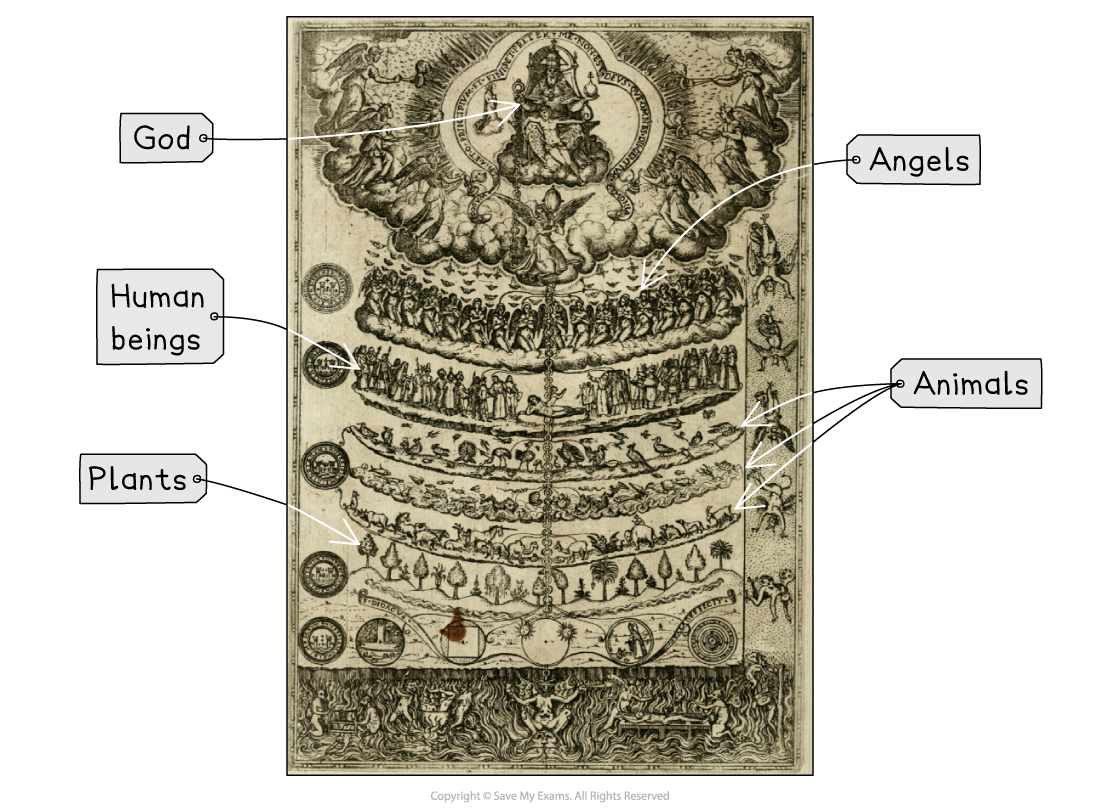
Elizabethan society was built on the idea of the Great Chain of Being
This was a belief that God had ordered all of creation in a fixed hierarchy
Human society reflected this: the monarch sat at the top, beneath God
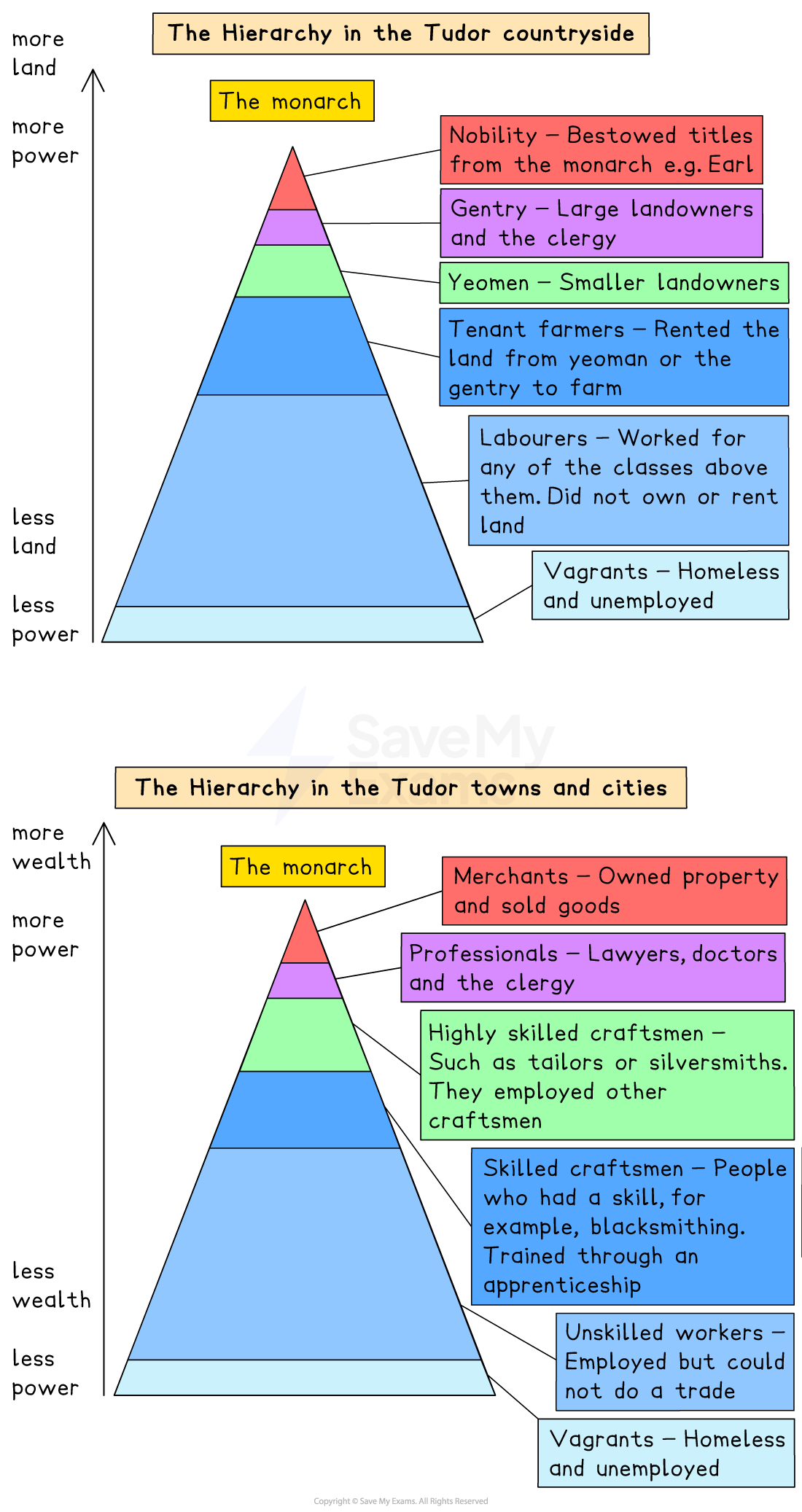
Below the monarch came the nobility, then the gentry, then yeomen, then merchants, then labourers and the poor
Challenging this order was seen as going against the will of God
Social groups
Nobility |
|
|---|---|
Gentry |
|
Yeomanry |
|
Merchants and professionals |
|
Labourers and the rural poor |
|
The basic structure of society changed little under Elizabeth
The hierarchy remained broadly as it had been under Henry VII and Henry VIII
What changed was the composition: the gentry grew, the middling sort emerged and the poor became more numerous
Population growth was the biggest driver of social change throughout the reign
England’s population grew significantly during the 16th century, reaching around 4 million by 1600
Examiner Tips and Tricks
Be careful in saying that Elizabethan society was transformed. The hierarchy itself was very stable. The key changes were in its composition: a growing gentry, an emerging middling sort and a larger, more pressured poor. Population growth made an impact on the numbers of those towards the bottom of the "great chain". Always distinguish between continuity in structure and change in composition.
The Changing Role of the Gentry & the Rise of the "Middling Sort"
The gentry
The gentry grew in numbers, wealth and influence throughout Elizabeth's reign
The dissolution of the monasteries under Henry VIII had placed large amounts of land on the market
The gentry were the main buyers and leaseholders of this land
Rising trade and commerce created new wealth for merchant families who bought land and joined the gentry
Education transformed the gentry into a more confident and capable class
More gentry sons attended university and the Inns of Court than in any previous generation
By the end of the reign, a large proportion of MPs had a university education or legal training
A more educated gentry was better able to participate in government and assert its interests
The gentry formed the backbone of local government under Elizabeth
They served as Justices of the Peace (JPs), implementing royal policy at the local level
They served as MPs, sheriffs and deputy lieutenants
The Crown depended on their co-operation to govern the country beyond London
Without the gentry, royal policy could not be enforced in the counties
The rise of the "middling sort"
Below the gentry, a new social group was emerging by the later 16th century
The "middling sort" included prosperous tradespeople, craftsmen, merchants and yeomen
They had benefitted from growing trade and commerce without reaching the level of the gentry
They began to identify more with the social elite and less with the labouring poor
This group had a direct stake in social stability and the established order
The growth of this 'middling sort' helps explain the relative stability of Elizabethan society
A larger proportion of the population had something to lose from disorder
This likely reduced the risk of large-scale popular rebellion compared to the mid-Tudor period
Compare with Kett's Rebellion (1549) and Wyatt's Rebellion (1554): Elizabethan unrest was far more limited in scale
Examiner Tips and Tricks
The gentry's growing stake in stability meant that social discontent rarely translated into serious rebellion. The contrast with the mid-Tudor period (when rebellions were much larger and more widespread) is a strong analytical point worth making.
The Northern Rebellion, 1569: Causes, Events & Significance
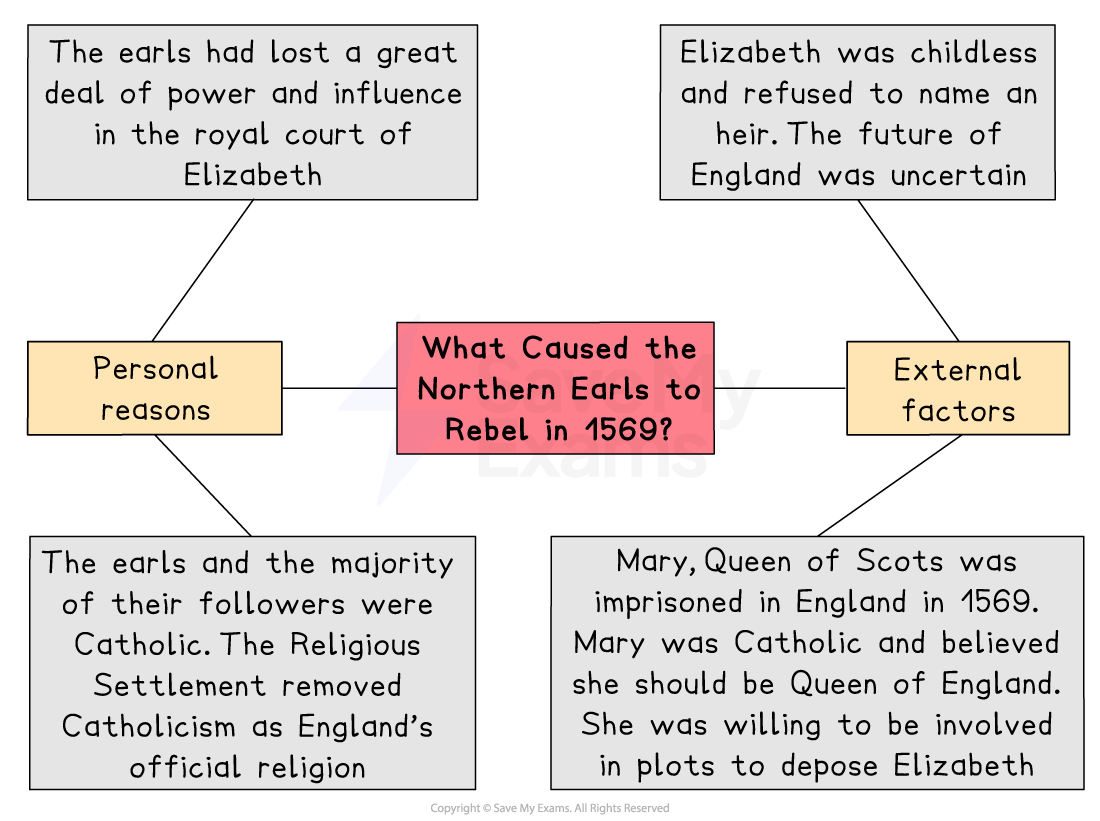
Causes of the Northern Rebellion
The Northern Rebellion was driven by overlapping religious, political and economic causes
Cause | Key factors |
|---|---|
Religious |
|
Political |
|
The Mary Queen of Scots connection |
|
Economic and regional |
|
Events of the Northern Rebellion
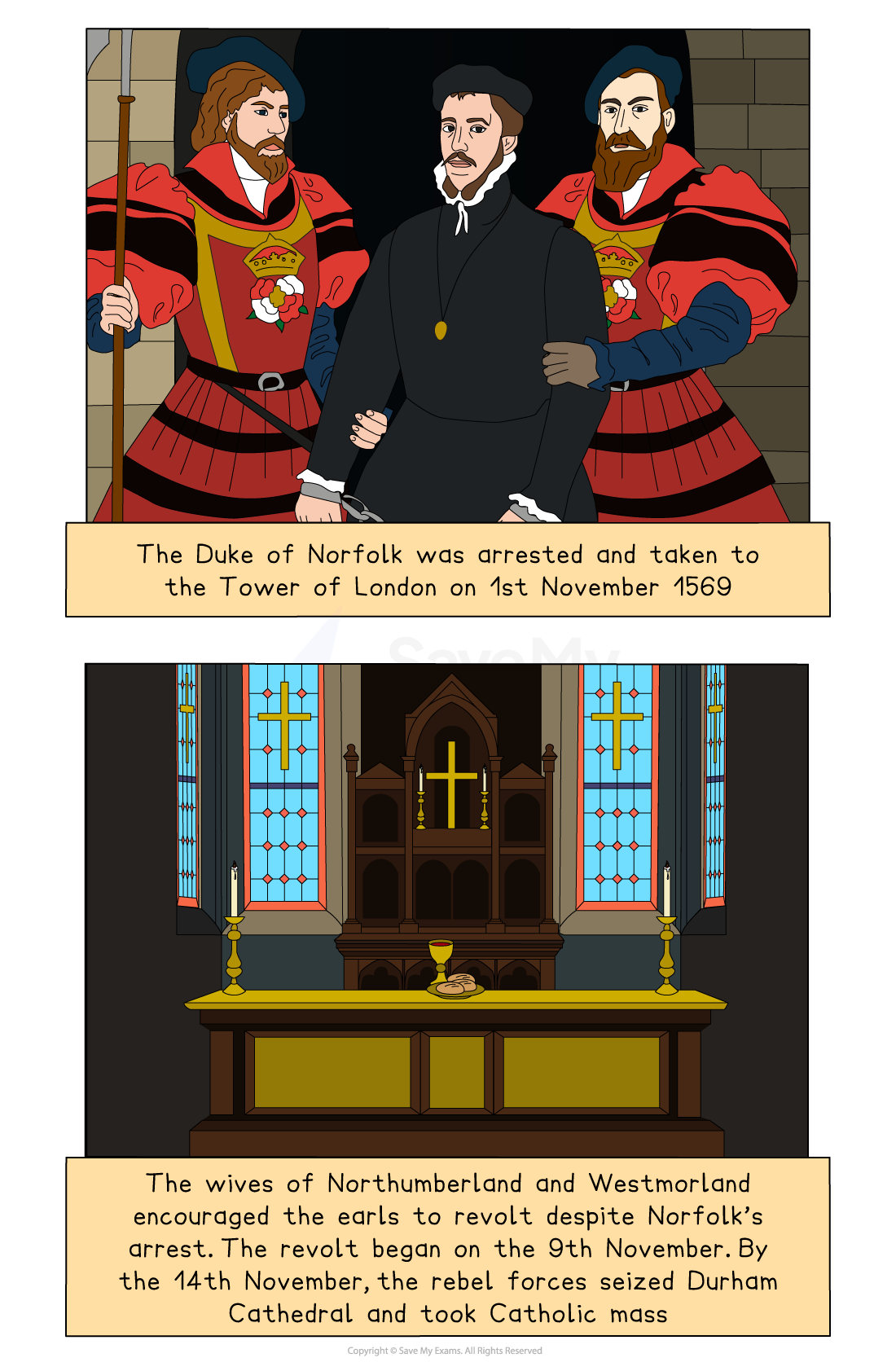
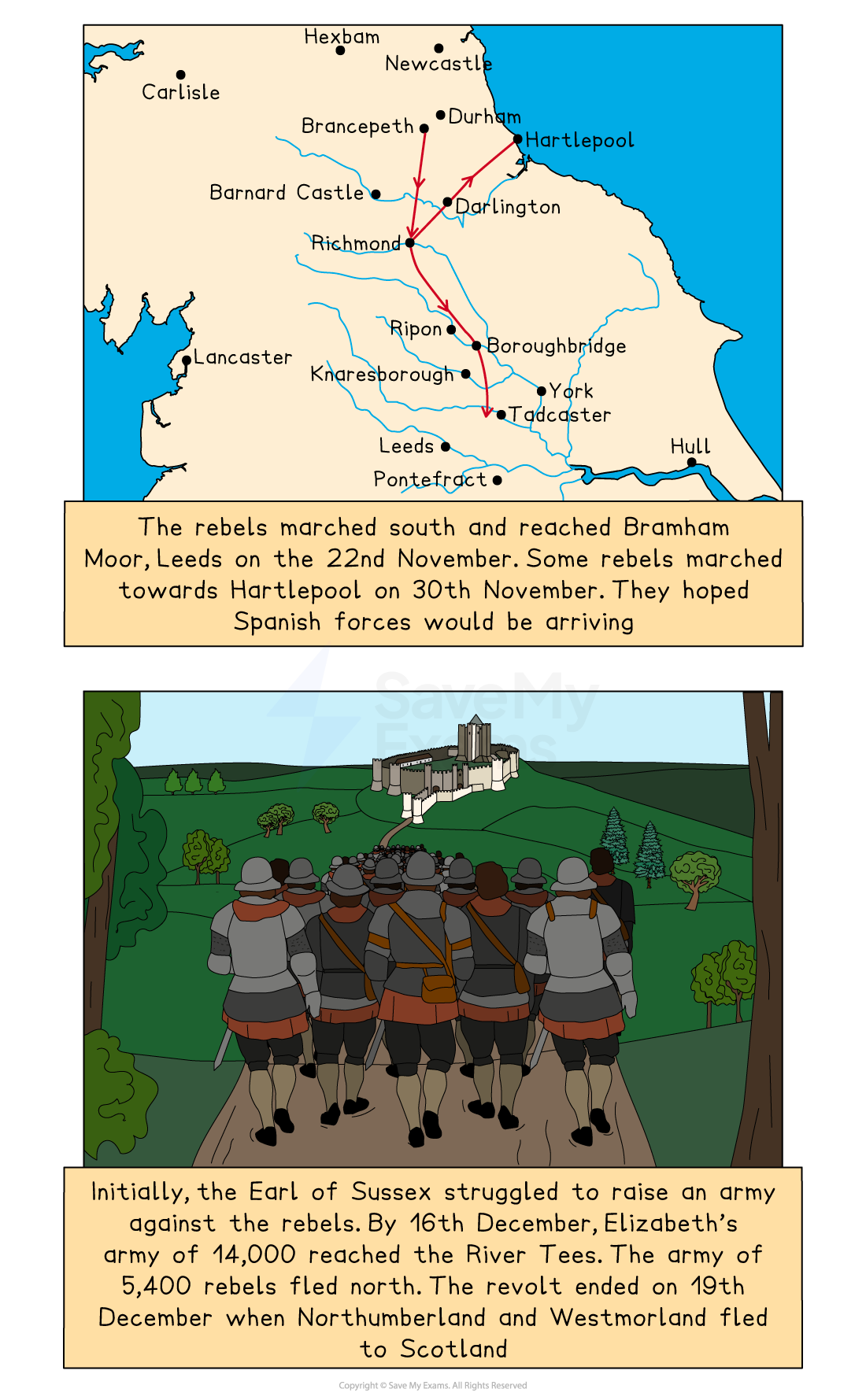
The rebellion broke out in November 1569
The Earls of Northumberland and Westmorland raised their banners in Durham
They entered Durham Cathedral, tore up the Protestant prayer books and celebrated a Catholic mass
The rebel army marched south, but got no further than the area around Clifton in Yorkshire
Support failed to materialise beyond the earls' own tenants
Response:
A royal army marched north
The earls fled to Scotland
The rebellion collapsed without a major battle
Aftermath and consequences
Elizabeth's response was severe
Around 800 people were hanged, mostly tenants of the rebel earls
The Earl of Northumberland was eventually captured, returned to England and executed in 1572
The Earl of Westmorland fled to the Netherlands and died in exile
The rebellion strengthened royal control in the north
The Council of the North was reconstituted in 1572 under the Earl of Huntingdon, a committed Protestant
Royal authority in the north was strengthened rather than weakened by the rebellion's failure
The rebellion failed for several reasons
Norfolk's capture before it began removed the political focus
The rebels failed to raise significant support beyond the earls' own tenants
The nobility and gentry of the north were divided; many chose not to join
No foreign military support arrived
Examiner Tips and Tricks
The Northern Rebellion is the only large-scale noble-led rebellion within England during the reign. Make sure you show why it failed rather than just describing what happened. The failure to raise support, the loss of Norfolk and the absence of foreign backing are the key analytical points. The collapse without a battle is itself significant: Elizabeth's position was strong enough to deter most potential rebels from committing.
Poverty, Vagrancy & the Elizabethan Poor Laws
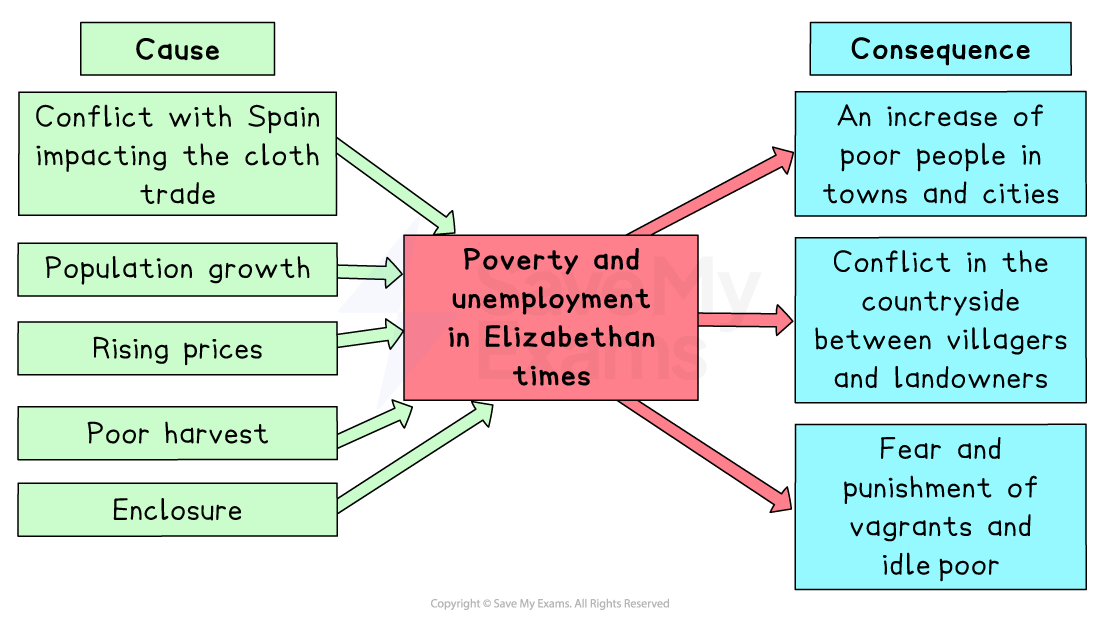
The causes of poverty
There were several long-term pressures driving poverty and vagrancy throughout Elizabeth's reign
Population growth:
This put growing pressure on food, land, wages and employment
Inflation:
Prices rose by around 400% across the Tudor period
Real wages fell; the poorest were hit the hardest
Enclosure:
Landowners converted arable land to sheep pasture
This displaced agricultural labourers and pushed some into vagrancy
Harvest failures:
Periodic bad harvests, especially in the 1590s, pushed the most vulnerable into destitution
Dissolution of the monasteries:
The dissolution under Henry VIII had removed the main source of organised charitable relief for the poor
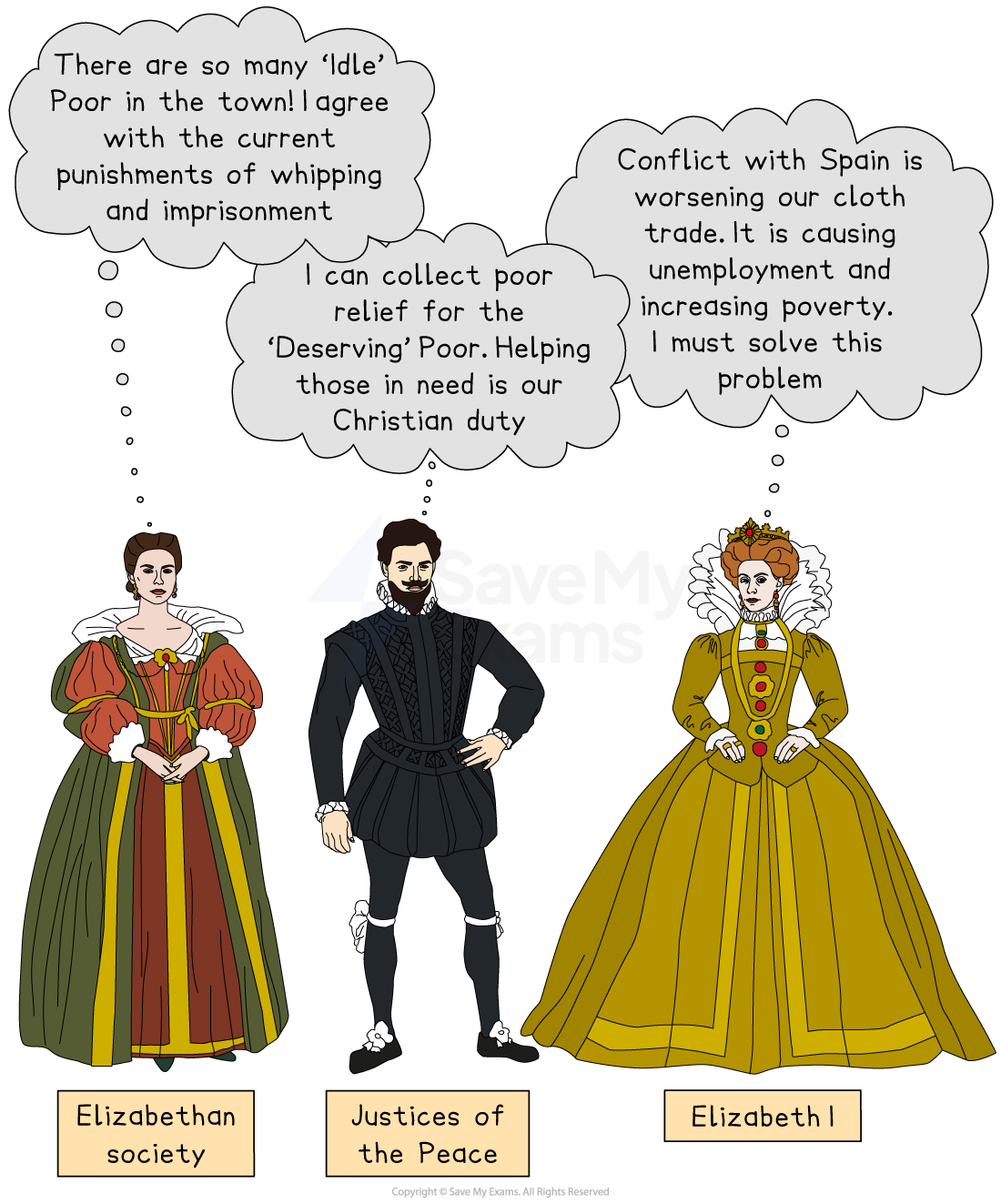
Categories of poor
The government drew distinctions between different types of poor person
The impotent/deserving poor:
Too old, too young or too ill to work
Seen as deserving of charity and relief
The able-bodied poor:
Able to work but unable to find employment
Increasingly recognised as needing support from the 1570s onwards
The idle/undeserving poor (vagabond):
Able to do work but unwilling to do so
Seen as undeserving and treated harshly throughout the period
“With us the poor is commonly divided into three sorts, so that some are poor by impotency, as the fatherless child, the aged, the blind and lame, and the diseased person that is judged to be incurable; the second are poor by casualty, as the wounded soldier, the decayed householder, and the sick person visited with grievous and painful disease; the third consisteth of thriftless poor, as the rioter that had consumed all, the vagabond that will abide nowhere but runneth up and down from place to place, and finally the rogue and the strumpet.”
William Harrison, Description of England (1586)
William Harrison was a clergyman and writer, describing categories of poor in Elizabethan England. Harrison identifies three categories of poor in 1586. His distinction between those who are poor through no fault of their own and those seen as causing their own poverty reflects the official thinking that drove Tudor poor law development throughout Elizabeth’s reign. Harrison’s categories differ slightly from official classifications, but reflect similar underlying distinctions between deserving and undeserving poor.
The development of the Poor Laws
The table below summarises the key Elizabethan laws regarding the poor
Statute of Artificers, 1563 |
|
|---|---|
Vagabonds Act, 1572 |
|
Act for the Setting of the Poor on Work, 1576 |
|
Poor Relief Act, 1597 |
|
Poor Law Act, 1601 |
|
The Poor Laws had a real but limited impact
In practice, charitable giving provided more relief than the compulsory poor rate
The laws were unevenly enforced across counties
“Nevertheless, no rebellions as serious as those of the mid-Tudor period occurred during the reign
The 1601 Poor Law Act established a permanent national framework that lasted until the 19th century
Examiner Tips and Tricks
The Poor Laws show the government actively trying to manage a growing social problem. Refrain from simply listing the legislation: instead, show how the approach changed over time, from harsh punishment of all vagrants to a more nuanced distinction between the different types of poor.
Social Unrest in the 1590s: The Oxfordshire Rising, 1596
The 1590s were the most difficult decade of Elizabeth's reign for ordinary people
Four successive harvest failures between 1594 and 1597 pushed food prices sharply upward
Real wages collapsed to their lowest levels since the Black Death
See the Economy: Prosperity and Depression Revision Note for the full economic analysis of this period
Food riots broke out in several areas
There were riots over food in London, the south-east and East Anglia in 1595–1597
These were protests against high prices and hoarding, not revolutionary movements
Local authorities used JPs and Privy Council instructions to regulate food prices and prevent hoarding
The Oxfordshire Rising, 1596
The Oxfordshire Rising was a product of harvest failures, enclosure and wartime hardship
A small group of men planned a march on London to demand the overthrow of enclosing landlords
They intended to seize weapons from Woodstock and link up with a large crowd
The crowd never materialised; only four men gathered at the appointed meeting point
The plot was uncovered by the authorities before it could develop further
The ringleaders were arrested, tortured and executed
The Privy Council's response was disproportionate to the actual threat
The Council treated the plot with great alarm and interrogated the ringleaders under torture
This suggests the government may have feared popular rebellion in the 1590s
But the rising itself attracted almost no support, it remained a plot rather than a rebellion
Examiner Tips and Tricks
Be precise about the Oxfordshire Rising. It attracted only around four men and never became a real rebellion. Its significance lies in what it reveals about the desperation of the poorest in the 1590s, and about the Privy Council's fear of popular unrest, rather than in the actual scale of the event. Be careful, don't present it as evidence of widespread revolt.
How Serious Was Social Discontent Under Elizabeth?
Use the specific evidence below to build and support your argument
The case that social discontent was limited and managed
The Northern Rebellion failed quickly and attracted limited support
The rebels got no further south than Yorkshire before the army approached
The nobility and gentry of the north were divided; many refused to join
The rebellion collapsed without a major battle
Popular unrest in the 1590s was real but not revolutionary
The Oxfordshire Rising attracted only around four men; it never became a rebellion
Food riots were local and limited; there was no nationwide uprising comparable to Kett's Rebellion (1549)
The government managed the worst distress through poor law legislation and local regulation of food prices
The growth of the gentry and middling sort created a larger group with a stake in social stability
Compared with the mid-Tudor period, Elizabethan social unrest was far less serious in scale and frequency
Tudor society was essentially stable; the Stuarts inherited a functioning social order
The case that social discontent was serious
The Northern Rebellion (1569) was the only large-scale domestic noble-led rebellion of the reign
Around 6,000 men gathered under the earls at its height
The rebels entered Durham Cathedral and celebrated a Catholic Mass in direct defiance of the Settlement
The rebellion revealed how far the north had failed to accept the religious and political changes of the reign
The 1590s saw genuine and widespread distress
Four successive harvest failures between 1594 and 1597 caused real suffering
Food riots broke out in London, the south-east and East Anglia
The Oxfordshire Rising revealed the government’s fear that even small-scale unrest could escalate into wider disorder
The gap between rich and poor widened structurally over the reign
Population growth and inflation pressed down on the poorest while the gentry and middling sort grew wealthier
This long-term polarisation was a genuine social change, even if it rarely produced open rebellion
Examiner Tips and Tricks
The key question demands a judgement across the whole reign, not just one event. A strong answer will contrast the Northern Rebellion (1569) with the 1590s unrest, show how the gentry’s growth contributed to stability and compare Elizabethan social discontent with the more serious mid-Tudor rebellions. The Oxfordshire Rising is useful but must be kept in proportion.

Unlock more, it's free!
Join the 100,000+ Students that ❤️ Save My Exams
the (exam) results speak for themselves:

Was this revision note helpful?
