Elizabeth I: The English Renaissance (the Golden Age) (AQA A Level History: Component 1: Breadth study): Revision Note
Exam code: 7042

Summary
Elizabethan culture flourished due to royal and noble patronage, political stability, growing wealth among the gentry and the influence of the European Renaissance
Theatre developed from travelling and temporary performance into a major commercial art form within a generation
Marlowe pioneered blank verse drama; Shakespeare became its greatest practitioner
Music flourished at court and in the Church:
Byrd and Tallis were granted a royal monopoly on music printing in 1575
The madrigal became a fashionable form of courtly entertainment
Elizabeth's portraits were political as much as artistic:
The Cult of Gloriana used used imagery such as eyes, ears, pearls and globes to project power and virginal authority
Prodigy houses, built by nobles and gentry to impress Elizabeth during her progresses, were among the most ambitious buildings in English history
Historians debate whether a genuine "Golden Age" existed:
Brigden argues the court became the centre of power, patronage and cultural activity, driving the artistic flourishing associated with the “Golden Age”
Others argue the cultural flourishing was largely confined to the elite and served political purposes
The Elizabethan "Golden Age": Why Did Culture Flourish?
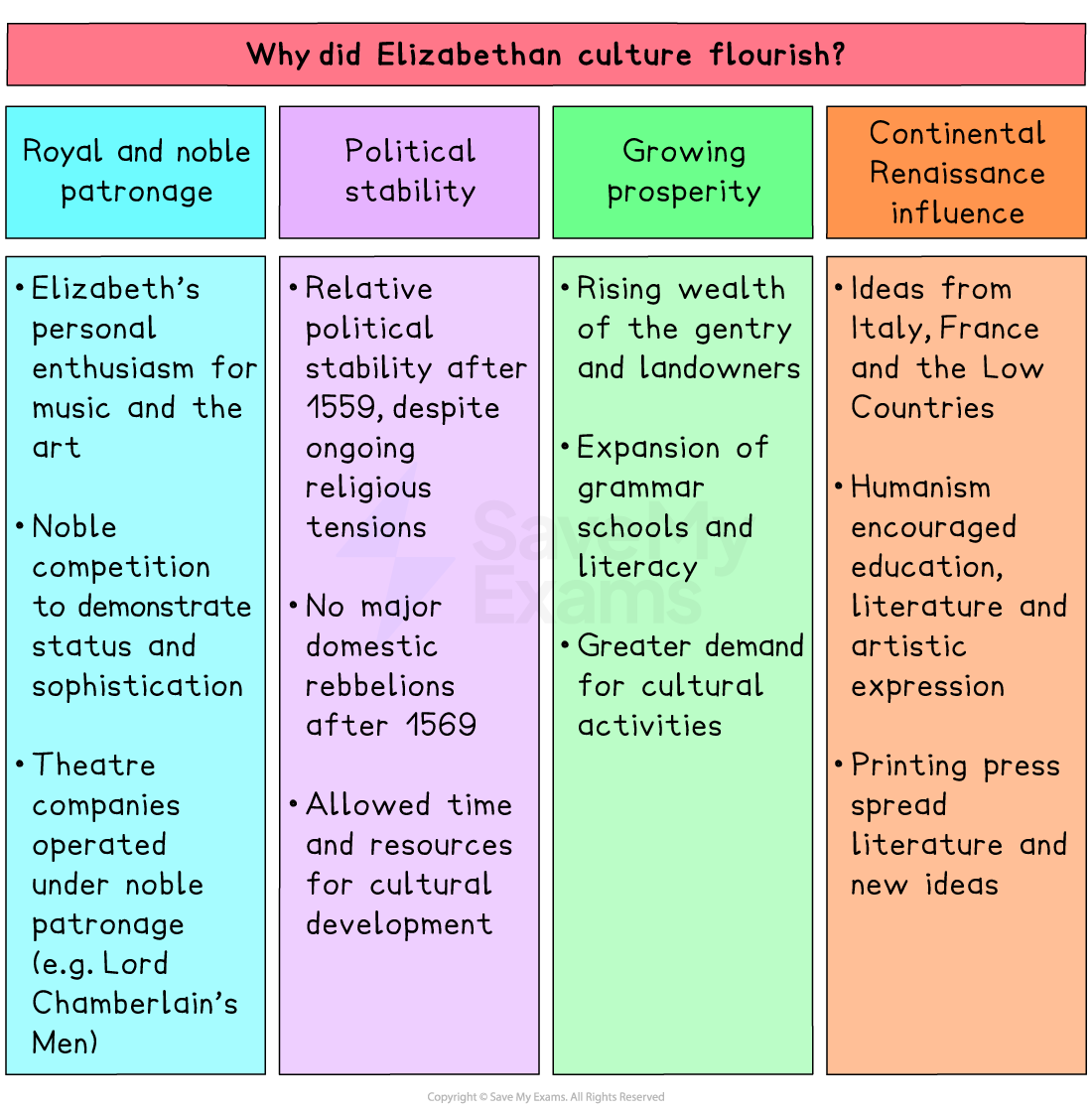
Royal and noble patronage
Elizabeth herself drove cultural investment at court
She was a skilled musician who played the virginals and the lute
She spoke six languages and was educated to a standard unusual even for the time
She spent over £1,500 per year on music and kept the Chapel Royal as a centre of musical excellence, employing a substantial number of instrumentalists
She had her own company of actors, The Queen's Men, established in 1583
Nobles competed to demonstrate cultural sophistication
Courtiers were encouraged to favour art, music, literature and the theatre
Robert Dudley, Earl of Leicester patronised his own theatre company, Leicester's Men, from 1559
By 1590, half of England's peers had town houses in London, concentrating wealth and cultural activity in the capital
Nobles who hosted Elizabeth during her annual summer progresses built or extended their houses to impress her
Political stability and growing prosperity
The reign provided relative stability after the upheavals of the mid-Tudor period
Edward VI's reign had brought rapid religious change and social tension
Mary I's reign brought more persecution, war and economic difficulty
Elizabeth's longer, more stable reign gave the gentry the confidence to invest in culture
The gentry grew in wealth and education throughout the reign
Approximately 136 to 150 grammar schools were founded during Elizabeth's reign
University attendance grew, and more members of the gentry and merchant classes could read, write and engage with literature
The dissolution of the monasteries had already distributed land and wealth to the gentry, giving them the resources to build houses and patronise culture
The European Renaissance and the printing press
Renaissance ideas had been filtering into England from the Continent since the early 16th century
Italian, French and Flemish influences shaped English architecture, music and portraiture
Protestants who had spent Mary's reign in exile on the Continent returned with new ideas
Pattern books brought continental architectural ideas to English builders without requiring travel
The printing press transformed the reach of literature and ideas
Plays, poetry, religious works and scholarly texts could now be printed and sold commercially
A growing literate audience meant there was a market for cultural production that had not previously existed
In 1575, Elizabeth granted Byrd and Tallis a monopoly on music printing
This helped make printed music commercially available on an unprecedented scale in England
Examiner Tips and Tricks
When explaining why culture flourished, try to show how these causes connected rather than listing them separately. Patronage depended on political stability, while growing gentry wealth helped sustain cultural investment; wealth depended partly on earlier Tudor policies. The ability to connect the causes will gain you higher marks.
Shakespeare, Marlowe & the Rise of Elizabethan Theatre
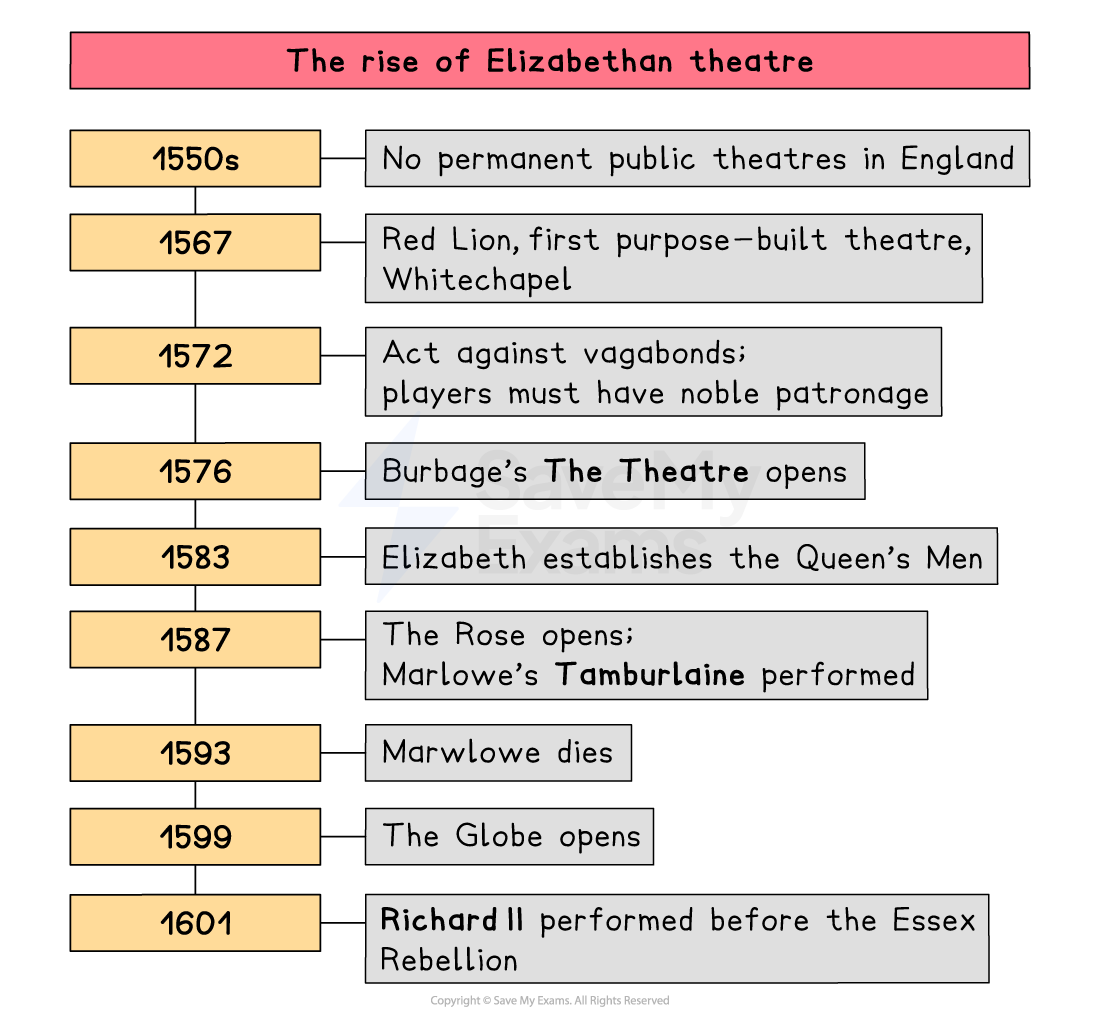
Theatre before the Elizabethan period
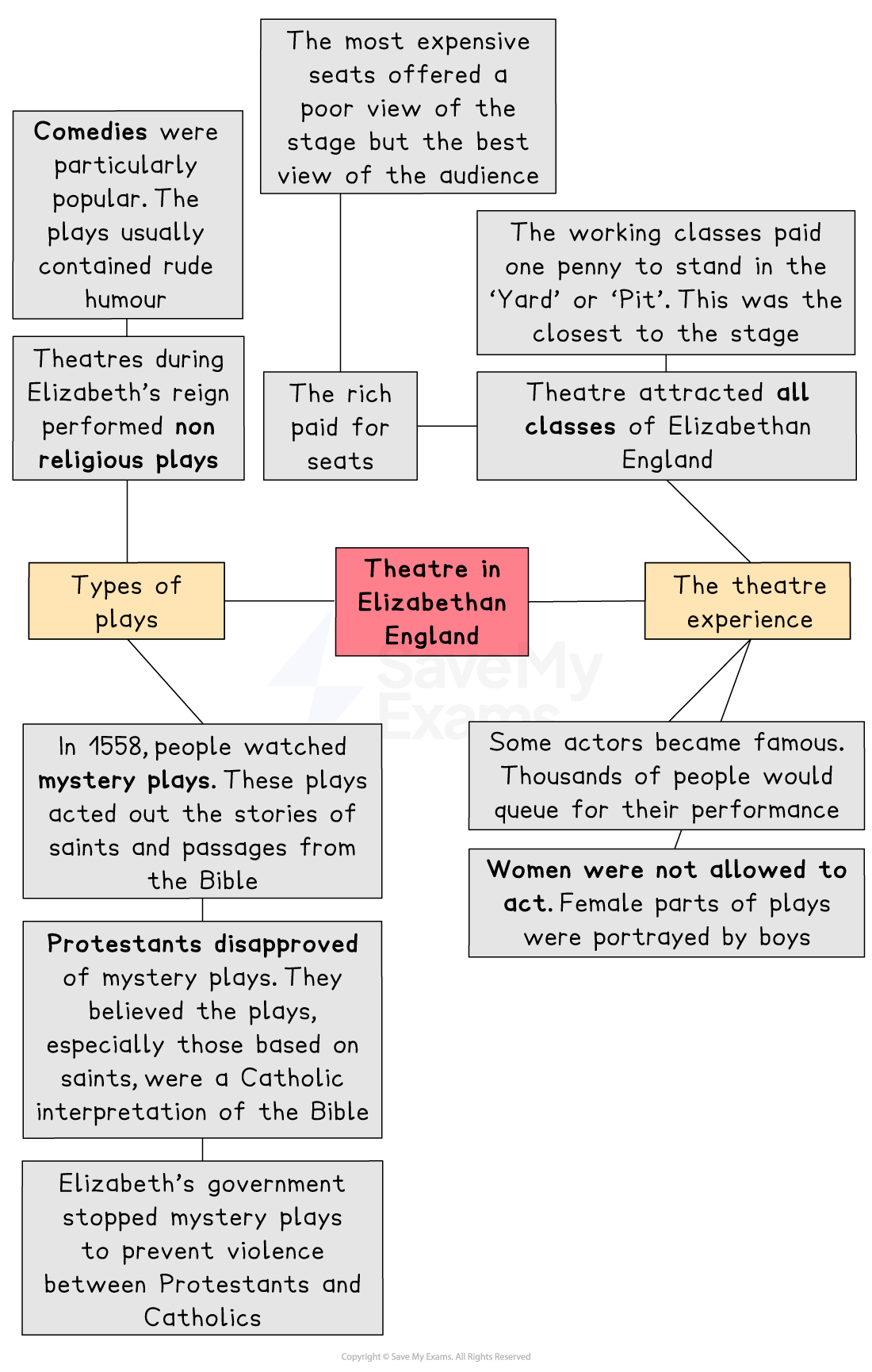
Before Elizabeth's reign, England had no permanent theatres
Actors travelled around and performed in open fields, inn courtyards or other temporary spaces
Actors were treated with suspicion and seen as socially suspect
The main dramatic form was the religious mystery play, which acted out Bible stories and saints' lives
Protestant reformers banned mystery plays as Catholic in character; this cleared space for secular drama to develop
The development of permanent theatres
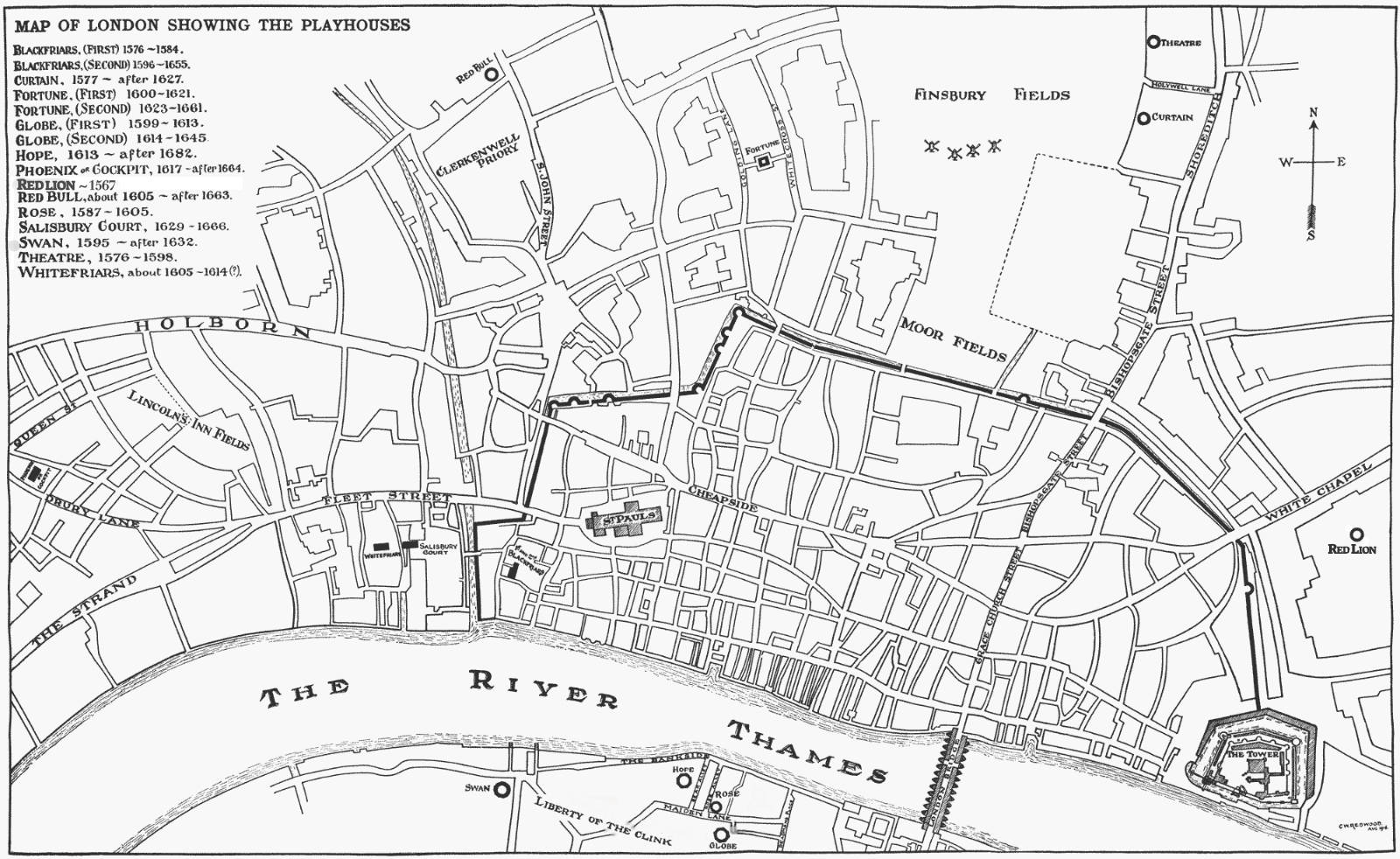
London permitted the building of permanent theatres in 1567
The Red Lion in Whitechapel (1567) is often considered the first purpose-built theatre in England
James Burbage's 'The Theatre' (1576) was the first major commercial theatre in London
The Rose (1587) and The Globe (1599) followed
The Globe was built using timbers from 'The Theatre', moved across the Thames to Bankside
Theatre attracted all sections of society
Working people paid one penny to stand in the yard in front of the stage
Wealthier audiences sat in the galleries
Theatre was one of the few forms of entertainment that genuinely crossed social boundaries
The government licensed and censored the theatre
From 1572,theatre companies required the patronage of a noble or royal licence to operate legally
A government official read and approved all play scripts before they could be performed
This gave the Crown control over what messages the theatre communicated
Christopher Marlowe (1564–1593)
Marlowe was the dominant playwright before Shakespeare
He pioneered blank verse drama in English, the form that Shakespeare then built upon
His most important plays were Tamburlaine the Great (1587), Doctor Faustus (c. 1592) and the Jew of Malta
He died in mysterious circumstances in 1593, possibly connected to his work as a government agent
Without Marlowe, Shakespeare's development may have been very different
William Shakespeare (1564–1616)
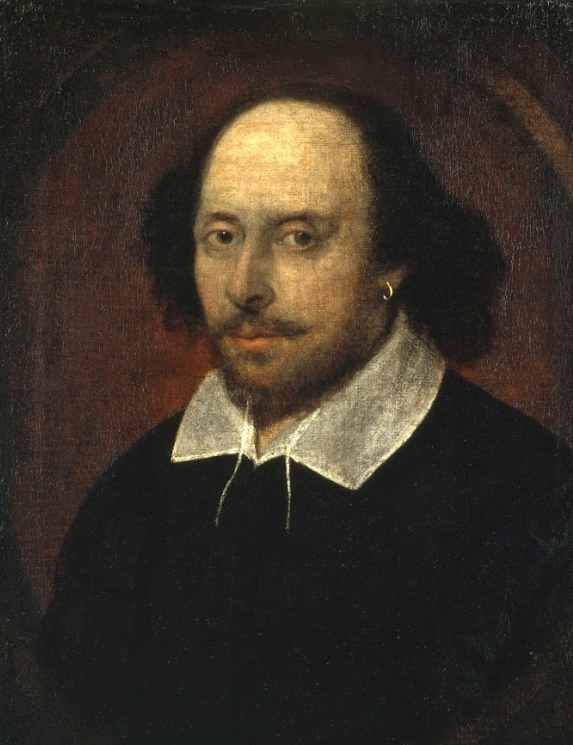
Shakespeare was the greatest playwright of the reign and one of the most celebrated writers in the English language
He wrote for the Lord Chamberlain's Men, whose plays were performed at The Globe from 1599
He wrote 38 plays in total: histories, comedies and tragedies
Shakespeare's history plays had a directly political function
Plays such as Richard II, Richard III and Henry V reinforced the Tudor view of history
They portrayed a strong monarchy as essential and disorder as catastrophic
They supported the Great Chain of Being
The idea that God had ordered society in a hierarchy that must be maintained
Shakespeare and Elizabeth had a direct connection
The Lord Chamberlain's Men performed Twelfth Night at court one Christmas
A later tradition claimed Elizabeth requested The Merry Wives of Windsor because she wanted to see Falstaff in love
Theatre as propaganda and opposition
The theatre's popularity made it a powerful tool of political communication
It could spread the monarchy's message to thousands of people who could not read
Government censorship aimed to ensure plays did not openly undermine the regime
The theatre also faced serious opposition
Puritans saw theatre as sinful, immoral and a distraction from godly living
The Lord Mayor of London repeatedly petitioned the Privy Council to limit or ban theatre in the city
“Plays give opportunities to the ungodly people that are within this city to assemble themselves. They are places for vagrant persons, masterless men, thieves, horse-stealers, whoremongers and other idle and dangerous persons to meet together. They also draw apprentices from their ordinary work to the great hindrance of trade. In time of sickness it is found by experience that many, having sores but not yet sick, take occasion for recreation by hearing a play, whereby others are infected.”
Lord Mayor of London, letter to the Privy Council, July 1597
The Lord Mayor frames his objection in terms of public order and public health rather than morality alone. His letter shows how the theatre had become a flashpoint in a broader argument about social control in London, helps explain why the government ultimately chose to regulate rather than ban the theatre
However, the Privy Council sided with Elizabeth in supporting the theatre
“It is considered that the use of such plays, not being an evil in itself, may with good order and moderation be suffered in a well-governed state. As Her Majesty is pleased at some times to take delight and recreation in the sight and sharing of them.”
Privy Council ruling on the theatre, 1600
The Privy Council’s ruling reflects Elizabeth’s personal endorsement of theatre. By framing it as acceptable "with good order and moderation", the Council preserved government control over the theatre while overruling the Lord Mayor’s objections. The reference to the queen’s own enjoyment shows how royal patronage effectively protected an entire art form.
The Richard II episode of 1601 showed the political edge of theatre
The Lord Chamberlain's Men were persuaded to perform Richard II the day before the Essex Rebellion
The play featured the deposing of a king, which the rebels hoped would inspire Londoners to revolt
It failed: the crowd did not rise, and Essex was defeated
See the Factional rivalries and the Essex Rebellion revision notes for further information
Examiner Tips and Tricks
The theatre section works well for exam answers because it has so many different angles: cultural achievement; political propaganda; social tension between Crown and city authorities; and the limits of the Golden Age (Puritan opposition and the censorship of plays). All of these are worth drawing on depending on the question.
Elizabethan Music: Byrd, Tallis & the Madrigal
Music at court and in the Church
Music flourished, particularly at court, where Elizabeth's personal enthusiasm drove investment
Elizabeth played the virginals (an early keyboard instrument) and the lute
The Chapel Royal employed a substantial number of instrumentalists and a choir of gentlemen and children
Church music in the cathedrals also thrived despite the changes brought by the Reformation
Courtiers were expected to be able to sing and play instruments as a mark of education and sophistication
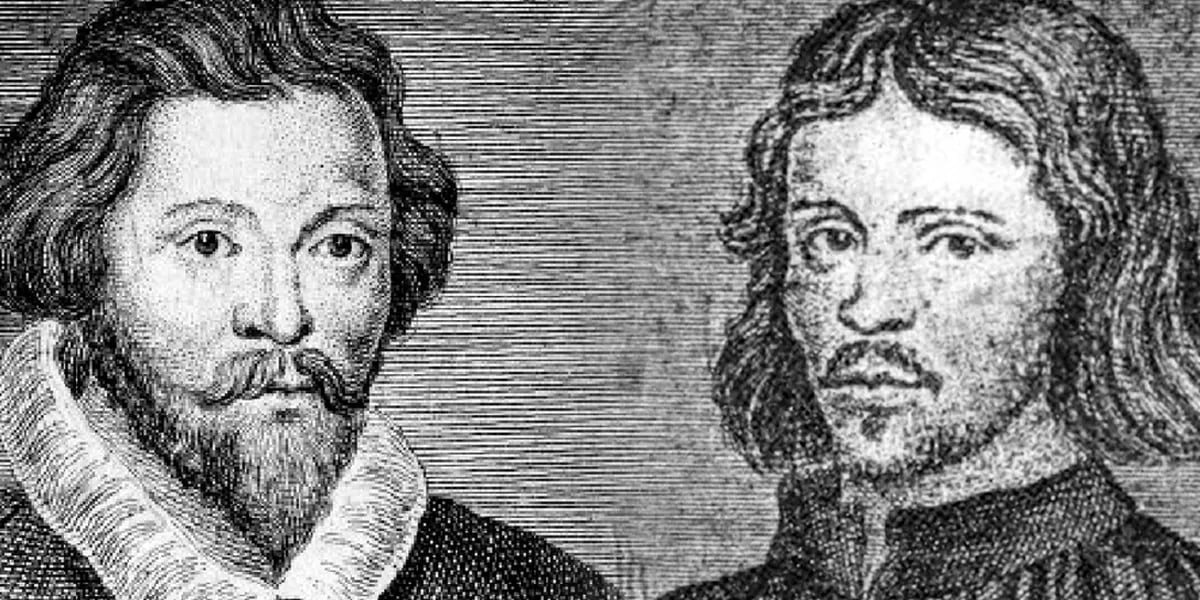
Thomas Tallis (c. 1505–1585)
Tallis was one of the greatest composers of the Tudor period
He composed sacred music for both Catholic and Protestant worship across four reigns
He navigated the religious changes of Henry VIII, Edward VI, Mary I and Elizabeth with remarkable skill
In 1575, Elizabeth granted Tallis and Byrd a joint 21-year monopoly on printing and publishing music in England
This was a mark of enormous royal favour and made their music commercially dominant
William Byrd (1543–1623)
Byrd was one of the greatest composers of the Elizabethan period
He was a Catholic who somehow maintained royal favour despite the penal legislation against Catholics
He composed Anglican music for his official duties at the Chapel Royal
He also composed Catholic music for private Catholic worship, which was technically illegal
His career shows how exceptional talent could secure protection even in a hostile religious climate
He shared the 1575 printing monopoly with Tallis
The madrigal
The madrigal was the most fashionable musical form of the reign
A madrigal is a secular part-song for several voices, usually on secular or romantic themes
The form came from Italy and became fashionable in England from the 1580s onwards
It combined musical sophistication with a kind of courtly flattery Elizabeth enjoyed
Thomas Morley's The Triumph of Oriana (1601) was the defining madrigal collection of the reign
It was a collection of 25 madrigals by different composers, all in honour of Elizabeth
Every song ended with the same line: "Long live fair Oriana"
Oriana was a poetic name for Elizabeth, associating her with mythological beauty and virtue
The collection shows how music was woven directly into the Cult of Gloriana
Other important composers of the reign:
John Dowland: a leading lutenist famous for melancholic songs and instrumental works
Orlando Gibbons: a younger composer whose career extended into the Stuart period
Thomas Morley: madrigal composer and author of A Plaine and Easie Introduction to Practicall Musicke (1597)
Examiner Tips and Tricks
The music section is worth knowing in detail, as many students often neglect it. Byrd’s Catholicism alongside his royal favour is a genuinely interesting historical puzzle. The Triumph of Oriana connecting music directly to the Cult of Gloriana is a good example of how different aspects of the Golden Age connected.
Elizabethan Art: The Cult of Gloriana & Miniature Portraits
The Cult of Gloriana
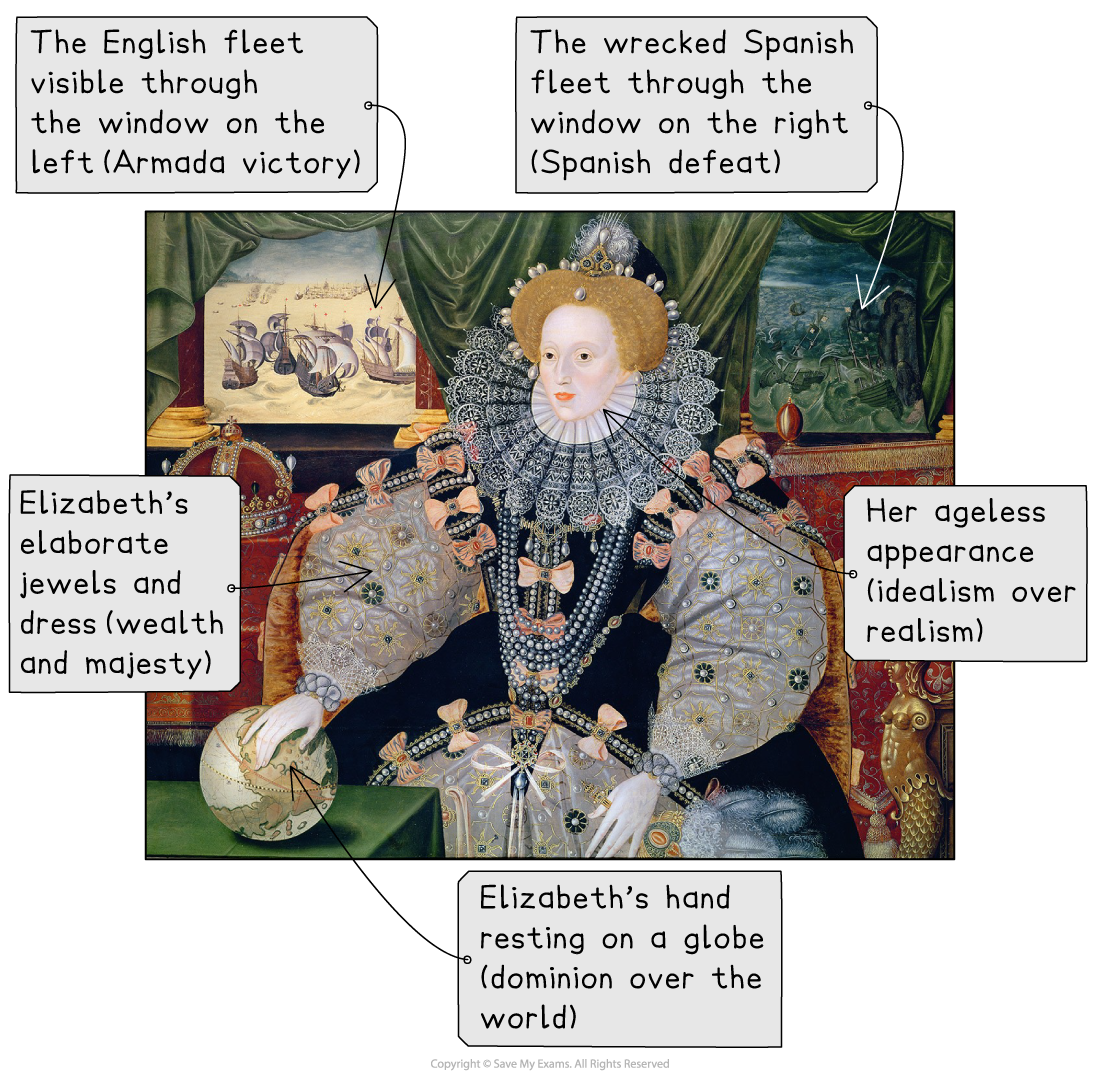
Elizabeth was portrayed through an elaborate and carefully controlled system of royal imagery
The aim was to project an image of timeless power, divine favour and virginal authority
Portraits were political propaganda as much as they were works of art
Elizabeth and her government tightly controlled how she was depicted:
She remained young (aging was never shown)
Formal and idealised images were required
Gloriana, Oriana, the Virgin Queen, Good Queen Bess: these were all nicknames that contributed to the royal image
Common symbols used in Elizabethan royal portraits include:
Ermine fur: royalty and purity
Pearls: virginity
The Tudor Rose: England's dynasty
A globe: power over the world
Eyes and ears embroidered on her gown: ceaseless vigilance over her people
An ageless face: timeless authority, not subject to the decay of ordinary mortals
Key portraits
Portrait | Key features and significance |
|---|---|
Armada Portrait (c. 1588) |
|
Ditchley Portrait (c. 1592) |
|
Rainbow Portrait (c. 1600–1602) |
|
Nicholas Hilliard and miniature portraits
Nicholas Hilliard (1547–1619) was the most important English painter of the reign
He was appointed as Elizabeth's personal miniature painter and goldsmith
Miniatures were small, jewel-like portraits, typically a few centimetres across, set in decorated cases
They were intimate objects given as personal gifts to favourites, allies and close friends
This made them politically significant as well as artistic: receiving a miniature of the queen was a mark of royal favour
Hilliard also painted Leicester, Drake, Raleigh and other prominent courtiers
Portrait painting served the regime as much as it celebrated individual subjects
No portrait of aging Elizabeth was permitted
The image of timeless beauty was maintained to the end
The portraits circulated widely, carrying England's royal imagery to foreign courts and English households alike
Examiner Tips and Tricks
The Cult of Gloriana is one of the most distinctive features of Elizabethan England and, due to this, frequently comes up in both source and essay questions. When writing about portraits, try to be specific about what the symbols meant, rather than just listing them. Connecting the imagery to Elizabeth's political situation, her gender and her religious position is more important that simply describing the picture.
Architecture: Prodigy Houses & the Country House
What were prodigy houses?
Prodigy houses were enormous country houses built by the nobility and gentry to impress Elizabeth
The term was coined by the architectural historian John Summerson
They were built specifically for Elizabeth's annual summer progresses, when she toured the country, staying with nobles
Hosting the queen and her court was enormously expensive; the house had to be worthy of the occasion
Building such a house signalled loyalty, wealth and ambition all at once
Prodigy houses reflected Continental Renaissance influences
Italian, French and Flemish architectural ideas shaped their design
Renaissance architecture emphasised symmetry, classical proportions and large windows to let in light
This was a deliberate break from the defensive design of medieval castles; architecture shifted from fortification to display
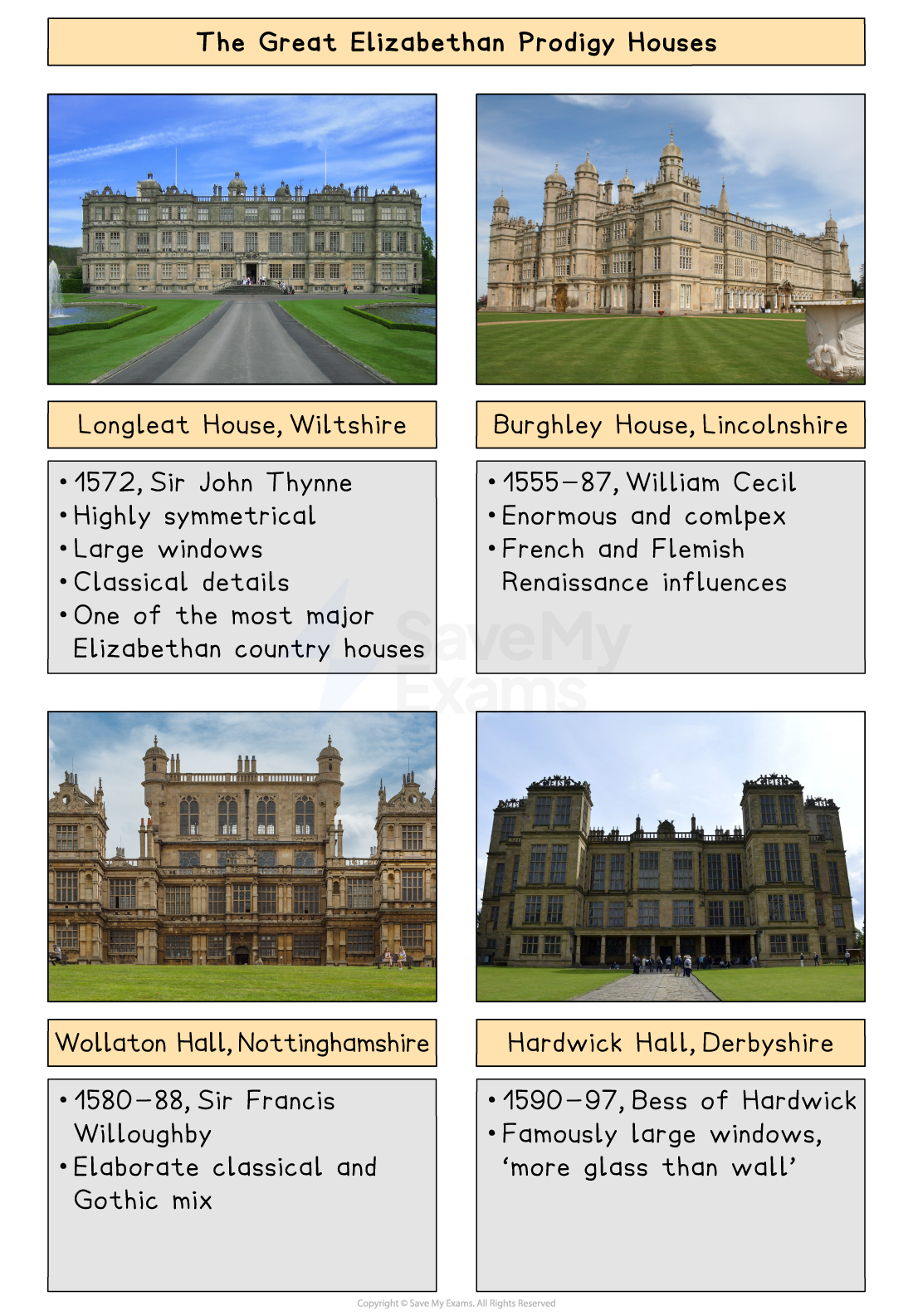
Key examples of Prodigy houses
House | Key features |
|---|---|
Longleat House, Wiltshire (1572) |
|
Burghley House, Lincolnshire (1555–1587) |
|
Wollaton Hall, Nottinghamshire (1580–1588) |
|
Hardwick Hall, Derbyshire (1590–1597) |
|
Why did architecture flourish?
Several factors drove the Elizabethan building boom
Peace and political stability gave the gentry both the money and the confidence to build
Elizabeth's progresses created a direct incentive
A royal visit required a house that could accommodate the queen and her court
The dissolution of the monasteries had given the gentry access to building materials as well as land
Continental pattern books brought Renaissance architectural ideas to English builders
The grammar schools produced an educated gentry who valued learning and display
The building boom extended beyond the great houses
Grammar schools, market halls and almshouses were also built in large numbers
Around 136 to 150 grammar schools were founded during the reign
Architecture expressed education, status and loyalty to the Crown at every level of the gentry
Examiner Tips and Tricks
Prodigy houses can be used in two different ways in an answer. They are evidence for the Golden Age as a cultural achievement. But they are also evidence of the political function of culture: they were built to impress Elizabeth and demonstrate loyalty for her progresses, not simply for the love of art. The absence of internal noble conflict after the Wars of the Roses gave the elite confidence to invest in display rather than defence.
How Far Did England Experience a Cultural "Golden Age"?
Use the specific evidence to build and support your argument
The case that England did experience a genuine "Golden Age"
Theatre developed from nothing into a world-class art form within a single generation
England had no permanent theatres in 1558; by 1599, it had The Globe and a thriving commercial theatre culture
Shakespeare and Marlowe produced work of permanent international significance
Music reached a level of sophistication that was admired across Europe
Byrd and Tallis are still regarded as among the greatest composers in the history of sacred music
The madrigal tradition produced collections of genuine artistic quality
Architecture produced lasting masterpieces
Hardwick Hall, Longleat, Burghley House and Wollaton Hall are still admired and visited today
They represent a genuine leap in the ambition and scale of English building
The spread of literacy and education created a larger audience for culture than at any previous point
The grammar schools, printing press and growing gentry class made cultural production commercially viable
Literature and music reached audiences far beyond the court for the first time
The case that the "Golden Age" was limited or overstated
Cultural flourishing was largely confined to the court and the wealthy gentry
Ordinary people had very limited access to portraiture, prodigy houses or the madrigal tradition
Theatre was the main exception, but even that was centred on London
Much of the cultural output served a political function rather than reflecting genuine freedom
Portraits were propaganda that never allowed Elizabeth to age
Shakespeare’s history plays reinforced the Tudor political order
The madrigal collection The Triumph of Oriana was flattery as much as art
Government censorship shaped what theatre companies could perform
The "Golden Age" concealed serious social problems
Harvest failures, rising poverty, plague and food riots marked the 1590s
See the Society: Continuity, Change and Rebellion revision notes and the Economy: Prosperity and Depression revision notes for full detail
The cultural flourishing was concentrated in the later reign, not the whole period
The great theatrical, musical and architectural achievements came mainly from the 1580s and 1590s
The first two decades of the reign were less obviously a cultural golden age
Key historian
S. Brigden, New Worlds, Lost Worlds: The Rule of the Tudors, 1485–1603 (2000) |
|
|---|
Examiner Tips and Tricks
The key question invites you to challenge the idea of a Golden Age as much as to describe it. The strongest answers will define what a Golden Age would mean, examine whether the evidence supports that definition, then qualify the answer. Brigden is useful because she shows how the court was the centre of cultural life, but that the cultural life of the court was deeply political.

Unlock more, it's free!
Join the 100,000+ Students that ❤️ Save My Exams
the (exam) results speak for themselves:

Was this revision note helpful?