Biological Drawings (Cambridge (CIE) IGCSE Biology): Revision Note
Exam code: 0610 & 0970

Biological drawing rules
A biological drawing is a record of what you can actually see, not an artistic impression
There are specific rules associated with biological drawings; you should always:
draw with a sharp pencil, so lines are thin and can be easily corrected
draw single, continuous lines, not broken, sketchy or overlapping lines
draw smooth outlines that follow the shape of the specimen
draw only what is visible
avoid shading, cross-hatching or colour
use double lines where a structure has two edges, e.g. a vein or a cell wall
Examiner reports show that students lose marks by:
adding shading or texture, so the drawing looks like an artistic impression
drawing a broken outline
using a ruler to draw part of the specimen, such as the midrib of a leaf
Proportions & use of space
Your drawing should use most of the space provided, because a small drawing cannot show enough detail
Plan the size before you start, so that the drawing does not run into the printed text or off the page
The proportions within the drawing must match the specimen
If one part is twice as wide as another in the specimen, it must be twice as wide in your drawing
Look carefully at where boundaries between tissues fall before drawing them
Examiner reports show that students lose marks by:
making the drawing so large that it crosses into the text of the question
not drawing the exact shape of the tissue layers
Examiner Tips and Tricks
Before you draw anything, put a faint pencil dot at the top, bottom, left and right of where your drawing will reach. This helps you avoid a drawing that is far too small, or one that runs off the page.
Adding labels & label lines
When labelling a biological drawing you should:
draw label lines with a ruler
ensure that each label line touches the structure being labelled
ensure that label lines do not have arrowheads
avoid drawing label lines that cross each other
write labels horizontally, outside the drawing, not on top of it
use the correct biological terms for the structures

Examiner reports show that students lose marks by:
drawing label lines that stop short of the structure
adding arrowheads to label lines
How to calculate the magnification of a drawing
You may be asked to calculate either:
the magnification of your own drawing
the actual size of a structure in it
magnification = image size ÷ actual size
actual size = image size ÷ magnification
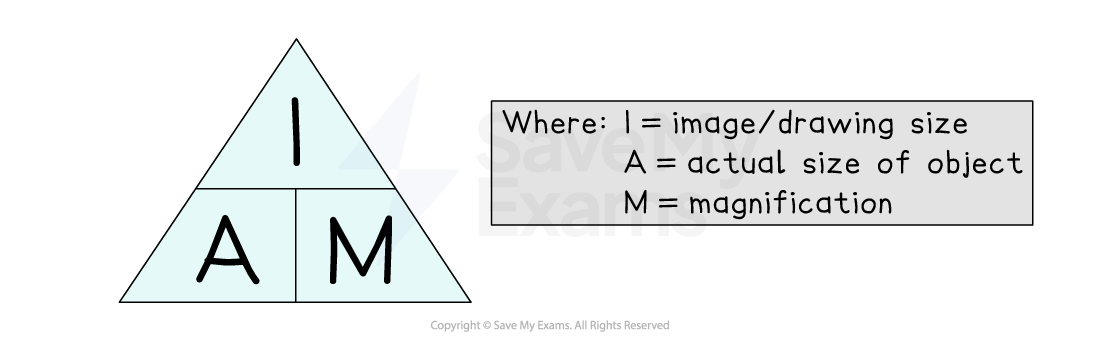
Calculate the magnification of a drawing as follows:
Measure the required length on the drawing using a ruler
Measure in millimetres unless the question tells you otherwise
Convert both measurements to the same unit
Multiply by 1000 to convert millimetres to micrometres
Write down the formula and substitute your values
Use the formula to calculate the magnification
Remember that magnification has no unit, so you should write, e.g. ×1500
Check the question to ensure that you have rounded correctly
Read more about the magnification formula

Unlock more, it's free!
Join the 100,000+ Students that ❤️ Save My Exams
the (exam) results speak for themselves:

Was this revision note helpful?