Ethical Issues in Marketing (AQA A Level Business): Exam Questions

Exam code: 7132

Syllabus Edition

First teaching 2026

First exams 2028

2 hours15 questions
1
6 marks

Source B: Brompton Bicycle Ltd

Brompton Bicycle Limited makes folding bicycles. Andrew Ritchie designed the first one in 1975 and built it in a workshop under a railway arch, and the company was registered the following year. Fifty years on, every Brompton is still made by hand and quality checked at the company's own factory in Greenford, west London. It is a private limited company with around 100 shareholders and is led by chief executive Will Butler-Adams, who joined the company in 2002 and has led it since 2008.

In principle the product has barely changed. A Brompton folds into a small package in under 20 seconds, so an owner can carry it onto a train, put it in a car boot or tuck it under a restaurant table. The range now includes electric, lightweight titanium and larger-wheel models. Brompton describes its purpose as creating urban freedom for happier lives, and it sells durability as part of the deal. Every frame carries a seven-year warranty, the bikes are designed to be repaired rather than replaced, and there are now more than a million Brompton owners and over 300 owners' groups around the world.

The year to 31 March 2025 was harder than usual. Turnover slipped by 0.9% to £121.45 million, the workforce fell by 54 people to 790, and cash at the bank almost halved. Over the same year the company's total liabilities rose by 53.5%.

Brompton would like to invest £15 million in its factory so that it can build more bikes at a lower cost per bike. It does not hold enough cash to pay for this out of its own resources. It could borrow the money from a bank, or it could ask its existing shareholders to buy new shares.

Source: information sourced from Companies House and Brompton Bicycle Ltd, 2026

Brompton Bicycle Ltd designs its bikes to be repaired rather than replaced.

Analyse one way in which designing for repair might affect the price Brompton Bicycle Ltd is able to charge.

2
6 marks

Source A: Good Energy Group plc

Good Energy Group plc sells electricity and gas to homes and businesses, and it installs solar panels, heat pumps and batteries. It is a public limited company and its shares are traded on AIM.

The electricity it sells is bought from a community of more than 2 500 independent renewable generators, many of them small: wind turbines, solar farms and hydro schemes. Good Energy is an accredited B Corp, the only domestic energy supplier in the United Kingdom to hold that certification, with an impact score of 118.5. B Corp certification is awarded to companies that meet standards on social and environmental performance, and it has to be re-earned.

The year to 31 December 2024 looked strange on the face of it. Revenue fell 29.3% to £180.07 million, down from £254.7 million. Profit before tax rose 16.0% to £6.59 million, and profit after tax rose 64.9% to £4.75 million. The company took less money and kept more of it.

The explanation lies outside the business. Wholesale energy prices rose sharply after Russia's invasion of Ukraine and then fell back, and the Ofgem price cap on what a domestic supplier may charge followed them up and down. Appendix B shows the cap. When the price a supplier charges falls, its revenue falls with it, even if it is serving exactly the same customers.

The company is also changing what it does. During the year it bought JPS, which installs heat, solar and storage across southern England, and it completed the acquisition of Amelio Enterprises Limited. Installing equipment is a different business from supplying energy: it is a one-off sale rather than a monthly bill, and it is not capped by Ofgem.

One thing sits awkwardly alongside the B Corp badge. Good Energy also sells gas, which is a fossil fuel, to customers who have gas boilers. It cannot make gas renewable in the way it can make electricity renewable, and every gas customer it keeps is a household it is not selling a heat pump to.

Source: information sourced from Good Energy Group plc results for the year ended 31 December 2024

Good Energy Group plc is the only domestic energy supplier in the United Kingdom accredited as a B Corp.

Analyse one way in which holding B Corp accreditation might affect the number of customers Good Energy Group plc attracts.

3
6 marks

Source A: Dr. Martens plc

Dr. Martens plc designs and sells boots, shoes and accessories. The footwear is what the brand is known for, but it also sells bags, belts, socks and shoe care products alongside it. It is a public limited company listed in London, and it sells in more than 60 countries through its own shops, its own website and wholesale customers such as department stores and independent retailers.

Almost everything the brand is worth rests on two ideas. The first is where it comes from: the company began in Northamptonshire and still makes its Made in England range at the Cobbs Lane factory in Wollaston. The great majority of its boots are not made there. They are made in Asia, and the Made in England range costs a good deal more than the standard one. The second idea is that the boots last. Customers are told they are buying something they will still be wearing in ten years, and that promise is why many of them accept the price.

The year to 30 March 2025 was the second difficult one in a row. Revenue fell 10.2% to £787.6 million, from £877.1 million. At constant exchange rates, which strips out the effect of the pound moving against other currencies, the fall was 8.2%. It was not the same everywhere: revenue fell 11.0% in EMEA, 11.4% in the Americas and 3.8% in Asia Pacific, and on a constant currency basis Asia Pacific actually rose 0.6%, helped by Japan and China.

Nor was it the same in every channel. Selling direct to the customer, through Dr. Martens plc's own 239 shops and its website, was down 4%. Selling wholesale, to other retailers, was down 19.5%.

Profit fell much further than revenue. Adjusted profit before tax was £34.1 million against £97.2 million the year before. Reported profit before tax was £8.8 million.

The company spent the year fixing what it could control. It took £25 million a year out of its costs, cut its inventory by £67 million and reduced its net debt, excluding leases, by £83 million. It also says it has reset its marketing so that it talks about the product rather than the brand around it.

Source: information sourced from Dr. Martens plc preliminary results for the 52 weeks ended 30 March 2025

Dr. Martens plc's marketing rests on the brand's British origins, but the great majority of its boots are made in Asia. Only its Made in England range is produced at the Cobbs Lane factory in Northamptonshire.

Analyse one way in which this might affect the trust customers place in Dr. Martens plc.

4
6 marks

Source A: Moonpig Group plc

Moonpig Group plc sells greeting cards, gifts and experience days online. It has no shops. The group owns the Moonpig brand in the UK, Greetz in the Netherlands, and Buyagift and Red Letter Days, which sell experience days such as spa breaks and driving days. It is a public limited company listed in London.

The business runs on knowing when a customer's friends and family have birthdays. A customer who sends one card gives Moonpig Group plc a name and a date, and the company then reminds them when that date comes round again. Around that reminder it offers a gift to send with the card, which is where much of the growth now comes from. It also sells a paid membership called Plus, and during the year it launched tools that use artificial intelligence to help customers write and design cards.

In the year to 30 April 2025 revenue was £350.1 million, 2.6% up on the year before. That figure hides three very different businesses. The Moonpig brand grew 8.6%, and its revenue in the United States, Australia and Ireland grew 36.1% between them. Greetz fell 4.7%. The Experiences business was difficult enough that the group wrote £56.7 million off the value of it.

Underneath, the numbers the company watches most closely moved the right way. Active customers across Moonpig and Greetz reached 12.0 million, up from 11.5 million. Total orders grew 4.1% and the average order value grew 2.1%.

Profit depends entirely on which figure is read. Adjusted profit before tax, which leaves out the write-off, was £67.5 million against £58.2 million, a rise of 16.0%. Reported profit before tax, which includes it, was £3.0 million against £46.4 million, a fall of 93.6%. Free cash flow was £66.1 million, and the company bought back £25 million of its own shares during the second half.

Source: information sourced from Moonpig Group plc results announcement for the year ended 30 April 2025

Moonpig Group plc reminds customers when a friend or family member's birthday is coming, using dates those customers gave it when they sent an earlier card.

Analyse one way in which using customers' own information in this way might affect how much those customers trust Moonpig Group plc.

5
6 marks

Source A: PZ Cussons plc

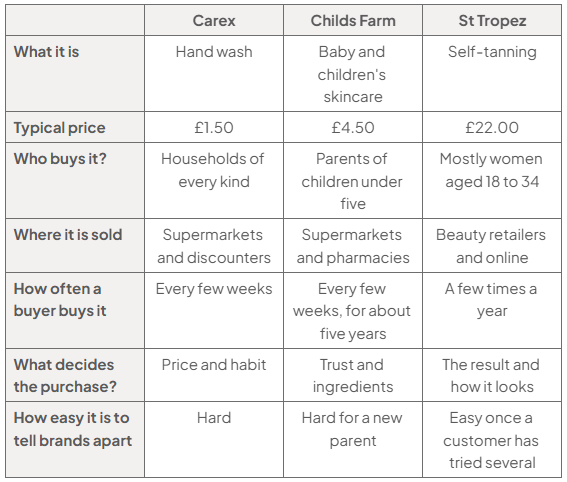
PZ Cussons plc owns personal care and beauty brands. In the United Kingdom it owns Carex, the best-selling hand wash, Original Source, Imperial Leather, Childs Farm, which is made for babies and children, and St Tropez, which is self-tanning. It does not own shops: its products reach customers through supermarkets, pharmacies, discounters and beauty retailers. It is a public limited company listed in London.

Much of the business is not in Britain at all. PZ Cussons plc has sold in Nigeria for more than a century and manufactures there, and it also sells across Asia Pacific. That reach is the source of both its growth and its biggest problem.

In the year to 31 May 2025 like-for-like revenue, which strips out the effect of currency changes, grew 8.0%, mostly because of price rises in Nigeria, where the volume sold fell. Reported revenue, which is what the accounts say, fell 2.7% to £513.8 million from £527.9 million. The difference is the Nigerian naira. The currency was stable through the year, but it averaged 38% below where it had been the year before, so every naira of Nigerian sales turned into far fewer pounds.

Adjusted operating profit was £54.9 million against £58.3 million, and the operating margin slipped to 10.7% from 11.0%.

The UK brands did not all pull the same way. Carex grew both its revenue and its gross margin, and held its position as the largest hand wash brand. St Tropez had a difficult year: its revenue fell by a double-digit percentage, reflecting weak demand for self-tan in the United States, while like-for-like revenue in Europe and the Americas grew only 0.6%. The company considered what to do with St Tropez and decided to keep it, saying it would give the brand a new direction.

Source: information sourced from PZ Cussons plc preliminary results for the year ended 31 May 2025

Appendix C: Three PZ Cussons plc brands, analyst estimates

Table comparing three brands by product, price, buyers, retailers, buying frequency, purchase influences and distinctiveness. Childs Farm is £4.50, bought by parents of under-fives every few weeks for about five years; trust and ingredients matter.

Source: Analyst

PZ Cussons plc's Childs Farm brand is made to be used on babies and young children.

Analyse one way in which selling a product for use on babies might affect the claims PZ Cussons plc is able to make when it advertises it.

6
6 marks

Source A: Loomfield Home Ltd

Loomfield Home Ltd sells bedding, towels and throws online. It has no shops. It is a private limited company founded by Esi Boateng, it employs 23 people and it works from a warehouse in Bristol.

Everything it sells is made from organic or recycled cotton, and that is what the business is built on. Its packaging carries the words "carbon neutral", which the company can say because it buys offsets to match the emissions of its deliveries, rather than because those deliveries produce no emissions. Nothing about the claim is untrue, and Esi Boateng has begun to wonder how long it will be before a customer asks her to explain the difference.

The website does something else she is less comfortable with. When a product is running low the page shows how many are left, and the number is real. What is not obvious to a customer is that the message appears whenever inventory falls below twenty, which for most lines is most of the time.

Last year Loomfield Home Ltd took £6.4 million, of which £5.6 million was in the United Kingdom, £0.5 million in Germany and £0.3 million in France. Both European markets are sold through the same website in the local language, with delivery from Bristol.

The company spends most of its marketing money on getting people to the website, and it has been successful at it. Since 2021 the number of visits has more than doubled. The number of orders has not.

Loomfield Home Ltd's packaging says "carbon neutral". The company can say this because it buys offsets to match the emissions of its deliveries, not because those deliveries produce no emissions.

Analyse one way in which making a claim of this kind might affect the trust customers place in Loomfield Home Ltd.

7
6 marks

Source A: Nine Acres Kitchen Ltd

Nine Acres Kitchen Ltd delivers meal kits: a box of measured ingredients and a recipe card for each meal. It is a private limited company founded by Dan Ferreira and Aisha Nkemelu, it employs 210 people across a packing site in Northamptonshire and an office in Manchester, and it has 12 600 active subscribers.

A subscriber chooses their meals on an app each week. The standard box costs £48.99 and the average subscriber takes two a month, which gives revenue of £14.8 million a year. Ingredients, packing and delivery cost £31.20 a box.

Getting people to try it is not the problem. The first box costs £14.99, and the offer works: the company recruits about 1 400 new subscribers a month. Keeping them is a different matter. Appendix B shows what happens to every hundred people who join. By the fourth box, the third charged at the full £48.99, 41 of them have gone.

The company knows a great deal about all of this. The app records what each subscriber cooks, what they skip, when they pause and what they were looking at before they cancelled. Dan Ferreira wants to use it to work out who is about to leave so the company can offer them something. Aisha Nkemelu wants to use it to suggest what they might cook next, on the grounds that people who enjoy the food do not cancel.

There is a third thing neither of them has raised at a board meeting. Starting a subscription takes about two minutes on the app. Cancelling one requires a telephone call, on weekdays between nine and five.

Starting a Nine Acres Kitchen Ltd subscription takes about two minutes on the app. Cancelling one requires a telephone call on a weekday between nine and five.

Analyse one way in which this difference might affect what customers think of Nine Acres Kitchen Ltd.

1
9 marks

Source A: Good Energy Group plc

Good Energy Group plc sells electricity and gas to homes and businesses, and it installs solar panels, heat pumps and batteries. It is a public limited company and its shares are traded on AIM.

The electricity it sells is bought from a community of more than 2 500 independent renewable generators, many of them small: wind turbines, solar farms and hydro schemes. Good Energy is an accredited B Corp, the only domestic energy supplier in the United Kingdom to hold that certification, with an impact score of 118.5. B Corp certification is awarded to companies that meet standards on social and environmental performance, and it has to be re-earned.

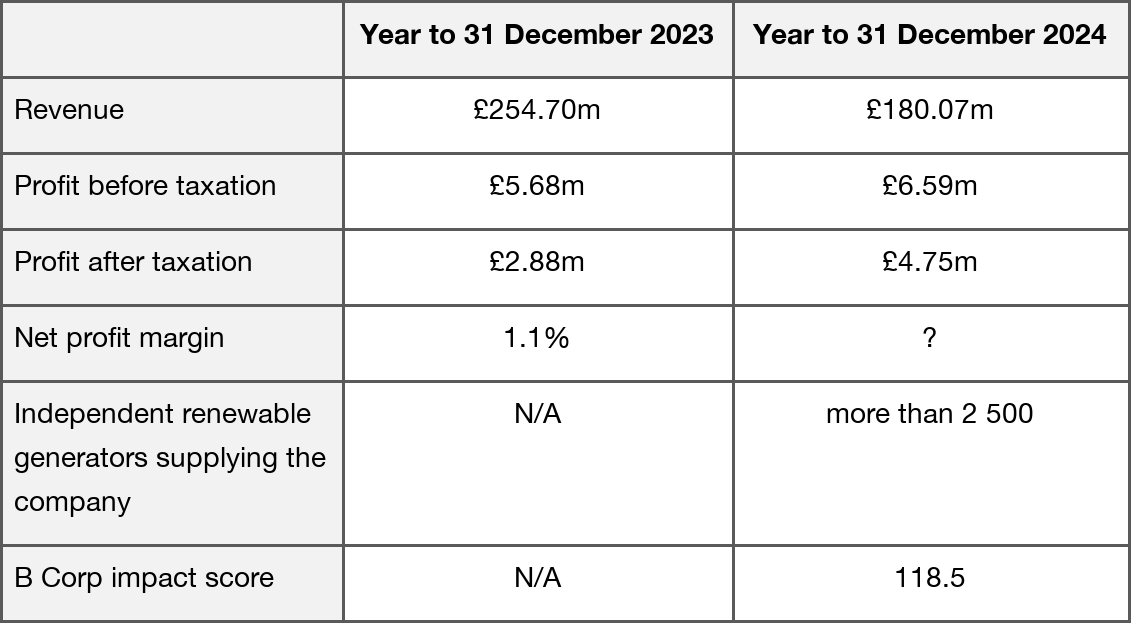
The year to 31 December 2024 looked strange on the face of it. Revenue fell 29.3% to £180.07 million, down from £254.7 million. Profit before tax rose 16.0% to £6.59 million, and profit after tax rose 64.9% to £4.75 million. The company took less money and kept more of it.

The explanation lies outside the business. Wholesale energy prices rose sharply after Russia's invasion of Ukraine and then fell back, and the Ofgem price cap on what a domestic supplier may charge followed them up and down. Appendix B shows the cap. When the price a supplier charges falls, its revenue falls with it, even if it is serving exactly the same customers.

The company is also changing what it does. During the year it bought JPS, which installs heat, solar and storage across southern England, and it completed the acquisition of Amelio Enterprises Limited. Installing equipment is a different business from supplying energy: it is a one-off sale rather than a monthly bill, and it is not capped by Ofgem.

One thing sits awkwardly alongside the B Corp badge. Good Energy also sells gas, which is a fossil fuel, to customers who have gas boilers. It cannot make gas renewable in the way it can make electricity renewable, and every gas customer it keeps is a household it is not selling a heat pump to.

Source: information sourced from Good Energy Group plc results for the year ended 31 December 2024

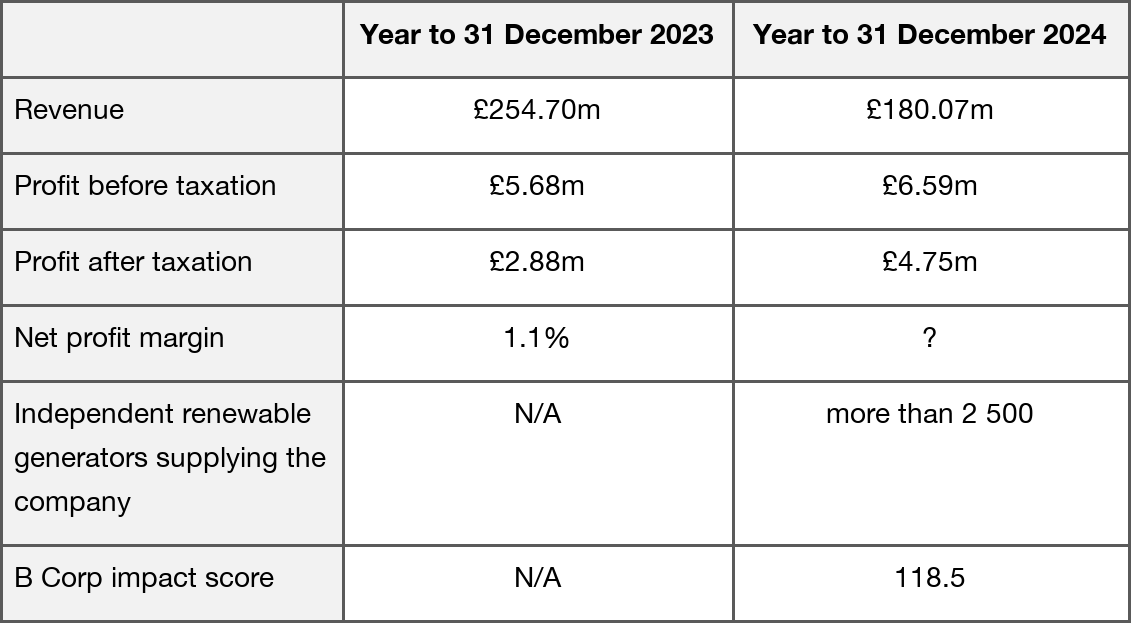
Appendix A: Good Energy Group plc selected results

Table comparing Good Energy’s 2023 and 2024 results: revenue £254.70m/£180.07m; pre-tax profit £5.68m/£6.59m; post-tax profit £2.88m/£4.75m; net margin 1.1%/?; generators N/A/>2,500; B Corp score N/A/118.5.

Source: Good Energy Group plc

Assess whether being an accredited B Corp is likely to give Good Energy Group plc an advantage over energy suppliers that are not.

2
9 marks

Source A: Dr. Martens plc

Dr. Martens plc designs and sells boots, shoes and accessories. The footwear is what the brand is known for, but it also sells bags, belts, socks and shoe care products alongside it. It is a public limited company listed in London, and it sells in more than 60 countries through its own shops, its own website and wholesale customers such as department stores and independent retailers.

Almost everything the brand is worth rests on two ideas. The first is where it comes from: the company began in Northamptonshire and still makes its Made in England range at the Cobbs Lane factory in Wollaston. The great majority of its boots are not made there. They are made in Asia, and the Made in England range costs a good deal more than the standard one. The second idea is that the boots last. Customers are told they are buying something they will still be wearing in ten years, and that promise is why many of them accept the price.

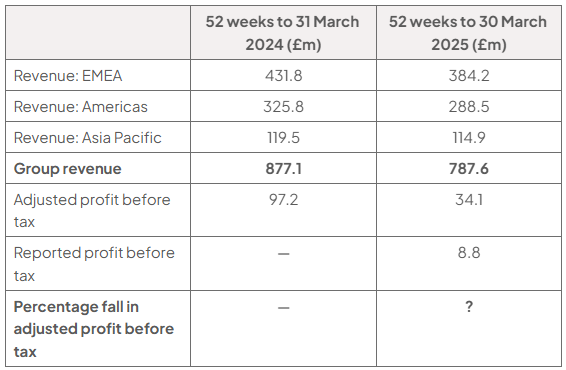
The year to 30 March 2025 was the second difficult one in a row. Revenue fell 10.2% to £787.6 million, from £877.1 million. At constant exchange rates, which strips out the effect of the pound moving against other currencies, the fall was 8.2%. It was not the same everywhere: revenue fell 11.0% in EMEA, 11.4% in the Americas and 3.8% in Asia Pacific, and on a constant currency basis Asia Pacific actually rose 0.6%, helped by Japan and China.

Nor was it the same in every channel. Selling direct to the customer, through Dr. Martens plc's own 239 shops and its website, was down 4%. Selling wholesale, to other retailers, was down 19.5%.

Profit fell much further than revenue. Adjusted profit before tax was £34.1 million against £97.2 million the year before. Reported profit before tax was £8.8 million.

The company spent the year fixing what it could control. It took £25 million a year out of its costs, cut its inventory by £67 million and reduced its net debt, excluding leases, by £83 million. It also says it has reset its marketing so that it talks about the product rather than the brand around it.

Source: information sourced from Dr. Martens plc preliminary results for the 52 weeks ended 30 March 2025

Appendix A: Dr. Martens plc selected results

Selected results table for 52 weeks to 31 March 2024 and 30 March 2025: adjusted profit before tax falls from £97.2 million to £34.1 million; the percentage-fall row is blank for calculation.

Source: Dr. Martens plc

Assess whether Dr. Martens plc should continue to make boots at its Cobbs Lane factory in England.

Calculate the percentage fall in Dr. Martens plc's adjusted profit before tax to support your answer.

Give your answer to one decimal place.

3
9 marks

Source A: Warpaint London plc

Warpaint London plc makes and sells cosmetics. Its largest brand is W7, which sells eyeshadow palettes, lipsticks and foundations at prices most teenagers can afford, and it also owns Technic, Skin & Tan, Super Facialist, Dirty Works and Fish Soho. It does not own shops. Its products reach customers through other retailers, from supermarkets and high street chains to discounters, in the United Kingdom, across Europe and in the United States. It is a public limited company quoted on AIM.

The way it competes is not a secret. Premium cosmetics houses employ studios of designers, run laboratories and spend heavily on advertising to decide what a season's colours will be. Warpaint London plc watches what those trends turn out to be and puts a version on the shelf quickly, at a fraction of the price. It also states that all of its products are manufactured cruelty free.

The year to 31 December 2024 was a record. Group sales grew 13% to £101.6 million, from £89.6 million. The gross profit margin rose to 41.2% from 39.9%, and the company ended the year with no debt at all.

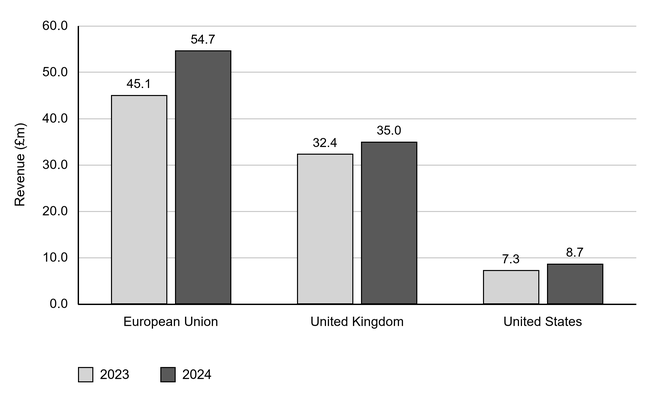
Where that revenue comes from is the surprise. The European Union is now Warpaint London plc's largest market, at £54.7 million against £45.1 million the year before. The United Kingdom, the country the company is based in, came second at £35.0 million against £32.4 million. The United States brought in £8.7 million against £7.3 million, and the remaining £3.2 million came from the rest of the world.

Source: information sourced from Warpaint London PLC results for the year ended 31 December 2024

Appendix C: Value and premium cosmetics compared, analyst estimates

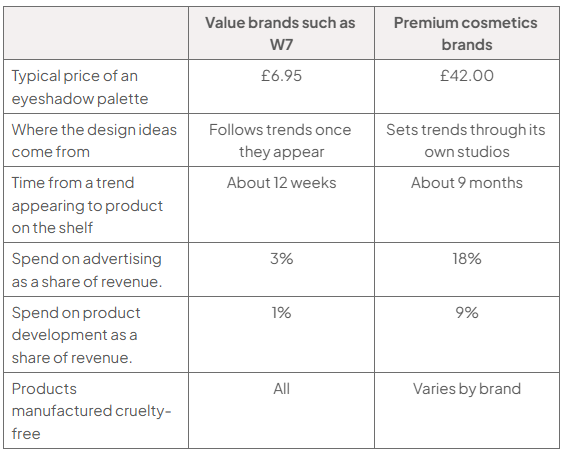
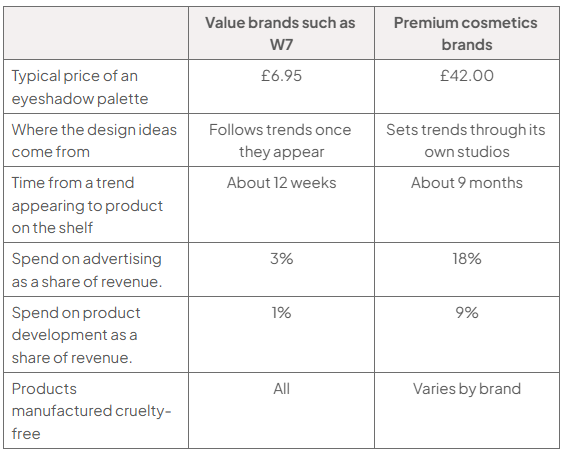
Table: value brands such as W7 versus premium cosmetics. Palette £6.95 versus £42; trend-to-shelf 12 weeks versus 9 months; advertising 3% versus 18%; development 1% versus 9%; cruelty-free: all versus varies by brand.

Source: Analyst

Assess whether telling customers that all its products are manufactured cruelty free is likely to increase Warpaint London plc's sales.

4
9 marks

Source A: Loomfield Home Ltd

Loomfield Home Ltd sells bedding, towels and throws online. It has no shops. It is a private limited company founded by Esi Boateng, it employs 23 people and it works from a warehouse in Bristol.

Everything it sells is made from organic or recycled cotton, and that is what the business is built on. Its packaging carries the words "carbon neutral", which the company can say because it buys offsets to match the emissions of its deliveries, rather than because those deliveries produce no emissions. Nothing about the claim is untrue, and Esi Boateng has begun to wonder how long it will be before a customer asks her to explain the difference.

The website does something else she is less comfortable with. When a product is running low the page shows how many are left, and the number is real. What is not obvious to a customer is that the message appears whenever inventory falls below twenty, which for most lines is most of the time.

Last year Loomfield Home Ltd took £6.4 million, of which £5.6 million was in the United Kingdom, £0.5 million in Germany and £0.3 million in France. Both European markets are sold through the same website in the local language, with delivery from Bristol.

The company spends most of its marketing money on getting people to the website, and it has been successful at it. Since 2021 the number of visits has more than doubled. The number of orders has not.

Assess whether showing customers how many items are left in stock is likely to increase Loomfield Home Ltd's sales.

5
9 marks

Source A: Rowan & Pine Ltd

Rowan & Pine Ltd makes wooden toys in a workshop near Totnes: stacking rings, shape sorters, pull-along animals and a train set that has been in the range since 1998. It is a private limited company owned by Marta Lindqvist and employs 46 people.

It sells in two ways. A little under half its revenue comes from its own website, and the rest from independent toy shops and two department store chains. Last year revenue was £5.4 million, of which £3.60 million was in the United Kingdom, £0.90 million in Germany, £0.60 million in the United States and £0.30 million elsewhere.

The website has been the focus of the last three years and the traffic shows it. Visits rose from 1 040 000 to 1 420 000. Orders rose from 31 200 to 38 900. Marta Lindqvist has noticed that the second number has not kept up with the first and has not yet decided what to do about it.

There is something else she has not decided what to do about. Every box in the range carries the line "supports early problem-solving and fine motor development". It comes from a study of 34 children carried out six years ago by a university department, which Rowan & Pine Ltd part-funded. Nobody has repeated it. The claim has never been challenged, and it appears on packaging in three countries.

Marta Lindqvist has £200 000 to put behind one overseas market. Germany is the larger of the two and sells almost entirely through toy shops. The United States is smaller, growing faster, and sells almost entirely through the website.

Assess whether Rowan & Pine Ltd should remove the developmental claim from its packaging.

1
15 marks

Source A: Good Energy Group plc

Good Energy Group plc sells electricity and gas to homes and businesses, and it installs solar panels, heat pumps and batteries. It is a public limited company, and its shares are traded on AIM.

The electricity it sells is bought from a community of more than 2 500 independent renewable generators, many of them small: wind turbines, solar farms and hydro schemes. Good Energy is an accredited B Corp, the only domestic energy supplier in the United Kingdom to hold that certification, with an impact score of 118.5. B Corp certification is awarded to companies that meet standards on social and environmental performance, and it has to be re-earned.

The year to 31 December 2024 looked strange on the face of it. Revenue fell 29.3% to £180.07 million, down from £254.7 million. Profit before tax rose 16.0% to £6.59 million, and profit after tax rose 64.9% to £4.75 million. The company took less money and kept more of it.

The explanation lies outside the business. Wholesale energy prices rose sharply after Russia's invasion of Ukraine and then fell back, and the Ofgem price cap on what a domestic supplier may charge followed them up and down. Appendix B shows the cap. When the price a supplier charges falls, its revenue falls with it, even if it is serving exactly the same customers.

The company is also changing what it does. During the year it bought JPS, which installs heat, solar and storage across southern England, and it completed the acquisition of Amelio Enterprises Limited. Installing equipment is a different business from supplying energy: it is a one-off sale rather than a monthly bill, and it is not capped by Ofgem.

One thing sits awkwardly alongside the B Corp badge. Good Energy also sells gas, which is a fossil fuel, to customers who have gas boilers. It cannot make gas renewable in the way it can make electricity renewable, and every gas customer it keeps is a household it is not selling a heat pump to.

Source: information sourced from Good Energy Group plc results for the year ended 31 December 2024

Appendix A: Good Energy Group plc selected results

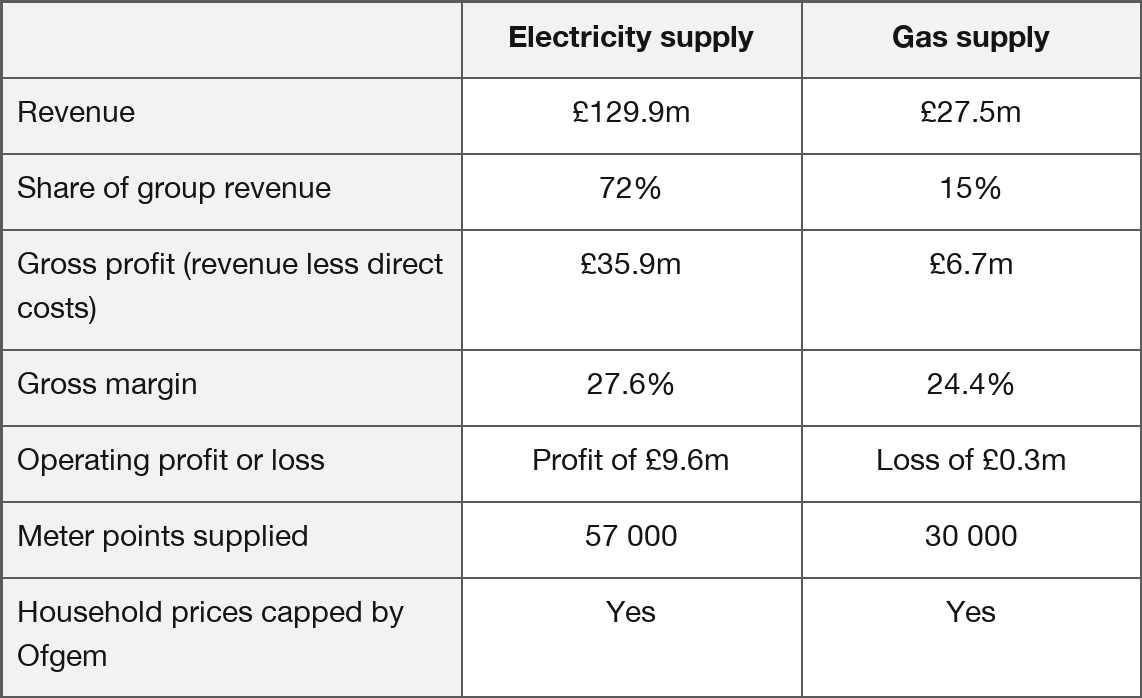
Table comparing Good Energy Group plc's electricity supply and gas supply in 2024. Electricity supply: revenue £129.9m, 72% of group revenue, gross profit £35.9m, gross margin 27.6%, operating profit £9.6m, 57 000 meter points, household prices capped by Ofgem. Gas supply: revenue £27.5m, 15% of group revenue, gross profit £6.7m, gross margin 24.4%, operating loss £0.3m, 30 000 meter points, household prices capped by Ofgem.

Source: Good Energy Group plc

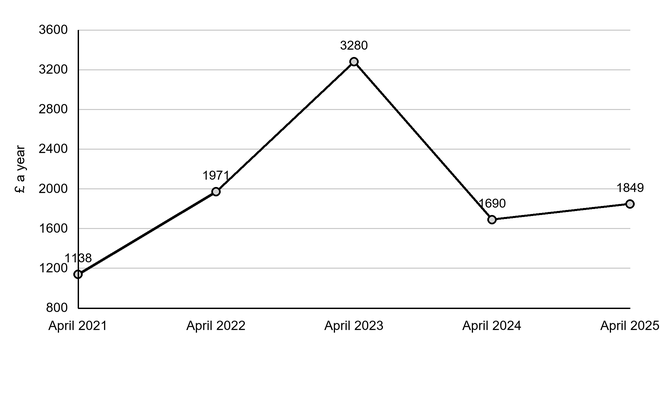
Appendix B: The Ofgem energy price cap

Line chart of Ofgem’s energy price cap in pounds a year, rising from £1,138 in April 2021 to £3,280 in April 2023, then falling to £1,690 in April 2024 and £1,849 in April 2025.
  • The figures are the cap that applied in April of each year for a typical household paying by direct debit. In April 2023 the government's Energy Price Guarantee meant most households actually paid about £2 500 rather than the capped £3 280.

  • Ofgem reduced its assumption of typical household consumption in late 2023, so figures either side of that point are not perfectly comparable.

Source: Ofgem

Appendix C: Good Energy Group plc electricity and gas supply, year to 31 December 2024

Table comparing electricity and gas supply: revenue £129.9m/£27.5m; group share 72%/15%; gross profit £35.9m/£6.7m; margin 27.6%/24.4%; operating result £9.6m profit/£0.3m loss; 57,000/30,000 meters; both Ofgem-capped.
  • Gross profit is revenue less direct costs: energy bought, transportation charges and environmental and social obligation costs.

  • Operating profit is after indirect costs, which include a share of the group's central administration costs, and depreciation.

Source: Good Energy Group plc consolidated segmental statement for the year ended 31 December 2024

Gas supply made up about 15% of Good Energy Group plc's revenue in 2024 and, once its share of indirect costs was counted, made an operating loss of £0.3 million.

Evaluate whether Good Energy Group plc should stop selling gas or continue to sell it alongside its renewable electricity.

2
15 marks

Source A: Warpaint London plc

Warpaint London plc makes and sells cosmetics. Its largest brand is W7, which sells eyeshadow palettes, lipsticks and foundations at prices most teenagers can afford, and it also owns Technic, Skin & Tan, Super Facialist, Dirty Works and Fish Soho. It does not own shops. Its products reach customers through other retailers, from supermarkets and high street chains to discounters, in the United Kingdom, across Europe and in the United States. It is a public limited company quoted on AIM.

The way it competes is not a secret. Premium cosmetics houses employ studios of designers, run laboratories and spend heavily on advertising to decide what a season's colours will be. Warpaint London plc watches what those trends turn out to be and puts a version on the shelf quickly, at a fraction of the price. It also states that all of its products are manufactured cruelty free.

The year to 31 December 2024 was a record. Group sales grew 13% to £101.6 million, from £89.6 million. The gross profit margin rose to 41.2% from 39.9%, and the company ended the year with no debt at all.

Where that revenue comes from is the surprise. The European Union is now Warpaint London plc's largest market, at £54.7 million against £45.1 million the year before. The United Kingdom, the country the company is based in, came second at £35.0 million against £32.4 million. The United States brought in £8.7 million against £7.3 million, and the remaining £3.2 million came from the rest of the world.

Source: information sourced from Warpaint London PLC results for the year ended 31 December 2024

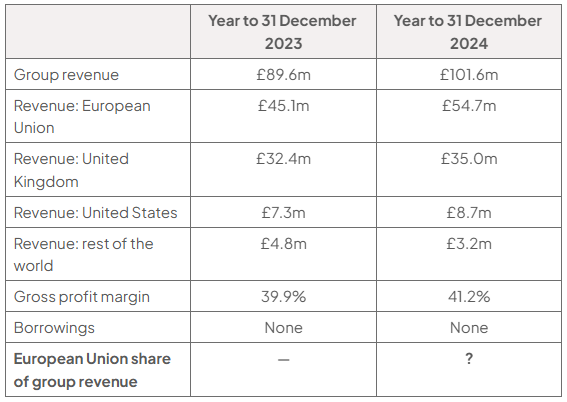
Appendix A: Warpaint London plc selected results

Table of Warpaint London results for 2023 and 2024: group revenue £89.6m to £101.6m; EU revenue £45.1m to £54.7m; UK £32.4m to £35.0m; US £7.3m to £8.7m; rest £4.8m to £3.2m; margins 39.9% to 41.2%; no borrowings; EU share of 2024 revenue is ?.

Source: Warpaint London plc

Appendix B: Warpaint London plc revenue by region

Grouped bar chart of regional revenue (£m) in 2023 and 2024: EU 45.1 to 54.7, UK 32.4 to 35.0, and US 7.3 to 8.7. The vertical axis runs from 0 to 60; 2024 is higher in every region.

Source: Warpaint London plc

Appendix C: Value and premium cosmetics compared, analyst estimates

Table comparing value brands such as W7 with premium cosmetics: palette £6.95 versus £42; follows trends versus sets them; 12 weeks versus 9 months; advertising 3% versus 18%; development 1% versus 9%; cruelty-free all versus varies.

Source: Analyst

Appendix C compares value cosmetics brands with premium ones.

Evaluate whether Warpaint London plc should keep following the trends that premium brands set or spend more on designing its own products.

3
15 marks

Source A: Nine Acres Kitchen Ltd

Nine Acres Kitchen Ltd delivers meal kits: a box of measured ingredients and a recipe card for each meal. It is a private limited company founded by Dan Ferreira and Aisha Nkemelu, it employs 210 people across a packing site in Northamptonshire and an office in Manchester, and it has 12 600 active subscribers.

A subscriber chooses their meals on an app each week. The standard box costs £48.99 and the average subscriber takes two a month, which gives revenue of £14.8 million a year. Ingredients, packing and delivery cost £31.20 a box.

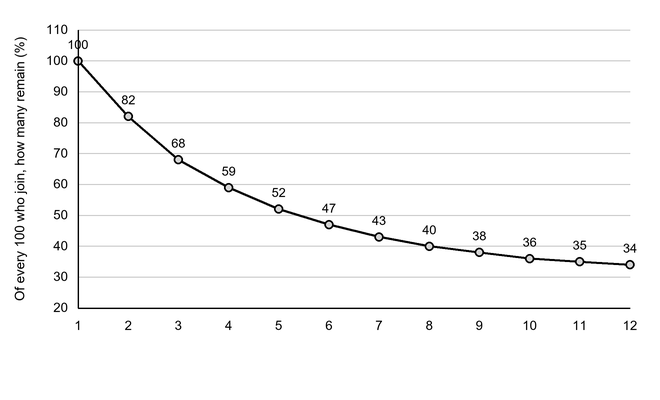
Getting people to try it is not the problem. The first box costs £14.99, and the offer works: the company recruits about 1 400 new subscribers a month. Keeping them is a different matter. Appendix B shows what happens to every hundred people who join. By the fourth box, the third charged at the full £48.99, 41 of them have gone.

The company knows a great deal about all of this. The app records what each subscriber cooks, what they skip, when they pause and what they were looking at before they cancelled. Dan Ferreira wants to use it to work out who is about to leave so the company can offer them something. Aisha Nkemelu wants to use it to suggest what they might cook next, on the grounds that people who enjoy the food do not cancel.

There is a third thing neither of them has raised at a board meeting. Starting a subscription takes about two minutes on the app. Cancelling one requires a telephone call, on weekdays between nine and five.

Appendix A: Nine Acres Kitchen Ltd, last year

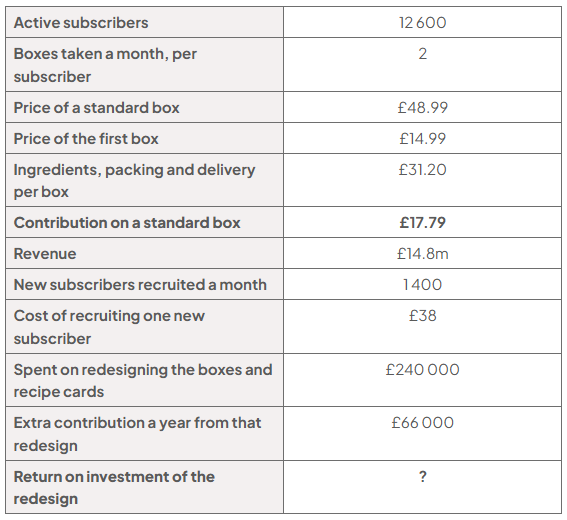
Appendix A table: 12,600 subscribers; two boxes per month; prices £48.99 standard and £14.99 first box; £31.20 costs and £17.79 contribution per box; £14.8m revenue; 1,400 new subscribers monthly; £38 recruitment cost; £240,000 redesign cost; £66,000 extra annual contribution; return on investment unknown.

Source: Analyst

Appendix B: Nine Acres Kitchen Ltd, what happens to every 100 subscribers who join

Line chart of subscribers remaining after each box: 100 at box 1, falling to 82, 68, 59 and 52 at boxes 2–5, then gradually to 34 by box 12; y-axis shows percentage of every 100 subscribers.

Source: Analyst

Appendix B shows that 41 of every 100 Nine Acres Kitchen Ltd subscribers have left by their fourth box.

Evaluate whether Nine Acres Kitchen Ltd should make cancelling a subscription as easy as starting one or leave the process as it is.