Characteristics of Soil (College Board AP® Environmental Science): Study Guide

Soil formation
Soil formation is the process by which rocks break down and organic material accumulates to create soil over time
It is influenced by a combination of biological, physical, and chemical processes
Factors affecting soil formation
Parent material
The underlying rock from which soil develops
Determines the mineral composition and texture of the soil
Climate
Temperature and precipitation influence the rate of weathering and organic decomposition
Warm, wet climates promote faster soil formation, while cold, dry climates slow it down
Organisms
Plants, animals, and microorganisms contribute organic material and aid in decomposition
Earthworms and microbes help mix and aerate the soil, improving fertility
Topography
Factors like slope influence drainage and erosion
Steep slopes tend to have thin soils due to erosion, while valleys accumulate deeper soils
Time
Soil formation is a slow process, taking hundreds to thousands of years to develop significant layers
Older soils are typically more developed with distinct layers, while young soils are less complex

Soil characteristics
Soil texture
Determined by the proportion of sand, silt, and clay in the soil
Affects water retention, drainage, and nutrient availability
Soil structure
Refers to how soil particles are arranged into aggregates
Influences aeration, root penetration, and water movement
Soil porosity and permeability
Porosity: the amount of space between soil particles, affecting water and air movement
Permeability: how easily water passes through soil
Soil color
Can indicate organic matter content and mineral composition
Darker soils tend to have higher organic matter, while red or yellow soils indicate iron oxides
Soil categorization & soil horizons
What are soil horizons?
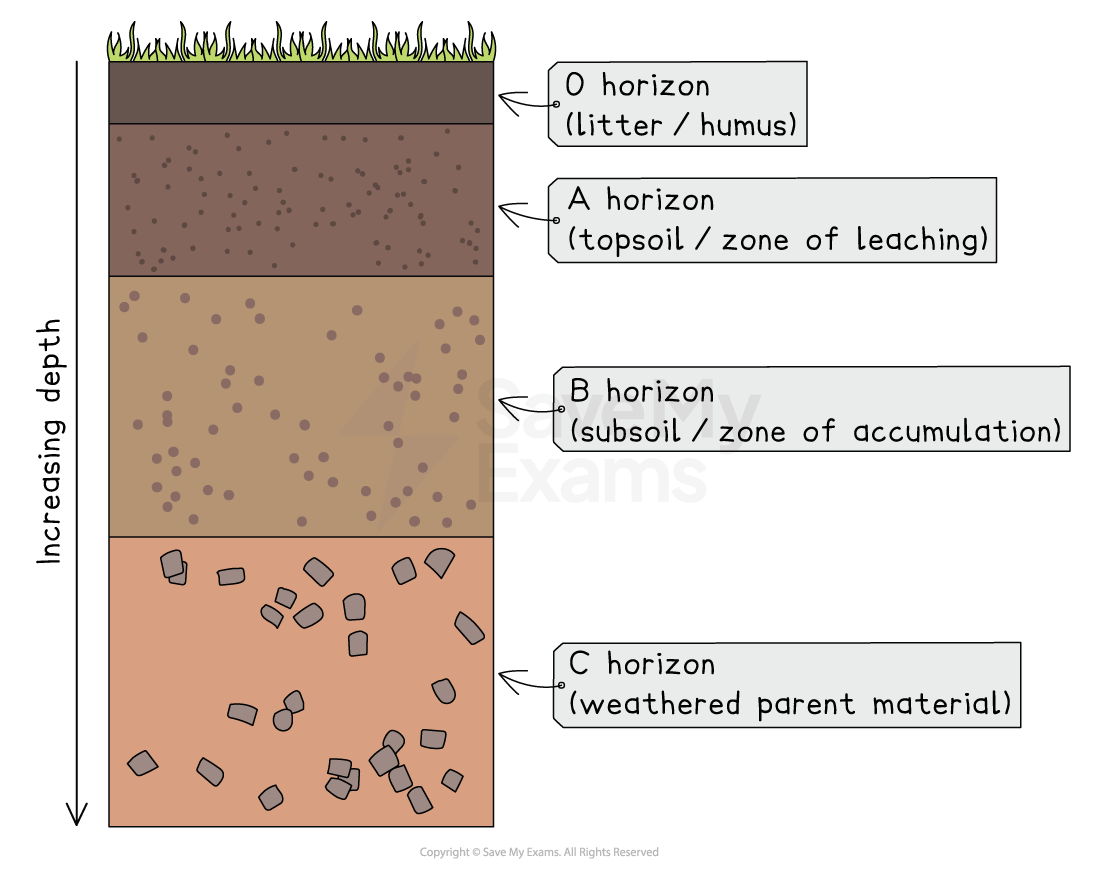
Soil horizons are distinct layers of soil that develop over time due to biological, chemical, and physical processes
These layers differ in composition, texture, color, and organic material
The vertical arrangement of horizons forms a soil profile, which helps categorize soil types
Major soil horizons
O horizon (organic layer)
Also known as the litter layer
Composed of decomposed plant and animal material (humus)
Found mostly in forested areas with high biological activity
Example: thick in temperate forests, thin or absent in deserts
A horizon (topsoil)
Also known as the zone of leaching
The most fertile soil layer: organic material and minerals are well mixed, giving it a typically dark color
Soluble minerals and clay particles are leached downwards from this layer by water moving through the soil
Example: agricultural soils depend on a healthy A horizon for crop production
B horizon (subsoil)
Also known as the zone of accumulation
Accumulates minerals, clay, and soluble compounds (such as iron oxides and calcium carbonate) that have been leached down from the A horizon
Contains little organic material, but is often rich in nutrients and important for deeper plant roots
Example: rich in iron and aluminum oxides in tropical soils, giving them a distinctive red color
C horizon (weathered parent material)
Composed of weathered rock fragments from which the soil above develops
Least affected by soil-forming processes: few roots and little organic matter
Example: the type of rock here (e.g. granite, limestone, sandstone) influences the texture and mineral composition of the soil above

Importance of soil horizons in categorization
Soil profiles help determine soil fertility, drainage, and land use suitability
Different ecosystems and climates produce unique soil horizon arrangements
Example: Grassland soils have deep A horizons, while tropical soils have thin topsoil layers due to rapid decomposition
Understanding soil horizons is important for activities like agriculture and construction
Soil erosion & protecting soils
What is soil erosion?
Soil erosion is the process by which soil is removed from one location and transported to another by natural forces such as wind and water
Erosion reduces soil fertility, depletes organic matter, and can lead to desertification
Human activities like deforestation, overgrazing, and unsustainable agriculture accelerate erosion
Causes of soil erosion
Water erosion
Rainfall and surface runoff: Heavy rains dislodge soil particles and carry them away
Rivers and streams: Flowing water erodes riverbanks and transports sediments downstream
Example: The Mississippi River carries vast amounts of sediment due to upstream erosion
Wind erosion
Strong winds remove loose soil, especially in dry and exposed areas
Example: The Dust Bowl of the 1930s resulted from poor land management and severe drought in the Great Plains region of the US
Protecting soils from erosion
Protection from soil erosion
A range of land-management practices can reduce soil erosion and protect long-term soil productivity, including:
Strip cropping: alternating strips of different crops to keep the soil covered year-round
Terracing: step-like platforms cut into steep slopes to slow runoff
Contour plowing: plowing along the contours of slopes rather than up and down
No-till and conservation tillage: leaving crop residue on fields and minimizing soil disturbance
Cover crops: plants such as clover or rye grown between cash-crop harvests to anchor the soil
Windbreaks: rows of trees or shrubs along field edges to reduce wind speed
For full coverage of these conservation methods, with examples and diagrams, see Unit 5: Intro to Sustainable Agriculture: Soil conservation methods
Soil protection and water quality
Healthy soils act as natural filters
This means they can remove pollutants and sediments from water before it reaches groundwater or surface water sources
Example: Wetlands and forested soils naturally filter excess nutrients, improving water quality in rivers and lakes
This means that protecting soils is an effective way of protecting water quality
Examiner Tips and Tricks
Soil erosion is a natural process but make sure you also understand the role of human activities in accelerating erosion.
Note that many of the soil conservation techniques outlined here help to conserve soils in multiple ways. For example, cover crops protect the soil from wind and water erosion, but they can also plowed into the soil to become green compost.

Unlock more, it's free!
Join the 100,000+ Students that ❤️ Save My Exams
the (exam) results speak for themselves:

Was this revision note helpful?
Build on this topic