Introduction to Sustainable Forestry (College Board AP® Environmental Science): Study Guide

Deforestation mitigation methods
What is deforestation mitigation?
Deforestation mitigation refers to strategies used to
reduce forest loss
promote sustainable forestry practices
Forests provide essential ecosystem services such as
carbon storage
biodiversity conservation
hydrologic cycle regulation
Sustainable forestry aims to balance timber production with environmental protection
Methods for mitigating deforestation
Reforestation
Replanting trees in deforested areas to restore ecosystems and sequester carbon
Helps improve soil stability, water retention, and biodiversity
Can be done naturally (allowing forests to regrow) or actively through tree planting programs
Sustainable forestry practices
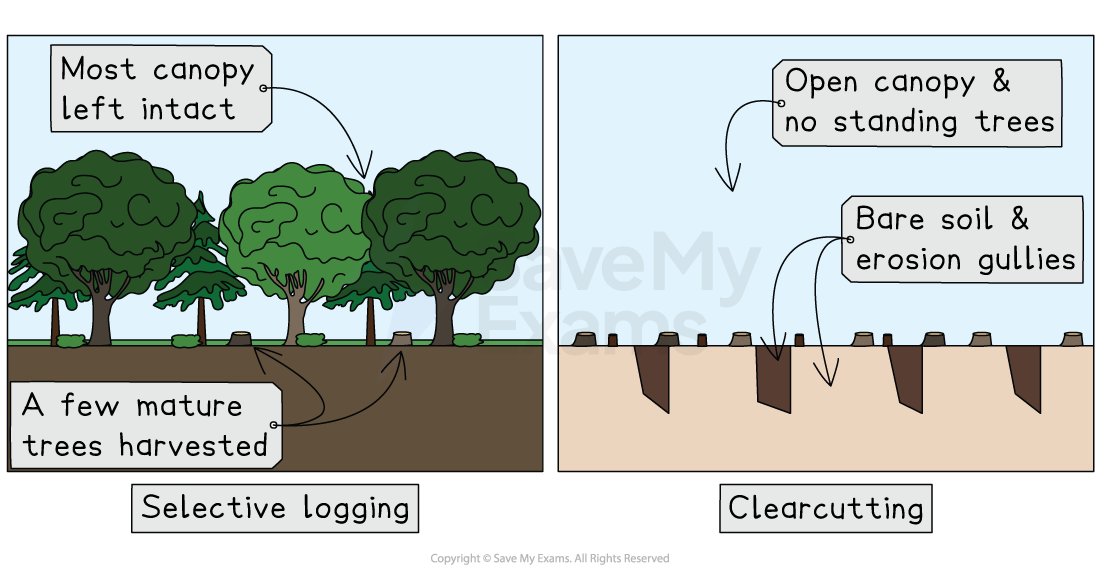
Selective logging: Only certain trees are harvested, preserving overall forest health
This approach often targets trees that have reached a useful size for timber or are less important for wildlife
Younger trees and those that support the ecosystem are left to continue growing
This approach contrasts with clear-cutting, where all trees in an area are cut down at once, regardless of their size or ecological role
Reduced-impact logging: Uses careful planning and techniques to minimize damage to surrounding trees and soil
Methods include directional felling to avoid harming nearby vegetation and using specialized equipment to reduce soil compaction and erosion
Agroforestry: Integrates trees with crops and livestock to create sustainable land use
Certification programs: Encourages responsible logging (e.g., Forest Stewardship Council (FSC) certified wood)
Using and buying sustainable wood
Consumers can support sustainable forestry by purchasing certified wood products
Encourages logging companies to follow environmentally friendly practices
Reduces demand for illegally harvested or unsustainable timber
Reusing and recycling wood
Extends the life cycle of wood products, reducing the need for new tree harvesting
Methods include:
Using reclaimed wood for construction and furniture
Recycling paper products to reduce demand for new pulp
Repurposing wood waste into biofuels or mulch
Protecting forests from pathogens & pests
Why is protecting forests from pathogens and pests important?
Pathogens (disease-causing organisms) and insect pests can weaken or kill trees, leading to forest degradation
Effective pest and disease management prevents large-scale tree loss and economic damage caused by this (e.g., due to loss of ecosystem services)
Methods to protect forests from pathogens and pests
Integrated pest management (IPM)
Uses a combination of biological, physical, and chemical methods to control pests with minimal environmental impact
Examples of IPM in forestry:
Biological control: Introducing natural predators of harmful insects
Physical control: Removing infected trees to prevent disease spread
Chemical control (limited use): Applying pesticides only when necessary
Monitoring and early detection
Regular tree health assessments help detect diseases and pest infestations early
Forest managers use traps, aerial surveys, and satellite imagery to track outbreaks of pests or diseases
Removal of affected trees
Infected or infested trees are strategically removed to prevent the spread of disease and pests
Protects healthy trees and allows forests to recover more effectively
Use of pest-resistant tree species
Some tree species are naturally resistant to certain pests and diseases
Selective breeding or genetic modifications can enhance resistance in forestry plantations
Example: Planting disease-resistant American chestnut trees to combat chestnut blight
Controlled burns (where appropriate)
In some cases, small, controlled fires can be useful for removing pest habitats and limiting disease spread
Must be used carefully to prevent large wildfires
Examiner Tips and Tricks
In your exam, remember that managing forests often requires a combination of methods. If asked for solutions, avoid suggesting just one approach; explain how biological, physical, and limited chemical controls can be used together to create an effective long-term strategy.
What is prescribed burn?
Definition of prescribed burn
Prescribed burning (also known as controlled burning) is the intentional use of fire under controlled conditions to manage forests and reduce wildfire risks
Purpose of prescribed burns
Reducing wildfire risk
Removes excess dry vegetation (fuel) that could otherwise contribute to severe wildfires
Creates firebreaks that slow or stop the spread of uncontrolled fires
Other benefits of prescribed burns
Promoting forest regeneration
Fire clears dead plant material, allowing new vegetation to grow
Opens up the forest floor to more sunlight, encouraging the growth of diverse plant species
Some plant species, like longleaf pines and sequoias, rely on fire for seed germination
Controlling pests and diseases
Prescribed burns can be used to destroy trees affected by harmful fungi, insects, and pathogens that threaten wider forest health
Challenges and risks of prescribed burning
Air quality concerns
Smoke from controlled burns can impact air quality and pose health risks to nearby communities
Timing and weather conditions must be carefully considered to minimize effects
Risk of fire escaping control
If conditions change (e.g., strong winds), a prescribed burn can become an unintended wildfire
Requires strict monitoring and planning to ensure safety
Public perception and opposition
Some communities oppose prescribed burns due to concerns about air pollution, safety, and aesthetics (burned forests are an eye-sore)
Education and communication are key to increasing public support


Unlock more, it's free!
Join the 100,000+ Students that ❤️ Save My Exams
the (exam) results speak for themselves:

Was this revision note helpful?
Build on this topic