Identifying, Anticipating & Understanding Customer Needs (AQA A Level Business): Exam Questions

Exam code: 7132

Syllabus Edition

First teaching 2026

First exams 2028

2 hours15 questions
1
6 marks

Source B: Paper Lane Ltd

Paper Lane Ltd sells stationery, cards and gifts from two small shops in market towns about 15 miles apart. Nina Okafor and Rhys Pritchard opened the first shop nine years ago and set the business up as a private limited company, with the two of them as the only directors and shareholders. They now employ nine other people, most of them part time.

The shops sell notebooks, pens, wrapping paper, cards and small gifts. Customers come in to browse, and a large share of what they buy was not on a list when they walked through the door. Nina and Rhys buy most of their inventory from small makers and from two wholesalers, and they order the Christmas range in August to get an 8% early order discount.

The business makes most of its profit in six weeks. December takes more money than August, September and October put together. That pattern is the heart of Paper Lane's problem. The inventory for Christmas is paid for in the autumn, months before it is sold, so the money goes out long before it comes back.

Sales have been steady and the shops are busy. Even so, cash at the bank fell from £19 000 to £2 000 during the year to 31 January 2026, and at its lowest point in the autumn the company was £22 000 into its overdraft. The overdraft limit is £25 000. Appendix D sets out the company's financial position and Appendix E shows what Nina and Rhys forecast will happen to the cash balance over the coming year.

They have been talking about opening a third shop. Their accountant has told them to sort the cash out first. They are also arguing about whether to ask their customers what they actually want, or to trust what nine years behind the counter has taught them.

A large share of what Paper Lane Ltd sells was not on the customer's list when they walked into the shop.

Analyse one reason why asking customers what they plan to buy might not give Nina and Rhys useful information.

2
6 marks

Source A: The Gym Group plc

The Gym Group plc runs low cost gyms. It opened its first in 2008 and is now a public limited company with shares traded on the London Stock Exchange. It describes itself as a leading low cost gym operator and its offer as high value, low cost. Members pay by the month, there is no long contract to sign, and the gyms are open 24 hours a day.

The company calls its approach a labour light business model. Gyms are largely self-service, so a site can run with a small team, and the savings go into the price rather than into staff on the front desk. In the six months to 30 June 2026 The Gym Group had an average of one million members, up 5% on the same period a year earlier, and average revenue per member per month rose 5%.

Growth comes from two places. The company opens new gyms, and it improves the ones it already has. Four new sites opened in the first half of 2026, with eleven more being built, and it expects to open at least 20 during the year as part of a plan to open around 75 over three years, paid for out of its own cash. It also refurbishes older gyms to a newer design. Three were refurbished in the first half of 2026 and eighteen more were planned for the second half. Gyms refurbished during 2025 went on to win 10% more members than before.

The business is not short of demand, but it is carrying a lot of debt. At the end of 2025 its total liabilities were £474.2 million against total assets of £615.9 million, and it held only £3 million in cash. The company says its aim is a 30% return on the money invested in its mature gyms, and it is buying back some of its own shares.

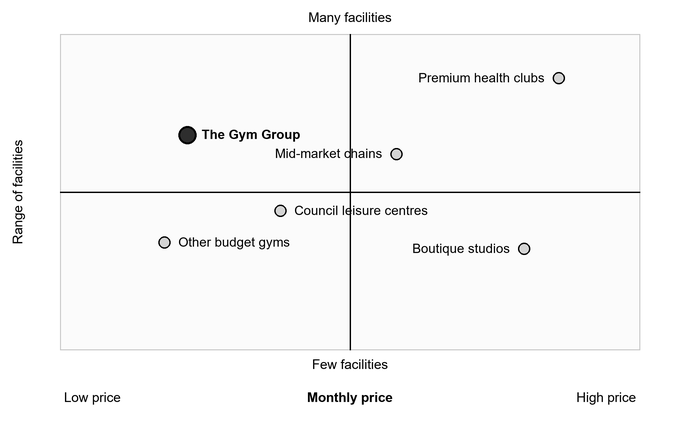
Appendix C shows where The Gym Group sits against other kinds of gym.

Source: The Gym Group plc interim results, 9 September 2026, and Companies House

Appendix C: Market map of the UK gym market

Market map of UK gyms: monthly price runs low to high and facilities few to many. The Gym Group is low-priced with many facilities; other budget gyms have fewer. Premium health clubs are high-priced with many, while other gyms are intermediate.

Source: Analyst

Appendix C shows The Gym Group plc offering more facilities than other budget gyms at a similar price.

Analyse one way in which holding this position might affect The Gym Group plc's ability to raise its prices.

3
6 marks

Source B: Home Instead Ltd

Home Instead Limited arranges care for older people in their own homes: help with washing and dressing, meals, medication, shopping and company. It has been trading in the United Kingdom since 2005 from an office near Warrington, and it is owned by an American company.

Home Instead does not provide the care itself. It is a franchisor. Local business owners buy the right to run a Home Instead office in a particular area, and in return they use the name, the training and the systems, and pay a fee on everything they sell. Those franchisees recruit and employ the carers. This is why the company's accounts look so unusual for a care business: turnover of £19.5 million but only 64 employees, because almost everybody who does the work is employed by somebody else.

The market is growing. The Office for National Statistics projects that the number of people in the UK at state pension age will rise from 12.0 million in mid-2022 to 13.7 million by mid-2032, an increase of 13.8%, while the population as a whole grows by 7.3%. Older people are becoming a larger share of the country, and most of them would prefer to stay in their own homes.

The company's own finances moved in two directions during 2025. Turnover rose 7.9% to £19.5 million. But cash at the bank fell by 28.8% to £3.12 million and net assets fell by 10.8% to £5.10 million.

Home Instead now has a choice about how to grow. It could recruit more franchisees to cover the areas it does not reach. Or it could buy back some territories and run them itself, employing the carers directly. Appendix E shows what a typical franchise costs to run and Appendix F shows the break-even chart for one.

Source: information sourced from Companies House and the Office for National Statistics, 2026

Home Instead Ltd uses published population figures when it decides where to open. The Office for National Statistics projects that the number of people at state pension age will rise by 13.8% between mid-2022 and mid-2032.

Analyse one reason why this projection might be an unreliable guide to how much care Home Instead Ltd will sell.

4
6 marks

Source B: Center Parcs

Center Parcs runs five holiday villages in the United Kingdom: Sherwood Forest in Nottinghamshire, Elveden Forest in Suffolk, Longleat Forest in Wiltshire, Whinfell Forest in Cumbria and Woburn Forest in Bedfordshire. Woburn Forest, which opened in 2014, is the newest. Guests stay in lodges set in woodland and pay separately for activities, restaurants and the spa.

It is a private limited company, so it has no shares traded on any exchange and no share price. During the 53 weeks to 24 April 2025 it paid dividends of £115.5 million to its owner.

The business is close to full. Occupancy for the year was 97.3%, up from 96.8%, and Appendix E shows that it is not full only in summer: in every month of the year the villages run at or above 93%. Revenue rose 4.7% to £649.8 million and adjusted EBITDA rose to £283.8 million from £277.3 million.

The number that stands still is the price. The net average daily rate was £243.10, against £243.17 the year before. Across a year in which costs rose, Center Parcs took seven pence a night less than it had the year before.

That leaves the company in an unusual position. It cannot sell many more nights, because it has almost no empty ones. It has not raised its daily rate for two years. Growth has therefore had to come from somewhere other than filling lodges or charging more for them, and the directors must decide where the next stage of growth is going to come from. Building a sixth village would take years and a great deal of money. Raising the price would work immediately, if guests accepted it.

Source: information sourced from the Center Parcs (Holdings 1) Limited annual report and financial statements for the 53 weeks ended 24 April 2025, which cover the five UK villages only

Center Parcs guests pay for their lodge and then pay separately for activities, restaurants and the spa.

Analyse one way in which charging separately for activities might help Center Parcs understand what its guests want.

5
6 marks

Source B: Dunelm Group plc

Dunelm Group plc sells homewares and furniture: curtains, bedding, cookware, lighting, storage, sofas. It is a public limited company and it sells through large out-of-town stores and through its website and app.

In the year to 28 June 2025 revenue rose 3.8% to £1.77 billion and profit before tax rose 2.7% to £211 million, with the margin slipping slightly to 11.9%. Its share of the combined homewares and furniture market rose from 7.7% to 7.9%, and the number of active customers, meaning people who have bought something within the last year, rose slightly.

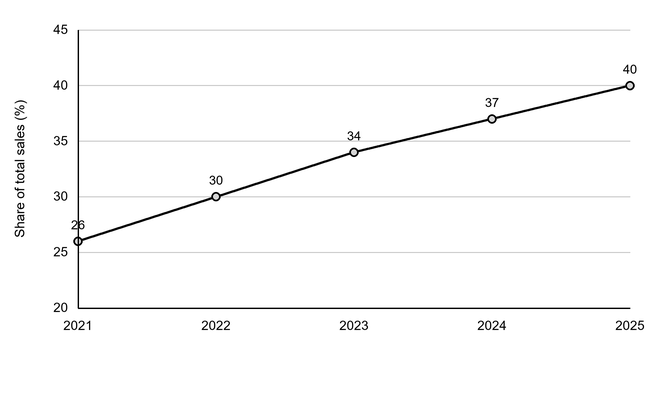
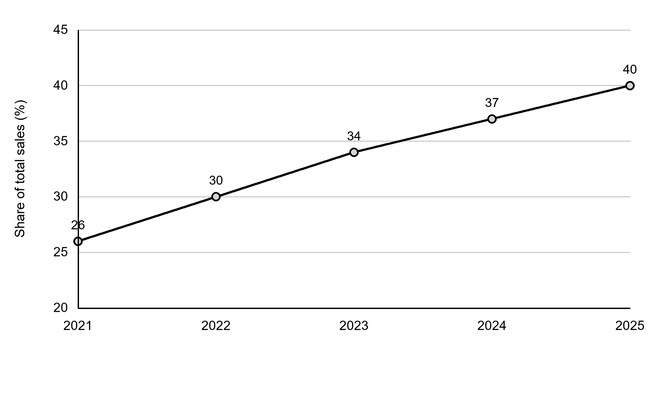
The change underneath those figures is where the customer shops. Digital sales are now 40% of everything Dunelm sells, up from 37% the year before. Appendix E shows how that share has moved over five years.

The complication is that digital and stores are not two separate businesses with two separate customers. The same person browses online and buys in store, or measures an item in store and orders at home, or buys online and returns to a store. A sofa is rarely bought without being sat on. A set of tea towels rarely needs a visit. Dunelm has to work out what a customer actually wants from each part of the business, when that customer does not think of them as separate at all.

It now has to decide where the next investment goes. Appendix F sets out the options.

Source: information sourced from Dunelm Group plc preliminary results for the year ended 28 June 2025

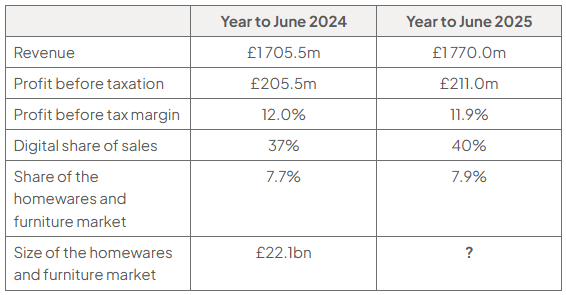
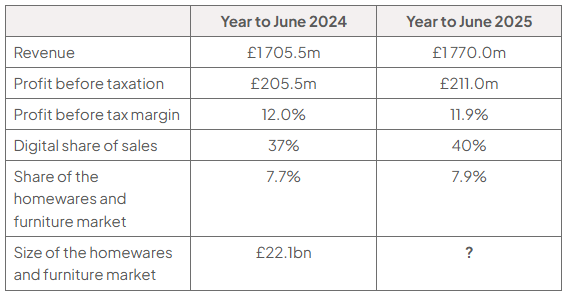
Appendix D: Dunelm Group plc selected results

Table comparing Dunelm results for years to June 2024 and 2025: revenue £1,705.5m to £1,770.0m; profit £205.5m to £211.0m; margin 12.0% to 11.9%; digital sales 37% to 40%; market share 7.7% to 7.9%; market size £22.1bn to ?.

Source: Dunelm Group plc

Appendix E: Dunelm digital share of sales, analyst estimates

Line chart of Dunelm’s digital share of total sales, rising from 26% in 2021 to 40% in 2025: 30% in 2022, 34% in 2023 and 37% in 2024. Y-axis ranges from 20% to 45%.

Source: Analyst

The same Dunelm customer may browse online, measure an item in a store and then order at home.

Analyse one way in which this might make it harder for Dunelm Group plc to find out what its customers want.

6
6 marks

Source A: Loomfield Home Ltd

Loomfield Home Ltd sells bedding, towels and throws online. It has no shops. It is a private limited company founded by Esi Boateng, it employs 23 people and it works from a warehouse in Bristol.

Everything it sells is made from organic or recycled cotton, and that is what the business is built on. Its packaging carries the words "carbon neutral", which the company can say because it buys offsets to match the emissions of its deliveries, rather than because those deliveries produce no emissions. Nothing about the claim is untrue, and Esi Boateng has begun to wonder how long it will be before a customer asks her to explain the difference.

The website does something else she is less comfortable with. When a product is running low the page shows how many are left, and the number is real. What is not obvious to a customer is that the message appears whenever inventory falls below twenty, which for most lines is most of the time.

Last year Loomfield Home Ltd took £6.4 million, of which £5.6 million was in the United Kingdom, £0.5 million in Germany and £0.3 million in France. Both European markets are sold through the same website in the local language, with delivery from Bristol.

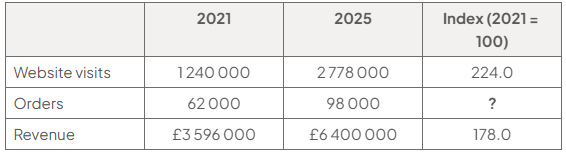
The company spends most of its marketing money on getting people to the website, and it has been successful at it. Since 2021 the number of visits has more than doubled. The number of orders has not.

Appendix A: Loomfield Home Ltd, four years apart

Table comparing Loomfield Home Ltd in 2021 and 2025: website visits rose from 1,240,000 to 2,778,000 (index 224.0), orders from 62,000 to 98,000 (index not given), and revenue from £3,596,000 to £6,400,000 (index 178.0).

Source: Analyst

Loomfield Home Ltd knows how many people visit its website, how many of them order and what they spend, but it does not know why the people who do not order chose not to.

Analyse one way in which this gap might affect the decisions Esi Boateng makes about the website.

7
6 marks

Source A: Rowan & Pine Ltd

Rowan & Pine Ltd makes wooden toys in a workshop near Totnes: stacking rings, shape sorters, pull-along animals and a train set that has been in the range since 1998. It is a private limited company owned by Marta Lindqvist and employs 46 people.

It sells in two ways. A little under half its revenue comes from its own website, and the rest from independent toy shops and two department store chains. Last year revenue was £5.4 million, of which £3.60 million was in the United Kingdom, £0.90 million in Germany, £0.60 million in the United States and £0.30 million elsewhere.

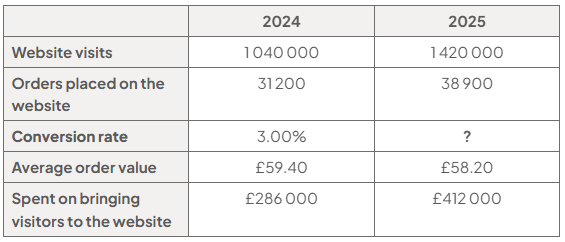
The website has been the focus of the last three years and the traffic shows it. Visits rose from 1 040 000 to 1 420 000. Orders rose from 31 200 to 38 900. Marta Lindqvist has noticed that the second number has not kept up with the first and has not yet decided what to do about it.

There is something else she has not decided what to do about. Every box in the range carries the line "supports early problem-solving and fine motor development". It comes from a study of 34 children carried out six years ago by a university department, which Rowan & Pine Ltd part-funded. Nobody has repeated it. The claim has never been challenged, and it appears on packaging in three countries.

Marta Lindqvist has £200 000 to put behind one overseas market. Germany is the larger of the two and sells almost entirely through toy shops. The United States is smaller, growing faster, and sells almost entirely through the website.

Rowan & Pine Ltd's packaging says its toys support early problem-solving and fine motor development, based on a study of 34 children carried out six years ago.

Analyse one way in which relying on research of this kind might affect the decisions Marta Lindqvist makes about her range.

1
9 marks

Source B: Apple's Vision Pro

In September 2023, Apple launched the Vision Pro in North America. Vision Pro is a virtual reality (VR) headset. Unlike rival headsets which require hand-held controllers, Vision Pro is controlled by hand movements, voice commands and eye tracking. Analysts estimated over $8 billion had been spent developing Vision Pro over five years.

The Vision Pro may turn out to be one of Apple's lowest-selling products. Apple reportedly hoped to sell 3 million units in the first year. Some experts expected sales would be below 200,000 units in this period, lower than any of Apple's other major product launches. Others were more optimistic about Vision Pro's long-term sales. Apple set a high price of $3499. This price was three times more expensive than Meta's competing headset, the Quest. Other issues with the product included a battery that lasted only two hours and a headset that some users said was awkward to wear.

Apple was keen to release the Vision Pro because of strong competition, especially from Meta. Meta had been selling the Quest at a loss to increase its market share.

Steve Jobs, Apple's founder, once said that customers do not know what they want until Apple makes it.

Over 2 billion Apple devices are in use around the world. Apple also has:

  • a huge database of information about current users of its products.

  • a wide product portfolio including iPads, Mac computers, iPods, Apple TV, and the Apple watch.

  • a trusted brand. In a 2021 survey, three times as many people said they would buy a headset from Apple compared to its closest competitor.

In 2023, Apple increased its dividend payments to about 15% of its yearly profits.

Source: Apple, 2024

Appendix D: Selected financial data for Apple in 2021 and 2023

  • Sales: $365 817 million in 2021, rising to $394 328 million in 2023

  • Operating profit: $108 949 million in 2021, rising to $125 344 million in 2023

  • Investment in new product development: $21 914 million in 2021, rising to $29 915 million in 2023

Source: Apple, 2024

Assess whether an increase in spending on market research could be profitable for Apple.

2
9 marks

Source A: Dr. Martens plc

Dr. Martens plc designs and sells boots, shoes and accessories. The footwear is what the brand is known for, but it also sells bags, belts, socks and shoe care products alongside it. It is a public limited company listed in London, and it sells in more than 60 countries through its own shops, its own website and wholesale customers such as department stores and independent retailers.

Almost everything the brand is worth rests on two ideas. The first is where it comes from: the company began in Northamptonshire and still makes its Made in England range at the Cobbs Lane factory in Wollaston. The great majority of its boots are not made there. They are made in Asia, and the Made in England range costs a good deal more than the standard one. The second idea is that the boots last. Customers are told they are buying something they will still be wearing in ten years, and that promise is why many of them accept the price.

The year to 30 March 2025 was the second difficult one in a row. Revenue fell 10.2% to £787.6 million, from £877.1 million. At constant exchange rates, which strips out the effect of the pound moving against other currencies, the fall was 8.2%. It was not the same everywhere: revenue fell 11.0% in EMEA, 11.4% in the Americas and 3.8% in Asia Pacific, and on a constant currency basis Asia Pacific actually rose 0.6%, helped by Japan and China.

Nor was it the same in every channel. Selling direct to the customer, through Dr. Martens plc's own 239 shops and its website, was down 4%. Selling wholesale, to other retailers, was down 19.5%.

Profit fell much further than revenue. Adjusted profit before tax was £34.1 million against £97.2 million the year before. Reported profit before tax was £8.8 million.

The company spent the year fixing what it could control. It took £25 million a year out of its costs, cut its inventory by £67 million and reduced its net debt, excluding leases, by £83 million. It also says it has reset its marketing so that it talks about the product rather than the brand around it.

Source: information sourced from Dr. Martens plc preliminary results for the 52 weeks ended 30 March 2025

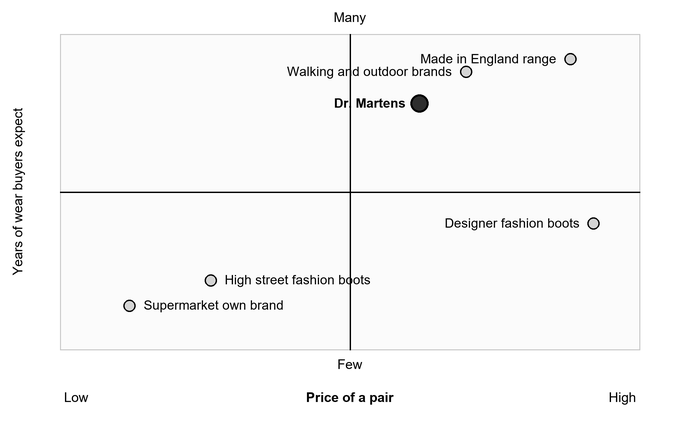
Appendix C: Where boot brands sit, analyst estimates

Positioning map of boot brands: price rises left to right and expected years of wear from few to many. Dr Martens, its Made in England range and walking/outdoor brands are costly and long-lasting; designer boots are costly but less durable.

Source: Analyst

Assess whether customer research would help Dr. Martens plc win back the customers it has lost.

3
9 marks

Source A: Warpaint London plc

Warpaint London plc makes and sells cosmetics. Its largest brand is W7, which sells eyeshadow palettes, lipsticks and foundations at prices most teenagers can afford, and it also owns Technic, Skin & Tan, Super Facialist, Dirty Works and Fish Soho. It does not own shops. Its products reach customers through other retailers, from supermarkets and high street chains to discounters, in the United Kingdom, across Europe and in the United States. It is a public limited company quoted on AIM.

The way it competes is not a secret. Premium cosmetics houses employ studios of designers, run laboratories and spend heavily on advertising to decide what a season's colours will be. Warpaint London plc watches what those trends turn out to be and puts a version on the shelf quickly, at a fraction of the price. It also states that all of its products are manufactured cruelty free.

The year to 31 December 2024 was a record. Group sales grew 13% to £101.6 million, from £89.6 million. The gross profit margin rose to 41.2% from 39.9%, and the company ended the year with no debt at all.

Where that revenue comes from is the surprise. The European Union is now Warpaint London plc's largest market, at £54.7 million against £45.1 million the year before. The United Kingdom, the country the company is based in, came second at £35.0 million against £32.4 million. The United States brought in £8.7 million against £7.3 million, and the remaining £3.2 million came from the rest of the world.

Source: information sourced from Warpaint London PLC results for the year ended 31 December 2024

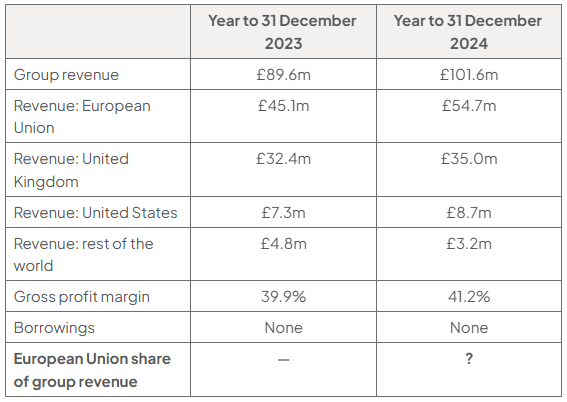
Appendix A: Warpaint London plc selected results

Table of Warpaint London plc results for years to 31 December 2023 and 2024: group revenue £89.6m and £101.6m; EU revenue £45.1m and £54.7m. The 2024 EU share is shown as ?.

Source: Warpaint London plc

Assess whether Warpaint London plc should rely on its own sales figures rather than pay for new market research before entering another country.

Calculate the percentage of Warpaint London plc's 2024 group revenue that was earned in the European Union to support your answer.

Give your answer to one decimal place.

4
9 marks

Source A: Pelham Audio Ltd

Pelham Audio Ltd designs and builds studio headphones and microphones in Cambridge. It is a private limited company founded by Nadia Sokolova and it employs 41 people, fourteen of them engineers.

For twenty years its customers were recording studios: a few thousand of them worldwide, buying expensive equipment and keeping it for a decade. That is still where the reputation comes from. It is no longer where most of the units go. Podcasters, musicians recording at home and people making video for a living now buy more Pelham Audio Ltd equipment than studios do, at less than a fifth of the price per item.

Last year revenue was £7.8 million. The United Kingdom accounted for £3.1 million, the United States £2.4 million, Germany £1.5 million and Japan £0.8 million. Everything is sold either through specialist dealers or directly from the company's own website.

Nadia Sokolova has spent money on finding things out. The company now knows what each dealer sells, what its website visitors look at before they buy, and what its customers say when asked. In February it commissioned a survey of 400 home producers, which found that 62% would pay more for a microphone that plugs straight into a computer without a separate audio interface. The research company reported the result with a margin of error of 4.9 percentage points at the 95% confidence level.

The data has produced two questions rather than one answer. The first is which country to put money behind next. The second is larger: whether Pelham Audio Ltd is a company that makes equipment for studios and happens to sell some to home producers, or the other way round.

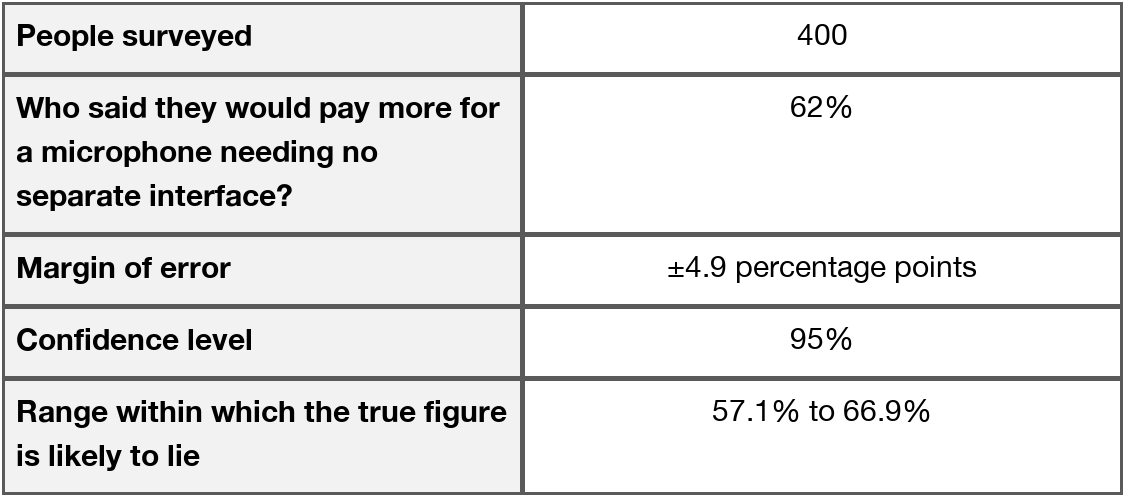
Appendix B: Pelham Audio Ltd, survey of 400 home producers

Survey table: 400 people were questioned; 62% would pay more for a microphone needing no separate interface. Margin of error is plus or minus 4.9 percentage points at 95% confidence, giving a likely true range of 57.1% to 66.9%.

Source: Analyst

Appendix B shows the result of a survey of 400 home producers.

Assess whether Pelham Audio Ltd should develop the microphone that needs no separate audio interface.

5
9 marks

Source A: Marchmont Paper Co. Ltd

Marchmont Paper Co. Ltd makes notebooks, planners and page-a-day diaries in a converted mill in Hebden Bridge. It is a private limited company owned by Ines Marchmont and Tom Prideaux, and it employs 28 people. The paper is milled in Cumbria, the covers are cloth-bound by hand, and a planner sells for around £24.

Revenue last year was £3.8 million. Of that, £2.7 million came from the United Kingdom, £664 000 from Japan, £397 800 from France and £38 200 from everywhere else. Inside the UK figure, £1.4 million was taken on Marchmont Paper Co. Ltd's own website and £1.3 million through about 400 independent stationers and one department store chain.

Ines Marchmont buys a market report each year. It values the UK market for premium paper stationery at £210 million and covers sales made through stationery shops only. Marchmont Paper Co. Ltd's shop sales of £1.3 million give it a share of 0.62% on that basis. Just over half of what the company actually sells in the UK is not in the report at all.

The marketing objective for this year, written into a plan every January and reviewed the following January, is to grow revenue by 25%.

Japan is where the plan has been working and not working at the same time. Until 2024 Marchmont Paper Co. Ltd sold direct to about 90 Japanese shops. In 2025 it moved to a single distributor, which buys in bulk and sells on. The number of items sold rose sharply. What came back did not.

Marchmont Paper Co. Ltd knows very little about who buys its planners. The website asks one question at checkout, "what will you use this for?", and roughly a fifth of customers answer it. Nobody has ever spoken to a customer who bought from a shop.

Assess whether Marchmont Paper Co. Ltd should carry out more detailed research before it designs its next range.

1
15 marks

Source B: Dunelm Group plc

Dunelm Group plc sells homewares and furniture: curtains, bedding, cookware, lighting, storage, sofas. It is a public limited company and it sells through large out-of-town stores and through its website and app.

In the year to 28 June 2025 revenue rose 3.8% to £1.77 billion and profit before tax rose 2.7% to £211 million, with the margin slipping slightly to 11.9%. Its share of the combined homewares and furniture market rose from 7.7% to 7.9%, and the number of active customers, meaning people who have bought something within the last year, rose slightly.

The change underneath those figures is where the customer shops. Digital sales are now 40% of everything Dunelm sells, up from 37% the year before. Appendix E shows how that share has moved over five years.

The complication is that digital and stores are not two separate businesses with two separate customers. The same person browses online and buys in store, or measures an item in store and orders at home, or buys online and returns to a store. A sofa is rarely bought without being sat on. A set of tea towels rarely needs a visit. Dunelm has to work out what a customer actually wants from each part of the business, when that customer does not think of them as separate at all.

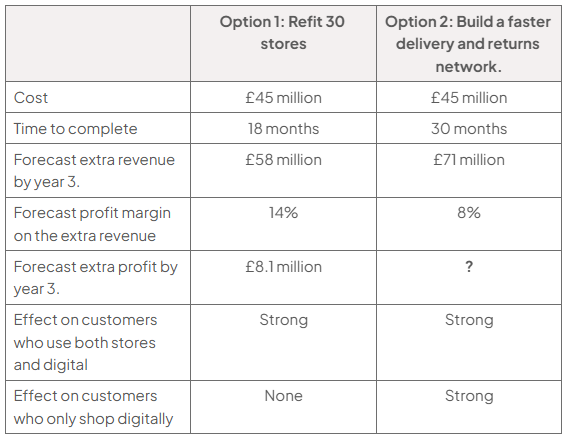
It now has to decide where the next investment goes. Appendix F sets out the options.

Source: information sourced from Dunelm Group plc preliminary results for the year ended 28 June 2025

Appendix D: Dunelm Group plc selected results

Table of Dunelm selected results comparing years to June 2024 and 2025: revenue £1,705.5m to £1,770.0m; profit before tax £205.5m to £211.0m; margin 12.0% to 11.9%; digital sales 37% to 40%; market share 7.7% to 7.9%; market size £22.1bn to ?.

Source: Dunelm Group plc

Appendix E: Dunelm digital share of sales, analyst estimates

Line chart of Dunelm’s digital share of total sales, rising steadily from 26% in 2021 to 30% in 2022, 34% in 2023, 37% in 2024 and 40% in 2025.

Source: Analyst

Appendix F: Data for two ways of investing £45 million

Table comparing two £45 million investments: refit 30 stores (18 months, £58m extra revenue, 14% margin, £8.1m extra profit) or build faster delivery and returns (30 months, £71m, 8% margin, profit unknown); both strongly affect omnichannel customers, but only the latter affects digital-only customers.

Source: Analyst

Appendix F shows two ways in which Dunelm Group plc could invest £45 million.

Evaluate both options and recommend which one would be the better use of Dunelm Group plc's £45 million.

2
15 marks

Source A: PZ Cussons plc

PZ Cussons plc owns personal care and beauty brands. In the United Kingdom it owns Carex, the best-selling hand wash, Original Source, Imperial Leather, Childs Farm, which is made for babies and children, and St Tropez, which is self-tanning. It does not own shops: its products reach customers through supermarkets, pharmacies, discounters and beauty retailers. It is a public limited company listed in London.

Much of the business is not in Britain at all. PZ Cussons plc has sold in Nigeria for more than a century and manufactures there, and it also sells across Asia Pacific. That reach is the source of both its growth and its biggest problem.

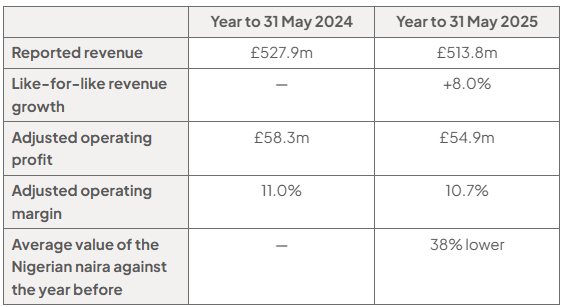
In the year to 31 May 2025 like-for-like revenue, which strips out the effect of currency changes, grew 8.0%, mostly because of price rises in Nigeria, where the volume sold fell. Reported revenue, which is what the accounts say, fell 2.7% to £513.8 million from £527.9 million. The difference is the Nigerian naira. The currency was stable through the year, but it averaged 38% below where it had been the year before, so every naira of Nigerian sales turned into far fewer pounds.

Adjusted operating profit was £54.9 million against £58.3 million, and the operating margin slipped to 10.7% from 11.0%.

The UK brands did not all pull the same way. Carex grew both its revenue and its gross margin, and held its position as the largest hand wash brand. St Tropez had a difficult year: its revenue fell by a double-digit percentage, reflecting weak demand for self-tan in the United States, while like-for-like revenue in Europe and the Americas grew only 0.6%. The company considered what to do with St Tropez and decided to keep it, saying it would give the brand a new direction.

Source: information sourced from PZ Cussons plc preliminary results for the year ended 31 May 2025

Appendix A: PZ Cussons plc selected results

Table comparing PZ Cussons plc results for years to 31 May 2024 and 2025: reported revenue £527.9m and £513.8m; like-for-like growth not shown and 8.0%; profit £58.3m and £54.9m; margins 11.0% and 10.7%; naira not shown and 38% lower.

Source: PZ Cussons plc

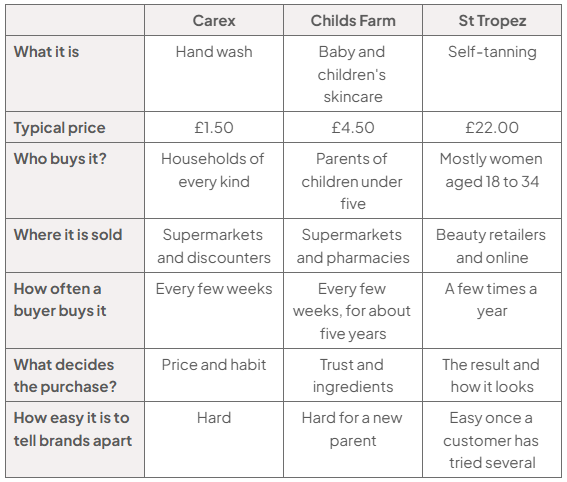
Appendix C: Three PZ Cussons plc brands, analyst estimates

Table comparing Carex, Childs Farm and St Tropez: prices £1.50, £4.50 and £22; buyers and purchasing frequency vary, with Carex and Childs Farm bought more often than St Tropez.

Source: Analyst

PZ Cussons plc has decided to keep St Tropez and give the brand a new direction.

Evaluate whether PZ Cussons plc should commission new customer research before deciding what that direction should be or act on the sales figures it already has.

3
15 marks

Source A: Rowan & Pine Ltd

Rowan & Pine Ltd makes wooden toys in a workshop near Totnes: stacking rings, shape sorters, pull-along animals and a train set that has been in the range since 1998. It is a private limited company owned by Marta Lindqvist and employs 46 people.

It sells in two ways. A little under half its revenue comes from its own website, and the rest from independent toy shops and two department store chains. Last year revenue was £5.4 million, of which £3.60 million was in the United Kingdom, £0.90 million in Germany, £0.60 million in the United States and £0.30 million elsewhere.

The website has been the focus of the last three years and the traffic shows it. Visits rose from 1 040 000 to 1 420 000. Orders rose from 31 200 to 38 900. Marta Lindqvist has noticed that the second number has not kept up with the first and has not yet decided what to do about it.

There is something else she has not decided what to do about. Every box in the range carries the line "supports early problem-solving and fine motor development". It comes from a study of 34 children carried out six years ago by a university department, which Rowan & Pine Ltd part-funded. Nobody has repeated it. The claim has never been challenged, and it appears on packaging in three countries.

Marta Lindqvist has £200 000 to put behind one overseas market. Germany is the larger of the two and sells almost entirely through toy shops. The United States is smaller, growing faster, and sells almost entirely through the website.

Appendix A: Rowan & Pine Ltd, website and orders

Table of website performance in 2024 and 2025: visits 1,040,000 and 1,420,000; orders 31,200 and 38,900; conversion rate 3.00% and ?; average order value £59.40 and £58.20; visitor spend £286,000 and £412,000.

Source: Analyst

Rowan & Pine Ltd knows what its customers buy from its own sales figures and what they say from the research it commissions.

Evaluate whether Rowan & Pine Ltd should design its next range from what parents say they want or from what its sales figures show they buy.