Source B: Apple's Vision Pro
In September 2023, Apple launched the Vision Pro in North America. Vision Pro is a virtual reality (VR) headset. Unlike rival headsets which require hand-held controllers, Vision Pro is controlled by hand movements, voice commands and eye tracking. Analysts estimated over $8 billion had been spent developing Vision Pro over five years.
The Vision Pro may turn out to be one of Apple's lowest-selling products. Apple reportedly hoped to sell 3 million units in the first year. Some experts expected sales would be below 200,000 units in this period, lower than any of Apple's other major product launches. Others were more optimistic about Vision Pro's long-term sales. Apple set a high price of $3499. This price was three times more expensive than Meta's competing headset, the Quest. Other issues with the product included a battery that lasted only two hours and a headset that some users said was awkward to wear.
Apple was keen to release the Vision Pro because of strong competition, especially from Meta. Meta had been selling the Quest at a loss to increase its market share.
Steve Jobs, Apple's founder, once said that customers do not know what they want until Apple makes it.
Over 2 billion Apple devices are in use around the world. Apple also has:
a huge database of information about current users of its products.
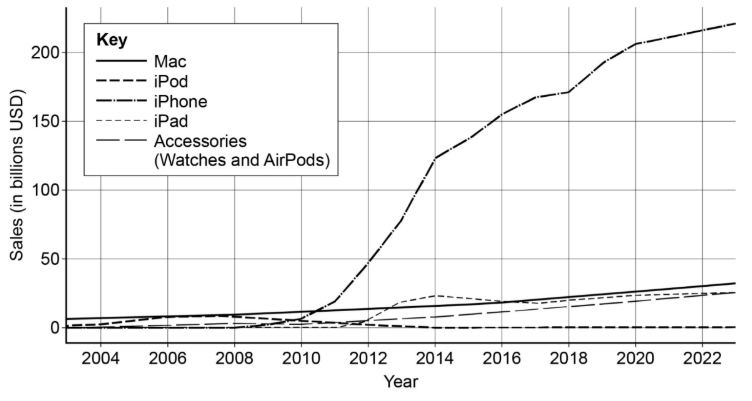
a wide product portfolio including iPads, Mac computers, iPods, Apple TV, and the Apple watch.
a trusted brand. In a 2021 survey, three times as many people said they would buy a headset from Apple compared to its closest competitor.
In 2023, Apple increased its dividend payments to about 15% of its yearly profits.
Source: Apple, 2024
Apple often sets a high price for its products, such as Vision Pro, compared to its competitors.
Analyse one way in which setting a high price might affect the revenue Apple earns from its products.
Was this exam question helpful?