Business Growth (AQA A Level Business): Exam Questions

Exam code: 7132

Syllabus Edition

First teaching 2026

First exams 2028

2 hours16 questions
1
6 marks

Source A: Finlay's Farm Ltd

Finlay's Farm Ltd is a small family-owned farm in Scotland. It has a herd of 130 cows, and their milk is used to make:

  • Cheese. This is sold both online and through various retail stores.

  • Ice cream. This is sold through retailers.

The company's founders are David and Wilma Finlay. They have built strong long-term relationships with its customers. There are two other employees. The dairy industry has been restructuring in recent years with bigger farms buying up smaller ones.

The company:

  • has high gearing but has also used crowdfunding to raise finance

  • receives government agricultural grants and subsidies

  • exports some of its products; although since the UK left the European Union exporting regulations have been complex.

The farm is organic. Organic farming aims to ensure that it uses processes that do not harm the environment, plant health or animal welfare. This is important to David and Wilma and its other employees. For example, the cows are fed an organic and natural diet as opposed to animal feed which has been genetically modified. The company aims to reduce energy use and greenhouse emissions and reduce the use of chemicals in farming as much as it can, even if this impacts on productivity. David and Wilma have been asked to speak at a number of environmental events and have been awarded an Outstanding Achievement award for their environmentally friendly practices.

The company has a good brand image and charges a premium price for its products. Its customers value its niche position in the market. It is said to be operating close to capacity. To increase scale, it would need to buy more cows and invest in new production facilities.

The farm has a small visitor centre which:

  • sells its products

  • offers food workshops such as ice cream making

  • organises visits for people who want to know more about organic farming and look around the farm.

Analysts say the key risks facing the company are:

  • changes in market conditions if customers become more price sensitive

  • the retirement of the founders

  • IT issues with its online sales business such as data theft.

One possible growth option for the business is to open a glamping campsite.

Source: Information sourced from Finlay's Farm Ltd

Analyse one advantage to the owners of Finlay's Farm Ltd of keeping the business small.

2
6 marks

Source A: Wise

Wise Group plc is a public limited company, founded in London in 2011, as TransferWise, by Kristo Käärmann and Taavet Hinrikus. It describes its mission as "building the best way to move and manage the world's money". Its services allow people and businesses to:

  • send money between countries

  • hold more than 40 currencies in one account

  • spend abroad with a Wise card

Banks and other companies also use Wise's technology through Wise Platform to offer international payments to their own customers. Wise Platform partners include UniCredit, Raiffeisen Bank, MBSB Bank and, from April 2026, Capitec.

Wise keeps its prices low. In the year to 31 March 2026 the average fee it charged on a cross-border transfer fell to 0.52% of the amount sent. Its 19 million active customers moved $243 billion across borders, 31% more than in the previous year, and its net revenue rose by 19% to $2.5 billion. In the fourth quarter of the year, 75% of payments arrived in under 20 seconds.

Wise must hold a licence from regulators in each country where it offers its services. In 2025-26 it won licences in South Africa, the UAE and Thailand and connected directly to the domestic payment systems of Brazil and Japan, which Wise says reduces its costs and increases speed.

On 11 May 2026 Wise moved its primary share listing to the Nasdaq stock exchange in New York, keeping a secondary listing in London.

Source: Wise Group plc, Full Year 2026 results

Banks and other companies use Wise's technology through Wise Platform to offer international payments to their own customers.

Analyse one way in which Wise Platform might help Wise to grow.

3
6 marks

Source A: AstraZeneca

AstraZeneca plc is a global pharmaceutical company with its headquarters in Cambridge, UK. Its medicines treat cancer, heart, kidney and metabolic disease, respiratory disease and rare diseases. It had 16 "blockbuster" medicines, each with annual sales of more than $1 billion, in 2025. It is one of the largest companies in the FTSE 100, and since 2 February 2026 its shares have also traded on the New York Stock Exchange. It remains listed and headquartered in the UK.

In 2025 total revenue rose by 9% to $58.7 billion, with growth in every major region. AstraZeneca has set itself the ambition of reaching $80 billion of total revenue in 2030.

In July 2025 AstraZeneca announced plans to invest $50 billion in the United States by 2030, including a manufacturing plant in Virginia. In October 2025 it agreed with the US government to offer US patients lower prices, in return for three years' exemption from US tariffs on pharmaceuticals. In the UK, it dropped a planned £450 million vaccine plant at Speke, Merseyside, in 2025, and in September 2025 paused a £200 million expansion of its research centre in Cambridge.

Developing a new medicine takes many years, and most candidates fail in clinical trials. AstraZeneca also buys and licenses medicines discovered by other companies.

Source: AstraZeneca plc, results for the full year 2025 and the first half of 2026

AstraZeneca buys and licenses medicines discovered by other companies, as well as developing its own.

Analyse one way in which buying and licensing medicines from other companies might affect AstraZeneca's growth.

4
6 marks

Source B: Macknade

Macknade is a family-owned food hall on the edge of Faversham, Kent, on the site of a farm the Neame family began farming in 1847. The company, Macknade Fine Foods Ltd, employed an average of 82 people in the year to 31 March 2025.

In 1979 Patricia Neame and her husband Renato Cuomo, who was born on the Italian island of Ischia, opened a pick-your-own business on the farm. In 2001 the family stopped farming to concentrate on retail. Their son, Stefano Cuomo, the sixth generation to run the business, became managing director in 2013 and later Chief Executive.

The seven-acre site is dominated by a 10 000 square foot food hall, which sells:

  • local and Mediterranean produce

  • more than 100 cheeses

  • meat from its own butchery, which opened in 2016 and buys whole carcasses from farms using regenerative "Pasture for Life" methods

The site also has a café and an outdoor food village of street-food traders. Other businesses rent space on the site, including a vet, a fitness studio and a sauna.

In 2021 Macknade's managing director said that "community is at our core". Its Chief Executive has described a shopper with a "dual shopping list", who buys some items in supermarkets and others from independent shops.

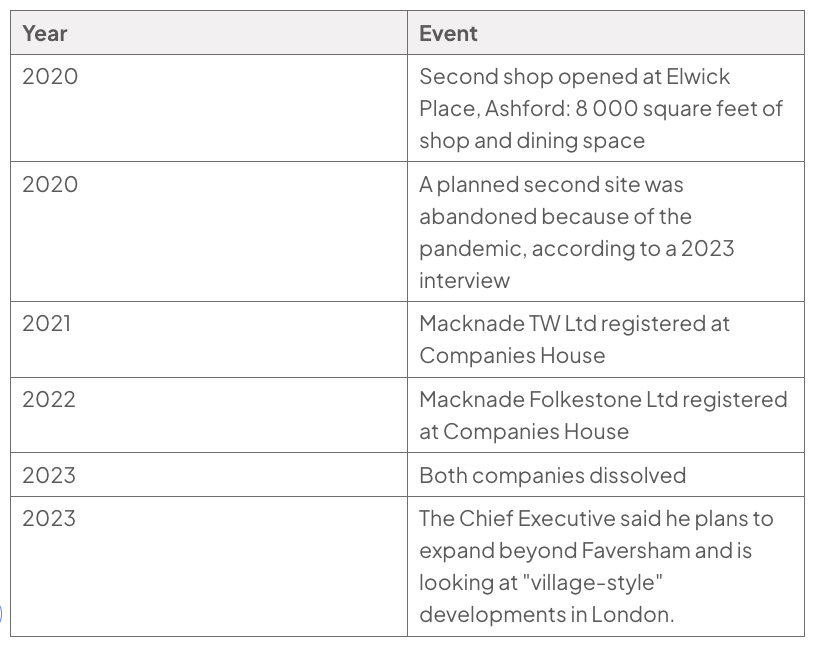
In 2020 Macknade opened a second shop, in Ashford. Its website now lists only the Faversham site.

Source: Macknade, Macknade Fine Foods Ltd accounts and press interviews

In 2020 Macknade opened a second shop, in Ashford. Its website now lists only the Faversham site.

Analyse one difficulty a family-owned business such as Macknade might face in running more than one site.

5
6 marks

Source B: Pukka Pads

Pukka Pads is a stationery business based in Poole, Dorset, owned and controlled by Chris Stott. It sells notebooks, pads, files, packaging and party products to retailers, to other businesses and online. It makes products in its UK factories and buys others from suppliers in China and the Far East, paying them in US dollars. It has companies in the United States, Hong Kong, China and the Netherlands.

In the year to 30 September 2025:

  • turnover fell by 10% to £21.8 million, "primarily as a result of moving away from very low margin product sales in the UK business"

  • gross profit rose, and operating profit rose to £652 055

  • inventory was reduced by £1.57 million

  • the average number of employees fell from 84 to 71

The company faces two main pressures:

  • Currency. No contracts to fix the exchange rate were in place at 30 September 2025, though some were taken out shortly afterwards. Administrative expenses included an exchange loss of £68 483 in 2025, against an exchange gain of £413 141 in 2024.

  • Trade. Since April 2025 the United States has charged a tariff of 10% on most goods imported from the UK, and higher tariffs on many goods from China.

For 2026, Pukka Pads says that "new machines have been acquired to improve manufacturing processes, reduce waste and headcount". In 2024-25, £367 080 of new machinery was financed through hire purchase. It also says that leaving one of its UK warehouses by 30 June 2026 will save more than £700 000 a year.

Source: Pukka Pads UK Limited, group accounts for the year ended 30 September 2025

Pukka Pads' turnover fell by 10% in the year to 30 September 2025, "primarily as a result of moving away from very low margin product sales in the UK business".

Analyse one way in which moving away from low-margin sales might affect Pukka Pads' profit.

6
6 marks

Source B: Gadderby Sportswear

Gadderby Sportswear Limited is a private limited company, founded in 2008 by Martin Ashworth, a former rugby league player, and based in Huddersfield, West Yorkshire. It is owned by the Ashworth family, and Martin's daughter, Jo Ashworth, is Managing Director.

The company makes custom kit, including shirts, shorts, socks and training wear in each team's colours with names, numbers and sponsors' logos, for about 2 300 amateur rugby, football and netball clubs and 410 schools. Its mission is "kit made in Yorkshire for every grassroots team".

Every garment is cut, printed and sewn in its own factory, which allows it to deliver an order in 10 working days. The company repairs damaged kit free of charge for the first season and keeps each club's designs on file for quick reorders.

Revenue rose from £12.6 million to £14.2 million in 2025, and the factory made 610 000 garments. In 2025 the company began supplying clubs in Ireland and the Netherlands, which are in the European Union. Three rules apply to sales to EU customers:

  • Tariffs. UK-made goods are free of tariffs if they meet the "rules of origin" in the UK-EU trade agreement.

  • Customs. Every shipment needs a customs declaration.

  • VAT. EU customers pay VAT when their goods arrive.

Many competitors sell online and import kit from factories in Asia, at lower prices but with deliveries that take four to six weeks.

The company's objective is to reach revenue of £20 million by 2030 with an operating profit margin of at least 10%.

Source: Gadderby Sportswear

Gadderby Sportswear's revenue rose from £12.6 million to £14.2 million in 2025. Every garment is made in its own factory, which allows it to deliver an order in 10 working days.

Analyse one way in which growth might affect Gadderby Sportswear's ability to deliver orders on time.

7
6 marks

Source B: Royal Shakespeare Company

The Royal Shakespeare Company (RSC) is a registered charity based in Stratford-upon-Avon, the town where Shakespeare was born. Its Co-Artistic Directors are Daniel Evans and Tamara Harvey. Its mission is to "redefine how Shakespeare and great story-telling connects us, creates opportunities and brings joy".

The RSC performs in three theatres in Stratford, transfers productions to London, tours the UK and abroad, and works with schools nationwide. It also earns income from licensing its productions, including the musical Matilda, which has had more than 5 000 performances in London since 2011 and began a UK tour in October 2025.

Its income comes from ticket sales, an annual grant from Arts Council England, Theatre Tax Relief, donations, catering and retail.

In 2024/25 the RSC sold more than 25 000 tickets at £25 or less, and in Stratford it sold 77% of its seats but achieved 64% of its potential ticket income. It sold more than 23 000 tickets at £10 to young people aged 14 to 25, in a partnership with the social media company TikTok. Linear television viewing is declining, particularly among younger audiences.

The RSC faces two pressures:

  • Income. In the year to 31 March 2025 income fell from £92.1 million to £82.0 million, partly because the previous year's income from Matilda and other productions was not repeated, and spending exceeded income.

  • Audiences. The RSC sees cost-of-living pressures as a risk to audience levels.

In 2025 it announced plans to reduce its workforce by 11%, first through voluntary redundancy, to close a shortfall of about £5 million.

Source: Royal Shakespeare Company, Report and Financial Statements for the year ended 31 March 2025, and press reports

The RSC transfers productions to London, tours the UK and abroad, and earns income from licensing its productions, including the musical Matilda.

Analyse one way in which licensing its productions might help the RSC to grow.

8
6 marks

Source B: Culverton Biotech

Culverton Biotech Limited was founded in 2017 by two scientists from the University of Oxford and is based at a science park near Abingdon, Oxfordshire. It has 46 employees. It is developing one medicine, CLV-201, for a rare inherited liver disease that affects about 1 in 25 000 people and for which there is no approved treatment in the UK.

Culverton Biotech's mission is "to turn rare-disease science into medicines that patients can actually get". Its objective is to have CLV-201 approved in the UK by 2029.

In 2025 CLV-201 completed a Phase II clinical trial. To be approved, it must now pass a larger Phase III trial, expected to cost £45 million over three years. The company has no revenue: it is funded by venture capital investors, who own most of its shares, and by research grants. It made a loss of £19.6 million in the year to 30 June 2026.

Two large pharmaceutical companies have approached Culverton Biotech about licensing CLV-201.

Source: Culverton Biotech

Culverton Biotech has 46 employees and one medicine in development. Two large pharmaceutical companies have approached it about licensing that medicine.

Analyse one way in which Culverton Biotech's small size might affect its ability to bring CLV-201 to patients.

1
9 marks

Source A: Rightmove

Rightmove plc runs the UK's largest property portal, where estate agents, letting agents and housebuilders advertise homes for sale and to rent. It is listed on the London Stock Exchange. Its customers are the agents and developers, who pay a monthly subscription; people looking for a home use the website and app free of charge. In 2025 users spent 16.8 billion minutes on Rightmove, which had 89% of all the time spent on UK property portals in December 2025, and more than 85% of visits came to the site directly rather than through a search engine or advertisement.

In the year to 31 December 2025 Rightmove's revenue rose 9% to £425.1 million and its underlying operating profit rose 9% to £297.7 million, a margin of 70%. Average revenue per advertiser rose by 6%, while the number of advertisers rose by 1%. Most agents choose a package of products, and a growing share choose the most expensive one.

Rightmove has three newer areas of business, which it calls its strategic growth areas: commercial property, mortgages and services for landlords and tenants. Together their revenue grew by 25% in 2025.

The company is using artificial intelligence across its business. It had 46 strategic AI initiatives in progress by June 2026. It has also launched a conversational search tool developed with Google Cloud and has submitted an app for use within ChatGPT. In November 2025 it announced that it would increase its investment in technology and AI, and that its underlying operating profit would therefore grow by only 3% to 5% in 2026. Its share price fell by more than 25% that day.

Source: Rightmove plc, Results for the year ended 31 December 2025, and Half Year Results 2026

Appendix A: Rightmove selected data

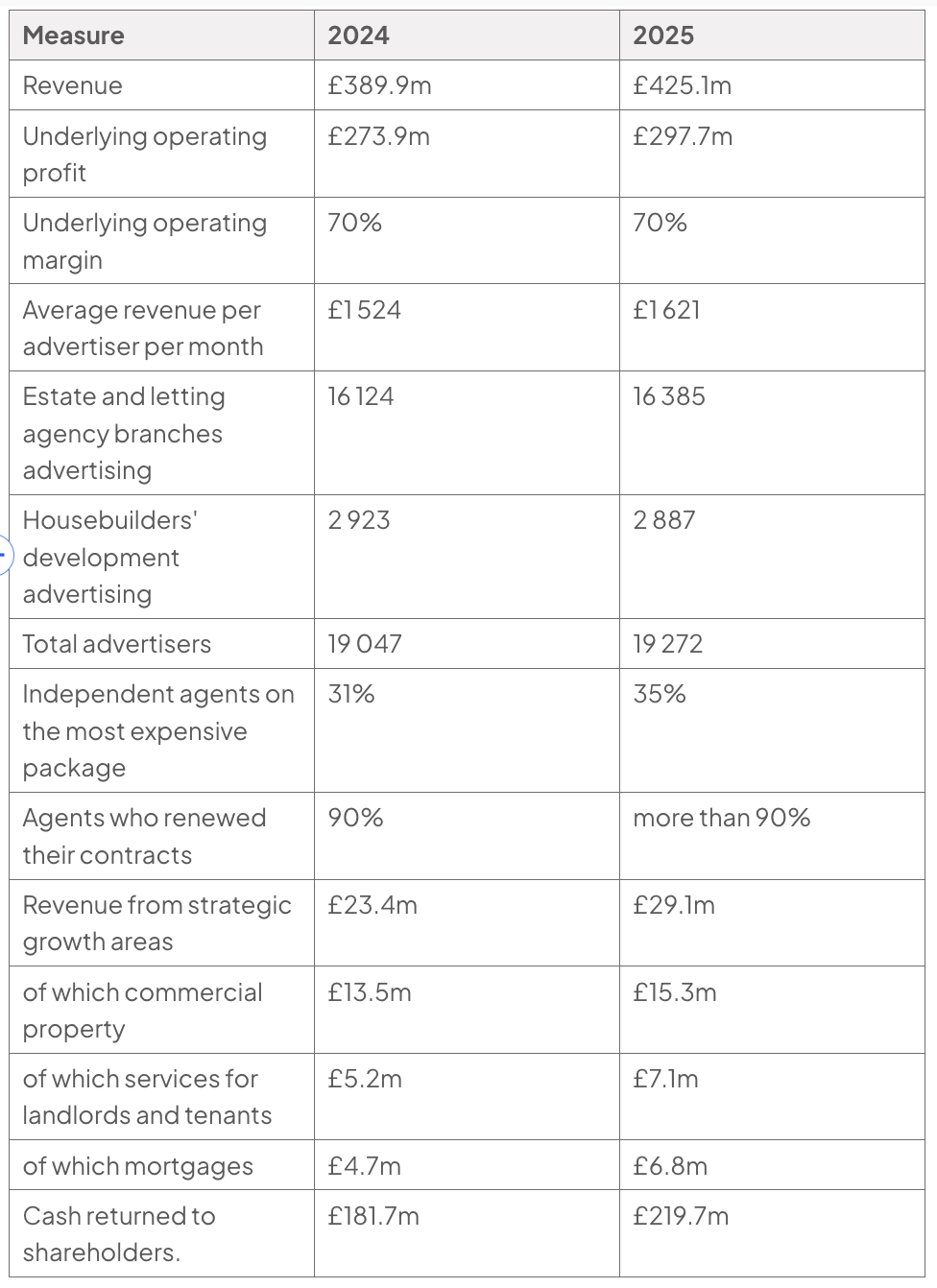
Table comparing Rightmove’s 2024 and 2025 data: 2025 revenue is £425.1m and revenue from strategic growth areas is £29.1m; other measures include profit, margins and advertisers.

The three strategic growth areas do not add exactly to the published total because of rounding.

Source: Rightmove plc

Appendix B: Rightmove in 2026

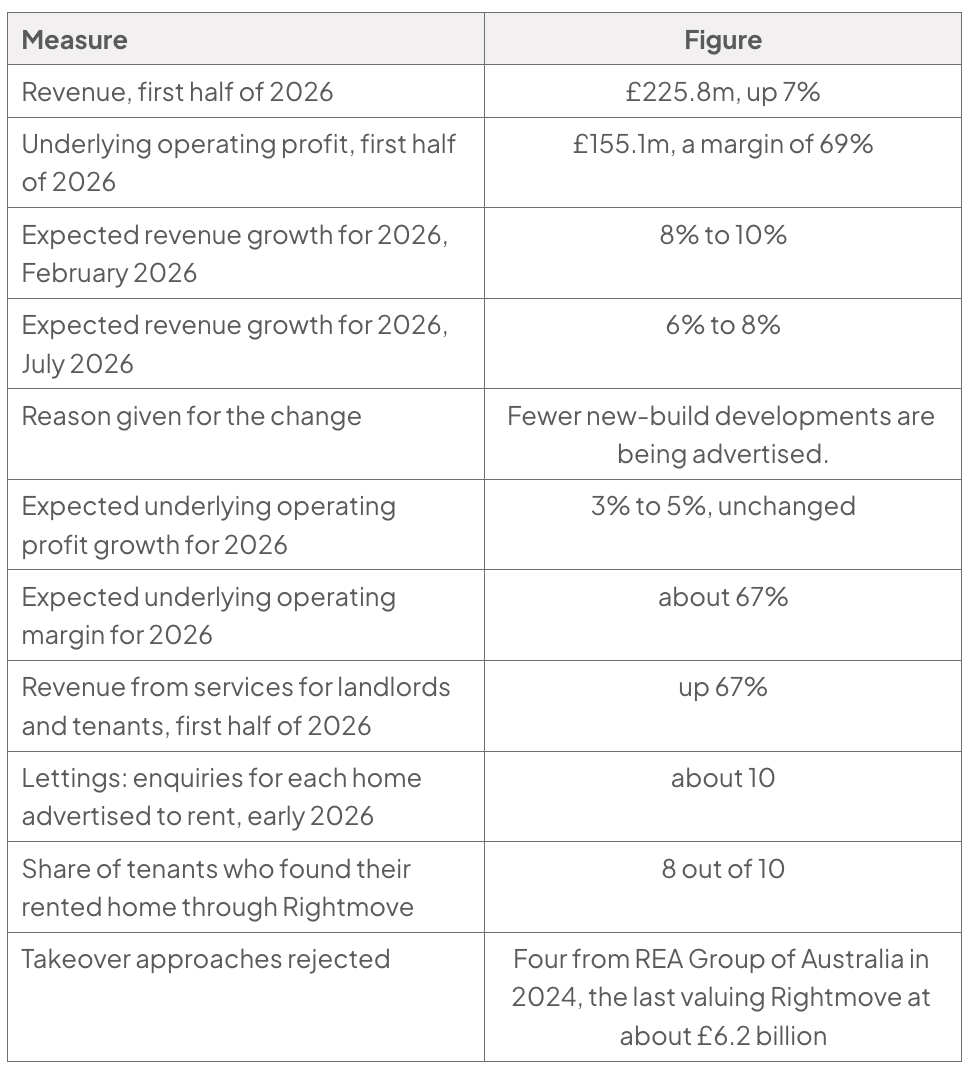
Table of Rightmove 2026 data: first-half revenue £225.8m, up 7%, and profit £155.1m; revenue-growth forecast cut from between 8% and 10% to between 6% and 8%; landlord and tenant services up 67%; four takeover bids rejected.

Source: Analyst, using Rightmove plc and press reports

Assess whether developing its strategic growth areas is the best way for Rightmove to grow.

2
9 marks

Source A: JD Sports

JD Sports Fashion plc, founded in 1981 in Bury, Greater Manchester, is listed on the London Stock Exchange. It sells trainers, clothing and accessories from brands such as Nike and Adidas, and some own-brand products, through 4 811 stores in 36 countries and online. Its shop names include JD, Size?, Hibbett, Finish Line, Shoe Palace, Courir and Go Outdoors.

Online made up 20% of sales in the half year to August 2026. Its JD STATUS loyalty programme has more than 10 million active members. In 2026 JD became one of the first US retailers to let customers buy its products and pay directly within an AI platform.

In July 2024 JD bought Hibbett, a US chain of about 1 000 stores, funded mainly by a $1 billion loan, and in November 2024 the French chain Courir. It is converting many of its US stores that trade as Finish Line to the JD name. It follows a "fewer, bigger, better" approach to its UK stores, and in 2026 JD Germany was reduced from 91 to 62 stores.

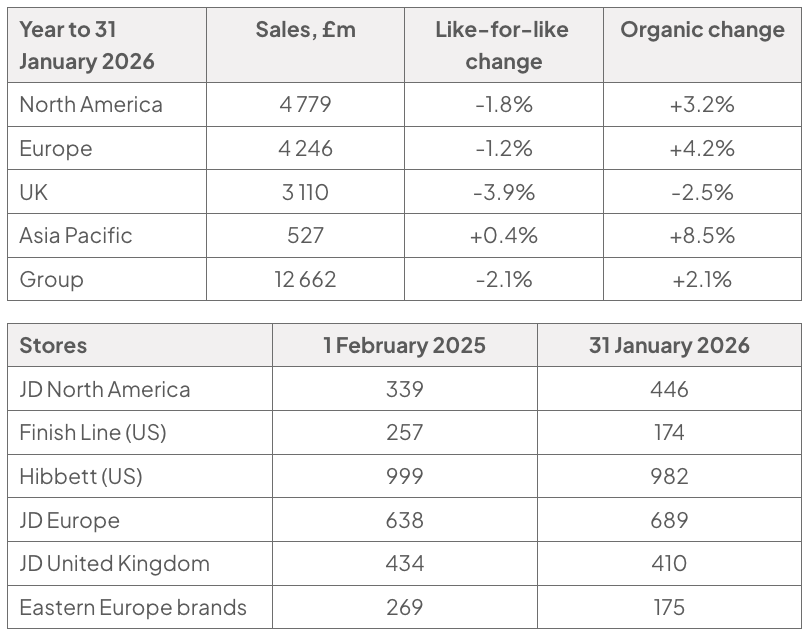
In the year to 31 January 2026 sales rose 10.5% to £12 662 million. Organic sales, which exclude acquisitions, rose 2.1%, and like-for-like sales, from stores and websites open in both years, fell 2.1%. Free cash flow rose. JD describes its market as "highly promotional".

Its medium-term priorities are sales growth ahead of its markets, a rising operating margin and strong free cash flow. It aims to generate more than £1.4 billion of free cash flow over the three years to January 2028.

Source: JD Sports Fashion plc, results for the year to 31 January 2026 and the half year to 1 August 2026

Appendix A: JD Sports financial data

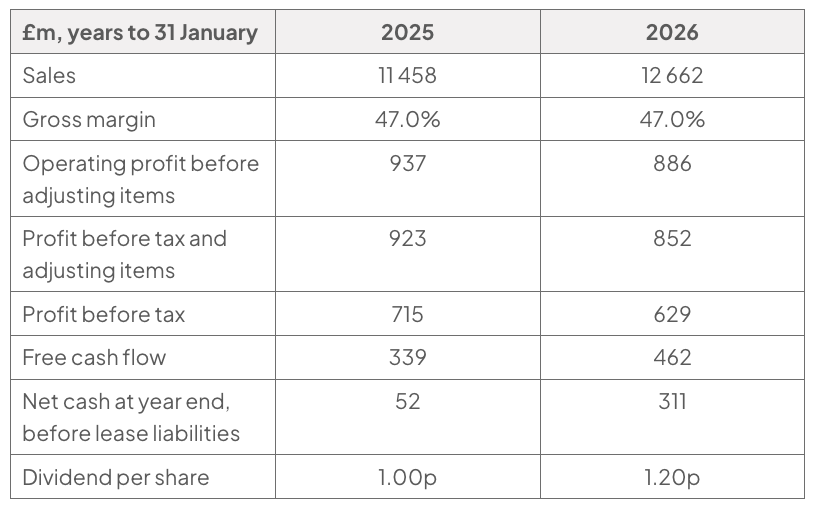
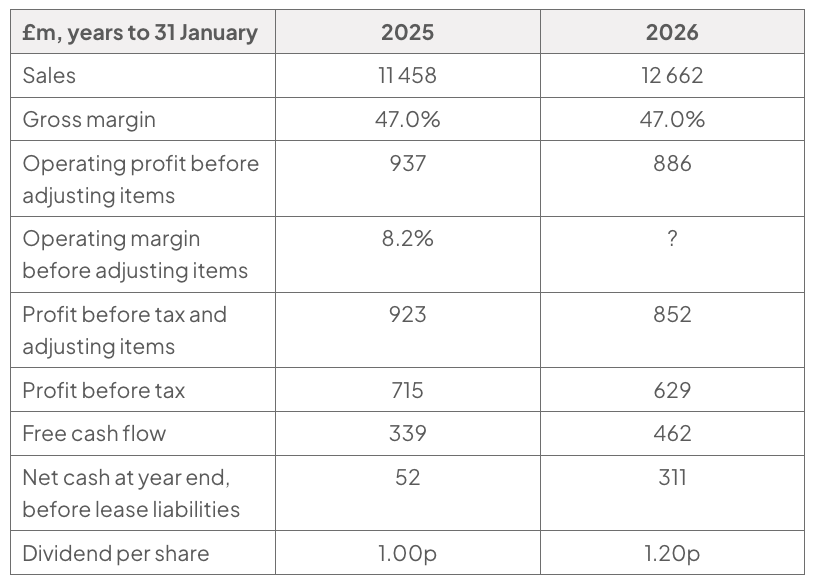
Financial table for years to 31 January 2025 and 2026, in £m except percentages and pence per share, comparing sales, gross margin, operating profit before adjusting items, profit before tax, free cash flow, net cash and dividends.
  • Prices. JD made "controlled price investments", or price cuts, particularly online; their cost to gross margin was offset by higher marketing contributions from brands.

  • Shareholders. A £200m share buyback each year, alongside the 20% higher dividend.

  • Half year to 1 August 2026. Sales £5 899m (2025: £5 940m); profit before tax and adjusting items £282m (2025: £351m); like-for-like sales down 2.8%. Guidance for profit before tax and adjusting items for the year to January 2027 was cut from £750m-£850m to £700m-£800m.

Source: JD Sports Fashion plc

Appendix B: Regions and stores

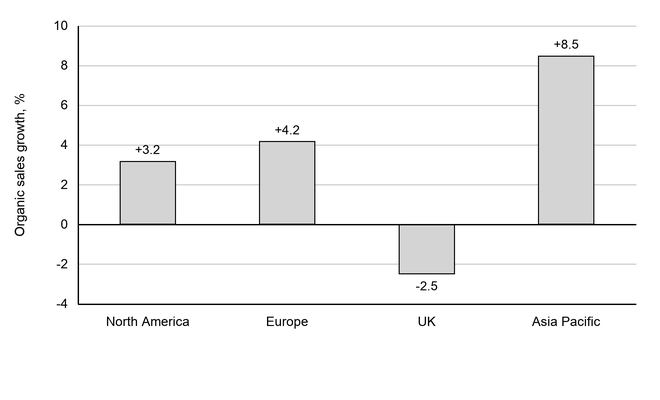
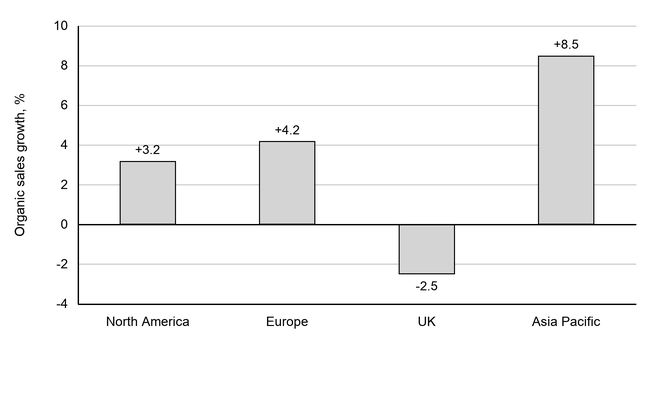
Bar chart of JD Sports’ organic sales growth by region, on a percentage scale from minus 4 to 10: North America +3.2%, Europe +4.2%, UK −2.5% and Asia Pacific +8.5%.
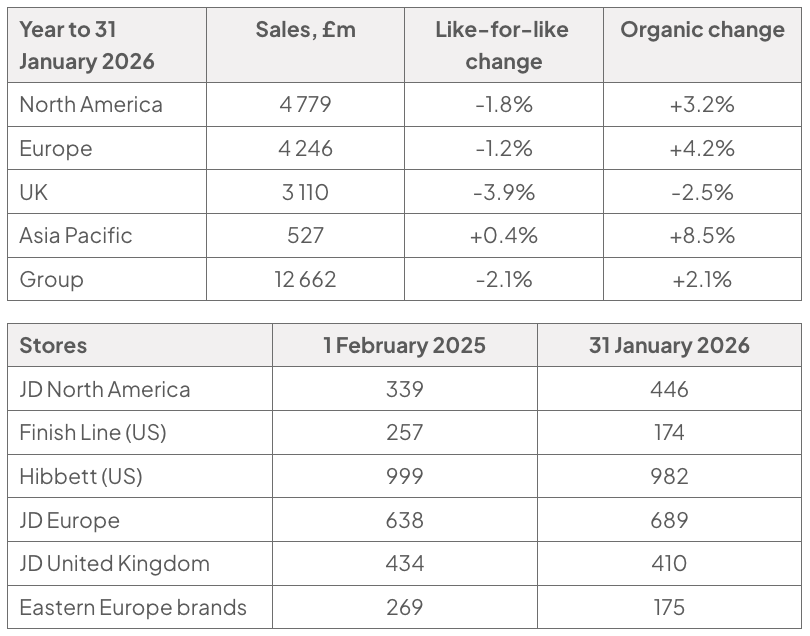
Tables show 2026 regional sales: North America £4 779m and group £12 662m, with Europe £4 246m, UK £3 110m and Asia Pacific £527m. Hibbett stores fell from 999 to 982; JD North America rose from 339 to 446.
  • US. All remaining standalone Finish Line stores are to be converted or closed by January 2028.

  • UK. A "fewer, bigger, better" approach, with new flagship stores in Cardiff and Sheffield in 2026.

  • Germany. JD Germany was reduced from 91 to 62 stores in 2026.

Source: Analyst, using JD Sports Fashion plc

Assess whether buying Hibbett has helped JD Sports to grow successfully.

3
9 marks

Source B: Macknade

Macknade is a family-owned food hall on the edge of Faversham, Kent, on the site of a farm the Neame family began farming in 1847. The company, Macknade Fine Foods Ltd, employed an average of 82 people in the year to 31 March 2025.

In 1979 Patricia Neame and her husband Renato Cuomo, who was born on the Italian island of Ischia, opened a pick-your-own business on the farm. In 2001 the family stopped farming to concentrate on retail. Their son, Stefano Cuomo, the sixth generation to run the business, became managing director in 2013 and later Chief Executive.

The seven-acre site is dominated by a 10 000 square foot food hall, which sells:

  • local and Mediterranean produce

  • more than 100 cheeses

  • meat from its own butchery, which opened in 2016 and buys whole carcasses from farms using regenerative "Pasture for Life" methods

The site also has a café and an outdoor food village of street-food traders. Other businesses rent space on the site, including a vet, a fitness studio and a sauna.

In 2021 Macknade's managing director said that "community is at our core". Its Chief Executive has described a shopper with a "dual shopping list", who buys some items in supermarkets and others from independent shops.

In 2020 Macknade opened a second shop, in Ashford. Its website now lists only the Faversham site.

Source: Macknade, Macknade Fine Foods Ltd accounts and press interviews

Appendix D: Macknade Fine Foods Ltd balance sheet data

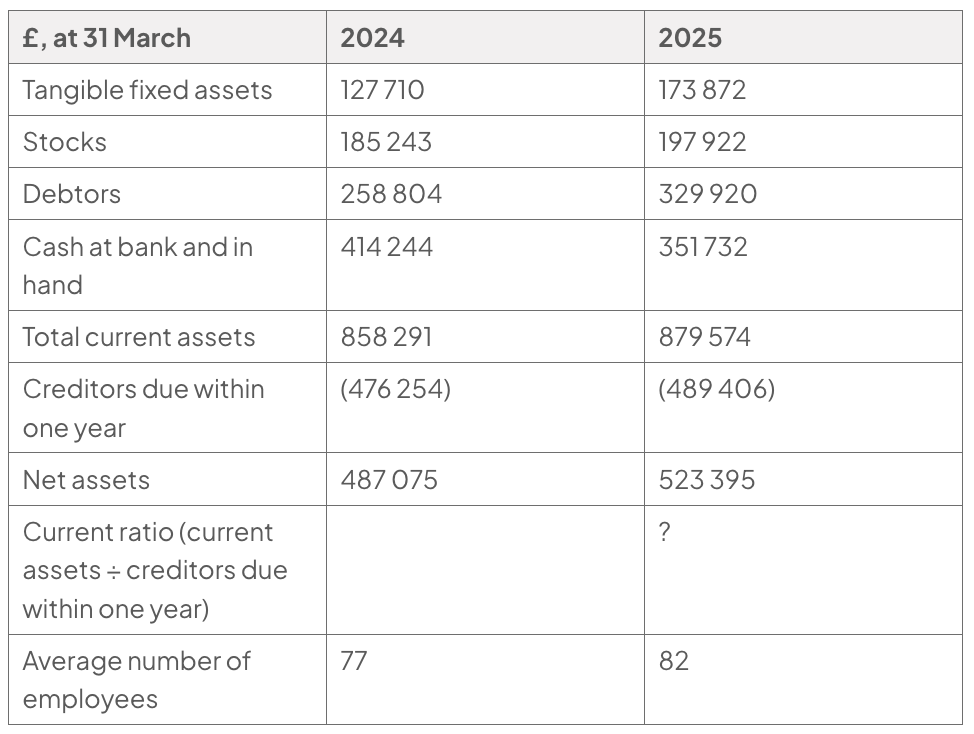
Balance sheet table in pounds at 31 March, comparing 2024 and 2025; in 2025, total current assets are £879 574 and creditors due within one year are £489 406, with the current ratio shown as a question mark.
  • In the year to 31 March 2025 Macknade spent £107 559 on new fixed assets, including property improvements, equipment and fixtures, and charged £59 714 of depreciation.

  • As a small company, Macknade is not required to publish its profit and loss account, and does not.

Source: Macknade Fine Foods Ltd

Appendix G: Growing beyond Faversham

A two-column table titled “Growing beyond Faversham”, with six entries from 2020 to 2023 recording a shop opening, abandoned site, company registrations, dissolution and expansion plans.

Source: Analyst, using Companies House and press reports

Assess whether Macknade has the financial resources to open another food hall.

Calculate Macknade's current ratio at 31 March 2025 to support your answer. Give your answer to two decimal places.

4
9 marks

Source B: Gadderby Sportswear

Gadderby Sportswear Limited is a private limited company, founded in 2008 by Martin Ashworth, a former rugby league player, and based in Huddersfield, West Yorkshire. It is owned by the Ashworth family, and Martin's daughter, Jo Ashworth, is Managing Director.

The company makes custom kit, including shirts, shorts, socks and training wear in each team's colours with names, numbers and sponsors' logos, for about 2 300 amateur rugby, football and netball clubs and 410 schools. Its mission is "kit made in Yorkshire for every grassroots team".

Every garment is cut, printed and sewn in its own factory, which allows it to deliver an order in 10 working days. The company repairs damaged kit free of charge for the first season and keeps each club's designs on file for quick reorders.

Revenue rose from £12.6 million to £14.2 million in 2025, and the factory made 610 000 garments. In 2025 the company began supplying clubs in Ireland and the Netherlands, which are in the European Union. Three rules apply to sales to EU customers:

  • Tariffs. UK-made goods are free of tariffs if they meet the "rules of origin" in the UK-EU trade agreement.

  • Customs. Every shipment needs a customs declaration.

  • VAT. EU customers pay VAT when their goods arrive.

Many competitors sell online and import kit from factories in Asia, at lower prices but with deliveries that take four to six weeks.

The company's objective is to reach revenue of £20 million by 2030 with an operating profit margin of at least 10%.

Source: Gadderby Sportswear

Appendix D: Gadderby Sportswear selected data

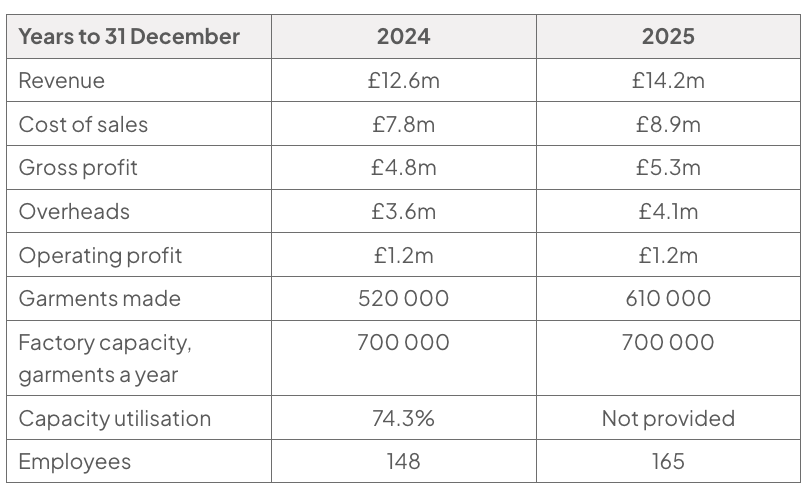
Table comparing 2024 and 2025: garments made rose from 520 000 to 610 000, while annual factory capacity remained 700 000; 2025 capacity utilisation is marked “Not provided”.

Source: Gadderby Sportswear

Appendix E: Customers, competitors and trade

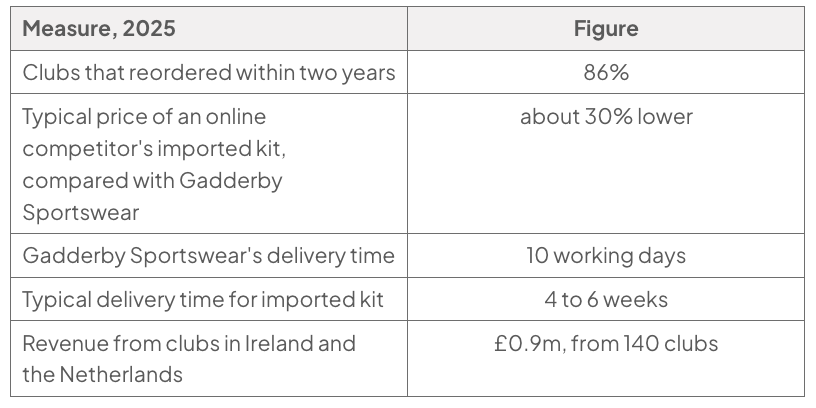
Table of 2025 customers, competition and trade: 86% reordered within two years; imported kit is about 30% cheaper; delivery is 10 working days versus 4 to 6 weeks; EU revenue is £0.9m from 140 clubs.
  • Trade with the EU. Goods made in the UK can be sold to EU customers without tariffs if they meet the "rules of origin" in the UK-EU trade agreement, but every shipment needs a customs declaration, and EU customers pay VAT when their goods arrive.

  • Service. Gadderby Sportswear repairs damaged kit free of charge for the first season and keeps each club's designs on file for quick reorders.

Source: Gadderby Sportswear and UK government guidance

Assess whether Gadderby Sportswear can continue to grow without increasing its factory capacity.

Calculate Gadderby Sportswear's capacity utilisation in 2025 to support your answer. Give your answer to one decimal place.

5
9 marks

Source B: Royal Shakespeare Company

The Royal Shakespeare Company (RSC) is a registered charity based in Stratford-upon-Avon, the town where Shakespeare was born. Its Co-Artistic Directors are Daniel Evans and Tamara Harvey. Its mission is to "redefine how Shakespeare and great story-telling connects us, creates opportunities and brings joy".

The RSC performs in three theatres in Stratford, transfers productions to London, tours the UK and abroad, and works with schools nationwide. It also earns income from licensing its productions, including the musical Matilda, which has had more than 5 000 performances in London since 2011 and began a UK tour in October 2025.

Its income comes from ticket sales, an annual grant from Arts Council England, Theatre Tax Relief, donations, catering and retail.

In 2024/25 the RSC sold more than 25 000 tickets at £25 or less, and in Stratford it sold 77% of its seats but achieved 64% of its potential ticket income. It sold more than 23 000 tickets at £10 to young people aged 14 to 25, in a partnership with the social media company TikTok. Linear television viewing is declining, particularly among younger audiences.

The RSC faces two pressures:

  • Income. In the year to 31 March 2025 income fell from £92.1 million to £82.0 million, partly because the previous year's income from Matilda and other productions was not repeated, and spending exceeded income.

  • Audiences. The RSC sees cost-of-living pressures as a risk to audience levels.

In 2025 it announced plans to reduce its workforce by 11%, first through voluntary redundancy, to close a shortfall of about £5 million.

Source: Royal Shakespeare Company, Report and Financial Statements for the year ended 31 March 2025, and press reports

Appendix D: RSC financial data

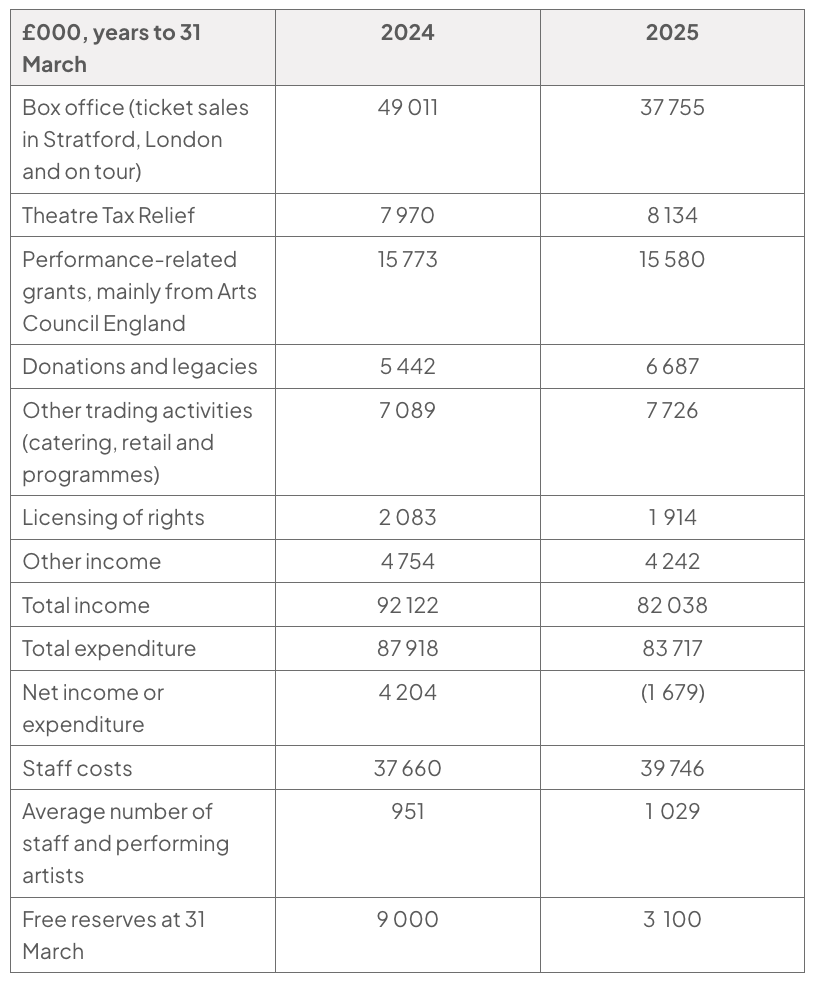
RSC financial data table in £000 for years to 31 March 2024 and 2025. Box office income is 49 011 in 2024 and 37 755 in 2025. Total income is 92 122 and 82 038, total expenditure 87 918 and 83 717, and staff costs 37 660 and 39 746.
  • Free reserves are money not tied up in buildings or given for a particular purpose.

  • In 2021 the RSC borrowed £19.4m from the government's Culture Recovery Fund for 20 years at 2%; repayments of about £1.5m a year began in February 2025 and run to 2041.

Source: Royal Shakespeare Company

Appendix F: Funding, people and strategy

  • Arts Council England. National Portfolio funding of £15.3m a year, unchanged since 2022 apart from a 1.61% increase in 2025/26, and extended to 2026/27. It was 18.6% of income in 2024/25.

  • Donations. More than 38 000 individual donations in 2024/25, and a legacy of £2m, of which up to £1m is designated to support a Shakespeare curriculum for schools.

  • Board response. The 2025/26 budget "shows a further reduction in unrestricted reserves". The Board began a strategic review of ways to increase income from a range of sources and make "its cost base more flexible".

  • Workforce changes, 2025/26. Staff were invited to apply for voluntary redundancy from September 2025. The in-house music department has effectively closed, and long-term contracts for actors and musicians are being replaced by freelance contracts.

  • Pay. The 2024/25 pay award was 3.75%.

Source: Analyst, using the Royal Shakespeare Company and press reports

Assess whether reducing the size of its workforce is the right response to the RSC's financial position.

Calculate the RSC's employee costs as a percentage of revenue (its total income) for the years to 31 March 2024 and 31 March 2025 to support your answer. Give your answers to one decimal place.

1
15 marks

Source B: Wrenbury Castings

Wrenbury Castings Limited makes iron castings at a foundry near Crewe, Cheshire. It was founded in 1921 and is owned by the Fairclough family; its Managing Director is Tom Fairclough. It employs 118 people. It melts scrap iron and steel in two electric induction furnaces and pours the metal into sand moulds to make castings weighing between 2 and 8 tonnes, such as counterweights for excavators, pump housings and parts for agricultural machinery. Its largest customer, a UK manufacturer of construction machinery, buys 41% of its output, and customers in the EU buy 18%.

When the moulds are broken open and the castings are cleaned by grinding, a process called fettling, fine silica dust is released. The law sets a limit on the amount of this dust that workers may breathe, and the Health and Safety Executive inspects foundries to check that employers control it.

Electricity is the company's second-largest cost, after scrap metal. Wrenbury Castings competes with imported castings, many of them made in foundries which melt iron using coke, a process that emits more carbon dioxide.

Several changes in government policy affect the business:

  • The EU carbon border charge. From 2026, businesses in the EU which import iron and steel goods, including castings, must pay a charge for the carbon dioxide emitted in making them, unless a similar carbon price has already been paid. In May 2025 the UK and the EU agreed to work towards linking their carbon markets, which would remove the charge on UK goods.

  • The UK carbon border charge. From 1 January 2027 the UK will charge a similar levy on imports of iron and steel and some other goods.

  • Electricity costs. In June 2025 the government's Industrial Strategy promised to cut electricity costs by up to 25% from 2027 for manufacturers which use large amounts of electricity.

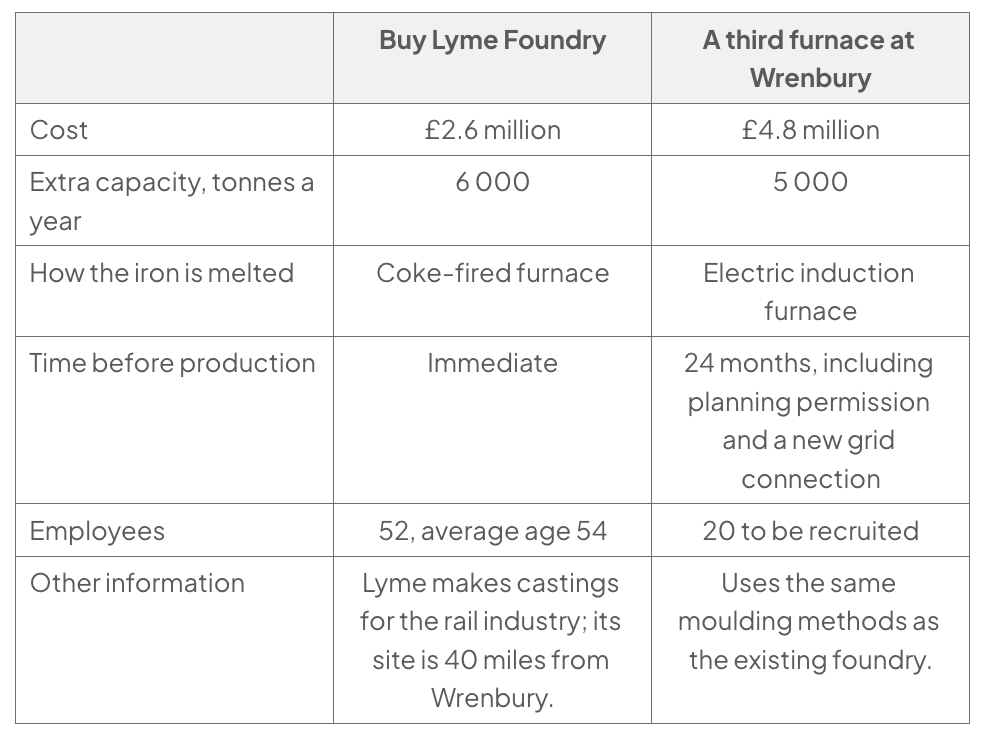
Wrenbury Castings has been offered the chance to buy Lyme Foundry, a smaller rival in Staffordshire whose owner is retiring. Its largest customer has asked it to supply 3 000 more tonnes of castings a year from 2028.

Source: Wrenbury Castings

Appendix D: Wrenbury Castings selected data

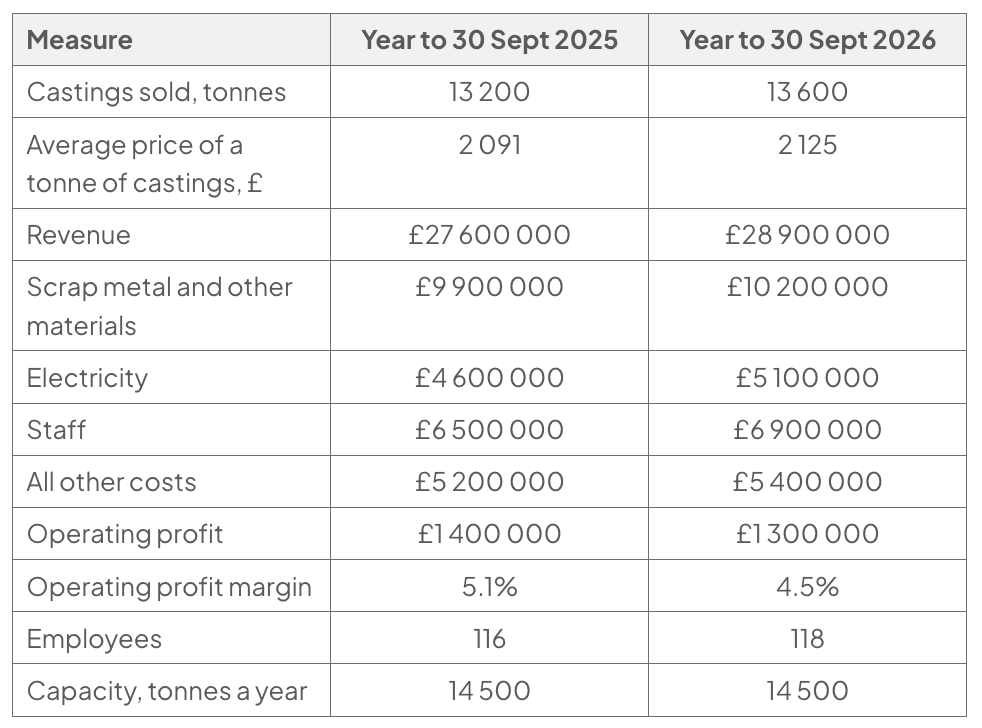
Table comparing Wrenbury Castings’ selected sales, financial, staffing and capacity data for the years to 30 September 2025 and 2026.

Source: Wrenbury Castings

Appendix F: The carbon in a tonne of castings

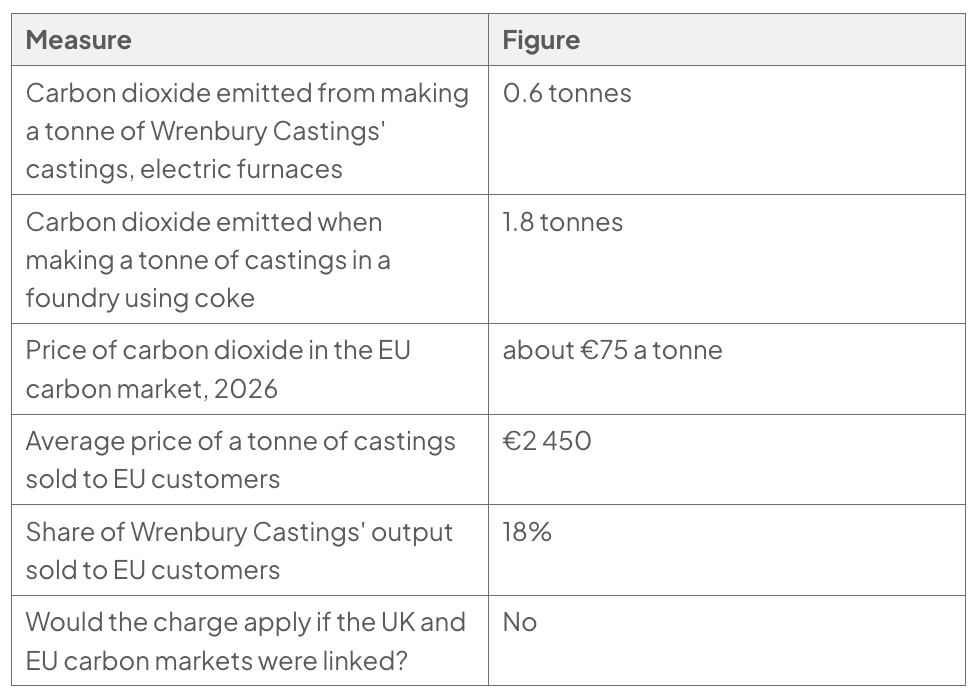
Table of carbon data: emissions per tonne are 0.6 tonnes using electric furnaces and 1.8 tonnes using coke; EU carbon price is about €75 per tonne, castings cost €2,450 per tonne, 18% go to EU customers, and linking markets means no charge.

Source: Analyst

Appendix H: Two ways to grow

Comparison table of two growth options: buying Lyme Foundry costs £2.6 million and adds 6,000 tonnes capacity immediately; a third furnace costs £4.8 million, adds 5,000 tonnes after 24 months.

Source: Wrenbury Castings

Wrenbury Castings' largest customer has asked it to supply 3 000 more tonnes of castings a year from 2028.

Evaluate whether Wrenbury Castings should grow by buying Lyme Foundry or by building a third furnace at its own site.

2
15 marks

Source A: JD Sports

JD Sports Fashion plc, founded in 1981 in Bury, Greater Manchester, is listed on the London Stock Exchange. It sells trainers, clothing and accessories from brands such as Nike and Adidas, and some own-brand products, through 4 811 stores in 36 countries and online. Its shop names include JD, Size?, Hibbett, Finish Line, Shoe Palace, Courir and Go Outdoors.

Online made up 20% of sales in the half year to August 2026. Its JD STATUS loyalty programme has more than 10 million active members. In 2026 JD became one of the first US retailers to let customers buy its products and pay directly within an AI platform.

In July 2024 JD bought Hibbett, a US chain of about 1 000 stores, funded mainly by a $1 billion loan, and in November 2024 the French chain Courir. It is converting many of its US stores that trade as Finish Line to the JD name. It follows a "fewer, bigger, better" approach to its UK stores, and in 2026 JD Germany was reduced from 91 to 62 stores.

In the year to 31 January 2026 sales rose 10.5% to £12 662 million. Organic sales, which exclude acquisitions, rose 2.1%, and like-for-like sales, from stores and websites open in both years, fell 2.1%. Free cash flow rose. JD describes its market as "highly promotional".

Its medium-term priorities are sales growth ahead of its markets, a rising operating margin and strong free cash flow. It aims to generate more than £1.4 billion of free cash flow over the three years to January 2028.

Source: JD Sports Fashion plc, results for the year to 31 January 2026 and the half year to 1 August 2026

Appendix A: JD Sports financial data

Financial table comparing JD Sports’ 2025 and 2026 results in £m and percentages. The 2026 operating margin before adjusting items is missing and shown as a question mark; operating profit is £886m and sales £12,662m.
  • Prices. JD made "controlled price investments", or price cuts, particularly online; their cost to gross margin was offset by higher marketing contributions from brands.

  • Shareholders. A £200m share buyback each year, alongside the 20% higher dividend.

  • Half year to 1 August 2026. Sales £5 899m (2025: £5 940m); profit before tax and adjusting items £282m (2025: £351m); like-for-like sales down 2.8%. Guidance for profit before tax and adjusting items for the year to January 2027 was cut from £750m-£850m to £700m-£800m.

Source: JD Sports Fashion plc

Appendix B: Regions and stores

Bar chart of JD Sports’ organic sales growth by region: North America +3.2%, Europe +4.2%, UK −2.5% and Asia Pacific +8.5%. The vertical axis ranges from −4% to 10%.
Two tables show JD Sports’ regional sales and store numbers for 2026. Organic change ranges from −2.5% in the UK to +8.5% in Asia Pacific; JD North America stores rose from 339 to 446.
  • US. All remaining standalone Finish Line stores are to be converted or closed by January 2028.

  • UK. A "fewer, bigger, better" approach, with new flagship stores in Cardiff and Sheffield in 2026.

  • Germany. JD Germany was reduced from 91 to 62 stores in 2026.

Source: Analyst, using JD Sports Fashion plc

Appendix C: Strategy, technology and customers

  • Five priorities for 2026/27. A broader product range, including own brands; store productivity and optimisation; completing new e-commerce platforms worldwide; "accelerating AI adoption"; and using data to personalise marketing.

  • Online. 20% of sales in the half year to August 2026 (2025: 19%). Organic online sales grew 12.2% in North America and 3.8% in Europe in the year to January 2026. New e-commerce platforms went live in North America, South-East Asia, Italy, and the UK and Ireland.

  • JD STATUS. In the US, 5.7m active members made about 40% of JD and Finish Line's sales across stores and online, spending 21% more than non-members. In the UK and Europe, 3.7m members made about a third of sales, spending 25% more.

  • Products. Apparel and accessories reached 36% of sales; footwear sales were weaker because of the brands' product cycles, and JD describes the market as "highly promotional".

  • Operations. Automation was introduced at JD's distribution centre in Heerlen, the Netherlands.

  • Market. JD expects "muted market growth" and cites consumer cost-of-living pressures.

Source: Analyst, using JD Sports Fashion plc

JD Sports sells through 4 811 stores and online, and is investing in new e-commerce platforms while closing stores in some countries and opening them in others.

Evaluate whether JD Sports should grow mainly through its stores or through online sales.

3
15 marks

Source A: Mulberry

Mulberry Group plc was founded in Somerset in 1971 and is known for leather handbags such as the Bayswater. Its two largest shareholders are Challice, controlled by Singapore's Ong family, and Frasers Group, which owns retailers such as Sports Direct and Flannels. In 2024 Mulberry's board rejected a takeover approach from Frasers.

Mulberry designs, makes and sells bags, small leather goods and clothing. About half of its iconic bags are made by craftspeople at its two factories in Somerset. It sells through:

  • its own stores and website

  • franchise partners abroad

  • wholesale to other retailers

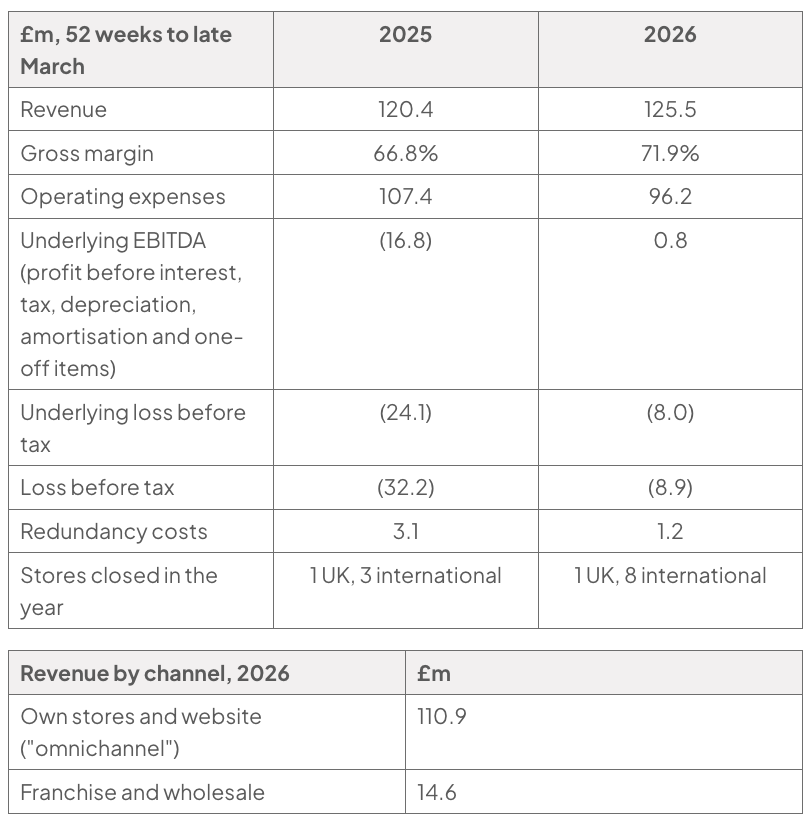
In the year to March 2025 Mulberry's revenue fell by 21% and it made a loss before tax of £32.2 million. Andrea Baldo, who became Chief Executive in 2024, launched a strategy called "Back to the Mulberry Spirit" in January 2025. Its aims are to:

  • simplify the business

  • restore profitability

  • rebuild the gross margin by selling more at full price

  • "put creativity back at the centre of what we do"

In July 2025 Challice and Frasers provided £20 million of funding. As part of the strategy, Mulberry:

  • made redundancies in both the year to March 2025 and the year to March 2026

  • closed one UK store and eight international stores in the year to March 2026

  • introduced a new incentive scheme for store staff "supporting a stronger performance culture"

In the 52 weeks to 28 March 2026 revenue rose by 4% to £125.5 million, and the loss before tax fell to £8.9 million. More than half of Mulberry's UK sales through its stores and website came from returning customers. Its pre-loved service, Mulberry Exchange, which buys back and resells used Mulberry bags, increased its sales by 46%.

Mulberry's medium-term goal is revenue of more than £200 million with an adjusted operating profit margin of 15%.

Source: Mulberry Group plc, audited results for the 52 weeks ended 28 March 2026

Appendix A: Mulberry financial data

Two Mulberry financial tables: 2025 and 2026 revenue, margins, costs, losses, redundancies and store closures; and 2026 revenue split between own stores and website, and franchise and wholesale.
  • Revenue grew 11% in the second half of the year. Like-for-like sales through Mulberry's own stores and website rose 9%.

  • Mulberry's bank facilities are committed until July 2028. Staff costs were £41.2m.

Source: Mulberry Group plc

Appendix B: Markets around the world

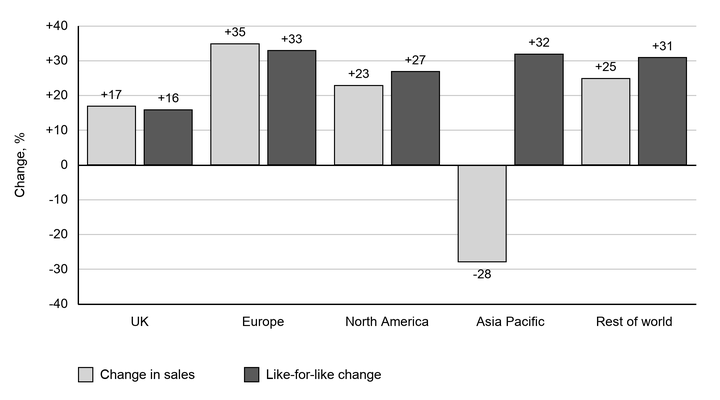
Bar chart of Mulberry sales changes by region, with change in sales and like-for-like change on a percentage scale from −40 to +40: UK +17%, +16%; Europe +35%, +33%; North America +23%, +27%; Asia Pacific −28%, +32%; rest of world +25%, +31%.
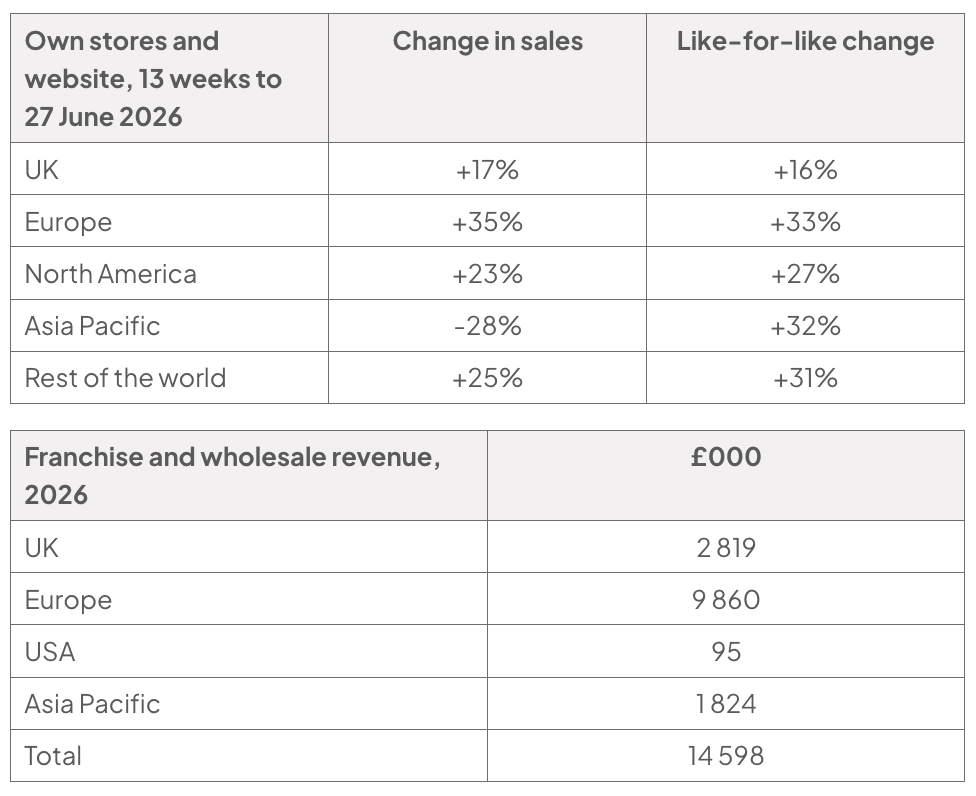
Two tables showing the change in sales in own stores and websites in the 13 weeks to 27 June 2026, with UK +17%, Europe +35%, North America +23%, Asia Pacific -28% and rest of the world +25%. The second table shows franchise and wholesale revenue in 2026 in £000: UK 2 819, Europe 9 860, USA 95, Asia Pacific 1 824, with a total of 14 598
  • Group revenue in the 13 weeks to 27 June 2026 was 23% higher than a year earlier; franchise and wholesale revenue was 56% higher.

  • Mulberry is "reshaping the Asia Pacific business with a focus on profitability".

  • Like-for-like sales compare stores and websites that were open in both periods.

Source: Mulberry Group plc

Appendix C: Carrying out the change

  • Product. New creative team; the return of the Roxanne bag; a limited edition Bayswater "sold out within minutes". The designer Christopher Kane was appointed creative director for clothing.

  • Pricing. Less discounting and "greater full-price discipline".

  • Wholesale. New UK partnerships with John Lewis, Liberty, Flannels and Harvey Nichols.

  • People. Redundancies in both years; a new incentive scheme for store staff "supporting a stronger performance culture". In September 2026 Kenny Wilson, former Chief Executive of Dr. Martens, joined the board.

  • Technology. Investment in a new e-commerce platform and customer relationship management.

  • Brand. Campaigns with the actor Cynthia Erivo and "Rooted in Craft"; the Chair says the board chose "to prioritise brand equity over short-term volume".

  • Outlook. The Chief Executive says "there is still more to do" and that the business remains "mindful of the wider macroeconomic environment".

Source: Analyst, using Mulberry Group plc

Mulberry sells mainly through its own stores and website, but has added wholesale partners such as John Lewis, Liberty, Flannels and Harvey Nichols.

Evaluate whether Mulberry should grow mainly through its own stores and website or through wholesale partners.