Disc Method Around Other Axes (College Board AP® Calculus BC): Study Guide

Volume with disc method revolving around other axes
How can I use the disc method to calculate volumes of revolution around axes parallel to the x-axis?
For a continuous function , if the region bounded by
the curve and the line
between and
is rotated radians around the line , then the volume of revolution is
Note that here is a function of
Thinking of this as an accumulation of change
is the volume of a disc with
circular cross section of radius
and length
is the limit of this volume element as
The integral sums up all these infinitesimal volume elements between and
Worked Example
Let be the region enclosed by the graph of , the lines and , and the line , as shown in the figure below.
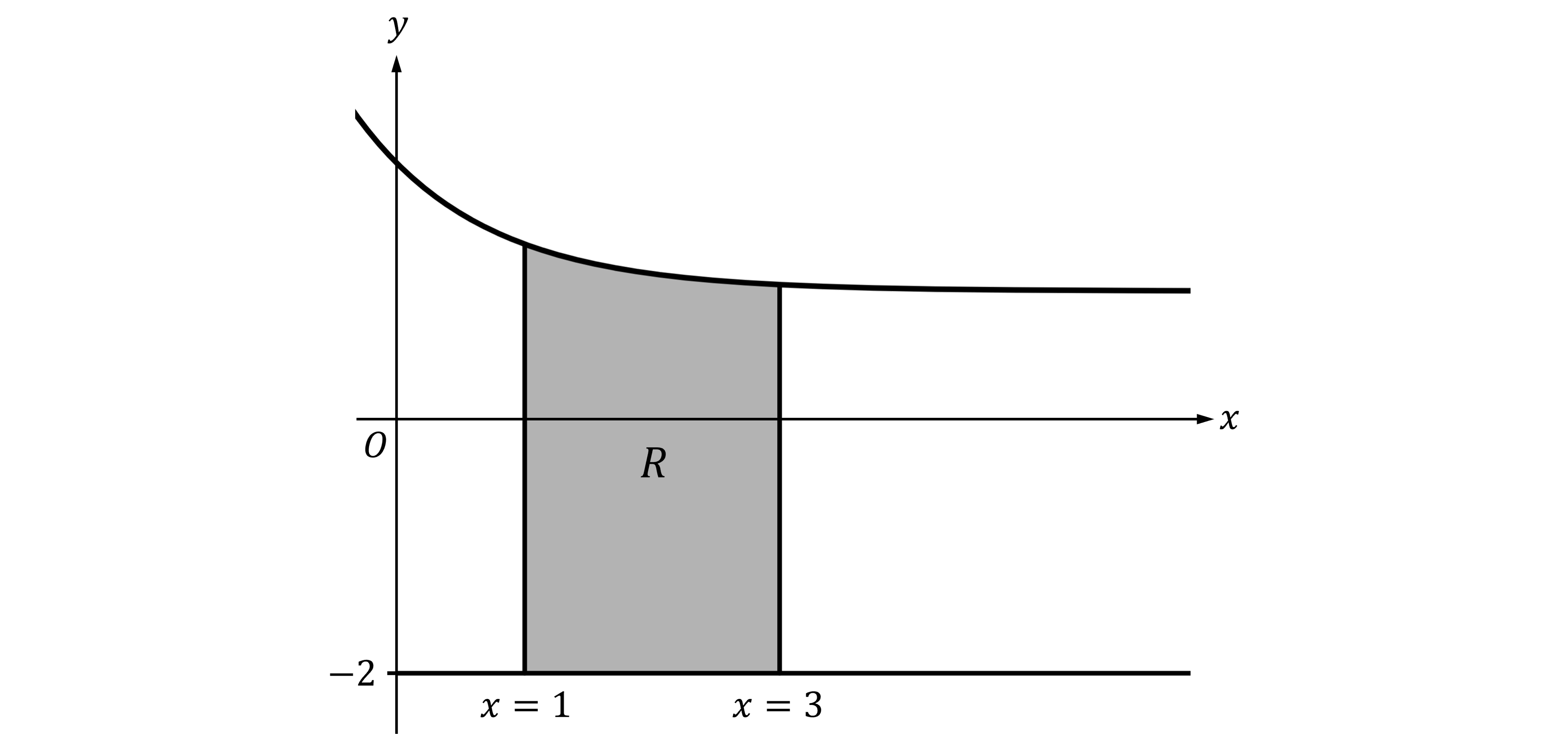
Find the volume of the solid generated when is rotated about the horizontal line .
Answer:
Use
62.753 units cubed (to 3 decimal places)
How can I use the disc method to calculate volumes of revolution around axes parallel to the y-axis?
This is similar to finding volumes of revolution around axes parallel to the -axis
For a continuous function , if the region bounded by
the curve and the line
between and
is rotated radians around the line , then the volume of revolution is
Note that here is a function of
This will mean rewriting in the form
Also note that the integration is done with respect to
Worked Example
Let be the region enclosed by the graph of , the lines and , and the line , as shown in the figure below.
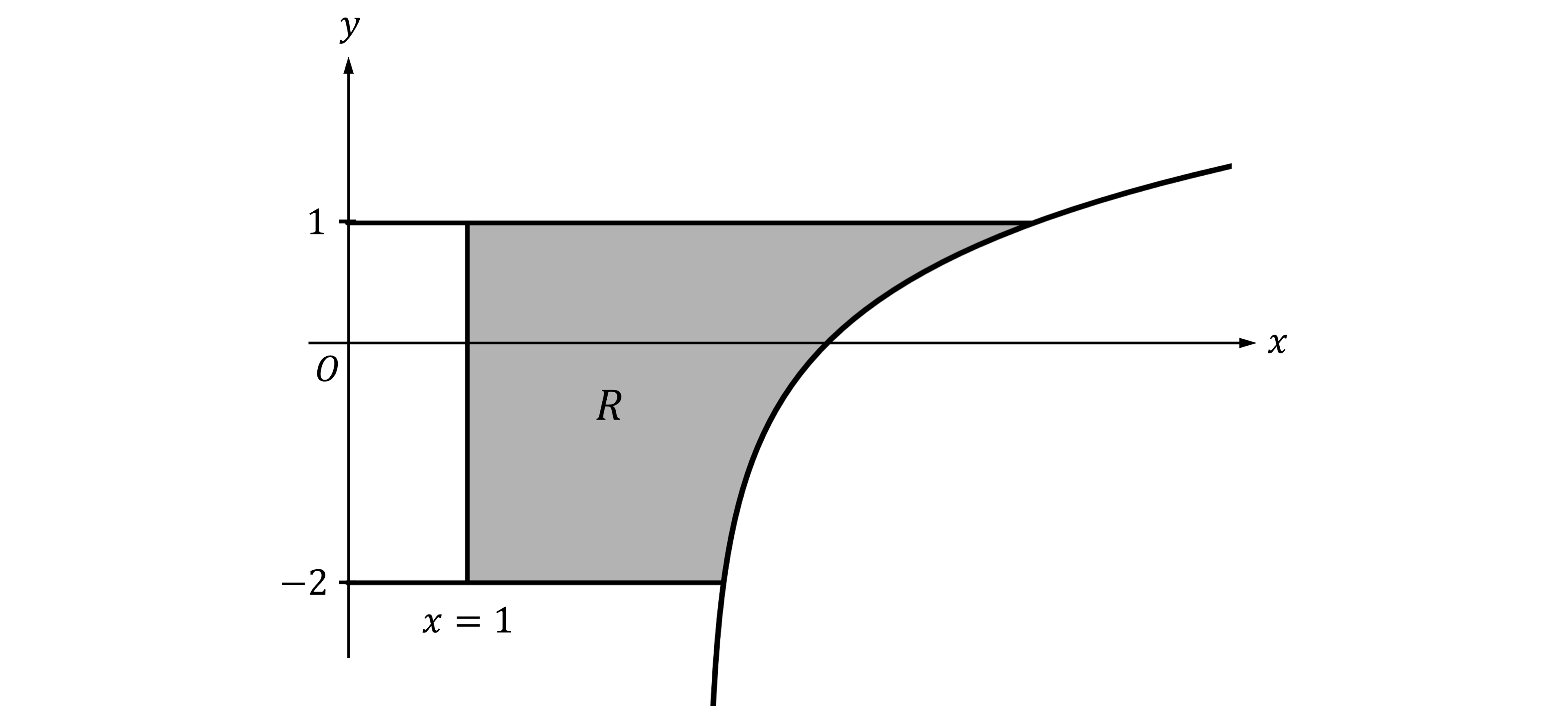
Find the volume of the solid generated when is rotated about the vertical line .
Answer:
Use
First rewrite the function as a function of
Now that can be put into the integral
Note that the integration will be along the -axis, from to
81.735 units cubed (to 3 decimal places)

Unlock more, it's free!
Join the 100,000+ Students that ❤️ Save My Exams
the (exam) results speak for themselves:

Was this revision note helpful?
Build on this topic