Target Market (AQA A Level Business): Exam Questions

Exam code: 7132

Syllabus Edition

First teaching 2026

First exams 2028

2 hours15 questions
1
6 marks

Source A: Jet2 plc

Jet2 plc describes itself as the UK's leading provider of package holidays and its third largest airline. It is a public limited company with shares traded on the London Stock Exchange, based at Leeds Bradford Airport, and it employs more than 14 000 people. Steve Heapy is the chief executive.

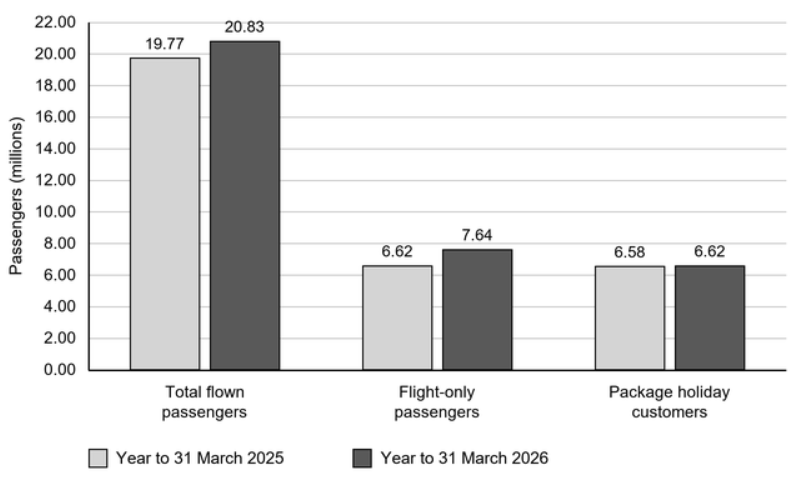
The company sells two different things. A package holiday combines flights, a hotel and transfers in one booking. A flight-only seat is just the flight. In the year to 31 March 2026 Jet2 flew a record 20.83 million passengers, up 5%. Within that total, flight-only passengers rose 15% to 7.64 million while package holiday customers rose 1% to 6.62 million. Jet2 counts each package holiday customer once, while flown passengers are counted on every flight, outbound and return. Appendix B shows the two side by side.

Customers pay for a holiday months before they take it, so money arrives long before the flight happens. At the year end the company held £3 292.5 million in cash and money market deposits, and net cash of £2 012.9 million.

The year's results were mixed. Revenue reached a record £7 482.1 million, up 4%. But operating profit fell 2% to £439.6 million, after absorbing £11.0 million of start-up costs for a new base at London Gatwick and £50 million of increased costs from employment taxes and sustainable aviation fuel. Profit before tax fell 7% and earnings per share fell 1% to 211.2p.

Source: Jet2 plc preliminary results, 8 July 2026, and Companies House

Appendix B: Jet2 plc passengers by type

Bar chart of Jet2 passengers in millions for years to 31 March 2025 and 2026: total flown 19.77 and 20.83; flight-only 6.62 and 7.64; package holiday 6.58 and 6.62.

Source: Jet2 plc

In the year to 31 March 2026 Jet2 plc's flight-only passengers rose 15% while its package holiday customers rose 1% (Appendix B).

Analyse one way in which serving these two groups of customers might affect the way Jet2 plc markets itself.

2
6 marks

Source A: The Gym Group plc

The Gym Group plc runs low cost gyms. It opened its first in 2008 and is now a public limited company with shares traded on the London Stock Exchange. It describes itself as a leading low cost gym operator and its offer as high value, low cost. Members pay by the month, there is no long contract to sign, and the gyms are open 24 hours a day.

The company calls its approach a labour light business model. Gyms are largely self-service, so a site can run with a small team, and the savings go into the price rather than into staff on the front desk. In the six months to 30 June 2026 The Gym Group had an average of one million members, up 5% on the same period a year earlier, and average revenue per member per month rose 5%.

Growth comes from two places. The company opens new gyms, and it improves the ones it already has. Four new sites opened in the first half of 2026, with eleven more being built, and it expects to open at least 20 during the year as part of a plan to open around 75 over three years, paid for out of its own cash. It also refurbishes older gyms to a newer design. Three were refurbished in the first half of 2026 and eighteen more were planned for the second half. Gyms refurbished during 2025 went on to win 10% more members than before.

The business is not short of demand, but it is carrying a lot of debt. At the end of 2025 its total liabilities were £474.2 million against total assets of £615.9 million, and it held only £3 million in cash. The company says its aim is a 30% return on the money invested in its mature gyms, and it is buying back some of its own shares.

Appendix C shows where The Gym Group sits against other kinds of gym.

Source: The Gym Group plc interim results, 9 September 2026, and Companies House

The Gym Group plc's gyms are open 24 hours a day and members can leave at a month's notice.

Analyse one way in which these two features might affect the type of customer The Gym Group plc attracts.

3
6 marks

Source B: Center Parcs

Center Parcs runs five holiday villages in the United Kingdom: Sherwood Forest in Nottinghamshire, Elveden Forest in Suffolk, Longleat Forest in Wiltshire, Whinfell Forest in Cumbria and Woburn Forest in Bedfordshire. Woburn Forest, which opened in 2014, is the newest. Guests stay in lodges set in woodland and pay separately for activities, restaurants and the spa.

It is a private limited company, so it has no shares traded on any exchange and no share price. During the 53 weeks to 24 April 2025 it paid dividends of £115.5 million to its owner.

The business is close to full. Occupancy for the year was 97.3%, up from 96.8%, and Appendix E shows that it is not full only in summer: in every month of the year the villages run at or above 93%. Revenue rose 4.7% to £649.8 million and adjusted EBITDA rose to £283.8 million from £277.3 million.

The number that stands still is the price. The net average daily rate was £243.10, against £243.17 the year before. Across a year in which costs rose, Center Parcs took seven pence a night less than it had the year before.

That leaves the company in an unusual position. It cannot sell many more nights, because it has almost no empty ones. It has not raised its daily rate for two years. Growth has therefore had to come from somewhere other than filling lodges or charging more for them, and the directors must decide where the next stage of growth is going to come from. Building a sixth village would take years and a great deal of money. Raising the price would work immediately, if guests accepted it.

Source: information sourced from the Center Parcs (Holdings 1) Limited annual report and financial statements for the 53 weeks ended 24 April 2025, which cover the five UK villages only

Center Parcs' villages are set in woodland and guests stay in lodges rather than in hotel rooms.

Analyse one way in which this might affect the type of customer Center Parcs attracts.

4
6 marks

Source A: Softcat plc

Softcat plc sells technology to other organisations. If a company needs 400 laptops, a new firewall, a cloud contract and someone to set it all up, it can deal with a dozen manufacturers or it can deal with Softcat. It is a public limited company listed in London, and it sells to about 10 200 customers: businesses of every size and a large amount of public sector work.

Softcat does not describe its own size the way most companies do, and the reason is worth understanding. When it sells a laptop it buys the laptop and sells it on, so the whole price counts as its revenue. When it sells a software licence it is acting more as an agent for the software company, and accounting rules require it to count only the commission it keeps, not the price the customer paid. Two sales of exactly the same value to the customer therefore appear in Softcat's accounts at completely different sizes.

That is why it publishes a third figure. Gross invoiced income is the total value of everything it invoiced, whichever way the accounting treats it, and Softcat regards gross profit as its main measure of scale.

In the year to 31 July 2025 all three grew, and none of them agreed with the others. Gross invoiced income rose 26.8% to £3 617.0 million. Revenue rose 51.5% to £1 458.4 million. Gross profit rose 18.3% to £494.3 million. Statutory operating profit rose 12.2% to £172.9 million and underlying operating profit rose 16.9% to £180.1 million. Appendix B shows the three top-line measures together.

Behind all of it, the customer numbers barely moved. Softcat served 10 200 customers, 1.6% more than the year before, and gross profit per customer rose 16.5% to £48 500. It also completed its first acquisition.

Source: information sourced from Softcat plc preliminary results for the year ended 31 July 2025

Softcat plc sells to about 10 200 customers, including a large amount of public sector work.

Analyse one way in which depending on public sector customers might affect how reliable Softcat plc's revenue is.

5
6 marks

Source A: Meadowbank Pet Foods Ltd

Meadowbank Pet Foods Ltd makes dry dog food at a single factory in Shropshire. It is a private limited company owned by Ros Calderwood, who started it after eleven years as a vet, and it employs 34 people.

It does not sell in supermarkets and has never wanted to. Its food reaches customers through independent pet shops, veterinary practices and its own website, where about a third of customers buy on a repeating subscription. A 12 kilogram bag costs £48. Supermarket own label sells at around £22 for the same weight, and the mid-range brands sit between the two.

What the company sells is an explanation. Every bag lists the percentage of each ingredient, names the farm the meat came from and carries a batch number that a customer can look up. Ros Calderwood's view is that people who read the label are the only customers worth having, because they are the ones who do not switch when a rival runs a promotion.

Last year Meadowbank Pet Foods Ltd took £9.02 million, up from £8.20 million. Almost all of it is still British: £8.06 million against £7.71 million the year before. The two export markets are small and growing quickly. Ireland went from £0.38 million to £0.62 million and the Netherlands from £0.11 million to £0.34 million, both sold through independent pet shops in the same way as at home.

Ros Calderwood has £400 000 to spend and two ways to spend it. She has been offered a distributor in Germany, which is the largest pet food market in Europe and one Meadowbank Pet Foods Ltd has never sold into. Or she can spend the money at home, where growth has slowed to 4.5% and where nine tenths of the revenue already is.

Before deciding anything, she ran a test. For three months the price of the 12 kilogram bag went up from £48 to £52, and she watched what happened to the number of bags sold.

Meadowbank Pet Foods Ltd sells a 12 kilogram bag of dog food for £48, while supermarket own label sells for around £22 for the same weight.

Analyse one way in which charging more than twice the supermarket price might affect the type of customer Meadowbank Pet Foods Ltd attracts.

6
6 marks

Source A: Skylark Adventure Ltd

Skylark Adventure Ltd runs six indoor adventure parks, in converted warehouses on the edges of northern towns. Each one has climbing walls, trampolines, an obstacle course and a café. It is a private limited company owned by Ben Attah and Priya Shergill, who opened the first site in 2016, and it employs 148 people, most of them part time.

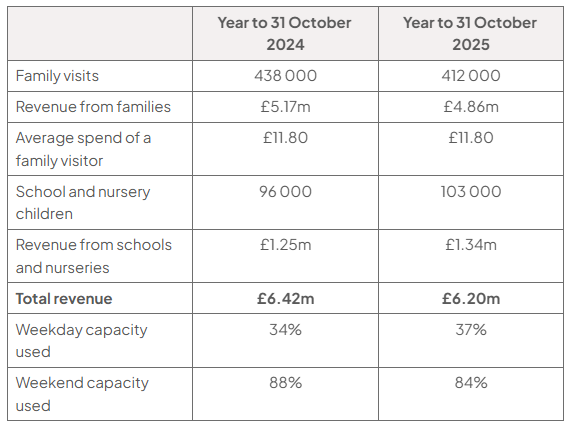
Almost all of the money comes from families. Last year 412 000 family visits brought in £4.86 million, an average of £11.80 a head once the café is counted. The rest, £1.34 million, came from schools and nurseries, who book weekday mornings a whole year ahead.

The two kinds of customer behave nothing like each other. A school booking is made in September for the following July and is almost never cancelled. A family visit is decided on a Saturday morning and is the first thing to go when money is tight. Appendix B shows what happened to family visits over five years as real household disposable income moved, and the two lines are hard to look at separately.

Ben Attah and Priya Shergill have £250 000 to spend across the six sites. They can lower prices, which they have never done, or they can put a new activity into every site and leave the price where it is. They are also arguing about something larger: whether a business that depends on families having spare money is one they should be trying to change.

Appendix A: Skylark Adventure Ltd, where the money comes from

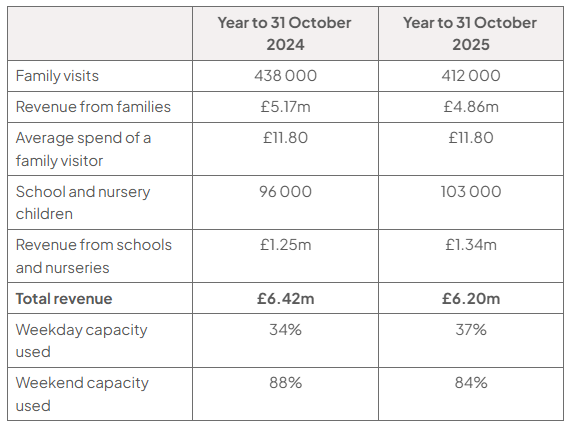
Table comparing 2024 and 2025: family visits fell from 438,000 to 412,000 and revenue from £5.17m to £4.86m, while school and nursery users rose from 96,000 to 103,000 and revenue from £1.25m to £1.34m.

Source: Analyst

Skylark Adventure Ltd sells to families at weekends and to schools and nurseries on weekday mornings.

Analyse one way in which serving two groups of customers like these might affect the prices Skylark Adventure Ltd is able to charge.

7
6 marks

Source A: Wrenfield Schoolwear Ltd

Wrenfield Schoolwear Ltd makes and sells school uniform from a unit in Nottingham: blazers, jumpers, skirts, trousers and PE kit, most of it carrying an embroidered school badge. Priya Wrenfield started it in 2009 after both her children came home in December with blazers that had already worn through at the elbow. The objective written into the company's own documents has never changed: to make uniform that lasts three years, and to keep a full set below £60. It is a private limited company and it employs 41 people.

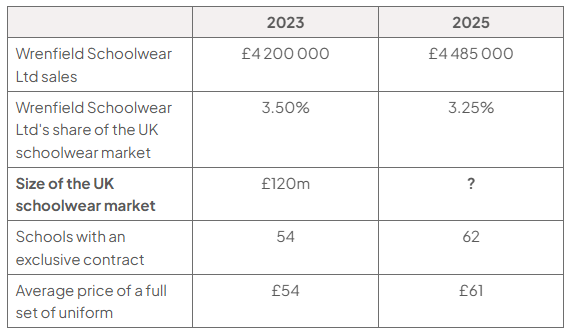
It sells in two ways. Sixty-two schools have an exclusive supply contract with Wrenfield Schoolwear Ltd, which means a parent at one of those schools cannot buy the uniform anywhere else; the school receives a share of everything sold. That brought in £3 320 000 last year. The rest, £1 165 000, came from Wrenfield Schoolwear Ltd's own website, mostly from parents at schools with no exclusive supplier.

The marketing objective set two years ago was to grow sales by 5% by 2025. Sales rose from £4 200 000 to £4 485 000, which is 6.8%, and Priya Wrenfield has told the board the objective was met. Appendix A contains the figure she has not put in front of them.

A full set of uniform now costs a parent £61.

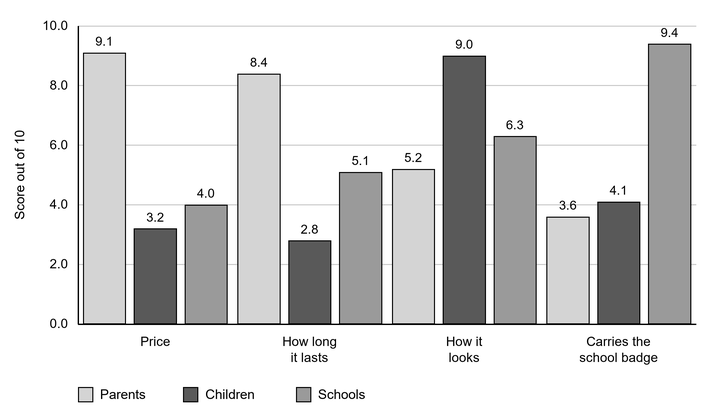
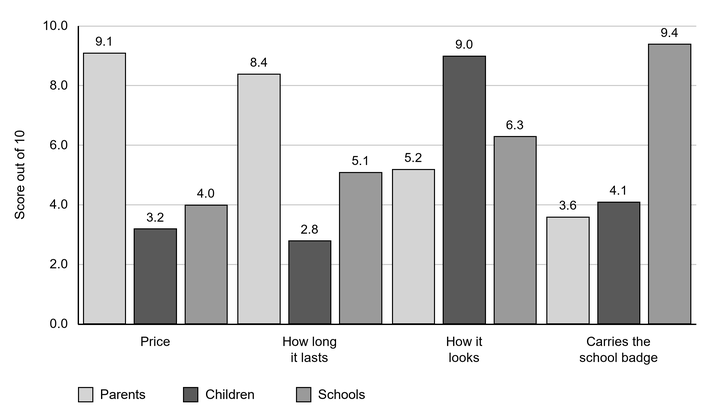
Wrenfield Schoolwear Ltd commissioned a survey last spring of 400 parents, 400 pupils and 96 school business managers, asking each of them to score four things out of ten. The results are in Appendix B. Priya Wrenfield has read them several times and has not yet decided what to do about them.

Appendix B: What parents, children and schools say matters, scored out of ten

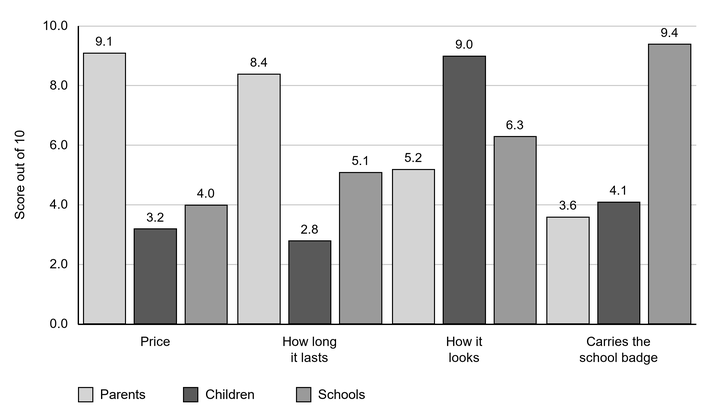
Bar chart of survey scores out of 10: parents prioritise price (9.1) and durability (8.4), children appearance (9.0), and schools the badge (9.4). Categories: price, durability, appearance and badge; scale 0–10.

Source: Survey of 400 parents, 400 pupils and 96 school business managers commissioned by Wrenfield Schoolwear Ltd

Wrenfield Schoolwear Ltd's uniform is chosen by schools, paid for by parents and worn by children.

Analyse one way in which this might affect how Wrenfield Schoolwear Ltd promotes its uniform.

1
9 marks

Source B: Riverford Organic Farmers Ltd

Riverford Organic Farmers Limited grows and delivers organic vegetables. Guy Singh-Watson began delivering boxes of vegetables to local households from the family farm in Devon, and the business was registered as a private limited company in 1999. Its registered office is still Wash Barn at Buckfastleigh in Devon, and its registered business activity is the growing of vegetables, roots and tubers.

Customers subscribe to a weekly box rather than choosing individual items. Boxes are packed at Riverford's own sites and delivered straight to the door by its own drivers, so the company controls its route to market and does not sell through supermarkets. Subscribers pay in advance and can pause or change an order online. Riverford owns five of its sites outright and holds another nine on lease.

In 2018 Guy Singh-Watson began transferring ownership of the company to the people who work in it. The process finished on 8 June 2023, when he sold his remaining shares and the Riverford Employee Ownership Trust became the company's only person with significant control. The business is now held in trust on behalf of its roughly 1 000 employees. There are no outside shareholders, so no dividends are paid to investors outside the business.

In the year ended 3 May 2025 turnover rose by 5.9% to £116.9 million. Cash held at the bank rose by a quarter to £12.31 million, and total liabilities fell by 13.0%.

Organic food remains a small part of UK grocery, and supermarkets have been widening their own organic ranges at lower prices.

Because there are no outside shareholders, the directors and the trust decide together what to do with each year's profit. There is £2.4 million available this year. It could be paid to the co-owners as a profit share, or it could be spent on solar panels and new refrigeration at Wash Barn, which would cut the company's running costs every year from then on. Appendix F shows information on the two options.

Source: information sourced from Companies House, 2026

Appendix E: UK organic vegetable box market information

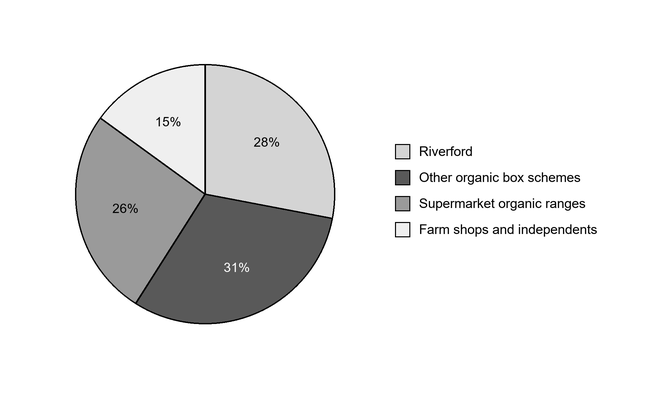
Pie chart of UK organic vegetable box market share: other organic box schemes 31%, Riverford 28%, supermarket organic ranges 26%, and farm shops and independents 15%.

Source: Analyst

Assess whether competing in a niche market rather than a mass market is likely to protect Riverford Organic Farmers Ltd from supermarket competition.

2
9 marks

Source A: MJ Gleeson plc

MJ Gleeson plc builds houses. It is a public limited company listed on the London Stock Exchange and it works in two quite different ways. Gleeson Homes builds and sells houses, mainly in the North of England and the Midlands. Gleeson Land buys options on farmland, obtains planning permission and sells the land on to other housebuilders.

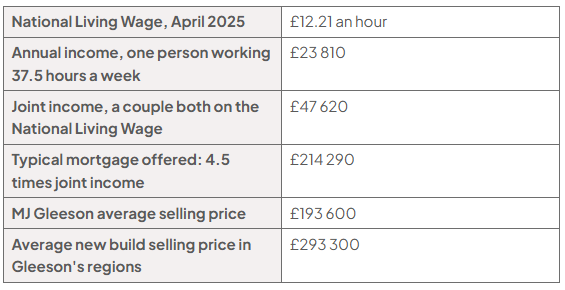
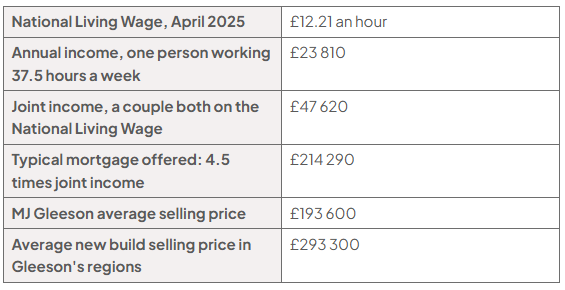
What makes Gleeson unusual is who it sells to. It builds the lowest-priced new homes in Britain and says its average selling price is 34% lower than the average new build price in the regions where it works. In the year to 30 June 2025, 78% of the homes it sold were affordable to a couple both earning the National Living Wage. Many of its buyers are first-time buyers who would otherwise be renting.

The year was a difficult one. Group revenue rose 5.9% to £365.8 million and the company sold 1 793 homes, only 21 more than the year before. The average selling price rose 4.3% to £193 600, but almost all of that came from building a different mix of houses rather than from charging more for the same house: underlying price growth was just 0.6%.

Costs went the other way. The gross margin at Gleeson Homes fell from 24.1% to 20.7%, and its operating profit fell 26.4% to £22.3 million. Gleeson Land had a much better year, completing seven land sales and lifting its operating profit from £2.2 million to £7.0 million, but it is far too small to make up the difference. Group profit before tax fell 17.3% to £20.5 million.

The company built from fewer places. Active build sites fell from 79 to 68, while the land pipeline grew slightly to 19 638 plots. Gleeson holds a medium-term target of building 3 000 homes a year, which is well above the 1 793 it managed this year.

Money left the business. Gleeson began the year with net cash of £12.9 million and ended it with net borrowings of £0.8 million, having held its dividend at 11.0p a share even though earnings per share fell from 33.13p to 27.11p.

Source: MJ Gleeson plc audited results for the year ended 30 June 2025, 16 September 2025

Appendix B: The National Living Wage

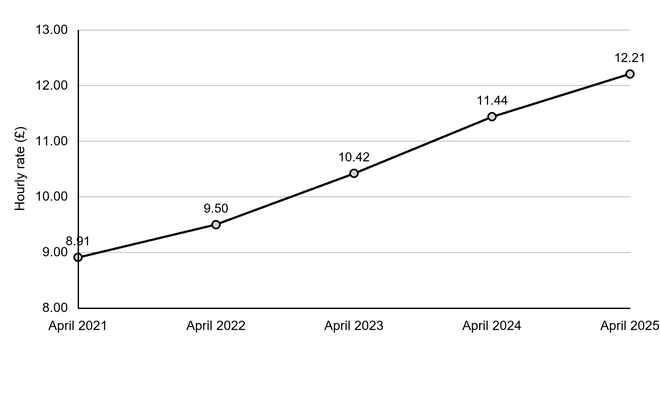
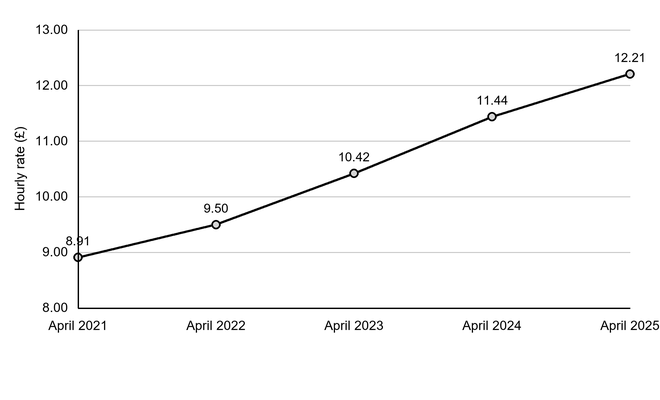
Line chart of National Living Wage hourly rates, rising each April from £8.91 in 2021 to £12.21 in 2025: £9.50 in 2022, £10.42 in 2023 and £11.44 in 2024. Y-axis: £8 to £13.

Source: gov.uk

Appendix C: Affordability information

Appendix C affordability table: National Living Wage £12.21 hourly; annual income £23,810; couple’s joint income £47,620; typical mortgage £214,290; Gleeson price £193,600; regional new-build average £293,300.

Source: Analyst

Assess whether the rise in the National Living Wage shown in Appendix B is likely to increase MJ Gleeson plc's sales.

3
9 marks

Source A: PZ Cussons plc

PZ Cussons plc owns personal care and beauty brands. In the United Kingdom it owns Carex, the best-selling hand wash, Original Source, Imperial Leather, Childs Farm, which is made for babies and children, and St Tropez, which is self-tanning. It does not own shops: its products reach customers through supermarkets, pharmacies, discounters and beauty retailers. It is a public limited company listed in London.

Much of the business is not in Britain at all. PZ Cussons plc has sold in Nigeria for more than a century and manufactures there, and it also sells across Asia Pacific. That reach is the source of both its growth and its biggest problem.

In the year to 31 May 2025 like-for-like revenue, which strips out the effect of currency changes, grew 8.0%, mostly because of price rises in Nigeria, where the volume sold fell. Reported revenue, which is what the accounts say, fell 2.7% to £513.8 million from £527.9 million. The difference is the Nigerian naira. The currency was stable through the year, but it averaged 38% below where it had been the year before, so every naira of Nigerian sales turned into far fewer pounds.

Adjusted operating profit was £54.9 million against £58.3 million, and the operating margin slipped to 10.7% from 11.0%.

The UK brands did not all pull the same way. Carex grew both its revenue and its gross margin, and held its position as the largest hand wash brand. St Tropez had a difficult year: its revenue fell by a double-digit percentage, reflecting weak demand for self-tan in the United States, while like-for-like revenue in Europe and the Americas grew only 0.6%. The company considered what to do with St Tropez and decided to keep it, saying it would give the brand a new direction.

Source: information sourced from PZ Cussons plc preliminary results for the year ended 31 May 2025

Appendix B: The UK hand wash market, analyst estimates

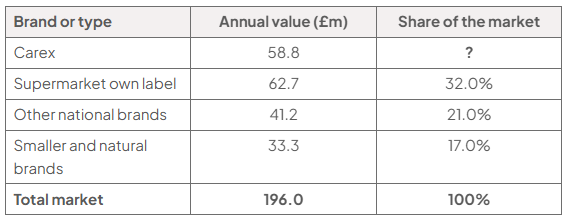
Table of UK hand wash market value and share: Carex £58.8m; supermarket own label £62.7m and 32.0%; other national brands £41.2m and 21.0%; smaller and natural brands £33.3m and 17.0%; total £196.0m and 100%.

Source: Analyst

Appendix C: Three PZ Cussons plc brands, analyst estimates

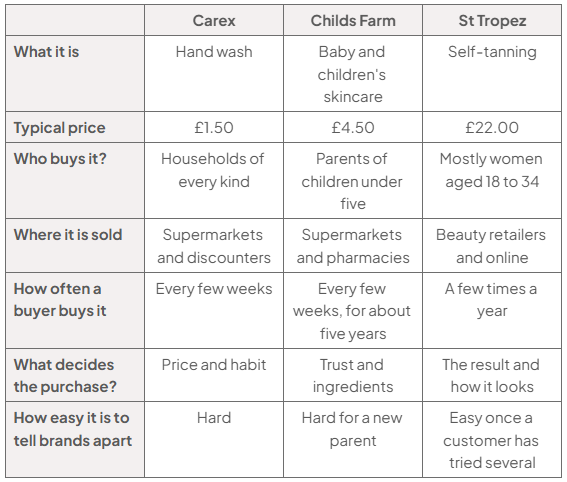
Comparison table of Carex, Childs Farm and St Tropez: products, prices (£1.50, £4.50 and £22), buyers, outlets, buying frequency, purchase factors and distinctiveness. Only Carex is hand wash.

Source: Analyst

Assess whether Carex is competing mainly against other hand wash brands.

Calculate Carex's share of the UK hand wash market to support your answer.

Give your answer to one decimal place.

4
9 marks

Source A: Skylark Adventure Ltd

Skylark Adventure Ltd runs six indoor adventure parks, in converted warehouses on the edges of northern towns. Each one has climbing walls, trampolines, an obstacle course and a café. It is a private limited company owned by Ben Attah and Priya Shergill, who opened the first site in 2016, and it employs 148 people, most of them part time.

Almost all of the money comes from families. Last year 412 000 family visits brought in £4.86 million, an average of £11.80 a head once the café is counted. The rest, £1.34 million, came from schools and nurseries, who book weekday mornings a whole year ahead.

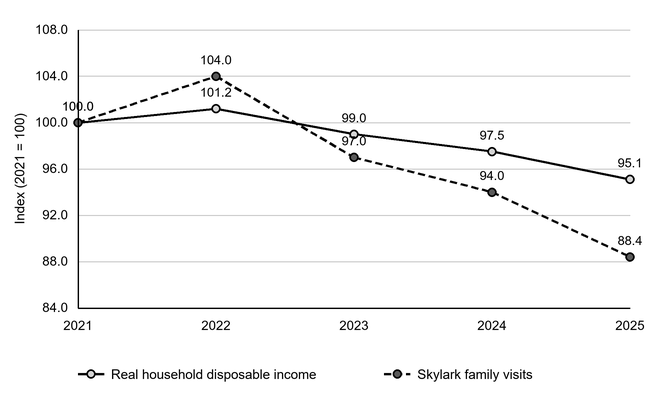
The two kinds of customer behave nothing like each other. A school booking is made in September for the following July and is almost never cancelled. A family visit is decided on a Saturday morning and is the first thing to go when money is tight. Appendix B shows what happened to family visits over five years as real household disposable income moved, and the two lines are hard to look at separately.

Ben Attah and Priya Shergill have £250 000 to spend across the six sites. They can lower prices, which they have never done, or they can put a new activity into every site and leave the price where it is. They are also arguing about something larger: whether a business that depends on families having spare money is one they should be trying to change.

Appendix A: Skylark Adventure Ltd, where the money comes from

Table comparing years to 31 October 2024 and 2025: family visits 438,000/412,000; family revenue £5.17m/£4.86m; average spend £11.80 in both; school children 96,000/103,000; total revenue £6.42m/£6.20m.

Source: Analyst

Appendix B: Skylark Adventure Ltd family visits and household income

Line graph of index data (2021=100) from 2021–2025: real household disposable income is 100, 101.2, 99.0, 97.5 and 95.1; Skylark family visits are 100, 104.0, 97.0, 94.0 and 88.4.

Source: Analyst

Assess whether Skylark Adventure Ltd should aim at families on higher incomes.

Calculate the income elasticity of demand for Skylark Adventure Ltd's family visits to support your answer.

Give your answer to one decimal place.

5
9 marks

Source A: Wrenfield Schoolwear Ltd

Wrenfield Schoolwear Ltd makes and sells school uniform from a unit in Nottingham: blazers, jumpers, skirts, trousers and PE kit, most of it carrying an embroidered school badge. Priya Wrenfield started it in 2009 after both her children came home in December with blazers that had already worn through at the elbow. The objective written into the company's own documents has never changed: to make uniform that lasts three years, and to keep a full set below £60. It is a private limited company and it employs 41 people.

It sells in two ways. Sixty-two schools have an exclusive supply contract with Wrenfield Schoolwear Ltd, which means a parent at one of those schools cannot buy the uniform anywhere else; the school receives a share of everything sold. That brought in £3 320 000 last year. The rest, £1 165 000, came from Wrenfield Schoolwear Ltd's own website, mostly from parents at schools with no exclusive supplier.

The marketing objective set two years ago was to grow sales by 5% by 2025. Sales rose from £4 200 000 to £4 485 000, which is 6.8%, and Priya Wrenfield has told the board the objective was met. Appendix A contains the figure she has not put in front of them.

A full set of uniform now costs a parent £61.

Wrenfield Schoolwear Ltd commissioned a survey last spring of 400 parents, 400 pupils and 96 school business managers, asking each of them to score four things out of ten. The results are in Appendix B. Priya Wrenfield has read them several times and has not yet decided what to do about them.

Appendix B: What parents, children and schools say matters, scored out of ten

Bar chart of parents’, children’s and schools’ scores out of 10 for uniform priorities. Parents prioritise price (9.1) and durability (8.4), while schools value the badge (9.4); children rate appearance highest (9.0).

Source: Survey of 400 parents, 400 pupils and 96 school business managers commissioned by Wrenfield Schoolwear Ltd

Assess whether Wrenfield Schoolwear Ltd should sell PE kit to junior sports clubs as well as to the schools it supplies.

1
15 marks

Source A: MJ Gleeson plc

MJ Gleeson plc builds houses. It is a public limited company listed on the London Stock Exchange and it works in two quite different ways. Gleeson Homes builds and sells houses, mainly in the North of England and the Midlands. Gleeson Land buys options on farmland, obtains planning permission and sells the land on to other housebuilders.

What makes Gleeson unusual is who it sells to. It builds the lowest-priced new homes in Britain and says its average selling price is 34% lower than the average new build price in the regions where it works. In the year to 30 June 2025, 78% of the homes it sold were affordable to a couple both earning the National Living Wage. Many of its buyers are first-time buyers who would otherwise be renting.

The year was a difficult one. Group revenue rose 5.9% to £365.8 million and the company sold 1 793 homes, only 21 more than the year before. The average selling price rose 4.3% to £193 600, but almost all of that came from building a different mix of houses rather than from charging more for the same house: underlying price growth was just 0.6%.

Costs went the other way. The gross margin at Gleeson Homes fell from 24.1% to 20.7%, and its operating profit fell 26.4% to £22.3 million. Gleeson Land had a much better year, completing seven land sales and lifting its operating profit from £2.2 million to £7.0 million, but it is far too small to make up the difference. Group profit before tax fell 17.3% to £20.5 million.

The company built from fewer places. Active build sites fell from 79 to 68, while the land pipeline grew slightly to 19 638 plots. Gleeson holds a medium-term target of building 3 000 homes a year, which is well above the 1 793 it managed this year.

Money left the business. Gleeson began the year with net cash of £12.9 million and ended it with net borrowings of £0.8 million, having held its dividend at 11.0p a share even though earnings per share fell from 33.13p to 27.11p.

Source: MJ Gleeson plc audited results for the year ended 30 June 2025, 16 September 2025

Appendix A: MJ Gleeson plc selected results

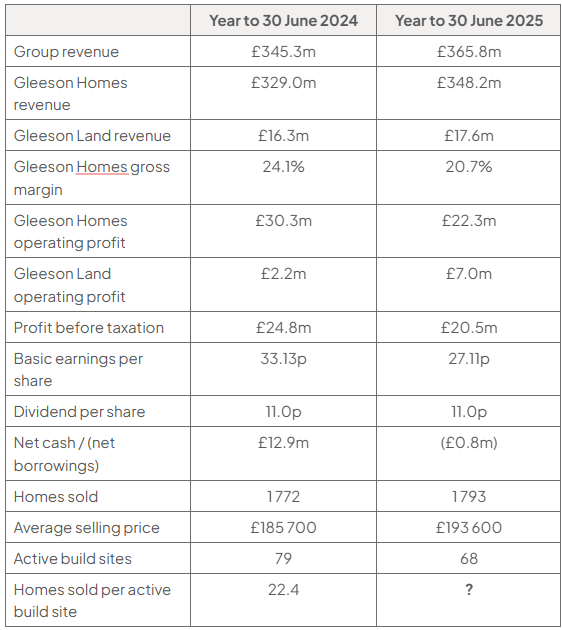
Table comparing MJ Gleeson results for 2024 and 2025: revenue £345.3m/£365.8m, gross margin 24.1%/20.7%, operating profit £30.3m/£22.3m, homes sold 1,772/1,793 and average price £185,700/£193,600.

Source: MJ Gleeson plc

Appendix B: The National Living Wage

Line chart of the UK National Living Wage hourly rate, rising from £8.91 in April 2021 to £12.21 in April 2025; the y-axis ranges from £8 to £13.

Source: gov.uk

Appendix C: Affordability information

Affordability table: National Living Wage in April 2025, £12.21 an hour; annual full-time income, £23,810; couple’s joint income, £47,620; typical mortgage at 4.5 times income, £214,290; Gleeson price, £193,600; regional average, £293,300.

Source: Analyst

MJ Gleeson plc's gross margin fell from 24.1% to 20.7%.

Evaluate whether MJ Gleeson plc should raise its average selling price to restore its profit margin or hold its prices to keep its homes affordable to first-time buyers.

2
15 marks

Source A: Pelham Audio Ltd

Pelham Audio Ltd designs and builds studio headphones and microphones in Cambridge. It is a private limited company founded by Nadia Sokolova and it employs 41 people, fourteen of them engineers.

For twenty years its customers were recording studios: a few thousand of them worldwide, buying expensive equipment and keeping it for a decade. That is still where the reputation comes from. It is no longer where most of the units go. Podcasters, musicians recording at home and people making video for a living now buy more Pelham Audio Ltd equipment than studios do, at less than a fifth of the price per item.

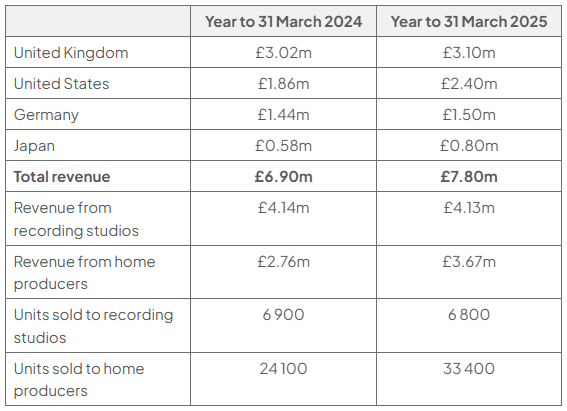
Last year revenue was £7.8 million. The United Kingdom accounted for £3.1 million, the United States £2.4 million, Germany £1.5 million and Japan £0.8 million. Everything is sold either through specialist dealers or directly from the company's own website.

Nadia Sokolova has spent money on finding things out. The company now knows what each dealer sells, what its website visitors look at before they buy, and what its customers say when asked. In February it commissioned a survey of 400 home producers, which found that 62% would pay more for a microphone that plugs straight into a computer without a separate audio interface. The research company reported the result with a margin of error of 4.9 percentage points at the 95% confidence level.

The data has produced two questions rather than one answer. The first is which country to put money behind next. The second is larger: whether Pelham Audio Ltd is a company that makes equipment for studios and happens to sell some to home producers, or the other way round.

Appendix A: Pelham Audio Ltd, revenue by market and by customer

Table comparing years to 31 March 2024 and 2025: UK revenue £3.02m to £3.10m, US £1.86m to £2.40m, Germany £1.44m to £1.50m, Japan £0.58m to £0.80m; total £6.90m to £7.80m. Studio revenue £4.14m to £4.13m, home-producer revenue £2.76m to £3.67m; units: studios 6,900 to 6,800, home producers 24,100 to 33,400.

Source: Analyst

Appendix C: Pelham Audio Ltd's two kinds of customer, analyst estimates

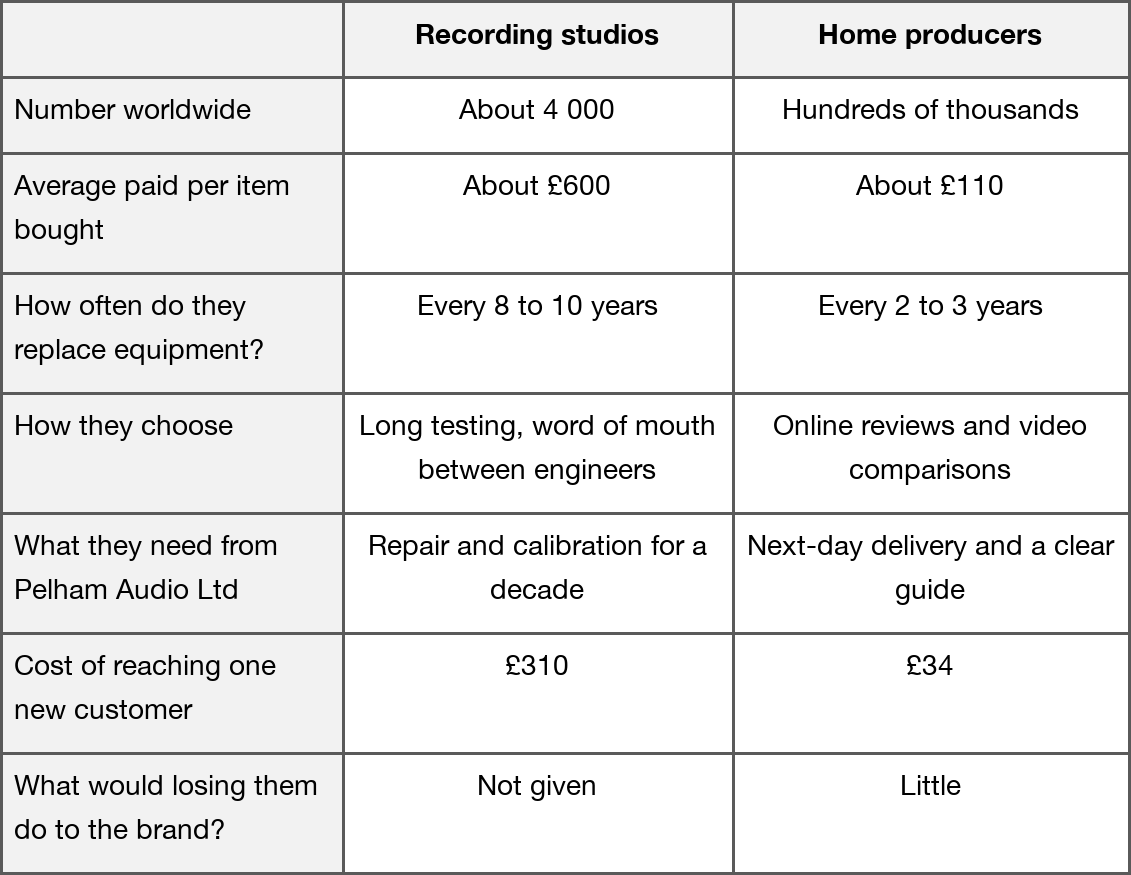
Table comparing recording studios and home producers: about 4,000 versus hundreds of thousands; average price £600 versus £110; replacement every 8–10 versus 2–3 years. Acquisition costs £310 versus £34; brand impact is not given versus little.

Source: Analyst

Appendix C compares the two kinds of customer Pelham Audio Ltd sells to.

Evaluate whether Pelham Audio Ltd should aim its next microphone at recording studios or at home producers.

3
15 marks

Source A: Wrenfield Schoolwear Ltd

Wrenfield Schoolwear Ltd makes and sells school uniform from a unit in Nottingham: blazers, jumpers, skirts, trousers and PE kit, most of it carrying an embroidered school badge. Priya Wrenfield started it in 2009 after both her children came home in December with blazers that had already worn through at the elbow. The objective written into the company's own documents has never changed: to make uniform that lasts three years, and to keep a full set below £60. It is a private limited company and it employs 41 people.

It sells in two ways. Sixty-two schools have an exclusive supply contract with Wrenfield Schoolwear Ltd, which means a parent at one of those schools cannot buy the uniform anywhere else; the school receives a share of everything sold. That brought in £3 320 000 last year. The rest, £1 165 000, came from Wrenfield Schoolwear Ltd's own website, mostly from parents at schools with no exclusive supplier.

The marketing objective set two years ago was to grow sales by 5% by 2025. Sales rose from £4 200 000 to £4 485 000, which is 6.8%, and Priya Wrenfield has told the board the objective was met. Appendix A contains the figure she has not put in front of them.

A full set of uniform now costs a parent £61.

Wrenfield Schoolwear Ltd commissioned a survey last spring of 400 parents, 400 pupils and 96 school business managers, asking each of them to score four things out of ten. The results are in Appendix B. Priya Wrenfield has read them several times and has not yet decided what to do about them.

Appendix A: Wrenfield Schoolwear Ltd and the UK schoolwear market

Table comparing Wrenfield Schoolwear Ltd in 2023 and 2025: sales £4.2m and £4.485m; UK market share 3.50% and 3.25%; market size £120m and unknown; exclusive-contract schools 54 and 62; uniform price £54 and £61.

Source: Analyst

Appendix B: What parents, children and schools say matters, scored out of ten

Grouped bar chart of scores out of 10 for price, durability, appearance and badge: parents/children/schools score 9.1/3.2/4.0, 8.4/2.8/5.1, 5.2/9.0/6.3 and 3.6/4.1/9.4 respectively.

Source: Survey of 400 parents, 400 pupils and 96 school business managers commissioned by Wrenfield Schoolwear Ltd

Appendix B shows what parents, children and schools each say matters most.

Evaluate whether Wrenfield Schoolwear Ltd should design its uniform around what parents want or around what schools want.