Areas of Exploration (DP IB English A: Language and Literature: HL): Revision Note

The IB Diploma Language A: Language and Literature (HL) course consists of three Areas of Exploration (AoEs), each of which asks six questions. These areas are approaches to reading and they encourage you to think more deeply about how texts function individually and in relation to the wider world.
In this section we will explore the main focus of each of these areas:
Readers, writers and texts
Time and space
Intertextuality
Readers, writers and texts
“A word after a word after a word is power."
– Margaret Atwood
Readers, writers and texts explores what literature is, why it matters and the different ways texts can be read, interpreted and responded to. You will examine how meaning is constructed and how readers actively participate in interpreting texts. Readers, writers and texts helps you to build the skills and awareness needed to examine texts critically, guided by key conceptual questions about how literature works.
You will consider six key conceptual questions:
1. Why and how do we study literature? | 2. How are we affected by literary texts in various ways? | 3. In what ways is meaning constructed, negotiated, expressed and interpreted? |
4. How does language use vary among literary forms? | 5. How does the structure or style of a literary text affect meaning? | 6. How do literary texts offer both insights and challenges? |
Linking to Theory of Knowledge (TOK)
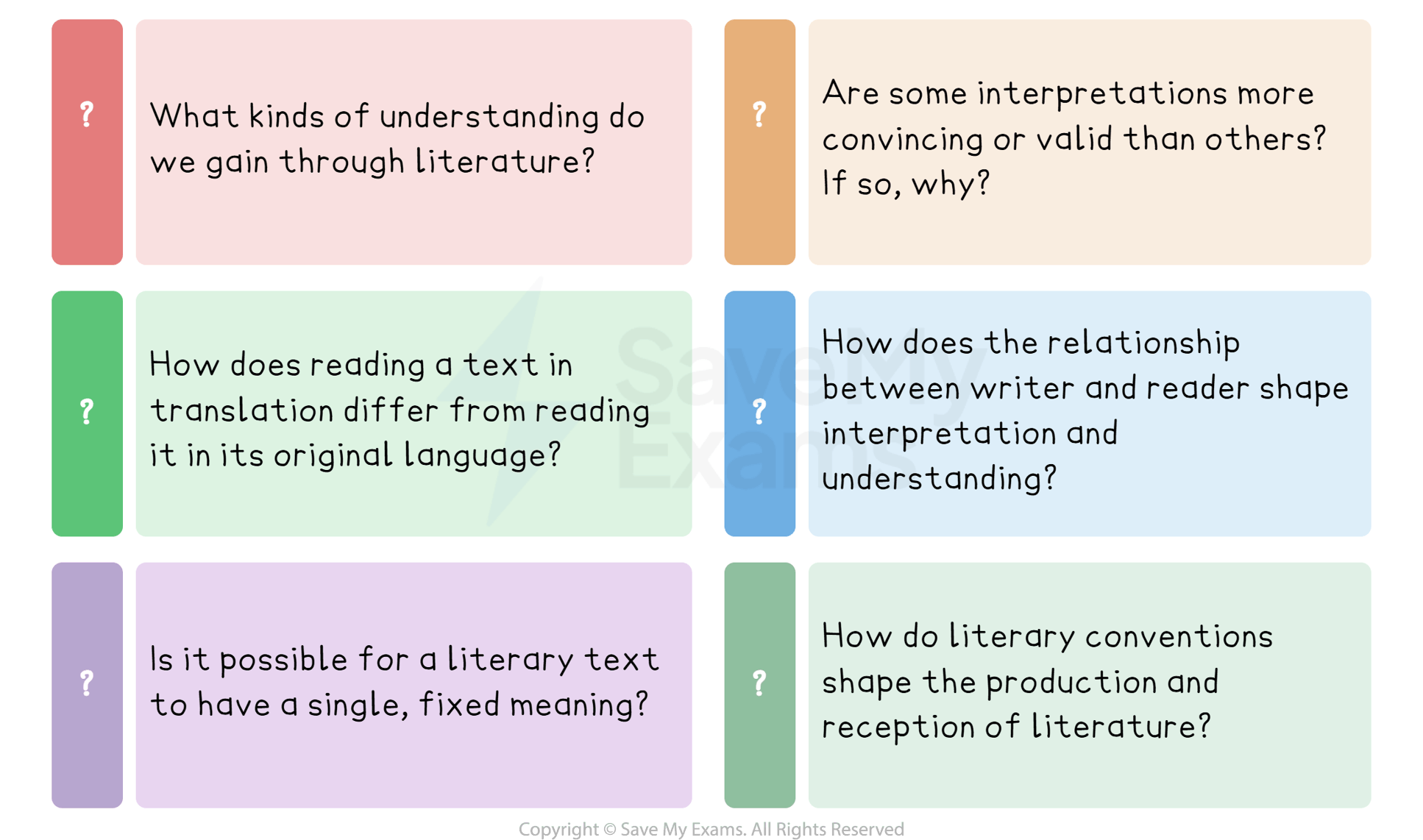
When studying your texts in relation to this area, you need to consider whether meaning is fixed or open to multiple interpretations and whether some interpretations are more convincing than others. You will also need to explore how language influences these interpretations.
These questions can help you consider the connections between this Area of Exploration and Theory of Knowledge (TOK):
Examiner Tips and Tricks
Try not to view the three AoEs as separate or isolated aspects but more as complementary approaches to studying your texts. While each area has its own specific focus, they often overlap and work together. Viewing them in this integrated way will help you form a more connected understanding of your texts.
Time and space
“I think the use of language is a very important means by which this species, because of its biological nature, creates a kind of social space, to place itself in interactions with other people.”
– Noam Chomsky
Time and space explores how texts are shaped by and connected by the historical, cultural and geographical contexts in which they are created and received. You will examine how time and place influence themes, characters and perspectives and how meaning can change when texts are read in different contexts. Through this, you will explore the relationship between the text, yourself as a reader and others and how they connect to global ideas.
You will consider these six key conceptual questions:
1. How important is cultural or historical context to the production and reception of a text? | 2. How do we approach texts from different time periods and cultures to our own? | 3. To what extent do texts offer insights into another culture? |
4. How does the meaning and impact of a text change over time? | 5. How do texts reflect, represent, or form a part of cultural practices? | 6. How does language represent social distinctions and identities? |
Linking to Theory of Knowledge (TOK)
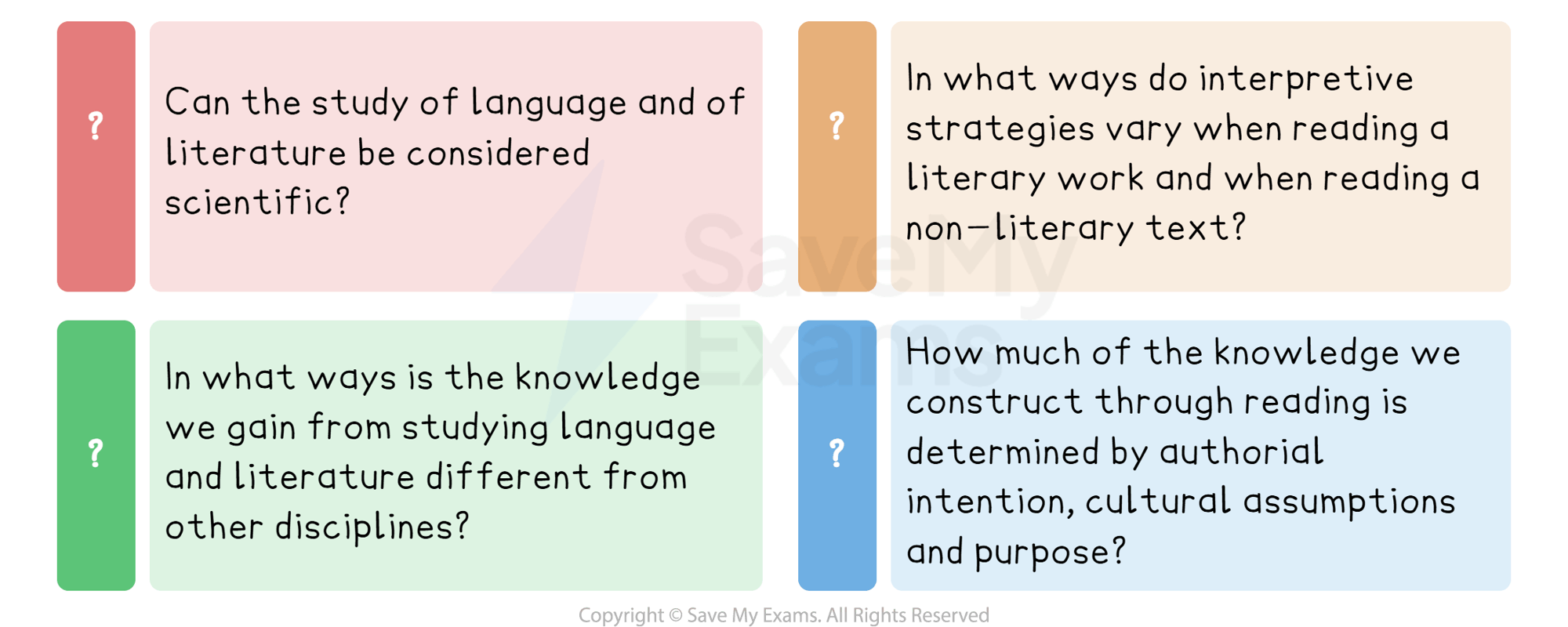
When studying texts in relation to this area, you need to consider how historical, cultural and social contexts shape meaning. You should also reflect on how a reader’s own background influences interpretation and whether understanding a text depends on knowledge of its context.
These questions can help you consider the connections between this Area of Exploration and Theory of Knowledge (TOK):
Intertextuality
“I will not deny that language is based on difference; rather I will argue that it is also based on reference.”
– Robert Scholes
Intertextuality examines the similarities and differences between texts, highlighting how texts are connected through shared traditions, influences, conventions and ideas. You will study texts comparatively in order to develop a deeper understanding of both the distinctive features of individual works and the complex relationships between them. You will also learn how one text can act as a lens through which to interpret another, either reinforcing its meaning or offering an alternative perspective.
You will consider these six key conceptual questions:
1. How do texts adhere to and deviate from conventions associated with literary forms or text types? | 2. How do conventions and systems of reference evolve over time? | 3. In what ways can diverse texts share points of similarity? |
4. How valid is the notion of a classic text? | 5. How can texts offer multiple perspectives of a single issue, topic or theme? | 6. In what ways can comparison and interpretation be transformative? |
Linking to Theory of Knowledge (TOK)
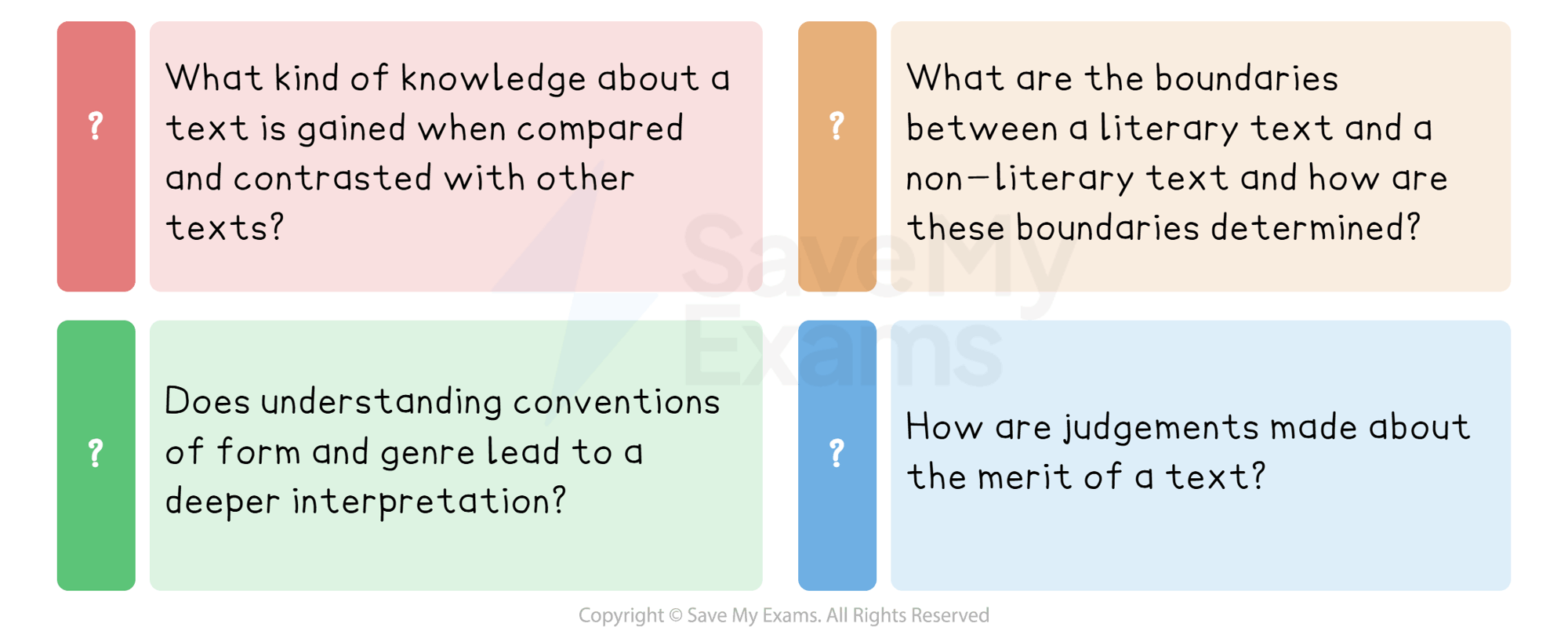
When studying texts in relation to this area, you need to consider how a text’s connections with other texts influences its meaning. These links may be deliberately created by the writer or recognised by the reader during interpretation. You should also reflect on how prior knowledge of other texts shapes understanding and whether meaning changes when texts are read alongside one another.
These questions can help you consider the connections between this Area of Exploration and Theory of Knowledge (TOK):

Unlock more, it's free!
Join the 100,000+ Students that ❤️ Save My Exams
the (exam) results speak for themselves:

Was this revision note helpful?