Key Concepts (DP IB English A: Language and Literature: HL): Revision Note

Nick Redgrove

Written by: Nick Redgrove

Reviewed by: Deb Orrock

Updated on

The IB Diploma Language A: Language and Literature (HL) course is structured around seven key course concepts. These concepts help guide the study of your texts across the three Areas of Exploration. 

In this section we will explore:

  • The importance of concepts

  • Seven key concepts

  • How to use the key concepts

The importance of concepts

Concepts have an important role in your study of language and literature as they help organise and shape your analysis across the three Areas of Exploration. They connect with each area in different ways and help you make meaningful links between texts, allowing you to recognise patterns, contrasts and shared concerns more clearly. Concepts make it easier for you to be able to draw connections between your literary and non-literary texts and help you to explore how different texts relate to each other.

For example, instead of simply asking what your text is about you could consider other questions using a conceptual frame:
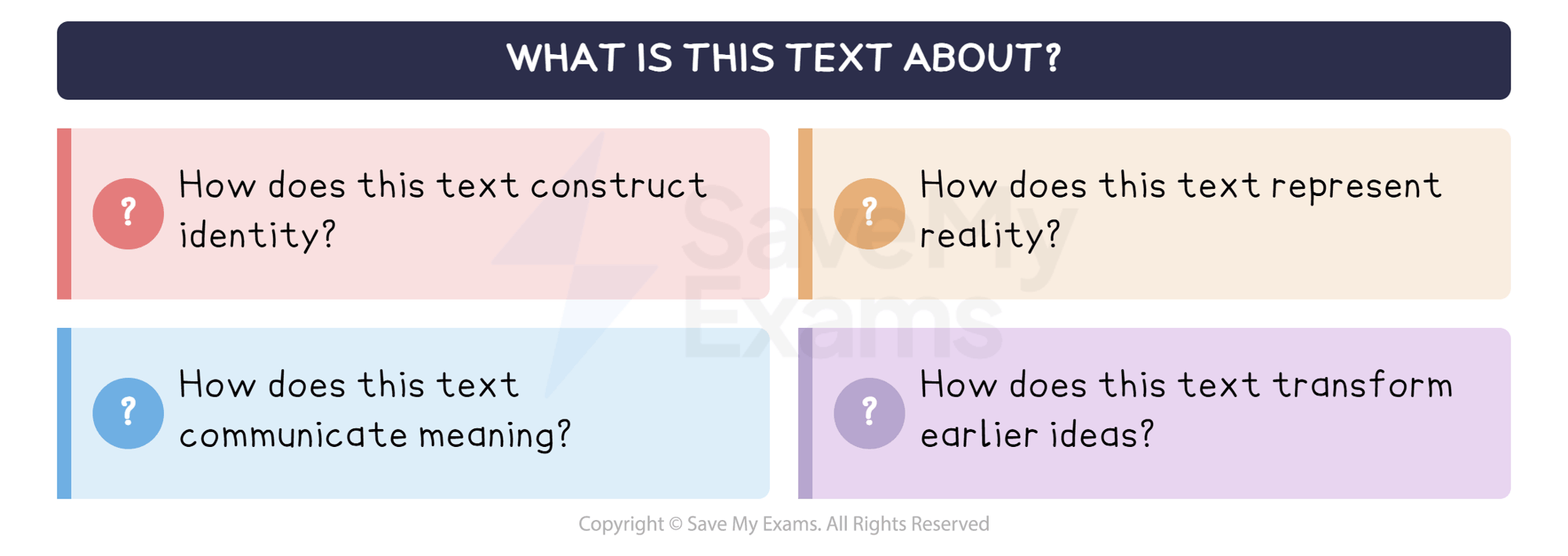
Conceptual frame: DP IB English A: Language and Literature (HL)
Conceptual frame

This type of conceptual thinking moves you beyond simply describing what happens in a text and encourages you to analyse how and why meaning is created. 

Seven key concepts

The IB specifies seven key concepts which help you to think more deeply about how texts create meaning and how they relate to language, culture and interpretation. Although they are not directly assessed, they are central to developing your analytical skills when approaching  your literary and non-literary texts.
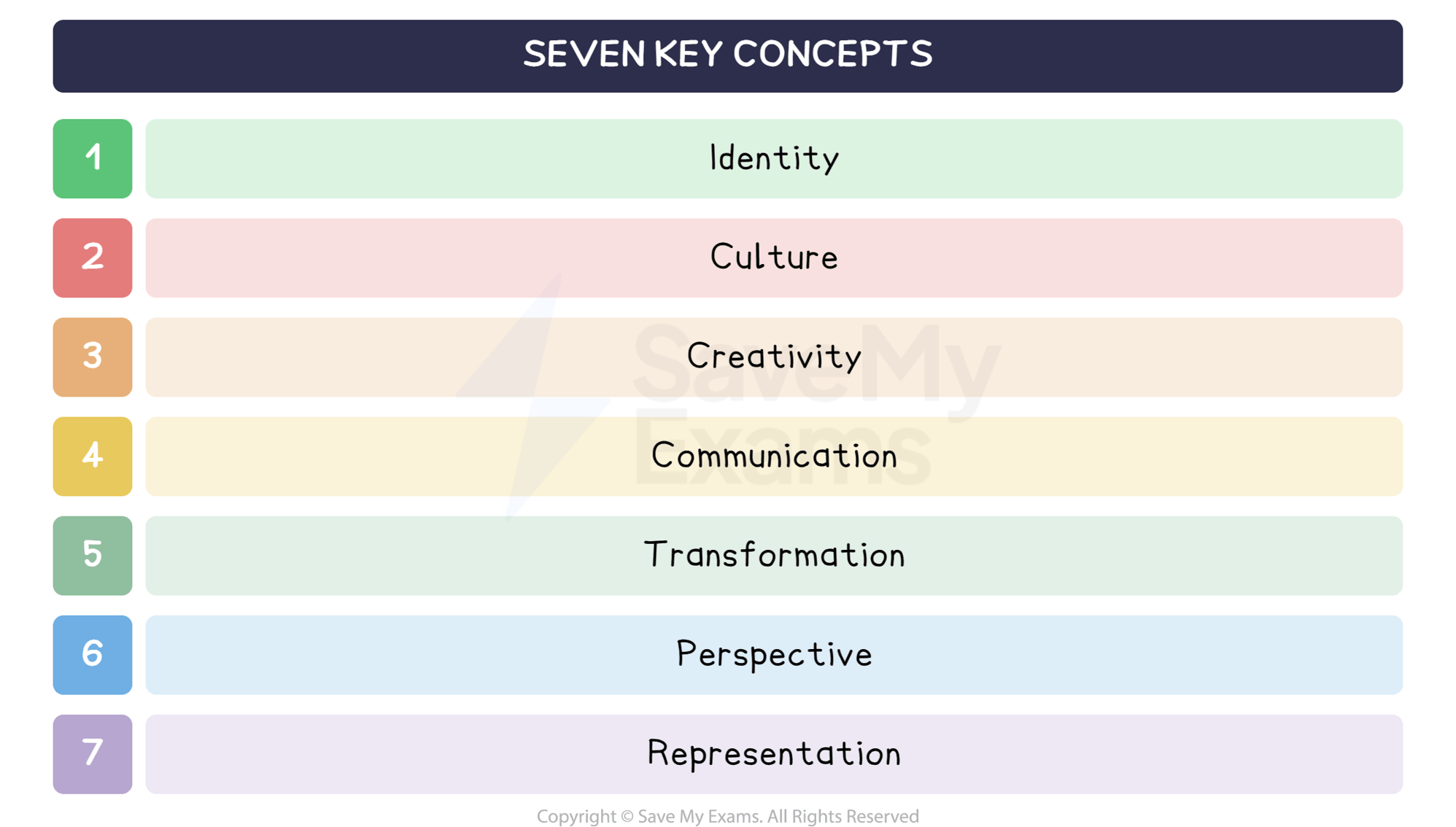
Seven key concepts: DP IB English A: Language and Literature (HL)
Seven key concepts

Here is a brief overview of each concept, along with some guiding ideas and questions.

Key concept

Ideas

Questions

Culture

How texts reflect or respond to the values, beliefs and traditions of their time:

  • Social, political or historical context

  • Cultural norms and expectations

  • Literary traditions influencing a text

  • How texts interact with or challenge cultural values

  • How does a text reflect a specific culture?

  • Does the text reinforce or critique dominant values?

  • How might a text be read differently in another culture?

Creativity

How texts explore imagination, originality and the act of creating meaning:

  • The writer’s imaginative choices

  • Innovation in form or style

  • The reader’s role in generating meaning

  • Originality versus tradition

  • How does the writer use imagination?

  • Does the text adapt or reinvent conventions?

  • How does reading require creative engagement?

Communication

Explores the relationship between writer, text and reader:

  • Intended audience

  • Assumptions about reader knowledge

  • Stylistic and structural choices

  • Multiple meanings

  • Who is the text addressing?

  • How does the writer guide interpretation?

  • Why might different readers understand the text differently?

Identity

How texts construct and present individuals, groups or voices:

  • How characters or speakers are shaped by society

  • The relationship between an author and the voices they create

  • How readers’ own identities influence interpretation

  • Whether a text reinforces or challenges identity categories

  • Whose identity is being represented?

  • How is identity shaped by context?

  • How does your perspective affect your interpretation?

Perspective

How meaning shifts depending on position:

  • Narrative voice

  • Bias and reliability

  • Multiple viewpoints

  • Influence of context on interpretation

  • Whose perspective dominates the text?

  • Are alternative perspectives included?

  • How do content and time shape interpretation?

Representation

Explores how texts relate to reality:

  • How reality is depicted

  • The relationship between form and meaning

  • Accuracy versus artistic freedom

  • Construction of social groups or ideas

  • How is reality constructed in the text?

  • What is emphasised or omitted?

  • Does form shape how reality is represented?

Transformation

Explores change and intertextuality:

  • How texts borrow from or respond to other texts

  • Adaptation and reinterpretation

  • How reading transforms meaning

  • How texts influence readers or society

  • Does the text transform earlier ideas or traditions?

  • How does interpretation change across contexts?

  • Can a text transform its reader?

Rather than trying to explore every theme and idea in your texts, you can use these concepts to guide your thinking by focusing on specific aspects such as perspective or representation. 

The table below can be helpful as it shows each key concept alongside the area it is most useful for. This can help you quickly identify which concept to apply depending on what you are analysing in a text. For example, if you are examining how groups are portrayed in a text, you may choose to view it through the conceptual lens of representation. 
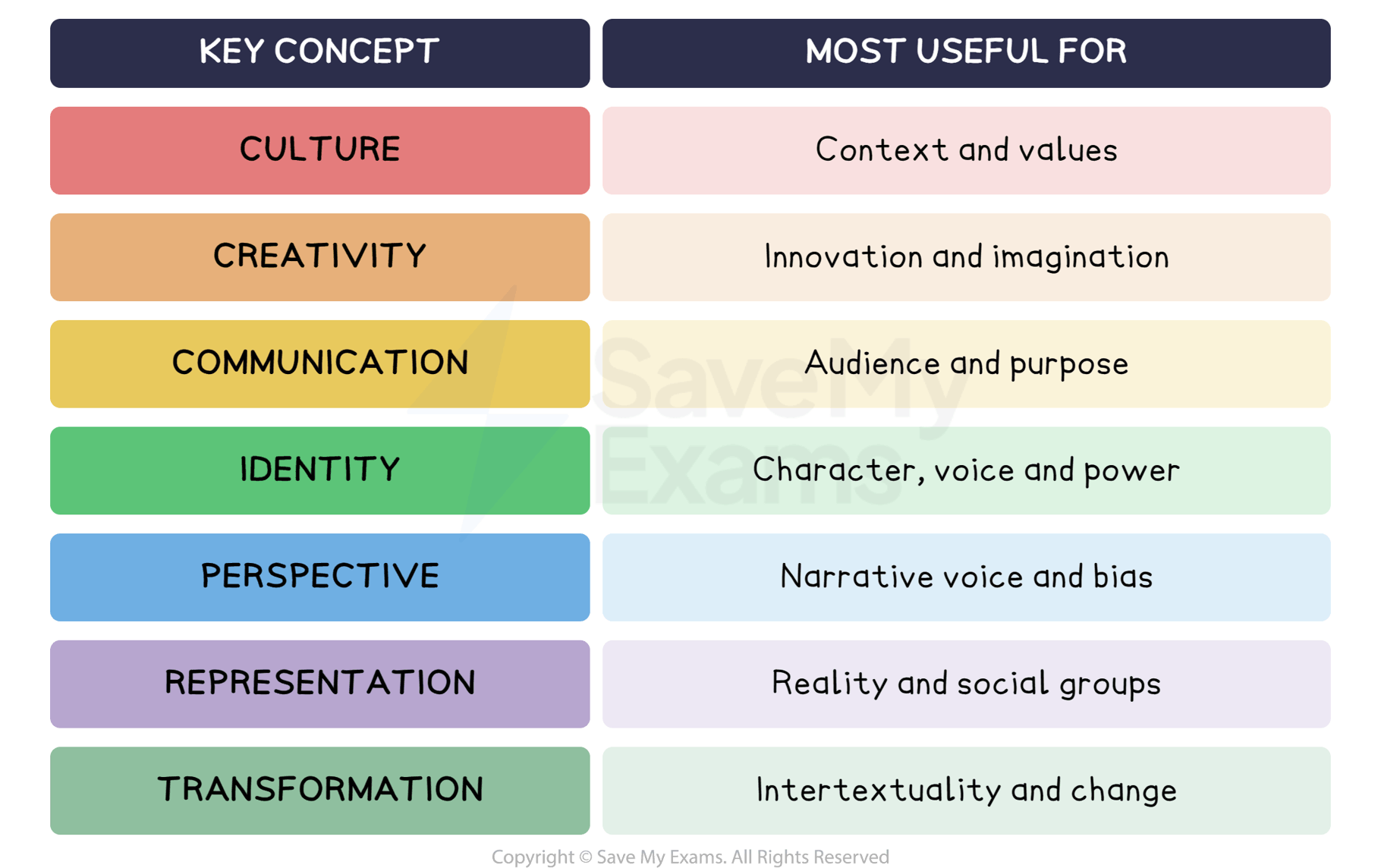
Using key concepts: DP IB English A: Language and Literature (HL)
Using key concepts

Examiner Tips and Tricks

The IB concepts can be incredibly useful as a revision tool when preparing for each of your assessment components. For example, in Paper 2, one of the exam questions may ask you to explore how a text transforms its reader or how a writer’s representation of reality shapes interpretation and creates multiple meanings. Reading your texts through the lens of identity, culture or transformation can help you to develop a more conceptual response. 

How to use the key concepts

The key concepts can help you to explore broader questions about meaning, context and interpretation. When revising for your assessments, you could consider:

  • Which concepts are most relevant to this text?

  • How does this concept help me interpret the writer’s choices?

  • Can this concept strengthen a comparison between two works?

  • Does this concept connect to a possible global issue?

Using the concepts will make your interpretations more focused, comparative and analytical. 

Assessment component

How key concepts help

Individual Oral 

  • Help frame how a global issue is constructed

  • Support analysis of authorial choices

Paper 1

  • Help analyse perspective, representation and communication

Paper 2

  • Provide strong comparative points (e.g. identity, culture, transformation)

HL Essay

  • Help define your focus

Unlock more, it's free!

Join the 100,000+ Students that ❤️ Save My Exams

the (exam) results speak for themselves:

Nick Redgrove

Author: Nick Redgrove

Expertise: English Content Creator

Nick is a graduate of the University of Cambridge and King’s College London. He started his career in journalism and publishing, working as an editor on a political magazine and a number of books, before training as an English teacher. After nearly 10 years working in London schools, where he held leadership positions in English departments and within a Sixth Form, he moved on to become an examiner and education consultant. With more than a decade of experience as a tutor, Nick specialises in English, but has also taught Politics, Classical Civilisation and Religious Studies.

Deb Orrock

Reviewer: Deb Orrock

Expertise: English Content Creator

Deb is a graduate of Lancaster University and The University of Wolverhampton. After some time travelling and a successful career in the travel industry, she re-trained in education, specialising in literacy. She has over 16 years’ experience of working in education, teaching English Literature, English Language, Functional Skills English, ESOL and on Access to HE courses. She has also held curriculum and quality manager roles, and worked with organisations on embedding literacy and numeracy into vocational curriculums. She most recently managed a post-16 English curriculum as well as writing educational content and resources.