Characters (DP IB English A: Language and Literature: HL): Revision Note

Characterisation is a writer’s method and it’s good to use this word in your responses. Characterisation can include:
How characters are established
How characters are presented:
Their physical appearance
Their actions and motives
What they say and think
How they interact with others
What others say and think about them
How far the characters conform to or subvert stereotypes
Their relationships to other characters
Characters in Things Fall Apart are constructed to carry ideas. In your assessments you are credited for how you interpret them, so treat each one as a choice Achebe has made and ask what that choice allows him to say. For the techniques Achebe uses to build them, see Authorial Choices and Textual Features.
Below you will find character profiles of:
Main characters
Okonkwo
Nwoye
Ikemefuna
Ekwefi
Other characters
Unoka
Ezinma
District Commissioner
Obierika
Uchendu
Mr Brown and Reverend James Smith
Okonkwo
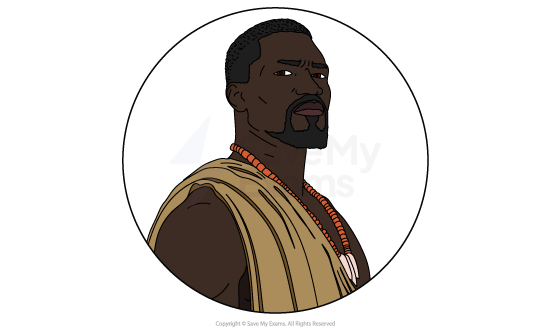
Okonkwo’s complex characterisation raises issues about tradition:
He abides by traditional and patriarchal views on masculinity
He is hardworking and driven, but rejects discussion and compassion
He is a tragic hero: initially he is respected as a farmer and family man
His fatal flaw, his aggressive rigidity, isolates him from his son and peers:
He is a responsible father and loving husband, but is unable to express his feelings or show mercy
His love for his culture is presented as worthy, but his aggression leads to his inevitable downfall
His suicide is portrayed with the complexity of his characterisation throughout:
He is a victim of the colonialists’ cruelty, and alienated from his clan
Okonkwo is judged by Igbo characters long before any coloniser arrives:
The clan punishes him for breaking the Week of Peace and exiles him for the killing at Ezeudu’s funeral
Obierika, his uncle and the elders all challenge him
This lets Achebe criticise Okonkwo from inside Igbo values, which is why the novel cannot be read as a defence of everything the clan does
His downfall has two causes at once, and the balance between them is genuinely open:
He is destroyed by his own extremism, and by a colonial administration that leaves him no way to act
Critics disagree about which weighs more heavily, so this is a productive question for an HL essay
He is a useful figure for global issues built around identity, masculinity or the individual under state power
Nwoye
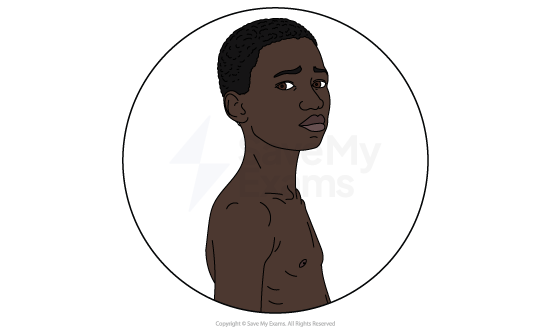
Nwoye’s character functions as a foil to Okonkwo:
Okonkwo’s teenage eldest son, Nwoye does not take after his father and is more like his peaceful grandfather (who Okonkwo describes as lazy)
Nwoye’s relationship with Okonkwo is presented as conflicted to highlight Okonkwo’s inability to understand or deal with differences peacefully
The tense relationship worsens when Ikemefuna, Nwoye’s close friend, is killed by Okonkwo
Nwoye eventually converts to Christianity to escape his father
Nwoye embodies the novel’s idea of transformation:
He is the character who changes most, and the change is a loss for his father and a release for him
Achebe gives his conversion an emotional cause as well as a religious one
His conversion complicates any simple account of the missionaries:
Nwoye is drawn to Christianity partly because Igbo custom has already troubled him, including the abandoning of twins
Achebe therefore shows the appeal of the new religion to those the old order treated harshly
He takes a new name, Isaac, which makes him useful for a global issue about identity and belonging
Ikemefuna
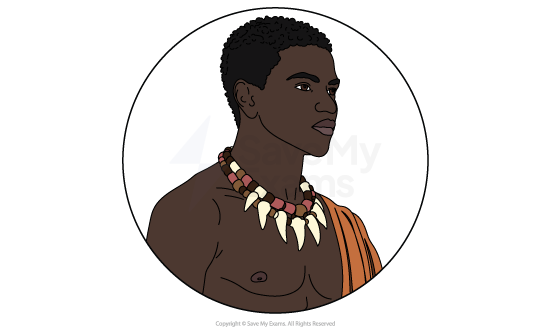
Ikemefuna is central to the conflict between Okonkwo and his son, Nwoye:
A victim of a tribal dispute, Ikemefuna is a young boy taken from his home and brought to Umuofia, where he is placed in Okonkwo’s care
Although he is homesick to the point of illness and is beaten by Okonkwo, he begins to form a bond with the family, especially Nwoye
His tragic murder by Okonkwo serves as a catalyst for Okonkwo’s guilt and downfall, as well as Nwoye’s broken relationship with his father
Ikemefuna is the clearest test the novel sets its readers:
His death is demanded by the Oracle, so it is lawful within Igbo belief
Okonkwo is warned to take no part in it, so his blow is a personal choice
Achebe separates the custom from the man, and readers have to weigh each one
He is often chosen as an Individual Oral extract because his death sits in Part 1, before any coloniser appears, and it pairs readily with a non-literary text on childhood or conflict
Ekwefi
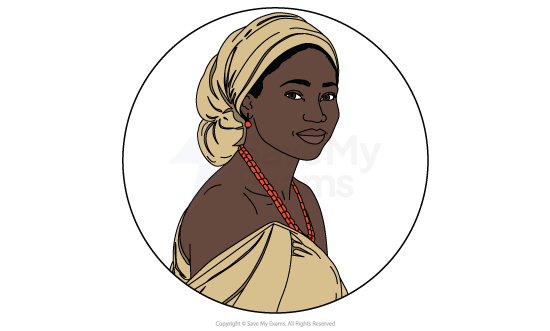
Ekwefi, Okonkwo’s second wife, allows Achebe to present another side to Okonkwo in order to portray him more sympathetically
Ekwefi’s marriage to Okonkwo is portrayed as being more tender than Okonkwo’s other relationships with his wives
Their shared concern for their sick daughter, Ezinma, presents Okonkwo as a loving and responsible father:
He helps her take Ezinma to the Oracle and they reminisce about his kindness towards her when they first met
Ekwefi is the novel’s main route into women’s experience of Umuofia:
She left her first husband for Okonkwo, which shows women exercising choice within a patriarchal system
She has buried nine children, and Achebe gives that grief real narrative space
Her night walk after Chielo takes Ezinma is one of the few episodes told largely from a woman’s point of view
Examiner Tips and Tricks
Writers use characters to convey ideas, and often to set opposing ideas against each other, so look for the pairings. Okonkwo’s differences with his father and with his own son are central to his emotional turmoil, and you’ll get more out of writing about the relationship than about either man alone.
Other ideas are conveyed by a character’s progression through the novel. Okonkwo’s stubborn rigidity and his refusal to understand Nwoye, despite advice to change, leave him isolated. If you can track what changes and what refuses to change, you’ll have an interpretation to argue rather than just describing a character.
Other Characters
Unoka
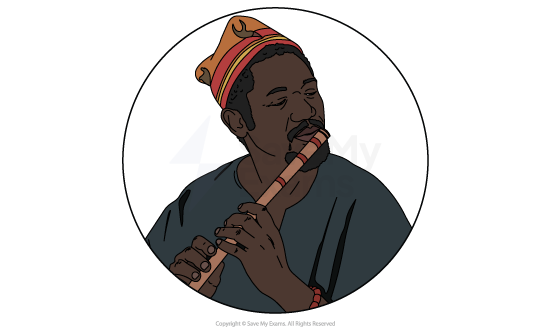
Unoka is Okonkwo’s deceased father
He provides readers with context regarding Okonkwo’s character
He works as a foil to Okonkwo to raise issues about masculinity and tradition:
Unoka was a peaceful musician who preferred talking and drinking to working, which led to debt and poverty
Okonkwo’s rigid objective is to be the opposite of his father, which proves to be his downfall
Achebe gives him the gentler arts the clan does not reward, so he raises the question of what a society loses when it measures a man only by yams and titles
Ezinma
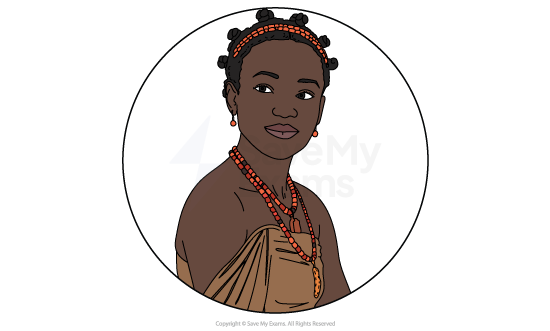
Ezinma is the eldest, favoured child of Okonkwo and his second wife, Ekwefi
Achebe presents Igbo traditions via her journey to the Oracle and her encounters with a medicine man
Ezinma’s character highlights gender issues, as Okonkwo clearly favours her over his other children:
Achebe critiques his patriarchal values through Okonkwo’s regretful wish that she had been born a boy
Her ogbanje illness gives Achebe a way to show Igbo spiritual belief working as ordinary family life, not as spectacle
District Commissioner
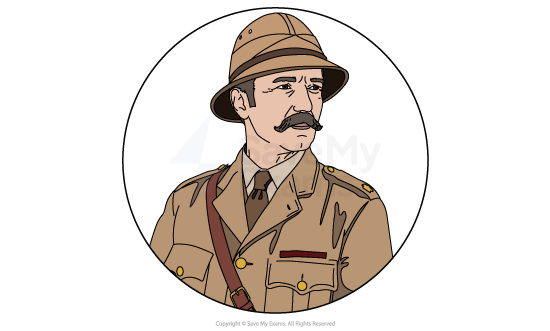
The District Commissioner is a British governor placed in charge of local villages
His character functions to show the disastrous impact of the British colonists:
As judge and governor, he uses British laws to rule the Igbo community and instil British culture on what he believes is a savage society
He arrests Okonkwo and the village men when they act out revenge on a Christian convert who has disrespected their culture
His character also highlights the tragic circumstances of Okonkwo’s death:
In the resolution, Achebe draws attention to Okonkwo’s suicide and suggests the colonialist settlers are to blame
The District Commissioner passes comment on the suicide as reasonably good research for his book
The title of his book ends Achebe’s novel poignantly: “The Pacification of the Primitive Tribes of the Lower Niger”
He is the only character given control of the narration:
Achebe hands him the closing paragraphs so that the novel ends in the coloniser’s voice
Obierika
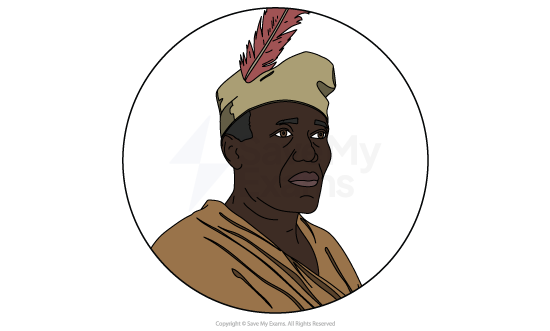
Obierika, Okonkwo’s friend, serves as a voice of conscience to Okonkwo:
He offers advice when Okonkwo complains about his children and the missionaries
He is critical of Okonkwo’s aggression towards Ikemefuna
He represents loyalty, respect, patience and compassion:
In the final chapter, Obierika mourns Okonkwo’s death and expresses anger at how colonial rule has robbed his friend of dignity
He is also the novel’s thinker, and Achebe uses him to voice the clearest statement of what colonisation has done:
The white man “has put a knife on the things that held us together and we have fallen apart”
Uchendu
Uchendu is Okonkwo’s maternal uncle, who receives him in Mbanta and gives him land and seed yams during his exile
He is the clan’s own critic of Okonkwo’s hyper-masculinity, and he makes the case from inside Igbo values:
In Chapter 14 he asks why a common Igbo name is “Nneka”, meaning “Mother is Supreme”, then answers himself: “A man belongs to his fatherland when things are good and life is sweet. But when there is sorrow and bitterness he finds refuge in his motherland”
He reminds Okonkwo that he has buried 22 children: “You think you are the greatest sufferer in the world?”
In Chapter 15 he condemns both the killing that provoked the Abame massacre and the colonists’ reprisal:
“Never kill a man who says nothing”
Mr Brown and Reverend James Smith
The two missionaries are written as a deliberate contrast, and neither works without the other:
Mr Brown listens, debating religion with the elder Akunna through an interpreter
He restrains his converts, preaching “against such excess of zeal”, and he builds a school and a small hospital
Achebe states that he “came to be respected even by the clan”
Reverend James Smith replaces him when ill health forces Mr Brown to leave:
Smith “saw things as black and white. And black was evil”
He encourages the zeal Mr Brown had held back, and Enoch’s unmasking of an egwugwu follows
Why the pair matters:
The mission is not destroyed by one bad man, since Mr Brown’s patient version converts more people than Smith’s
Achebe makes the tolerant missionary the more effective agent of change, which is a harder and more interesting argument
The pair is valuable for a global issue about belief, education and cultural power
Examiner Tips and Tricks
When you plan a Paper 2 answer, choose characters who let you make a comparison, not simply the ones you know best. A pairing works when the two writers put a similar figure under different pressures, so ask yourself what each character is up against before you commit to them.
It’s worth having two or three characters ready for this. Okonkwo suits questions on power, tradition and the individual; Nwoye suits questions on change and belief; Obierika suits questions on how a writer builds in a critical voice. Going in with that shortlist means you won’t lose ten minutes deciding who to write about.
Sources:
Achebe, Chinua. Things Fall Apart. William Heinemann, 1958.
Alam, Md. Mahbubul. “Reading Chinua Achebe’s Things Fall Apart from the Postcolonial Perspective.” Research on Humanities and Social Sciences, vol. 4, no. 12, 2014.

Unlock more, it's free!
Join the 100,000+ Students that ❤️ Save My Exams
the (exam) results speak for themselves:

Was this revision note helpful?