Characters (DP IB English A: Language and Literature: HL): Revision Note
In Persepolis, Marjane Satrapi uses characterisation to explore ideas about identity, resistance, political oppression and the tension between personal freedom and collective survival. The graphic memoir's characters are drawn from Satrapi's own family and life, giving the work its emotional honesty and moral weight.
Characterisation in the graphic memoir can include:
How characters are established through narration, visual design, and setting.
How characters are presented:
Their physical appearance and visual representation on the page
Their actions and motivations
What they say, think, and believe
How they interact with others
What others say or think about them
How characters develop or change across the memoir
Their relationship to the historical and political context of Iran
Their relationship to one another
Below you will find character profiles of:
Marji (Marjane Satrapi)
The Mother (Taji)
The Father (Ebi)
The Grandmother
Uncle Anoosh
Marji (Marjane Satrapi)
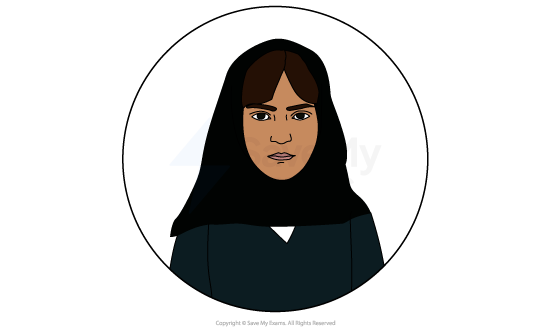
Marji is introduced on the first page as a ten-year-old girl in 1980, sitting cross-armed in her school veil:
The opening image establishes her as both a child subject to the new Islamic rules and as a narrator looking back critically at that child
Satrapi presents her younger self with self-deprecating humour and candour, signalling the memoir's honest, first-person voice
From the age of six, before the Revolution, Marji believed she was destined to be the last prophet:
She created her own holy book, incorporating rules such as "no old person should have to suffer" and "all maids should eat at the table with the others"
Her prophet ambitions reflect a child's genuine moral instinct — justice and equality — rather than mere religious fantasy
Her grandmother was her only confidante, telling Marji: "In that case, I'll be your first disciple"
Marji's inner life is rendered visually through her nightly conversations with God, depicted as a large bearded figure visiting her bedside:
She asks God for more time: "God, give me some more time. I am not quite ready yet"
God reassures her: "Yes you are, Celestial light, you are my choice, my last and my best choice"
These scenes show Satrapi's technique of externalising interiority — Marji's private faith is made visible and tangible to the reader
Marji's faith is shattered by the execution of Uncle Anoosh:
After learning of his death, she screams at God: "Shut up, you! Get out of my life!!! I never want to see you again!"
This is a turning point: Marji loses both her uncle and her faith simultaneously, marking the end of her childhood innocence
As a teenager, Marji navigates an increasingly dangerous environment through humour and small acts of resistance:
She mocks the school's compulsory ideological exercises, using comedy to maintain dignity under repression
She is suspended along with her classmates for collective refusal to comply with a teacher's demands
At fourteen, Marji is sent to Austria by her parents, who decide her safety takes priority over keeping the family together:
Her father tells her at the airport: "Don't forget who you are and where you come from"
The book closes with her mother fainting at the airport — an image that underlines the permanence of this separation
The Mother (Taji)
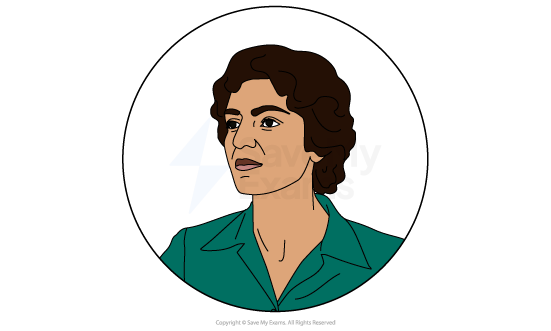
The mother is established early as an outspoken and courageous woman committed to political action:
She participates in demonstrations against the veil and is photographed by a German journalist at one of these protests
Her photograph is published in European newspapers, making her a visible face of Iranian women's resistance
When the image appears in an Iranian magazine, she dyes her hair and wears dark glasses for a long time to avoid being recognised — a detail that captures the personal cost of public activism
She is fiercely protective of Marji and intervenes directly when Marji is threatened:
When a Guardian of the Revolution insults Marji in the street, the mother confronts him: "You're lucky to have this woman for your wife, otherwise you'd already be in hell"
This scene demonstrates her fearlessness and her instinct to protect her daughter, even at personal risk
She is emotionally resilient in crisis situations, drawing on a lifetime of practised caution under authoritarian rule:
When the family is stopped by a Guardian at night, she calmly instructs: "Grandma! Marti! When we're home, get out first. I'll try to stall him. Flush all the alcohol down the toilet"
She tells Marji: "Don't worry dear. I'm used to it. When your father was alive, I was always hiding his tracts"
Despite her strength, the mother is visibly broken by Marji's departure:
At the airport, as Marji passes through security, the mother faints and has to be held up by the father
Satrapi's narration reflects: "It would have been better to just go" — she wished she had not looked back
The Father
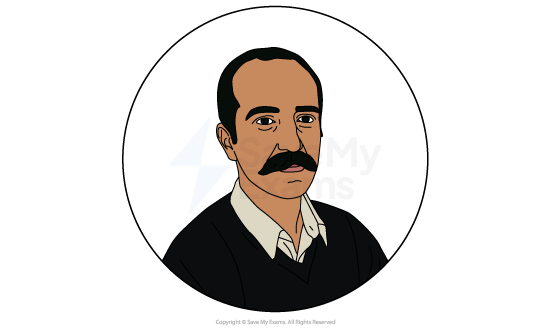
The father comes from a family with royal lineage — his grandfather was a prince and the son of an overthrown emperor:
He tells Marji: "I think you are old enough to understand certain things. You should know..." before revealing the family history
This privileged background makes his political opposition to the Shah's regime all the more striking
He was imprisoned and tortured under the Shah's regime for his political beliefs:
He was held in a cell filled with water for hours at a time
The mother recalls that every knock at the door filled her with fear that they were coming to take him back to prison
He is presented as politically educated and emotionally measured, acting as an interpreter of events for Marji:
He explains demonstrations, revolutionary politics, and the family's history in terms Marji can understand
He is also the one who tells Marji that Anoosh has gone "back to Moscow" — a euphemism that fails to conceal the truth from her
He is associated throughout with the phrase "Everything will be alright", which comes to carry increasing irony:
He repeats this to reassure the family at moments of crisis, but the memoir's events steadily contradict his optimism
By the airport farewell, the phrase has become a ritual comfort rather than a genuine belief
His farewell to Marji at the airport is one of the book's most emotionally charged scenes:
He tells her: "Don't cry. Think of your future" and "Europe awaits you"
His final words are: "Don't forget who you are and where you come from" — identity and memory are the most important inheritance he can give her
The grandmother
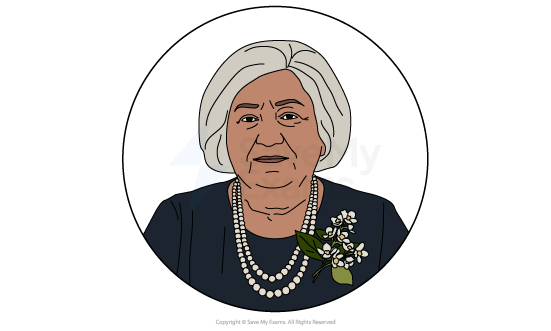
The grandmother is introduced as the only adult who takes Marji's prophet ambitions seriously:
She volunteers to be Marji's "first disciple" when Marji shows her the holy book
She asks probing questions — "But tell me how you'll arrange for old people not to suffer?" — engaging with rather than dismissing Marji's ideas
She has lived through decades of political turbulence and carries the weight of the family's history:
Her husband remained loyal to the Shah while Anoosh and Fereydoon joined the revolutionary cause
She was separated from her six children for thirty years — Satrapi narrates "For the first time in 30 years, my grandma was reunited with her six children"
To survive during periods of poverty, she sewed clothes for the entire family from leftover material
She is depicted as a woman of warmth, practicality, and quiet endurance:
Each morning she places jasmine flowers in her bra so that she smells nice — a small, private ritual of beauty and dignity that Marji observes on the eve of her departure
She soaks her breasts in ice water every morning and night — a detail she shares with Marji with characteristic matter-of-factness
Her farewell to Marji is the emotional and moral heart of the book's closing pages:
She gives Marji the following advice: "In life you'll meet a lot of jerks. If they hurt you, tell yourself that it's because they're stupid. That will help keep you from reacting to their cruelty. Because there is nothing worse than bitterness and vengeance... always keep your dignity and be true to yourself"
Satrapi narrates: "I smelled my grandma's bosom. It smelled good. I'll never forget that smell" — one of the most tender and specific images in the memoir
Uncle Anoosh
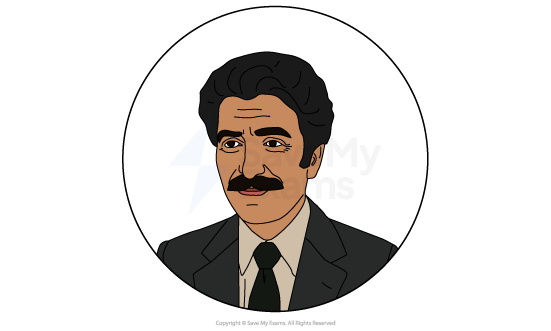
Anoosh is Marji's father's brother, absent from the family for thirty years due to imprisonment:
Satrapi narrates: "Luckily, one day they told me about my Uncle Anoosh. The only one of my father's brothers I had never met. Because he had been in prison"
Marji's immediate reaction is instinctive love: "And I had a hero in my family... naturally I loved him immediately"
Anoosh tells Marji his history across a series of bedtime stories, which function as a compressed history of twentieth-century Iranian political struggle:
At eighteen he followed his Uncle Fereydoon, who proclaimed the independence of the Iranian province of Azerbaijan and elected himself Minister of Justice
Anoosh became Fereydoon's secretary: "It was a time of dreams and enthusiasm"
When the Shah's soldiers arrived and arrested Fereydoon, Anoosh fled to the Soviet Union
He returned to Iran using a false passport and disguise but was immediately recognised and imprisoned for nine years under the Shah
After his release, Anoosh is re-arrested under the new Islamic Republic:
He is falsely accused of being a Russian spy — a charge that conflates leftist politics with foreign espionage
He chooses Marji as his last prison visitor, with only ten minutes permitted
The prison visit scene is one of the most emotionally powerful in the memoir:
He holds her and says: "You are the little girl I always wanted to have"
He gives her a bread swan he made in prison: "Here! I made you another bread-swan. It's the uncle of the first one"
His parting words are: "Star of my life...".
After the visit, Anoosh is executed — labelled in the newspaper as "Russian Spy Executed":
This headline, flanked visually by the bread swans Anoosh made, is one of Satrapi's most devastating visual juxtapositions
Anoosh's death is the event that destroys Marji's faith and marks the end of her childhood
Anoosh instructs Marji on the importance of family memory:
He tells her: "I tell you all this because it's important that you know. Our family memory must not be lost. Even if it's not easy for you, even if you don't understand it all"
Marji responds: "Don't worry, I'll never forget" — a promise the memoir itself fulfils
Examiner Tips and Tricks
In the IB exam, avoid simply describing what a character does. Analyse how Satrapi constructs the character to convey ideas. For example, Marji's prophet ambitions are not merely a childish quirk — they explore the tension between personal spirituality and state-imposed religion.
Notice how Satrapi presents characters in relation to one another. Anoosh and the grandmother both serve as moral guides for Marji, but through different means: one through political storytelling and memory, the other through quiet personal conduct and emotional wisdom.
For Paper 2 comparative work, consider how Satrapi's characterisation of the family as a unit of resistance compares with Trevor Noah's characterisation of his mother in Born a Crime. Both texts use a parent or guardian figure to embody resilience and to transmit cultural and moral identity to the narrator.
Sources
Satrapi, M. (2003). Persepolis: The Story of a Childhood. Jonathan Cape.

Unlock more, it's free!
Join the 100,000+ Students that ❤️ Save My Exams
the (exam) results speak for themselves:

Was this revision note helpful?