Characters (DP IB English A: Language and Literature: HL): Revision Note
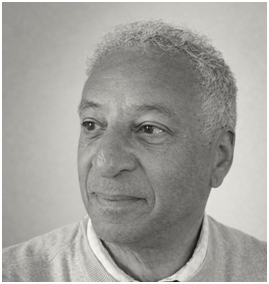
In Trevor Noah’s memoir Born a Crime, characterisation plays a central role in revealing the social realities of apartheid and post-apartheid South Africa. Through narrative voice, anecdote, dialogue and reflective commentary, Noah constructs characters who embody different responses to systemic racism, poverty, religion and family dynamics.
The characters in Born a Crime are not simply individuals within a memoir. They function as vehicles through which Noah explores broader social structures and cultural tensions.
Below you will find character profiles of:
Trevor Noah
Patricia Nombuyiselo Noah
Robert Noah
Abel Shingange
Minor characters:
Koko (Trevor’s grandmother)
Teddy
Andrew
These profiles support analysis for:
Paper 2, when comparing how writers construct characters across texts
Individual Oral, when connecting character experiences to global issues
Examiner Tips and Tricks
Characterisation should be analysed in relation to:
Authorial choices such as narrative perspective, humour and anecdotal structure
Conceptual concerns including identity, power, belonging and resistance
The historical context of apartheid and its social consequences
Global issues relevant to the Individual Oral
Trevor Noah

Trevor Noah serves as both protagonist and retrospective narrator of the memoir:
His perspective allows the reader to interpret childhood experiences through both immediate anecdote and adult reflection
This narrative method reveals how characterisation is shaped by voice, tone and retrospective commentary
Trevor’s identity is shaped before birth by apartheid legislation: “I was born a crime”:
This phrase establishes him immediately as a character whose very existence exposes the absurdity and violence of apartheid
Trevor grows up between racial categories and never fully belongs to one group:
He describes growing up in a “mixed family, with me being the mixed one in the family”
His character therefore illustrates the instability and incoherence of racial classification under apartheid
Trevor is presented as highly observant and intellectually agile:
His reflections often move from humour to serious critique
He uses wit to analyse injustice without reducing its severity
Language becomes one of Trevor’s most powerful tools:
His ability to speak multiple South African languages allows him to move between cultural groups and negotiate social boundaries
Reflecting on this, he explains how language functions as a form of social currency and protection
This reveals how Noah presents Trevor as adaptable, strategic and socially intelligent
Trevor’s teenage entrepreneurship demonstrates resilience and resourcefulness:
He sells CDs and becomes involved in informal township economies
These experiences show how young people navigate limited opportunities in post-apartheid South Africa
Trevor represents several important IB concepts:
Identity formation within oppressive systems
Language as a form of social power
Humour as a strategy for survival and critique
Examiner Tips and Tricks
Focus closely on Noah’s authorial choices, particularly his use of first-person narration, humour, anecdotal structure and reflective commentary. Strong responses analyse how these techniques allow Noah to present serious experiences of apartheid through a personal and often ironic narrative voice. You should also consider how the memoir structure allows Noah to move between childhood experience and adult reflection, showing how meaning is constructed through hindsight. High-level essays avoid simply identifying techniques and instead analyse how these choices shape the reader’s understanding of identity, power and survival.
Patricia Nombuyiselo Noah
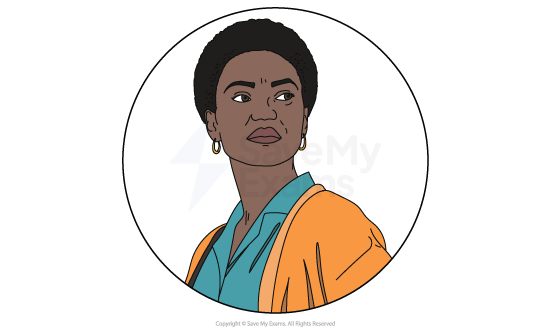
Patricia Noah is Trevor’s mother and the memoir’s strongest moral and ideological influence:
She is characterised as rebellious, fiercely independent and deeply determined
Her decisions repeatedly challenge the systems that attempt to control her life
Her Xhosa name, Nombuyiselo, means “She who gives back”
Patricia defies apartheid laws by choosing to have a child with a white man:
Trevor explains that his parents’ relationship was illegal under apartheid
Her decision is therefore presented as an act of resistance against racial regulation
Patricia is presented as committed to freedom, self-determination and education:
Trevor explains her outlook through her refusal to let the ghetto define his horizons
She says, “even if he never leaves the ghetto, he will know that the ghetto is not the world”
This presents her as intellectually ambitious for her son and resistant to internalised oppression
Religion is central to Patricia’s life and shapes Trevor’s upbringing:
Her faith structures family life and exposes Trevor to multiple communities and forms of worship
Despite Abel’s abuse, she remains protective, determined and mentally strong
Her survival after being shot becomes one of the memoir’s clearest symbols of endurance
Trevor presents Patricia as the person who expands his sense of possibility:
Her influence shapes his moral imagination, his independence and his capacity to question power
Patricia represents:
Resistance against oppressive systems
The role of faith and education in shaping identity
Maternal resilience and moral strength
Examiner Tips and Tricks
Examiners reward responses that compare how Noah uses characterisation to explore ideas such as identity, resistance and oppression. Strong Paper 2 responses move beyond narrative description and instead analyse how Noah constructs characters through anecdote, dialogue and narration to critique the social impact of apartheid and its legacy. High-level responses also focus on how characterisation reveals broader thematic concerns rather than simply retelling events.
Robert Noah

Robert Noah appears less frequently in the narrative but remains an important presence:
His reduced visibility reflects the legal realities of apartheid
Because interracial relationships were illegal, he could not openly function as Trevor’s father in public
Trevor explains that his father is absent from official structures of identity:
“My father isn’t on my birth certificate. Officially, he’s never been my father”
This detail shows how apartheid law distorts family identity and erases real relationships
Robert is presented as calm, reserved, and thoughtful:
He contrasts with Patricia’s strong outward energy
His quieter presence broadens Trevor’s understanding of masculinity and fatherhood
Trevor’s relationship with Robert is shaped by secrecy:
He recalls that “the only time I could be with my father was indoors”
This demonstrates how apartheid invades even ordinary family intimacy
Robert introduces Trevor to books, restaurants and ways of living beyond township limitations:
Through these moments, Noah presents Robert as a figure associated with reflection, culture and a different social world
Robert symbolises:
The complexity of interracial relationships under apartheid
Alternative models of masculinity and parenting
Cultural exchange and intellectual curiosity
Examiner Tips and Tricks
For your Individual Oral (IO), these characters provide strong entry points into global issues such as systemic racism and segregation, domestic violence and gendered power, identity formation in multicultural societies and the role of language as a tool of power and social mobility. Strong responses should focus on how Noah uses characterisation to explore how individuals navigate these pressures and how personal experiences reflect wider social structures.
Abel Shingange

Abel Shingange becomes Trevor’s stepfather after Patricia marries him:
He is initially associated with work, order and economic stability
However, Noah gradually reveals his need for control and his violent tendencies
Abel is presented as increasingly abusive and authoritarian:
Trevor’s fear of him is so intense that, when arrested, he thinks, “He might actually kill me”
This shows how fully Abel’s violence shapes the emotional atmosphere of family life
Noah presents Abel as a figure of patriarchal domination:
His behaviour reflects a model of masculinity built on ownership, intimidation and violence
Through Abel, the memoir explores how private domestic abuse connects to wider structures of power
The violence reaches its most extreme point when Abel shoots Patricia:
This moment forces the memoir into a darker register
It also sharpens Patricia’s role as a figure of extraordinary resilience
Abel exposes:
Patriarchal power and domestic abuse
The intersection between personal violence and broader social instability
The lingering effects of trauma within post-apartheid communities
Examiner Tips and Tricks
Writers use characters to convey ideas, often presenting contrasting perspectives in order to raise debates about society and human behaviour. In Born a Crime, Trevor, Patricia, Robert and Abel do not simply function as family members but instead represent different responses to race, power, religion, violence and survival. Through these contrasting characterisations, Noah explores how individuals respond differently to oppression and adversity depending on their values, beliefs and choices.
Minor characters
Koko (Trevor’s great-grandmother)
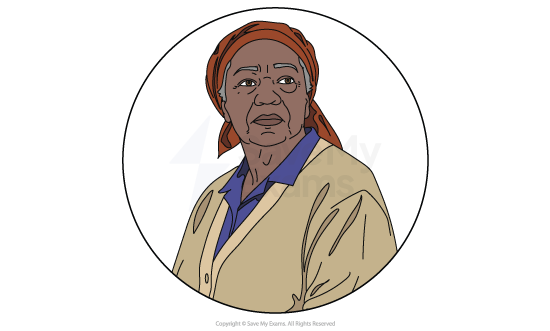
Koko is Trevor’s great-grandmother who helps raise him while Patricia works:
She provides Trevor with a structured and religious home environment
Her house represents stability during Trevor’s early childhood
Koko is presented as strict and shaped by the realities of apartheid:
She believes Trevor should be physically disciplined but Patricia refuses
This contrast highlights generational differences in parenting shaped by trauma and survival
Noah presents Koko as representing traditional values and generational trauma:
Her beliefs reflect how older generations adapted to survive apartheid through obedience and discipline
This contrasts with Patricia’s belief in independence and critical thinking
Koko represents the influence of tradition within Trevor’s upbringing:
Her religious household contributes to Trevor’s early exposure to faith and moral structure
This helps shape Trevor’s understanding of authority and identity
Koko exposes:
The generational effects of apartheid
Traditional discipline versus progressive parenting
The role of religion in family structure
How survival experiences shape parenting beliefs
Teddy
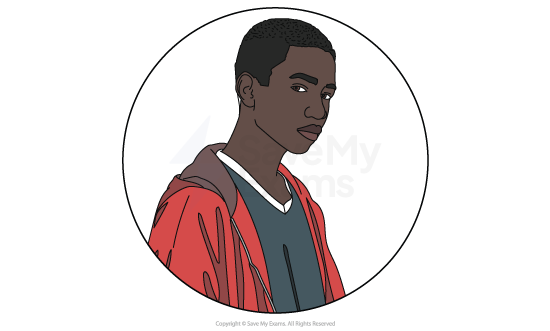
Teddy is one of Trevor’s closest childhood friends who grows up with him in the township:
He represents the everyday experiences of Black South African youth navigating poverty and limited opportunities
His friendship with Trevor reflects the importance of peer relationships in shaping identity during adolescence
Teddy is presented as streetwise and socially adaptable:
Like Trevor, he learns how to navigate dangerous environments and shifting social dynamics
Noah shows how friendships often function as protection within unstable social environments
Noah uses Teddy to illustrate how environment shapes behaviour:
Through Teddy, Noah shows how young men must develop resilience and toughness to survive township life
His character reflects how systemic inequality limits choices available to young people
Teddy represents the influence of peer culture on Trevor’s development:
Their shared experiences with music, social life and teenage survival strategies highlight how Trevor learns independence outside formal structures
These friendships help Trevor develop confidence and social intelligence
Teddy exposes:
The realities of township youth culture
The role of friendship as survival support
How environment influences identity formation
The social pressures faced by young men in post-apartheid communities
Andrew

Andrew is Trevor’s younger half-brother and the eldest son of Patricia and Abel:
His birth changes the family dynamic and strengthens Abel’s sense of authority in the household
As Abel’s biological son, Andrew receives a level of respect and attention that Trevor never experiences
Andrew is presented as a peacekeeper within the family:
Unlike Trevor, who fears Abel, Andrew loves his father and tries to calm his violent behaviour
This shows Andrew’s emotional maturity and his attempt to maintain stability in a violent home
Noah presents Andrew as a character caught between love and fear:
Andrew’s relationship with Abel demonstrates the complexity of abusive family dynamics
Through Andrew, Noah shows how children in abusive households may try to manage conflict rather than escape it
Andrew’s courage is shown when he attempts to protect his mother during Abel’s violent outbursts:
His attempts to reason with his father highlight his bravery and sense of responsibility despite his young age
However, when Abel’s violence escalates, Andrew is forced to realise he cannot control the situation
Andrew exposes:
The psychological impact of domestic abuse on children
The complexity of father–son relationships in abusive households
How family roles can force children to mature quickly
The emotional burden of trying to maintain peace in unstable environments
Sources
Noah, T. (2016), Born a Crime: Stories from a South African Childhood, London: John Murray.

Unlock more, it's free!
Join the 100,000+ Students that ❤️ Save My Exams
the (exam) results speak for themselves:

Was this revision note helpful?