Understanding Paper 1: Unseen Textual Analysis (DP IB English A: Language and Literature: HL): Revision Note

This section is designed to help you understand the structure and expectations of the unseen textual analysis on Paper 1 of your IB Diploma English A: Language and Literature (HL) course. It consists of:
How Paper 1 is assessed
Core skills assessed in Paper 1
Tips for success in Paper 1
How Paper 1 is assessed
Paper 1 is the first of the two timed examinations taken at the end of your IB Diploma English A: Language and Literature (HL) course. It is externally assessed and completed under exam conditions.
Overview:
Paper 1 is completed at the end of the second year of your Diploma course
It is worth 25% of the overall grade for Higher Level (HL) students
You have 2 hours and 15 minutes to complete the exam
Unlike Paper 2, which involves writing about literary texts studied in your course, Paper 1 requires you to write about texts you have not studied before
The exam includes two unseen non-literary texts:
You must write a separate analysis for each unseen text
The texts are usually 1–2 pages long
They may be complete texts or extracts from longer works
The exam paper will include a guiding question for each text:
While you do not have to answer the guiding question, it is a very good idea to do so
The guiding question will be about a technical or formal element of the text under analysis
The analysis of Paper 1 texts needs to focus on how and why a writer does something; you need to identify an intended purpose and analyse how the writer achieves it. The text can be any non-literary text type, for example:
Article
Diary
Travel writing
Blog
Advertisement
Opinion column
Speech
Infographic
Comic
You are expected to include detailed references from the texts under analysis to support your claims: you should quote text directly or refer to specific visual details from the sources in the exam.
Core skills assessed in Paper 1
When preparing for Paper 1, you will build many of the same skills you developed throughout the course for your other assessments, including Paper 2 and the Individual Oral. These include:
Reading carefully and critically
Understanding texts in depth
Making inferences and drawing clear conclusions
Using subject-specific literary terminology accurately
Organising and structuring ideas effectively in an essay
However, Paper 1 involves writing analytical essays on non-literary texts, so you will also need to identify key features of the texts to make your analysis specific and relevant. These include:
Context
Purpose
Text type
The interplay between visual and textual elements
There are four assessment criteria:
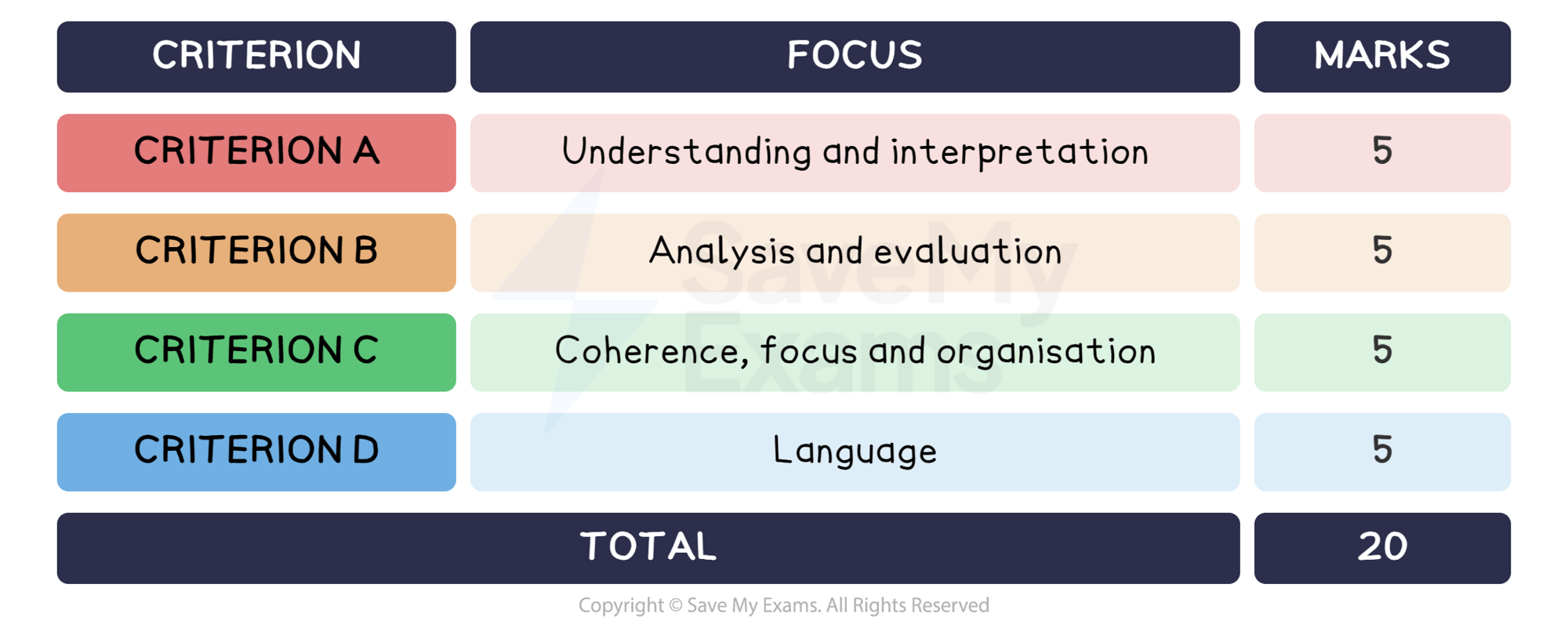
Time management
Effective time management is essential in Paper 1. You have 2 hours and 15 minutes to write two complete analytical essays, so you need to use your time wisely.
Here is a guide to planning your time in the exam. The timings here are for one of the unseen texts; repeat these timings for the second text:
10 mins | Read the text and annotate:
|
5 mins | Planning your essay:
|
45–55 mins | Writing your essay:
|
5 mins | Checking your essay:
|
Tips for success in Paper 1
Examiner Tips and Tricks
You cannot predict what texts will appear in Paper 1. You should build analytical skills that both apply across all text types and are specific to groups of text types (e.g., articles/opinion columns; comics/political cartoons; infographics/brochures; blogs/diary entries; advertisements/magazine covers).
Analysing the specifics of the texts in Paper 1 is essential to scoring highly. Generic, vague claims that apply to any text will not score well. This table outlines key factors to consider when analysing the unseen texts.
Analyse, not describe | Subject-specific terminology | Specific purpose | Specific audience |
The focus of Paper 1 is analysis. It is not enough to list or describe features in a text. You must link features to an effect on the reader and, ideally, link this effect to the intended purpose. | Criterion D assesses your use of appropriate and effective language. One key way to do this well is to use subject-specific terminology, including technical names for textual features (e.g., diction, connotation, gaze, graphic weighting) and verbs of textual analysis (e.g., suggests, highlights, emphasises, hints). | You will write a more convincing thesis statement and analysis if you identify a specific purpose. Avoid generic claims, such as “The writer wants to get the reader’s attention”. Strive for more nuanced claims that unpack what is really going on in a text. For example, not all advertisements only want to sell a product. Often, they aim to heighten brand awareness or align their brand with a certain vibe or trend. | You will write more convincing analytical claims if you have identified a specific audience. Avoid falling into the trap of assuming the figures represented in the text are the target audience. For example, an advertisement for children’s clothes is not aimed at children, as they do not buy their own clothes; it is aimed at their parents. |
Examiner Tips and Tricks
When under time pressure in the exam, it can be easy to fall into the habit of just describing your unseen texts. However, it is essential that you move on from describing to actually analysing them. Otherwise you won’t be awarded high marks.
For example, a descriptive statement would be, “The black letters stand out”. An analytical statement on the same feature would be, “The contrast of the black letters against the white background makes the word ‘elegant’ stand out so the reader associates this word with the brand. In this way, the author aligns their brand with elegance and entices their fashionista customer to buy the product and enhance their elegance.”

Unlock more, it's free!
Join the 100,000+ Students that ❤️ Save My Exams
the (exam) results speak for themselves:

Was this revision note helpful?