Characters (DP IB English A: Language and Literature: HL): Revision Note

When studying Beloved, it is important to understand the ideas that the author conveys through her use of characters. Toni Morrison shapes her characters in ways that reflect the historical realities of her main themes and topics, examining the everlasting impact of slavery and the effects of racial oppression, disrupted family structures, and the ongoing search for identity in post-Civil War America. She presents a world marked by trauma and memory, as we see in the portrayal of Sethe, Denver and Beloved, both individually and as connected characters.
Characterisation can be examined through both the introduction of characters and their development over the course of the narrative. It is important to understand not only how the central themes of the novel are reflected in the characters and what happens to them, but also to remember what happens to them to shape how the reader sees each character.
The following section provides profiles of the main characters, alongside shorter summaries of other figures who contribute to the progression of the narrative.
Main characters:
Sethe
Denver
Beloved
Paul D
Other characters:
Baby Suggs
Stamp Paid
Halle
Schoolteacher
Mr and Mrs Garner
Amy Denver
Sethe
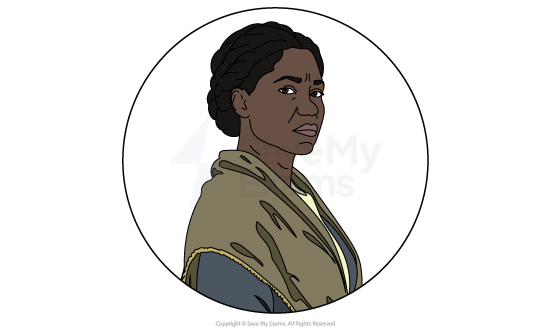
Sethe is a proud woman with a fighting spirit that carries her through a traumatic life:
She serves as the novel’s protagonist
In the present day of the novel, she is a free woman, living at a house known as “124” in Cincinnati, Ohio, with her daughter, Denver, and her mother-in-law, Baby Suggs
Sethe was born on a plantation that she can hardly remember, and never knew her mother’s name:
She remembers her mother working long hours, and was told by Nan that she was the child of a loving relationship
Her mother is hanged, and Sethe can only identify her by a mark under her breast
Sethe’s relationship with the memory of her mother is complicated by her death:
Since she was hanged, she suspects her mother was caught trying to escape
This left Sethe without her only living relative, but also shows her mother was willing to leave her alone to face a life of slavery
In contrast, Sethe cannot bear to be parted from her children, and would rather kill them than see them stuck in slavery alone
In events prior to the beginning of the novel, Sethe lived enslaved at a plantation known as “Sweet Home” in Kentucky:
Sethe was reasonably happy at Sweet Home when it was run by Mr and Mrs Garner, and given more respect than many slaves were
She marries Halle, and while she does not have a formal wedding, we see a glimpse of her character as she insists on sewing a wedding dress for her first night with Halle
Sethe has four children with Halle: Howard, Buglar, Beloved, and Denver:
By the time of the novel, only Denver remains living with Sethe at 124
Beloved is dead
Howard and Buglar both run away
Sethe helps her three children to escape Sweet Home, but is caught and punished:
The children make their way to Baby Suggs, but Sethe is caught by schoolteacher’s nephews
They whip her back and drink milk from her, as she is pregnant at the time
Sethe manages to escape after this, even while pregnant, with the help of a white woman who finds her
Flashbacks also show the reader that, when the family is later found by schoolteacher, Sethe would rather sacrifice them than see them taken back to slavery
Sethe cuts the throat of her oldest child, her daughter, who is eventually known by the name Beloved:
Sethe believes this is the ultimate act of protecting her children
She believes death will take them to family on the “other side”, rather than into the arms of the vicious schoolteacher and slavery
She is stopped before she can kill the other three, and taken to prison with Denver
Once freed, she lives at 124 with her three living children
The house at 124 is haunted by a ghost, believed to be the ghost of the daughter she killed, Beloved
In 1873, in the present time of the novel, after Baby Suggs has died and her sons have fled home, Sethe tries to start a new life in the home with Paul D, another former slave from Sweet Home
Eventually, that life is torn apart by a woman who comes into their life, believed to be the living spirit of Beloved:
Consumed by guilt and trauma, Sethe devotes herself entirely to Beloved, to the detriment of her health, and Denver’s health, too
She is easily manipulated by Beloved, eager to see her child reborn and to make up for what she did to her
By the end of the novel, she appears to have lost her mind somewhat in the stress of Beloved’s departure and the aftermath of attacking Mr Bodwin:
While frail and mentally fragile, she is free from Beloved’s haunting and her power over her
Denver

Denver is Sethe’s fourth and youngest child, and her only living daughter
Sethe considers Denver a charmed child due to the hardship she has endured and survived:
Sethe escaped Sweet Home while nine months pregnant with Denver, and took harsh beatings while heavily pregnant
While escaping, Sethe goes into labour, and gives birth by the side of a river with the help of a white woman named Amy Denver:
This is why she chose the name Denver for her youngest child
That Denver survives all this leads to Sethe’s belief, thinking Denver blessed to survive by some higher power
In the present day of the novel, Denver is the only child still living with Sethe, and the pair live alone together in 124
Denver is 18 years old at the start of the novel, but isolation from family and friendship has left her emotional growth stunted
Denver is both intelligent and responsible, while also being immature and self-centred
She can be quiet and independent, but craves attention and love from first Sethe, and then Beloved:
She tries to drive Paul D away, not wanting her mother’s attention drawn to someone else
When Beloved arrives, she attaches herself to her, desperate for a sister and a friend of a closer age
Denver becomes almost obsessed with keeping Beloved happy once she arrives, enjoying having a sister to talk to and play with:
She feels she must protect her, from both the world and their mother
This is a reminder to how Denver is scarred by the knowledge of what her mother did to her sister, and it has led her to not trust safety
Towards the end of the novel, she recognises the damage Beloved is doing to Sethe:
When she chooses to act independently to save Sethe, her future changes
From this moment, she finds access to work, the community, and an education with Miss Bodwin that sees her contemplating attending Oberlin College in the future
It is Denver that saves Sethe from Beloved’s influence, realising towards the end of the novel that they need outside help:
Her independence is shown by her desire to find work, not charity, to help her family
She also shows the maturity to accept help once she realises it is needed, which contests with her mother’s stubbornness
By taking outside help, Denver has the most dynamic personal growth of all the characters, realising her fear of outsiders is not necessary, and showing courage to lean on the community to save her mother
Her last conversation with Paul D shows her new maturity:
She is civil and sincere, but strong and assertive in her own opinions and feelings
Beloved

Beloved is a complicated character who can be interpreted in different ways
The reader may feel that she is, in fact, the reincarnated spirit of Sethe’s daughter Beloved, who was killed by Sethe when still young
Another interpretation is that she is a mentally unstable woman nearby, who, as Sethe initially believes, was locked up by a white man and never let out until his death
A third view is that she is actually a representation of Sethe’s mother:
She recounts memories that would suggest this, such as the crossing from Africa to America
She shares traits like a perpetual smile and her manner of speaking
The most common belief is that she is the spirit of Sethe’s child:
Considering the novel asserts from the beginning that a ghost is haunting the house they live in, it can easily be accepted that supernatural occurrences exist in this world
However she is viewed, Beloved represents the trauma of slavery and how the past haunts the present
The Beloved that we see before her death, the eldest child and daughter of Sethe, is a girl who is killed by her mother:
Sethe slashes her throat when she believes she and her children will be forced back into slavery
She does this to save them from a life of brutal enslavement under schoolteacher, but is stopped before she can kill her other three children
Beloved is then said to haunt their home, which eventually drives Sethe’s two boys out:
She is banished by Paul D when he arrives early in the novel
Beloved enters Sethe’s life having come from a river:
She arrives soaking wet, as if from the womb, and just before she arrives, Sethe has the sensation of her water breaking
She also appears to be the age that Beloved would have been, had she lived
She seems to have no memory of where she has been or how she got there
Later, she asserts that she had visions of a face, and that face was Sethe’s
She begins as quite childish, wanting attention from Sethe and to be babied, but takes over the house as time goes on:
Near the end, she has taken on more of a motherly role to Sethe
There are aspects to her that cannot be easily explained without believing in something supernatural:
She knows about a pair of earrings Sethe lost long ago
She hums a song that Sethe had made up for her children
She has a long scar under her chin, where the wound that killed her would have been
Her breath smells like milk
She is the age Beloved would have been and has the same name that was printed on her tombstone
Her sudden changes in character are also unsettling, and keep her hard to understand:
At times she appears vulnerable and childlike
This invites sympathy, as she can be viewed as the product of abandonment, suffering, or loss
Yet, she also has a demanding and threatening side
As her influence grows, the house becomes more oppressive, showing how her presence destabilises domestic life, and giving her a power that seems supernatural
Morrison may use ambiguous characterisation so Beloved functions as both a person and a symbol:
She represents unresolved grief, memory, and the return of the past
By refusing to define her completely, Morrison allows Beloved to embody both intimate family trauma and historical suffering
Her ambiguity ensures she remains psychologically and symbolically powerful throughout the novel
Beloved is presented as more than just a character, but as some sort of force of nature that takes hold of the lives of all she interacts with:
With this, she is shown to have both destructive impact, but also forces positive change:
She changes Paul D, seducing him against his will (at least initially) in a way that opens him up to feelings and emotions again, something he had closed off
She forces Sethe to confront the past, something she has tried to suppress, but also teaches her to live in the present
Her impact on Denver is at first damaging, as Denver becomes enthralled with her and feels desperate to protect her
However, once she feels her neglect, Denver realises how problematic she is, and by forcing her out of the home and into the community for help, she is the catalyst for change that leads to Denver becoming independent, educated, and planning for an ambitious future
Paul D

Paul D was a slave at the same plantation, Sweet Home, as Sethe, but did not escape until after she had
Paul tried to escape Sweet Home before eventually making it out, and was forced to watch his friend, Sixo, burned alive and then shot:
After this, he was forced to have an iron bit affixed in his mouth and sent to a prison camp in Georgia
Paul was fond of Sethe when they worked together, before she married Halle, and has many traumatic memories, much like Sethe
He also remembers parts of Sweet Home that Sethe does not:
It is Paul D who saw how Halle was frozen by the abuse Sethe suffered after her failed escape, and how he lost his mind after watching schoolteacher’s nephews drinking milk from Sethe’s breasts
He suffered greatly under schoolteacher, and then suffered as part of a chain-gang when incarcerated in Georgia:
He escapes with all the other men, and then wanders aimlessly, feeling no sense of home anywhere
Paul D arrives at 124 and is surprised by his desire to settle down with Sethe, seeing himself as closed off emotionally before this:
He tries to keep his memories, and his emotions, in the past, saying they are kept in a “tobacco tin” where his heart once was
Both Sethe, with her kindness and love, and Beloved, with her confronting personality and overwhelming nature, open him up and help him finally move forward
Paul D is kind, considerate and patient:
He has the confidence to banish the ghost of Beloved when he first arrives, and adapts to Denver’s mistrust by trying to show her, and Sethe at the same time, that they could build a life as a family
In the end, he returns to care for Sethe, even though she seems to have lost her mind and has become a fragile figure
He seems to represent a chance of hope for Sethe:
He shows her kindness and an understanding of her past
He is similar to her in feeling a bit lost after the pain his life has given him
Sethe does the same for him, helping him to settle:
Before this, he is seen repressing his past by being constantly on the move, so he could not settle in a place and have time to think of his pain:
While Paul D is more of an active agent in helping Sethe change, both help the other finally see a future of more than just survival
Other characters
Baby Suggs

Baby Suggs is Sethe’s mother-in-law, Halle’s mother, and the grandmother to their children
Baby Suggs dies near the beginning of the novel:
She is shown as sickly, weak, and interested only in seeing materials with colour in the dark and haunted house
She was born into slavery and had eight children:
Only Halle was kept with Baby Suggs; her seven other children were sold to other slaveowners
All eight are presumed dead by the time the novel is set
Halle worked extra hours at other plantations to buy Baby Suggs’ freedom from the Garners at Sweet Home
She was set up in a house in Cincinnati, where Sethe’s children, and eventually Sethe, join her
Before their arrival, Baby Suggs became an important figure in the local Black community:
She became a somewhat holy figure, an unchurched preacher, known for her generosity
Her reputation grew as a healer of physical and mental pain
In the end, her generosity caused resentment in the local community, a resentment that passed on to Sethe on Baby Suggs’ death, and was not healed until the confrontation with Beloved at the novel’s denouement
Stamp Paid
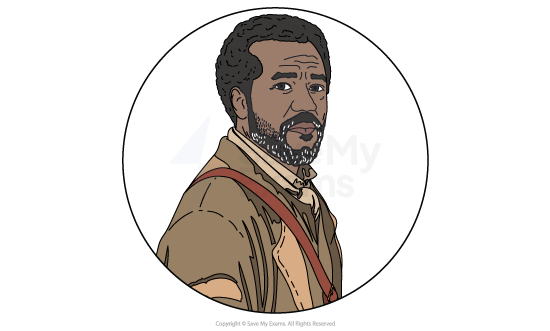
Stamp Paid is a former slave
He took on this new name once he had his freedom
He now works on the Underground Railroad
He helps Sethe get to 124, with Baby Suggs and her three children who had gone before her:
He ferries her across the Ohio River
It is later revealed that he was there the day Sethe killed her daughter (and would have killed the rest of her children) to escape schoolteacher:
It is Stamp Paid who takes Denver from Sethe, saving her life
He is another former slave who is haunted by his past and desperate to find relief from it
He tries to be kind and selfless, but in doing so, he contributes to Baby Suggs’ being ostracised by the community:
As a result of this, the community does not alert Baby Suggs and Sethe to schoolteacher’s arrival
Later in the novel, he tells Paul D about the day of Beloved’s death, confirming that it was Sethe who killed her:
He then feels guilty for this, as Paul D abandons Sethe, and he works to atone
In the end, he is part of the community effort to confront Beloved
He clearly holds great affection for Sethe, and especially for Denver
Halle

Halle is, or was, Sethe’s husband, and the father to her children
He is Baby Suggs’ son
Halle was enslaved at Sweet Home with Sethe, Paul D and others
Sethe accepts his marriage proposal as she sees him as a kind man
They have four children together, but Halle does not escape with his family
Halle works extra hours to buy his mother’s freedom, having seen her spend her life in slavery
Halle is driven mad by seeing schoolteacher’s nephews sexually and physically assault Sethe:
Paul D sees him with butter smeared all over his face for no reason, and considers him to have lost his mind
Halle was known as a happy and optimistic man before this, and we see that he has had his optimism and spirit ripped from him by life as a slave
Sethe is angered to hear Halle saw her being assaulted, but Paul D defends him, telling her he never mentally recovered from the sight of it:
Having experienced so much trauma, it is seeing his wife assaulted that eventually breaks him, showing how his character is driven by his love of others
It is unclear whether or not he is still alive, and the novel never resolves this
Schoolteacher

Schoolteacher takes over Sweet Home after the Garners
He is a cruel and vindictive man, who turns the kind atmosphere of Sweet Home into a more standard and nasty place
He uses his nephews to inflict pain and misery on all the slaves at Sweet Home:
This attitude and brutality ends up forcing all the slaves to attempt escape, which they had felt no need to do under the Garners
Schoolteacher is addressed without a capital letter, which suggests they either never learned his name, or refuse to name him, due to hatred and trauma:
This contributes to him being an undeveloped character, used more to represent evil in human beings
He seems to almost enjoy cruelty:
Such is his disturbing nature, Sethe feels justified in killing her own children, as that would be better than a life lived under schoolteacher’s control
He dehumanises the slaves, measuring and studying them like animals:
This affects Sethe greatly, more than the beatings
It is this that breaks Halle, the sight of the nephews drinking milk from his wife’s breast showing how they see the slaves like livestock
Mr and Mrs Garner

The original owners of Sweet Home, they are seen as kind slave owners, and are not unliked by Sethe, Halle, Stamp Paid and their other slaves
They also show how low the bar was to be seen as kind:
They still keep slaves, treat them as inferiors, and make Halle buy his mother’s freedom, even though she is an older woman
While kind, they still belittle their slaves:
Mrs Garner laughs at Sethe for asking if she could have a wedding with Halle:
However, when she notices Sethe is stealing little bits of fabric to make herself a wedding dress, she gives Sethe some earrings and tells her she wants them to be happy together
They took pride in how the men at Sweet Home were “Sweet Home men”, suggesting they are gentlemanly and treat women well:
Mr Garner uses this term as a boast to other slaveowners, who tell him that slaves can never be real men
How comfortable other slaveowners are with dehumanising slaves shows why the Garners are seen as kind, just for their limited show of decency
While the act of forcing Halle to buy his mother’s freedom seems crass, it is not something many slaveowners would do, which impresses those at Sweet Home
After Mr Garner dies, Mrs Garner feels she is not safe or in a position to run the plantation herself, and has her brother-in-law, the schoolteacher, take over:
She is dismayed by his treatment of the slaves
She cries when hearing of Sethe’s rape, but feels powerless to stop any of it
While the Garners’ roles as slaveowners may still be inexcusable, they are clearly presented as far better people than other slavers, and progressive for their time:
It is suggested that other slavers have threatened them with violence for how they treated enslaved people
Other white people being threatened or attacked if they allowed their slaves freedom or educated them was common in the South at the time
Some of the enslaved men believe Mr Garner may have been murdered for his progressive views:
Sixo also feels the local doctor may have been poisoning Mrs Garner to make her ill, so that schoolteacher can retain control and treat the enslaved men and women at Sweet Home in the expected manner
Amy Denver

Amy Denver is the woman who finds Sethe after her escape and helps deliver Denver:
This is why Denver is given that name, in her honour
Amy is the only white character to show complete kindness to Sethe, considering the Garners choose to keep her enslaved
Sethe and Amy are only together for a brief time, with Amy helping deliver her baby, and soothing the wounds on her back and feet, before helping her to get safe passage over the river and to Cincinnati
Amy’s mother was an indentured servant, and so Amy became one, too:
As such, she is the closest a white person could be to a slave
This experience gives her the perspective that sees her treat Sethe like an equal, in contrast to how the majority of white people would have treated Sethe
She takes the journey over the Ohio River with Sethe, looking to purchase some velvet
Sources
Morrison, T. (2007), Beloved, Vintage

Unlock more, it's free!
Join the 100,000+ Students that ❤️ Save My Exams
the (exam) results speak for themselves:

Was this revision note helpful?