Key IB Terms and Commands (DP IB English A: Language and Literature: HL): Revision Note

Understanding key IB terms and commands is essential for your IB Diploma English A: Language and Literature course. This sections explores:
Key terms
Command terms
Key terms
This section introduces important key terms used throughout your IB English course.
Form, genre and mode
The terms form, genre and mode are used to classify text types, especially literary texts.
Form
Form refers to a specific type of writing with certain conventions related to the physical layout or length of the text
A poem, play, novel and short story are four key literary forms:
Each of these four forms might be subdivided into different forms
For example, in poetry, forms could include a sonnet, haiku, free verse or an ode
In English A, the four main literary forms are poetry, drama, prose fiction and prose non-fiction:
These forms are sometimes further subdivided
For example, within the form prose fiction, more specific forms might include novels, graphic novels, novellas and short stories
Genre
Genre refers to a type of writing with certain conventions within a particular literary form:
For example, genres of the literary form prose fiction include: science fiction; crime fiction; romantic fiction and young adult fiction
Similarly, genres of the literary form drama include:
Tragedy, comedy, history and melodrama
These genres can then be subdivided into sub-genres:
For example, the parent genre of comedy includes the sub-genres farce and comedy of manners
Mode
Mode refers to a type of writing with certain conventions that can occur across a range of different literary forms and genres
Mode might refer to texts with a similar style or approach:
For example, satirical, realist, tragic, absurdist, and romantic texts
Or to texts with similar narrative features (for example, pastoral and gothic)
Here is an example using George Orwell’s Animal Farm.
Text | Form | Genre | Mode |
|---|---|---|---|
Animal Farm | Prose fiction (novella) | Political allegory | Satirical |
Global issues, fields of inquiry and Sustainable Development Goals (SDGs)
A global issue is defined as one which has significance on a wide or large scale, is transnational and whose impact is felt in everyday local contexts.
It forms the focus of your Individual Oral (IO) and provides the lens through which both of the texts and/or works in it should be approached
There are different sources that you can use for inspiration when defining the global issue for your IO:
One is the five fields of inquiry, broad areas which you could use as a starting point in exploring possible global issues
Another is the Sustainable Development Goals (SDGs) set by the United Nations’ Division for Sustainable Development Goals
They are defined by the UN as a “universal call to action to end poverty, protect the planet and ensure that all people enjoy peace and prosperity”
It is important to note that neither a field of inquiry nor an SDG by itself constitutes a global issue, but that they can be used as a source from which to form one
Intertextuality
The term intertextuality is used to refer to two distinct ways in which texts can be interpreted to refer to one another.
The first refers to the ways in which texts deliberately allude to or refer to other texts
An example of this might James Joyce’s Ulysses:
It is informed by the Odysseus myth in general and more specifically by the way characters are presented as versions of the characters of Homer’s Odyssey
The second way is exploring how texts might be seen to link and refer to one another in a much broader way than simply to enhance their meaning through allusion:
This broader view of how meaning is created in a text goes beyond simply transferring ideas from writer to reader
It links to the idea that the meaning of a text is likely to be constructed through reference to a range of other related texts
Literary merit and the canon
Defining the “value” of a text is difficult and relates to ideas about literary and cultural judgments.
The body of texts that have been viewed as “having value” is known as the canon
Canonical texts are often regarded as maintaining their value across generations of readers and within the literature of a culture or society
In examining the idea of value, readers can also examine the relationship between more valued and less valued text types:
Certain types of text are excluded
For example, non-fiction and media texts
Production and reception
A text is produced in a particular context, which includes the culture, time, space and place of the writer as well as their values, beliefs and attitudes.
These factors shape the perspectives and representations in a text:
These are contexts of production
Equally important is the context of reception, which is focused on the reader of the text:
The reader brings to the text their culture, community, time, space and place
These factors shape their perception of and response to a text
Reception can also refer to how others have received the text over time or in different places, including in literary criticism
Work, text and body of work
Knowing the differences between a text, a work and a body of work is important.
Work
A work is defined as:
One single major literary text, such as a novel, autobiography or biography
Two or more shorter literary texts such as novellas
5–10 short stories
5–8 essays
10–15 letters or:
a substantial section or the whole of a long poem (at least 600 lines) or 15–20 shorter poems
In order for a group of shorter literary texts to be considered a work, they must be written by the same author
A group of literary texts becomes a work when there is enough material written by the same author to allow you to explore their writing in detail
Text
A text is any form of communication that can be studied and analysed for meaning
This is a broader term than “work” and can include:
Literary texts (novels, poems)
Non-literary forms (advertisements, speeches or articles)
Body of work
A body of work refers to a collection of texts by the same author or creator:
It can consist of literary or non-literary texts that are studied together to gain a deeper understanding of that author or creator’s methods
It enables you to develop a deeper understanding of the creator’s voice and perspective
It helps you to compare and connect multiple texts within the same creator’s work or across different contexts or purposes
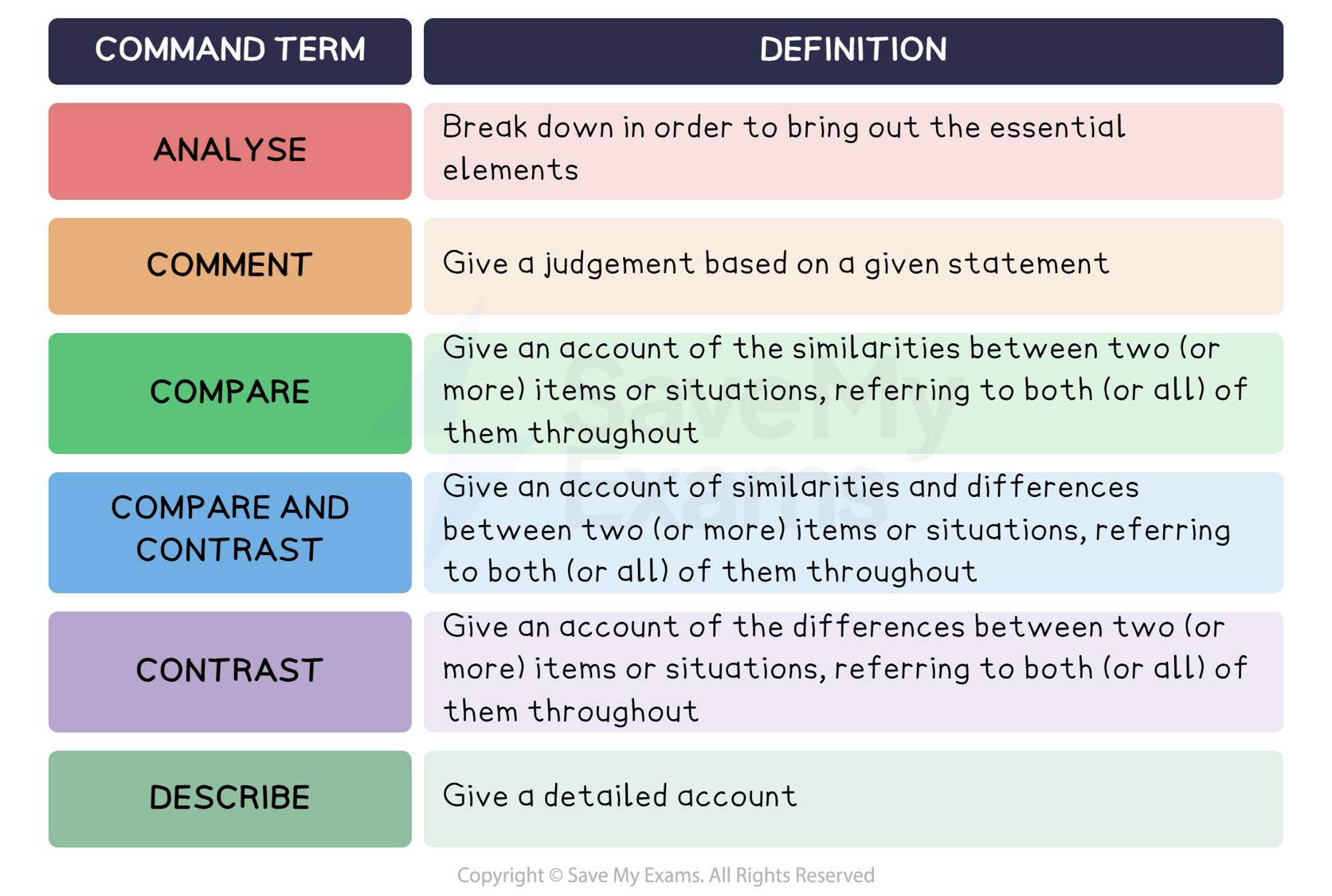
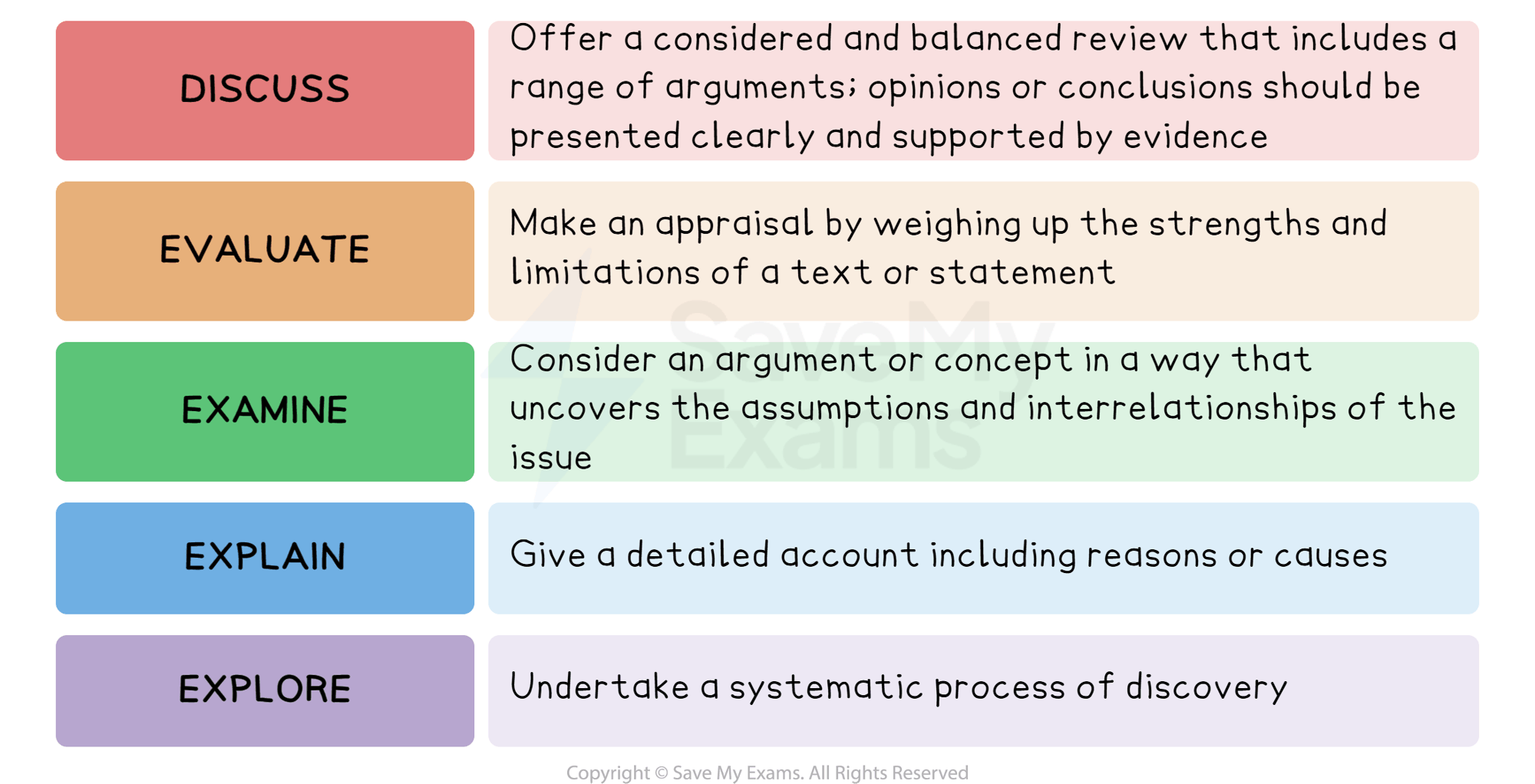
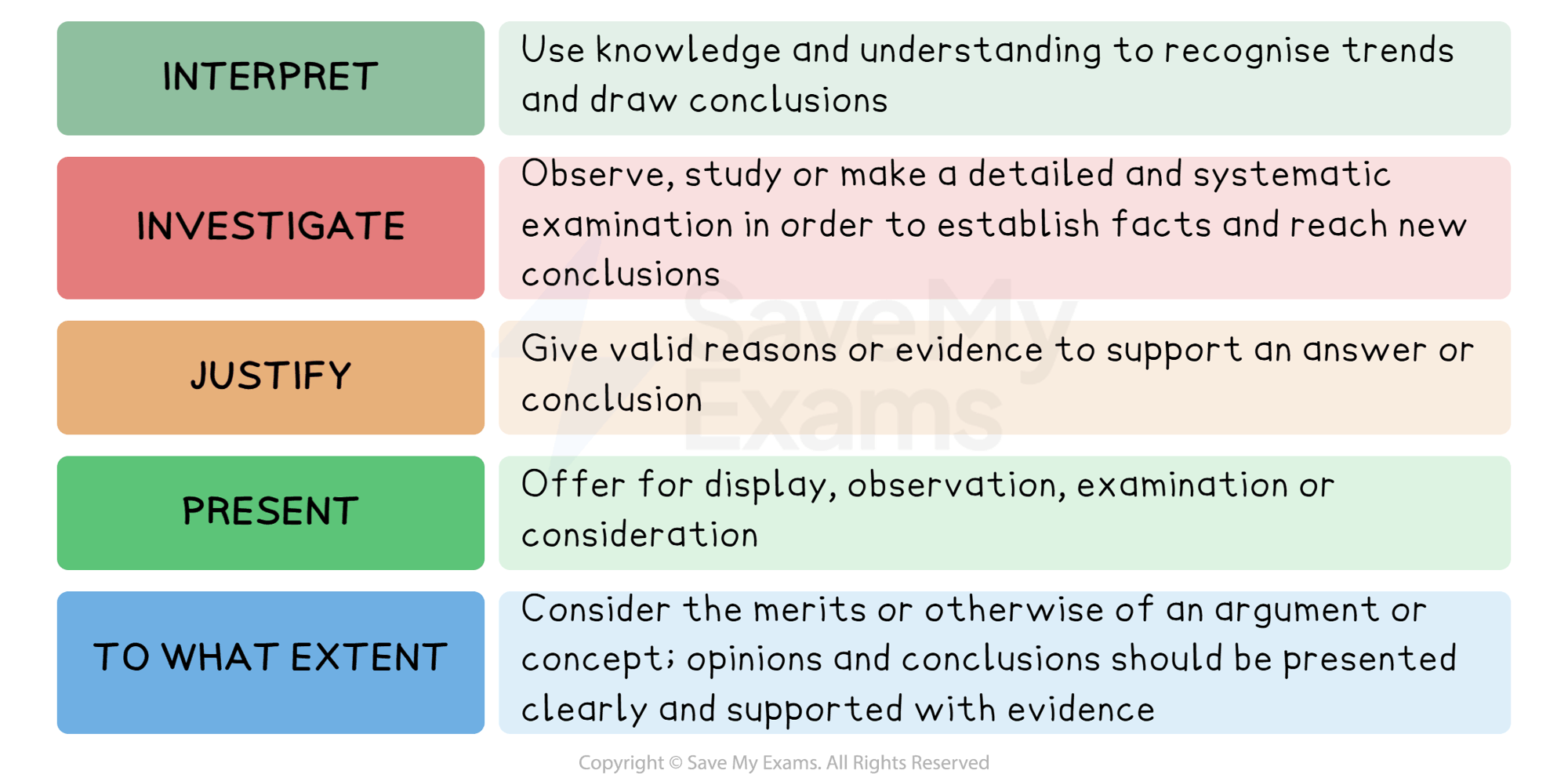
Command terms
You should be familiar with the following key terms and phrases used in your assessment objectives and assessment criteria. Some of these terms may be also used in your examination questions, but most of them will be used to describe your level of achievement in the descriptors of each of the different assessment criteria.

Unlock more, it's free!
Join the 100,000+ Students that ❤️ Save My Exams
the (exam) results speak for themselves:

Was this revision note helpful?