Choosing and Refining your Global Issue (DP IB English A: Language and Literature: HL): Revision Note

Choosing texts using a global issue allows you to connect your literary and non-literary works to broader, real-world concerns. This section is designed to help you understand how to select and refine a global issue for your Individual Oral (IO) and how to link it to your texts. It consists of:
Choosing a global issue
Connecting your texts to a global issue
Writing a global issue statement
Top tips
Choosing a global issue
Choosing a global issue is crucial in preparing for the IO. Before choosing your texts, it is important to understand what qualifies as a global issue.
The IB guide states that your global issue should meet the following three criteria:
It has significance on a large or wide scale
It is transnational
Its impact is felt in everyday local contexts
You can choose to focus on a global issue in different ways. You may already have a strong interest in a particular issue or you may notice a shared global issue emerging from some of the texts you have read during your course. This process is not always strictly linear, though here is one useful approach:
Start with a global area/issue | Choose your texts | Refine your global issue | Choose your extracts |
Below are some common approaches that you could use to choose a global issue.
Using IB fields of inquiry and key concepts
When selecting your global issue, you may find it helpful to use one of the IB’s:
five fields of inquiry, or
seven key concepts
These can be treated as broad starting points and can enable you to refine your focus into a more specific global issue.
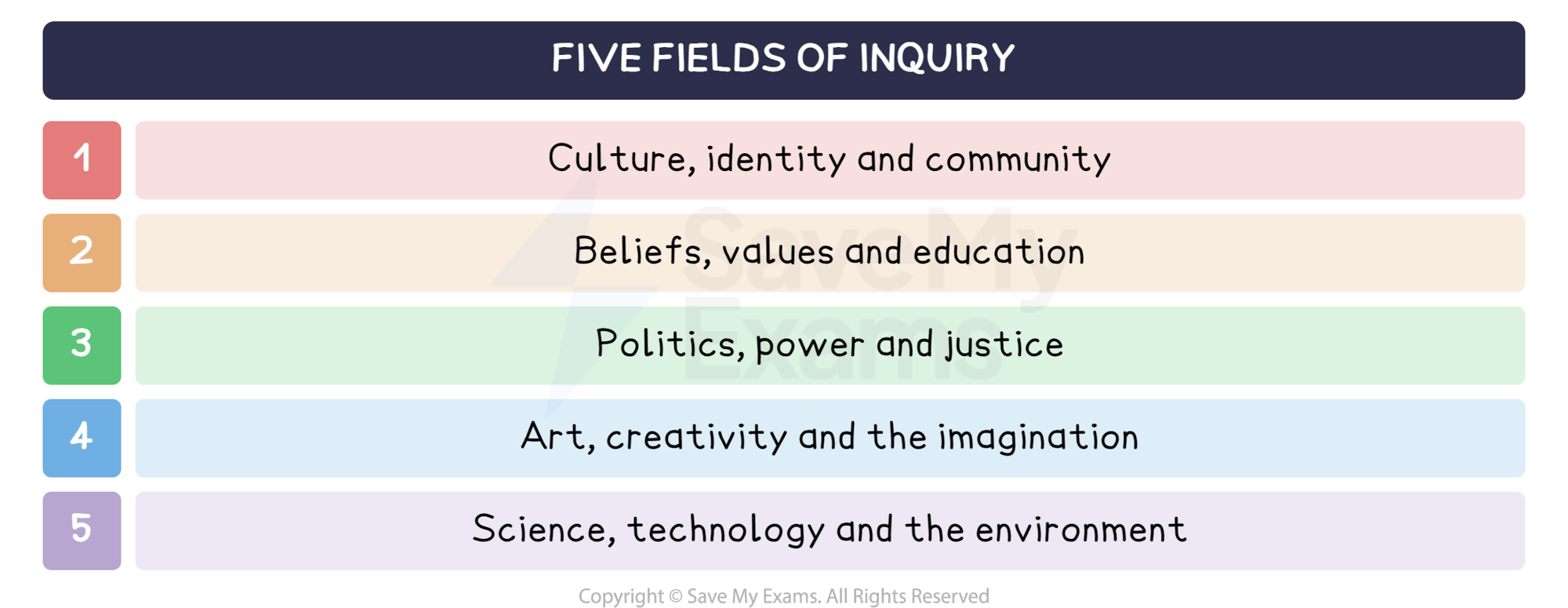
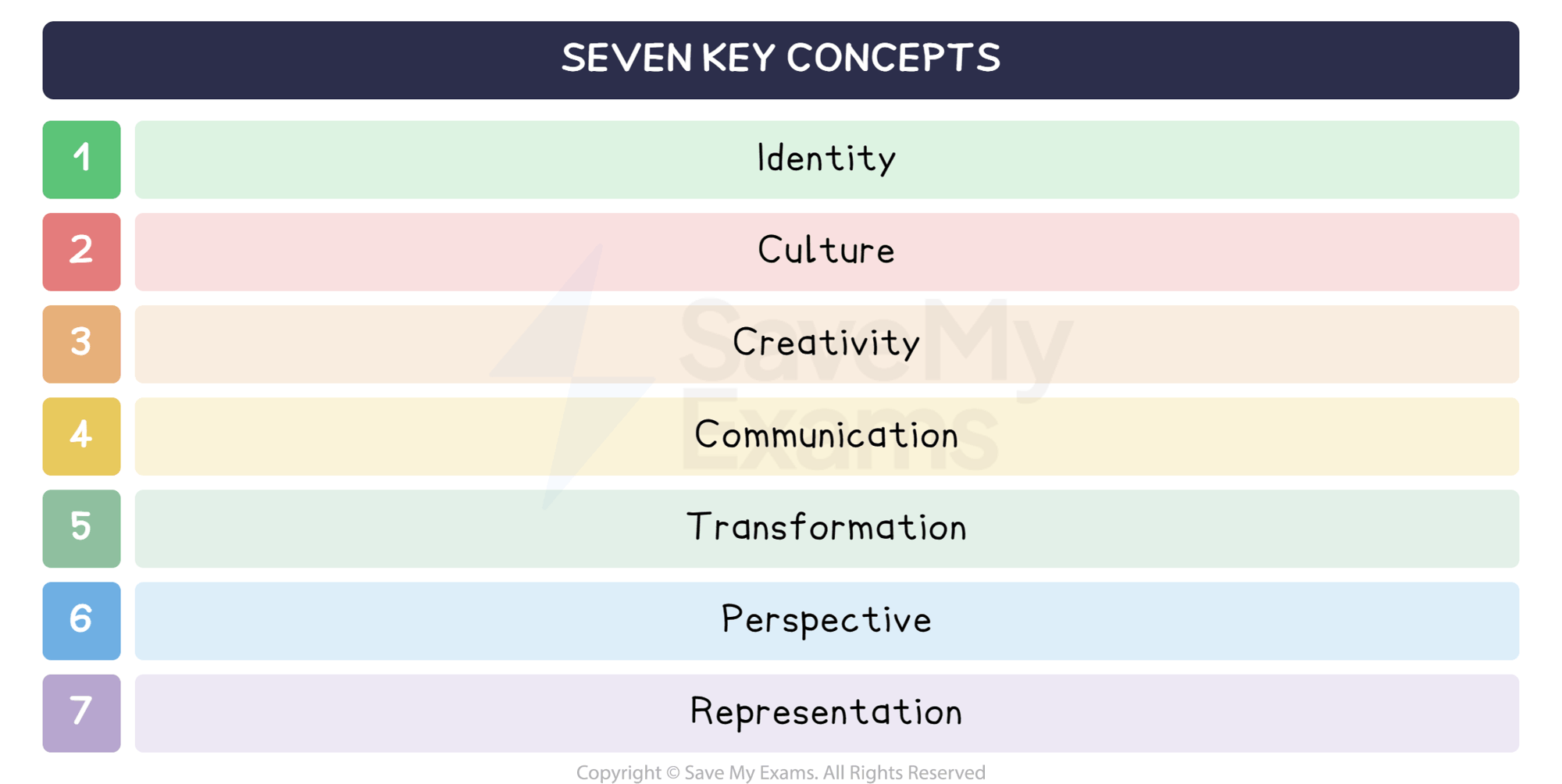
It is important to remember that these are broad global areas, not global issues. For the IO you must focus clearly on a specific and clearly defined global issue. This means you need to refine a broad area into a focused and arguable issue that can be explored in detail through both of your chosen extracts and texts.
Let’s explore how these broad areas could be linked to some specific global issues.
Using broad global areas to refine global issues | |||
Fields of inquiry | Related key concepts | Potential focus | Global issues |
Culture, identity and community |
|
|
|
Beliefs, values and education |
|
|
|
Politics, power and justice |
|
|
|
Art, creativity and the imagination |
|
|
|
Science, technology and the environment |
|
|
|
Examiner Tips and Tricks
Use your Learner Portfolio to create a mind map of as many potential global issues as you can that are linked to these fields of inquiry or key concepts. You could note down key themes from each field and then gradually break them down into more focused global issues.
Connecting your texts to a global issue
Once you have identified a potential global area or issue, you need to ensure that it is clearly present in:
One literary text
One non-literary text or body of work
As a starting point, it’s useful to create a list of all of your studied texts like this one:
Texts studied | |||
Woman at Point Zero – Nawal El Saadawi | Photography – Sebastião Salgado | The Kite Runner – Khaled Hosseini | Death and the Maiden – Ariel Dorfman |
The World’s Wife – Carol Ann Duffy | Speeches – John F. Kennedy, Barack Obama | Advertising campaigns – Nike, Dove, Apple | Political cartoons – Steve Bell |
Opinion articles – Caitlin Moran | Persepolis – Marjane Satrapi | Antigone – Sophocles | The Handmaid’s Tale – Margaret Atwood |
Once you have made a list of your texts, you should begin to link them to some of the possible global areas and issues they explore. Here is an example:
Texts studied | |||
Woman at Point Zero – El Saadawi | Photography – Salgado | Advertising campaigns – Nike, Dove, Apple | Persepolis – Satrapi |
Gender, power, oppression of women in patriarchal societies | Conflict, human experience, impact of poverty and displacement | Representation, identity, construction of beauty standards | Politics, power, impact of political regime on individual freedom |
Remember, your chosen texts must explore the same single global issue even if they both approach it in very different ways.
Writing the global issue statement
Developing a strong global issue statement is a key aspect of your assessment. It involves refining your initial ideas and selecting suitable texts to build a clear and sustained argument.
A strong global issue statement should aim to demonstrate these four key features:
Depth | Argument |
|
|
Cause and effect | Clarity |
|
|
Let’s explore how we might use this framework using a global issue.
Global issue statement How political systems and ideologies enable surveillance that restricts individual freedom and privacy | |
Depth |
|
Argument |
|
Cause and effect |
|
Clarity |
|
Selecting your extracts
Once you have chosen your texts and refined your global issue, you can begin to select your extracts. Each extract will form the focus of your analysis and must clearly demonstrate how your global issue is presented by both creators. Here are some guidelines which you must follow when selecting your extracts:
Literary texts | Non-literary texts |
|
|
Let’s explore an example of how you might choose a specific extract from a literary text which links to a global issue. For this example, we will focus on George Orwell’s 1984.
1984 | ||
Global issue How the use of surveillance and state control is used to suppress individual freedom and identity | ||
Relevant extract | Key evidence | Authorial choices |
|
|
|
There are many other different extracts that you could choose to use from this text. However, it is important that your selected extract provides enough depth to support a detailed analysis of authorial choices. Remember, your selected extracts will form the core of your presentation.
Examiner Tips and Tricks
It is important to find a balance when selecting each of your extracts. An extract which is too dense or complex may be difficult to cover within the time available. Similarly, an extract which is too simple or short may not provide enough material for you to make a meaningful analysis.
Top tips
Start with a broad global issue first and then refine it:
Use your texts to shape your final ideas
Choose your texts carefully:
Ensure you have selected one literary text and one non-literary text
Write your global issue as a statement rather than as a question:
It should be clear and arguable
Choose extracts that support your analysis:
Ensure both have clear authorial choices to analyse
Keep your focus on the global issue:
Only use one global issue for both texts
Your discussion should centre on how the global issue appears in both texts

Unlock more, it's free!
Join the 100,000+ Students that ❤️ Save My Exams
the (exam) results speak for themselves:

Was this revision note helpful?