Characters (DP IB English A: Language and Literature: HL): Revision Note

Characters
In an exploration of Antigone, the complexity of the moral, social, and psychological conflict in the play is largely achieved through contrasting characterisations. Sophocles presents characters who each have valid motivations for their actions, yet struggle to see the full truth before it is too late.
Through these opposing perspectives, the play explores themes such as the tension between competing loyalties, the conflict between divine authority and human authority, the dangers of rigid thinking, and the limits of human control in the face of fate.
Characterisation can include:
How characters are established:
Introduction, first impressions
How characters are presented:
Their physical appearance
Their actions and motives
Their speech and thoughts
Their interactions with other characters
How others perceive them
The degree to which characters conform to or subvert stereotypes
Their relationships to other characters
Below you will find character profiles of:
Antigone
Creon
Ismene
Haemon
Tiresias
The Chorus
Examiner Tips and Tricks
Plays offer a unique opportunity to explore character, because their meaning is shaped not just by the writer, but also by the director, the actors, and the audience. In this collaborative process, the playwright provides the foundation through dialogue and stage directions, the director and actors interpret and bring characters to life, and the audience contributes their own understanding.
When analysing a play, pay close attention to which characters speak most, the style and register of each character’s language, as well as the way in which the setting and stage directions reveal aspects of a character’s personality.
Additionally, within a play such as Antigone, characters are often defined not in isolation but through contrast. Notice who shares the stage with each character in a scene, how their traits oppose or mirror each other, and how these contrasts help us understand their motivations, relationships, and moral position.
Antigone

Antigone is a young woman, soon to be married
She has already endured significant loss in her short life, which has shaped her world view and motivation:
Her father was Oedipus and her mother was Jocasta (who had also been Oedipus’ mother and wife), making Antigone the product of a complicated and tragic family lineage
She has witnessed how even well-intentioned efforts to avoid fate can fail, as her father Oedipus tried to escape the prophecy but ultimately fulfilled it
Her mother killed herself upon realising she had married her son
Oedipus blinded himself and exiled himself, and it is implied that Antigone took care of him during his time of self-imposed exile
Antigone’s language use from the very beginning of the play is absolute and uncompromising
She essentially walks into her death willingly rather than trying to fight fate and the will of the gods
Antigone is defined in opposition to her sister, Ismene:
Ismene is hesitant and cautious
Antigone is action-focused
Antigone is also defined in opposition to Creon:
He is concerned with maintaining rigid order and ensuring his authority is taken seriously
Antigone can be understood in terms of how she does not follow the social norms for her gender:
She is somewhat concerned about dying before she has the opportunity to marry, but her moral conscience overrides that fear
She defies the social norm of being concerned with only private matters by making her grief public and by openly defying an order from political authority
Her defiance is morally and religiously motivated, not just an act of social rebellion
The play is named after Antigone, she is the first character we meet, and is the protagonist of the story
However, she is perhaps more of a catalyst or moral agent than the true tragic hero of the story:
She possesses many of the characteristics of a tragic hero, but she doesn’t really undergo the kind of transformation we see in Creon
In modern storytelling, the protagonist is usually the tragic hero, but in Greek tragedy, this is not always the case
In Greek tragedy, the protagonist is the central driving force of the action or the character whose decision initiates the conflict
The tragic hero is the one who undergoes the tragic arc
Creon
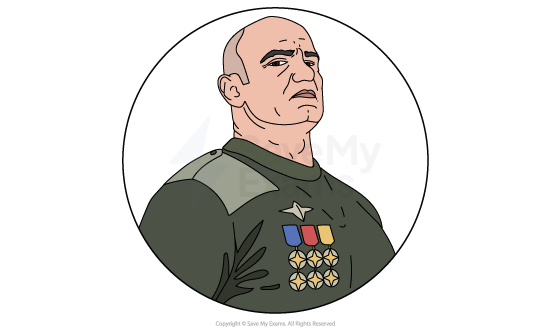
Creon is the king of Thebes and the uncle to Antigone and Ismene
He is primarily concerned with maintaining law, order, and the authority of the state:
He represents institutional power and societal expectation
As such, he stands in contrast to Antigone’s moral and divine-driven authority
Creon has newly stepped into his role as the ruler of Thebes:
He spent many years advising his nephews in their roles so he has experience working in government but this is his first experience of being the ultimate authority
The newness of his position likely contributes to the rigidity of his thinking and actions, as he is eager to be taken seriously
This desire to be taken seriously is both about personal pride and political necessity — he needs to stabilise Thebes after a period of conflict and prevent chaos
Creon interprets challenges to his authority as personal affronts rather than political debates or the concerns of an invested citizen
His language is often formal, commanding, and absolute:
This reflects his desire for control
His judgment is shaped by fear of appearing weak, rather than purely by moral reasoning
Creon’s character explores the tension between:
Law and morality
Social order and ethical responsibility
Pride and humility
His downfall comes from hubris and failure to heed warnings from his son and from Tiresias:
This leads to the deaths of Antigone, Haemon, and his wife, Eurydice
Ismene
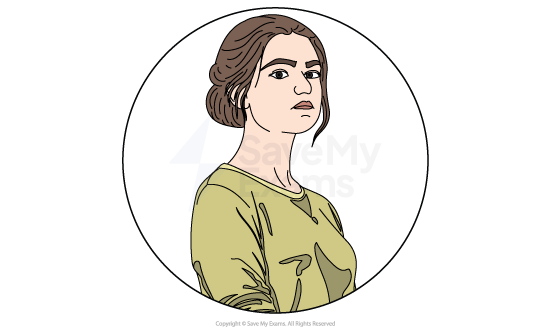
Ismene is Antigone’s sister
Initially, when Antigone shares her plan to bury their brother, Ismene is hesitant and afraid of the consequences of breaking Creon’s law:
In contrast to Antigone’s uncompromising moral and religious convictions, Ismene values social order and self-preservation
Later, in front of Creon, Ismene claims that she was involved in burying Polynices:
Antigone, however, won’t let her take the blame for something Ismene didn’t do
There are a variety of ways to interpret Ismene’s attempt to take partial responsibility for the burial:
It could be argued that she feels ashamed and guilty for her earlier cowardice and wants to make up for it
It could simply be a final act of loyalty to her sister
It could be that she initially believed it was important to follow the law no matter what but now understands that sometimes moral responsibility and divine law are greater than man-made authority
It could be that she realises that if Antigone dies, she will be left all alone with no family, so perhaps it is better to die with her sister than live a lonely, isolated existence
Ismene’s complexity as a foil to Antigone highlights Antigone’s courage:
But it also makes her more relatable to the audience who likely very much understands fear and self-preservation as motivators of behaviour
Haemon

He is the son of Creon and the fiance of Antigone:
His dual loyalty creates the moral and emotional tension of the scene he appears in
This tension is central to his impact
He appears in only one scene, but his dialogue is pivotal in revealing Creon’s character and the societal values of Thebes:
His father expects his son to blindly obey him and interprets his questioning as youthful defiance and disrespect
The way Haemon speaks to his father reveals how well he knows him
He challenges his father without direct confrontation, using respectful, persuasive language that appeals to Creon’s values of authority, power, and public reputation
He warns of potential social unrest and the danger of inflexible leadership, showing moral insight and wisdom
Interestingly, he has the same number of lines as Creon in this dialogue, which perhaps implies Sophocles’ intention to make these characters equal in their importance and highlighting Haemon’s role as a foil for Creon
His love for Antigone adds emotional stakes:
It also highlights the tension between personal loyalty and civic obedience
Haemon’s role foreshadows the tragic consequences of Creon’s stubbornness, and his reasoned approach contrasts with the rigid authority that drives the play towards disaster
Haemon is also used by Sophocles to explore the idea that wisdom does not only belong to the old
Tiresias
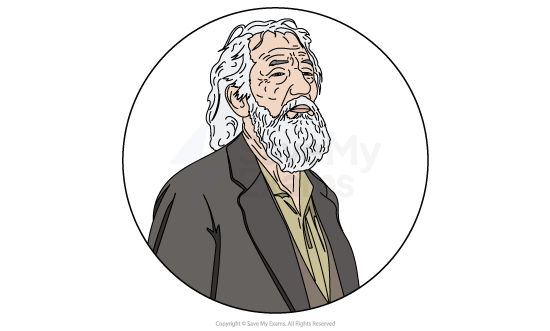
Tiresias is a blind prophet who serves as the voice of divine authority and moral insight:
Despite his blindness, he “sees” more clearly than any other character
His insight is moral and spiritual rather than physical
He is a liminal figure:
He is both part of society and outside of it
He has experience and understanding of the Chorus and their ways, but he is set apart from them because of his moral vision and spiritual role
He embodies the link between human action and divine consequence
He often speaks in riddles and symbolic language, but the meaning of his warnings is clear to the audience:
This contributes to the dramatic irony of the play
The audience knows Tiresias is speaking the truth, even if Creon refuses to listen
The Chorus
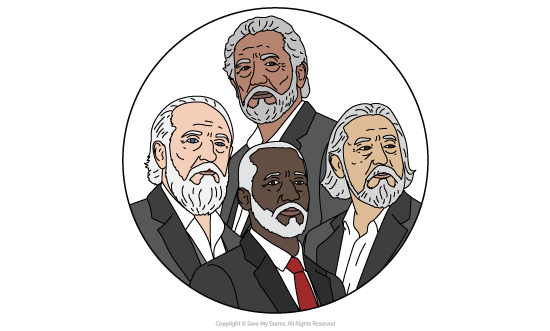
The Chorus in the play represents the elders of Thebes:
They are aligned with the state, which means they initially support Creon
However, they also believe in the importance of divine law and tradition, which pulls them towards Antigone
The Chorus demonstrates the tension of tradition vs. reason:
They tend to favour order and caution, but also reflect on the need for wisdom and humility
The Chorus in Antigone is much more indecisive than we see in other Greek tragedies:
We see the tension of two forces pulling at the Chorus right from the very beginning of the play
This highlights the moral complexity of the conflict within the play
The Chorus only actually condemns Creon very late in the play
The Chorus becomes a mirror of the audience:
They watch, weigh, and struggle to decide between two valid but completely incompatible truths
The Chorus also demonstrate a theme within the play:
That the truth is often seen too late
For a more in-depth overview of the function of the chorus within Greek tragedy, see the revision note on Authorial Choices and Textual Features.
Examiner Tips and Tricks
When trying to make connections between the characters and themes within the piece of literature you are discussing, track how a character develops or resists change over the course of the text.
Notice shifts in language, attitude, or behaviour, and pay close attention to the first and last key moments of the character. Contradictions, decisions, or moments of revelation often provide strong evidence of development and can highlight the central themes of a work.
Sources
Sophocles (trans. P. Woodruff) (2001), Antigone, Hackett Publishing Company
Sophocles (trans. D. Franklin and J. Harrison) (2003), Antigone, Cambridge University Press
Sophocles (trans. R. Fagles) (1984), The Three Theban Plays, Penguin Classics, London

Unlock more, it's free!
Join the 100,000+ Students that ❤️ Save My Exams
the (exam) results speak for themselves:

Was this revision note helpful?