Assessment Criteria (DP IB English A: Language and Literature: HL): Revision Note

The IB Diploma Language A: Language and Literature (HL) course includes a range of internal and external assessments. Each component is designed to assess different skills, including close reading, comparison, argument development and oral communication.
In this section we will explore:
Understanding the assessment criteria
Component breakdown
Understanding the assessment criteria
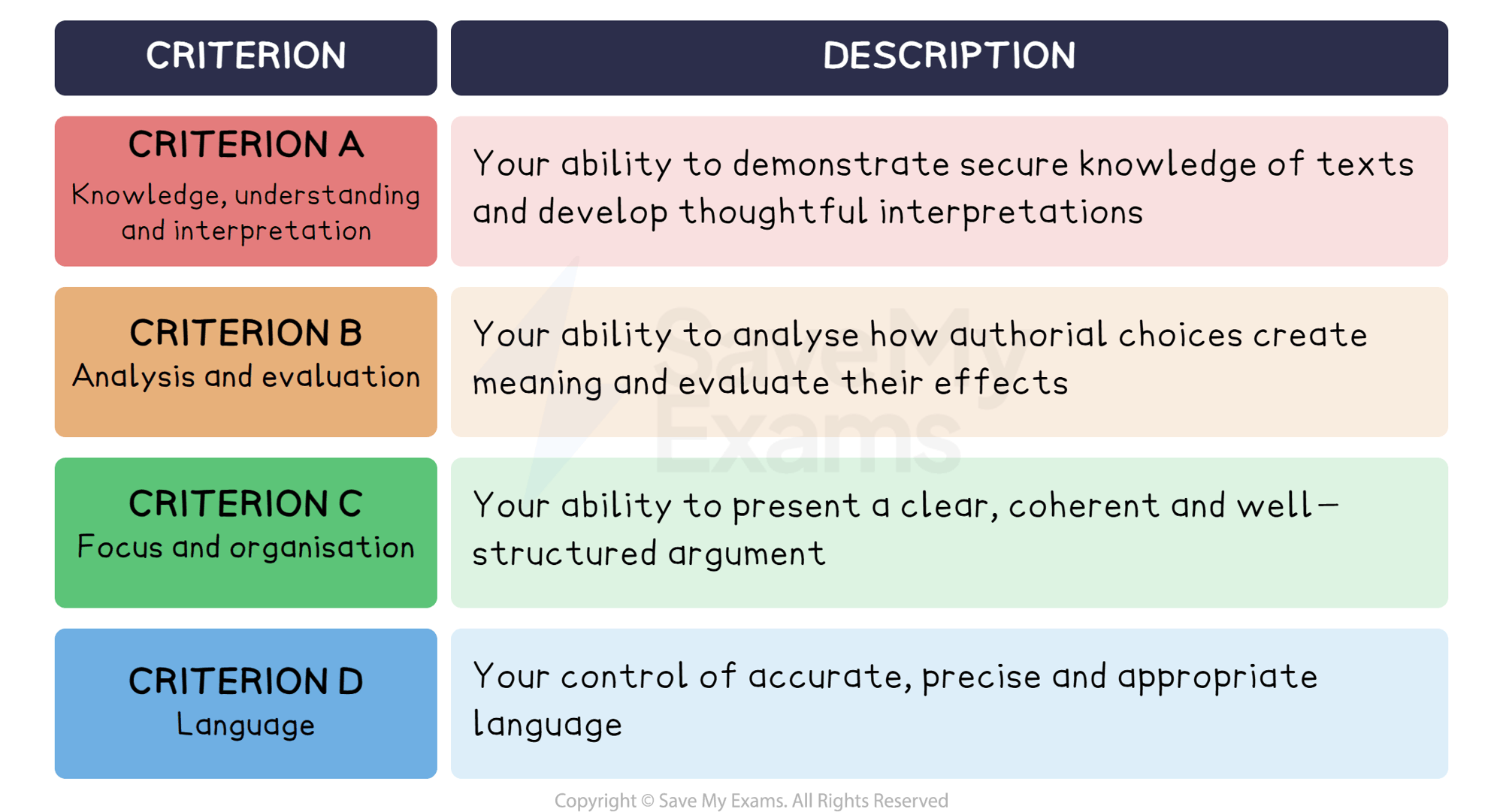
All assessment components in the IB Diploma Language A: Language and Literature course are assessed using four criteria.
Criterion A: Knowledge, understanding and interpretation
Criterion B: Analysis and evaluation
Criterion C: Focus and organisation
Criterion D: Language
While the wording varies slightly depending on the assessment, these four criteria are used across all components.
These criteria assess the core skills of the course:
Component breakdown
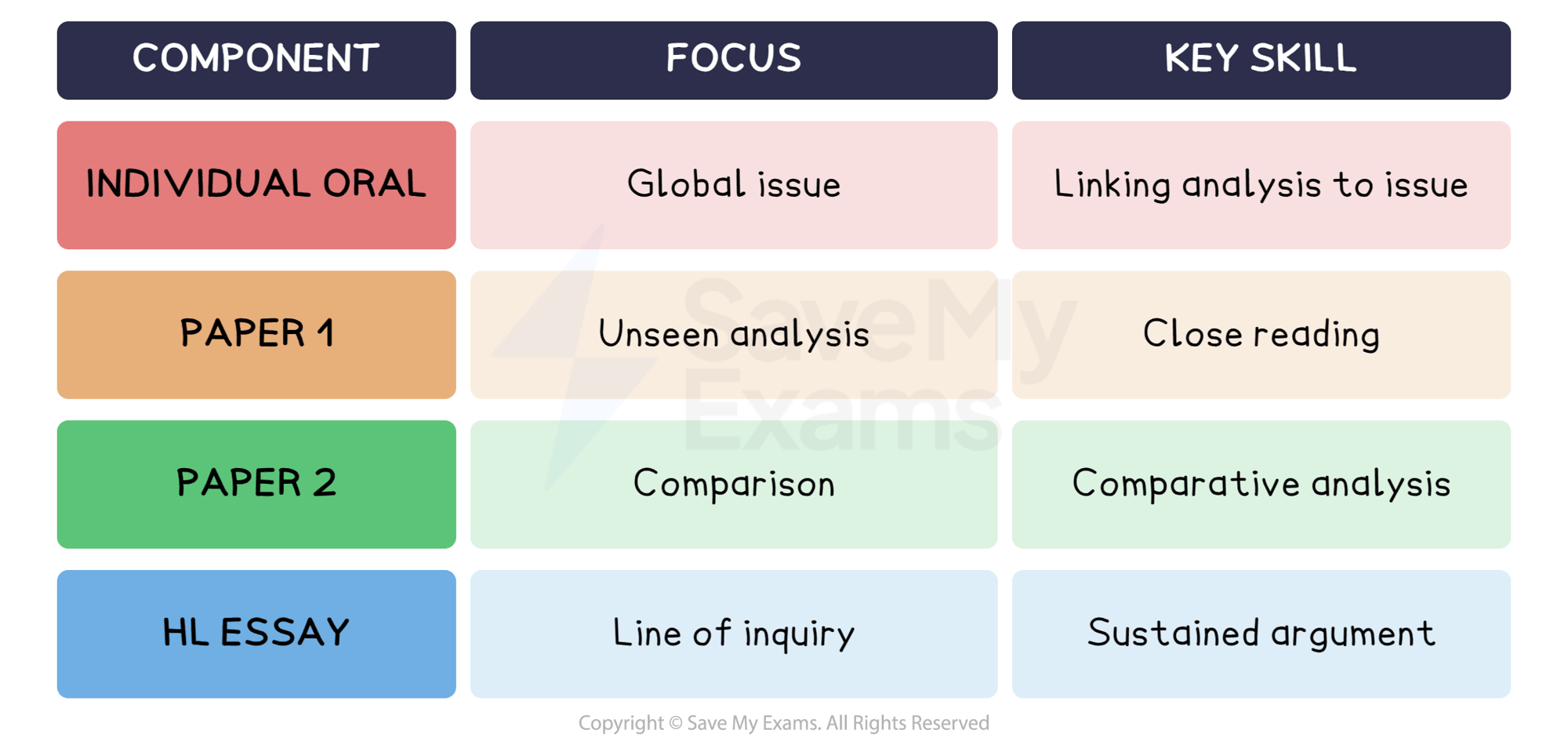
Individual Oral
Format:
10-minute oral presentation and 5-minute discussion
One literary extract and one non-literary extract
Focused on a global issue
Criterion A: Knowledge, understanding and interpretation |
|
Criterion B: Analysis and evaluation |
|
Criterion C: Focus and organisation |
|
Criterion D: Language |
|
Paper 1: Guided Textual Analysis
Format:
Analysis of two unseen non-literary texts
Criterion A: Knowledge, understanding and interpretation |
|
Criterion B: Analysis and evaluation |
|
Criterion C: Focus and organisation |
|
Criterion D: Language |
|
Paper 2: Comparative Essay
Format:
Comparative essay on two literary works
Criterion A: Knowledge, understanding and interpretation |
|
Criterion B: Analysis and evaluation Analysis and evaluation of textual features and/or authorial choices (B1) Comparative analysis (B2) |
|
Criterion C: Focus and organisation |
|
Criterion D: Language |
|
HL Essay
Format:
1,200-1,500 word essay on one literary work, one non-literary text or a body of work
Criterion A: Knowledge, understanding and interpretation |
|
Criterion B: Analysis and evaluation |
|
Criterion C: Focus and organisation |
|
Criterion D: Language |
|
Examiner Tips and Tricks
Strong responses need to address all four criteria. For example, detailed knowledge (Criterion A) will not earn top marks without careful analysis (Criterion B). Similarly, perceptive ideas and interpretations will lose marks if they are poorly structured (Criterion C) or expressed unclearly (Criterion D).
Summary

Unlock more, it's free!
Join the 100,000+ Students that ❤️ Save My Exams
the (exam) results speak for themselves:

Was this revision note helpful?