Analysing Literary Extracts & Bodies of Work (DP IB English A: Language and Literature: HL): Revision Note

Analysing literary extracts and bodies of work enables you to explore how creators construct meaning and present global issues through specific authorial choices. This section will help you to develop your analytical skills and show you how to connect your extract to your wider text or body of work. It consists of:
Analysing your extracts
Linking your extracts to your wider texts or bodies of work
Understanding how your teacher can support you
Analysing your extracts
It is important to remember that your extracts must both feature your global issue and also be rich in authorial choices. If your chosen extracts present the global issue but lack strong authorial choices, you will struggle to analyse how meaning is constructed. Similarly, if your extract has strong authorial choices but does not link clearly to your global issue, then your analysis will lose focus and relevance.
Your extracts are meant to help you focus your response:
They remove the need to learn quotations and enable you to explore more precise issues
For example, style, specific devices and other distinct techniques used by authors to present the global issue
Your choice of extracts should show your understanding of the relevance of the part to the whole:
They should enable coverage of larger and smaller choices made by the writers to shape their perspectives on the global issue
Exploring authorial choices
A strong understanding of authorial choices is essential when preparing for the IO. The strongest presentations move beyond identifying techniques and instead explain how and why those choices shape meaning.
Criterion B in the mark scheme specifically assesses the extent to which you analyse and evaluate how the creator’s use of language, technique, style and broader authorial choices shapes meaning. Your analysis must demonstrate that these choices are deliberate and significant and show how they link to your global issue.
Let’s explore some key authorial choices and how they can be used effectively in your presentation.
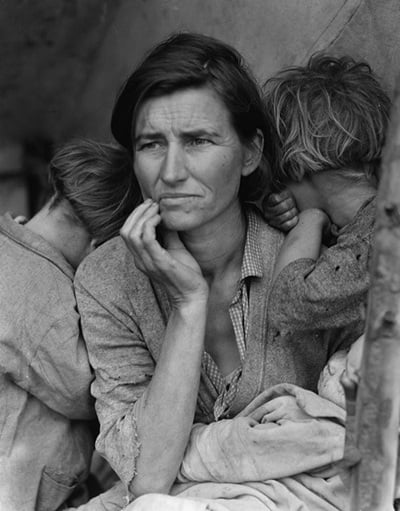
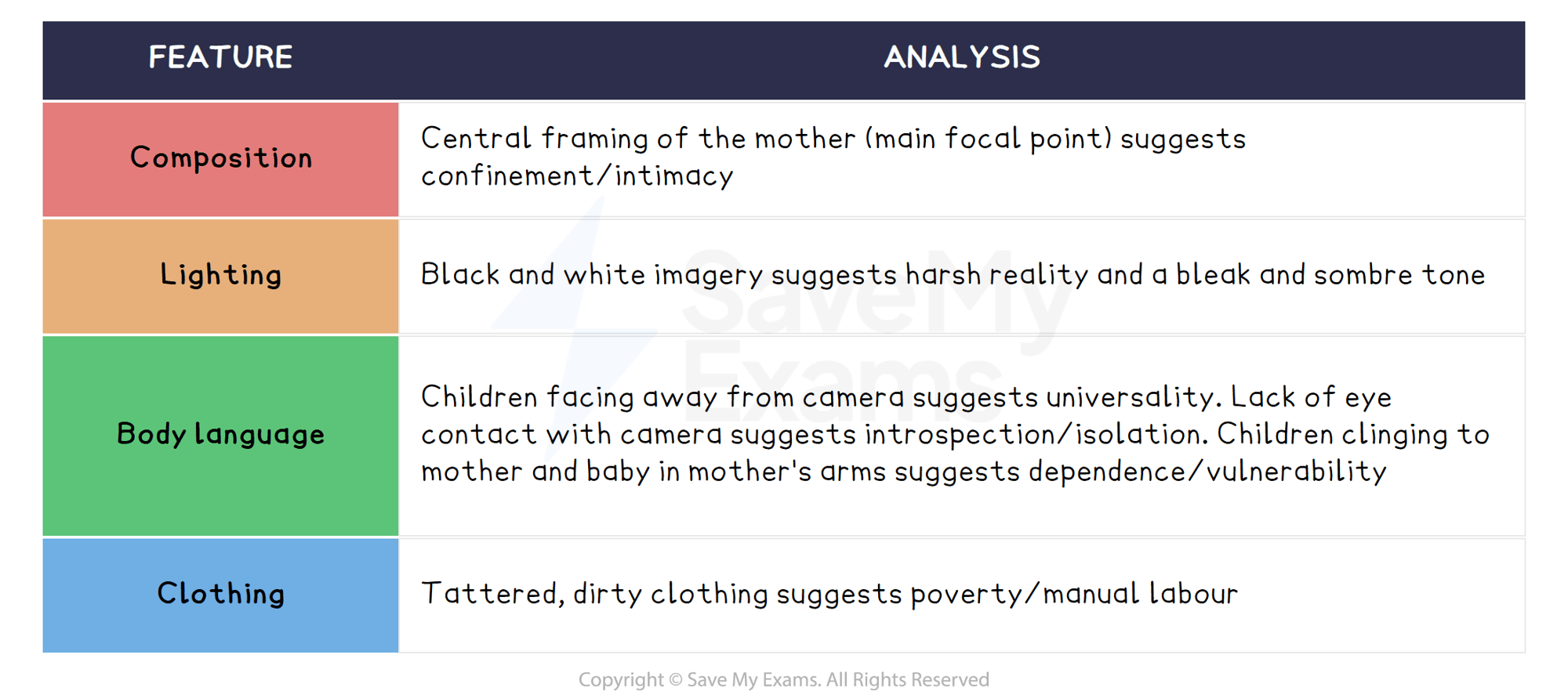
You should aim to highlight 3–4 points within your extract to focus on. These should be the most significant aspects of the extract which offer the strongest opportunities for you to analyse.
Authorial choice | Imagery: Tattered, dirty clothing and black and white |
How choice shapes meaning and links to GI | In the photograph, the worn clothing signifies poverty and manual labour, which illustrates how displacement often forces individuals into new identities due to economic hardship rather than personal choice. In this way, identity becomes closely linked to survival and hardship. This illustrates the global issue of the impact of displacement on identity and conveys the dehumanising effects that migration can have on individual identity. Further, the black and white imagery alludes to the harsh reality of the family’s situation and creates a bleak and sombre tone. This absence of colour also symbolises a loss of vibrancy and individuality. |
Examiner Tips and Tricks
Focus on depth rather than breadth. Remember you only have approximately 2 minutes to discuss 2–3 aspects about your extract which means you cannot cover everything. Try to identify the most relevant points by selecting the ones which demonstrate the most effective authorial choices.
Linking your extracts to your wider texts or bodies of work
Once you have explored one of your extracts, you need to also demonstrate how the GI is explored across the wider text or body of work.
Here are some examples of how you might link your GI to both extracts while also connecting them to the larger work or body of work.
Literary extract | Work | Non-literary extract | Body of work | Global issue |
|---|---|---|---|---|
2-3 panels from Persepolis | Marjane Satrapi’s Persepolis | Political cartoon about women’s rights in Iran | Series of political cartoons by a contemporary Middle Eastern cartoonist | Impact of political systems on individual freedom |
Extract from A Streetcar Named Desire | Tennessee Williams’ A Streetcar Named Desire | Magazine advertisement portraying gender stereotypes | Advertising campaign from a major fashion brand | Construction of gender roles |
Extract from Things Fall Apart | Chinua Achebe’s Things Fall Apart | Photograph of the effects of colonialism in Africa | Series of historical photographs documenting colonialism | Cultural identity and impact of colonialism |
Understanding how your teacher can support you
Your teacher plays an important role in guiding you through the preparation process and ensuring that you meet the assessment criteria.
Your teacher can help to:
Check that your work follows academic guidelines
Monitor your progress regularly:
They can provide you with regular feedback and ensure your focus is relevant
Guide you in shaping a global issue:
They can help you refine your global issue and ensure it is relevant and not broad or narrow
Support your understanding of how to analyse your chosen texts
Structure your outline effectively:
They can support you in identifying how the texts create meaning in relation to the global issue
Clarify the assessment criteria
Examiner Tips and Tricks
Your learner portfolio is not specifically assessed but it is an important place for you to explore and reflect upon your works in relation to global issues. When preparing for the Individual Oral, the learner portfolio provides an opportunity for you to:
Keep an ongoing record of the different global issues that could be related to each of the texts you read
Explore links that could be established between different texts on the basis of common global issues they address
Explore how key passages in the texts you have studied represent different or similar perspectives on one global issue through both form and content
Trace your thinking and planning in connection with the global issue and how its cultural value, its definition and application to the texts you read have changed

Unlock more, it's free!
Join the 100,000+ Students that ❤️ Save My Exams
the (exam) results speak for themselves:

Was this revision note helpful?