Close Reading & Analysis (DP IB English A: Language and Literature: HL): Revision Note

This section is designed to help you understand some key literary and critical theories that can be used for your Higher Level (HL) Essay on your IB Diploma English A: Language and Literature (HL) course. It consists of:
Marxist theory
Reader-response theory
Psychoanalytical theory
Post-colonialist theory
Marxist theory
Marxist theory is based on the ideas of Karl Marx:
He argued that society is structured around economic systems, particularly capitalism, which creates inequality between social classes
Society is divided into:
The bourgeoisie (those who own the means of production, e.g. factories, wealth)
The proletariat (those who sell their labour to survive)
This system often leads to:
Exploitation of workers
Unequal distribution of wealth and power
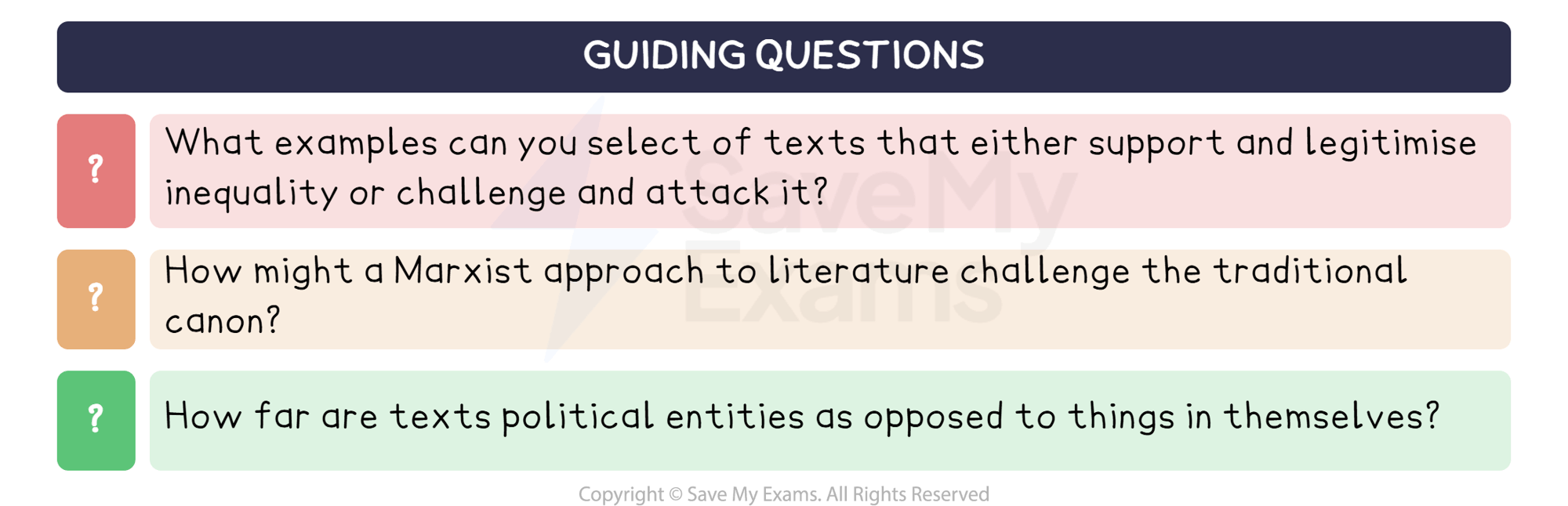
Marxist critics are interested in how texts reflect, reinforce or challenge these inequalities
Texts may:
Naturalise inequality (make it seem normal or acceptable)
Challenge inequality (expose injustice or exploitation)
Critics examine:
Representation of wealth and poverty
Social class differences between characters
Power dynamics in relationships
The aim is to reveal the ideology behind the text
How to apply Marxist theory to your IB text or body of work
Marxist analysis can help you explore how texts:
Reflect real-word inequalities
Represent or challenge power and class structures
In your HL Essay you could:
Analyse relationships between characters (who has power and who does not)
Explore how wealth or status is presented
Question whether the text reinforces inequality or critiques it
Reader-response theory
Reader-response theory focuses on the idea that meaning is not fixed in the text:
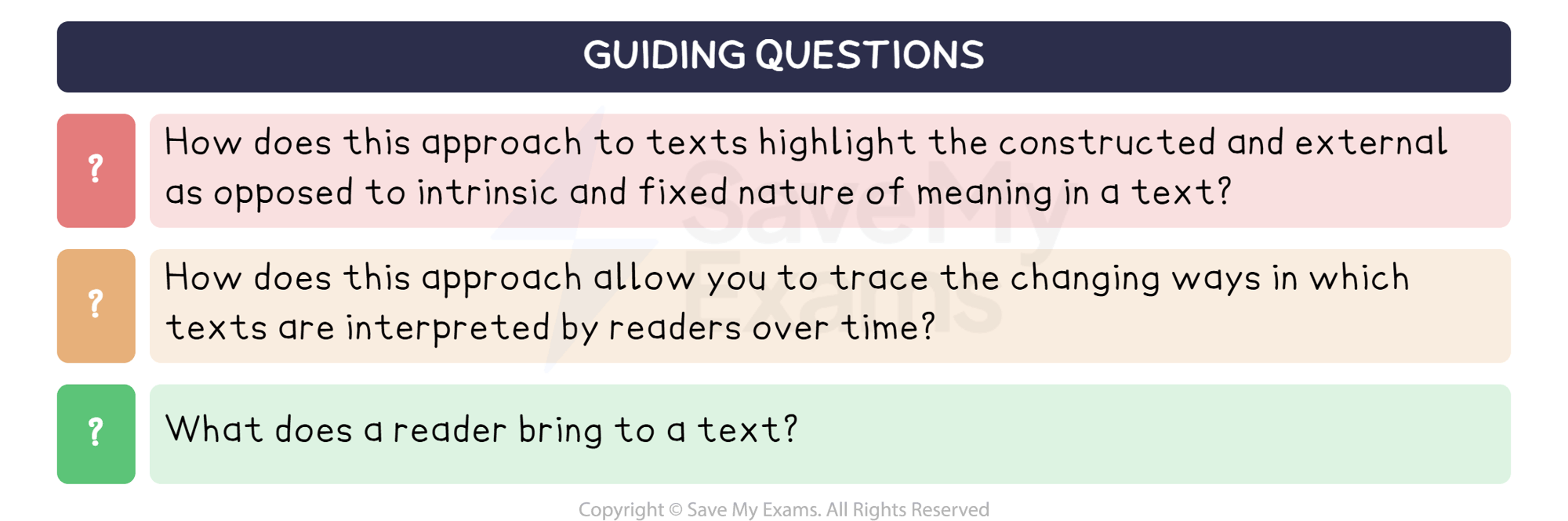
It is created through the interaction between the reader and the text
A key theorist is Wolfgang Iser:
Iser argued that reading is a collaborative process
The writer provides the text and the reader actively constructs meaning:
This means different readers may interpret the same text in different ways, depending on their experience, cultural background and knowledge of other texts
A central idea is that texts contain silences and omissions which the reader must fill in to create meaning:
These might include missing information about characters or ambiguities in events or motivations
Readers often make assumptions or fill in missing details unconsciously
Reader-response encourages readers to:
Be aware of these assumptions
Question how and why we interpret texts in certain ways
How to apply reader-response theory to your IB text or body of work
Reader-response theory is especially important for the IB Area of Exploration (AoE): Readers, Writers and Texts
It can help reveal how texts can:
Guide or manipulate reader expectations
Create tension by encouraging assumptions and challenging them
In your HL Essay you could:
Analyse how a text positions the reader to think or feel in certain ways
Explore how meaning changes depending on audience or context of reception
Examine how texts use omissions and ambiguity to shape interpretation
Psychoanalytical theory
Psychoanalytical theory is based on the ideas of Sigmund Freud:
It focuses on how the human mind, identity and unconscious desires shape behaviour and meaning in texts
Freud argued that the mind has three parts:
The Id: instinctual desires (pleasures, impulses)
The Ego: the rational self we present to the world
The Superego: our moral conscience and sense of right and wrong
He believed much of human behaviour is influenced by the unconscious, such as repressed desires and fears and anxieties
These ideas are used in literary criticism to explore:
Character motivation
Inner conflict
Identity development
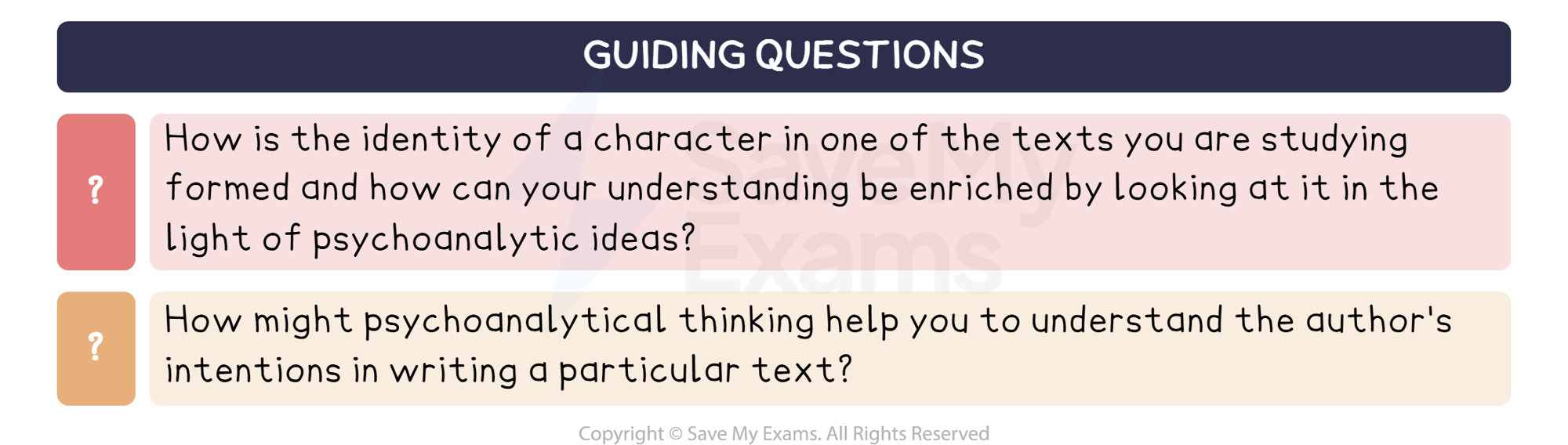
Psychoanalytic critics analyse how texts reflect the psychological processes of characters, especially their hidden desires, fears and conflicts
How to apply psychoanalytical theory to your IB text or body of work
Psychoanalytic theory can help you to explore:
Character psychology and motivation
Themes of identity, repression and conflict
The role of the unconscious in shaping meaning
In your HL Essay you could:
Analyse characters’ internal struggles
Explore symbolism (dreams, fears, recurring images)
Consider how identity is constructed or destabilised
Post-colonialist theory
Post-colonialist theory explores the relationship between Western (European and European-origin) and non-Western cultures and the development of historical imbalances in power between them:
It developed in the 20th century after the decline of European empires
It is strongly influenced by thinkers such as Edward Said
It examines how colonialism created:
Power imbalances between nations and cultures
Systems that marginalised non-Western voices
It argues that these inequalities are often continued after colonisation has ended
Post-colonialist critics focus on how texts represent power, race and cultural identity, especially in relation to colonial histories:
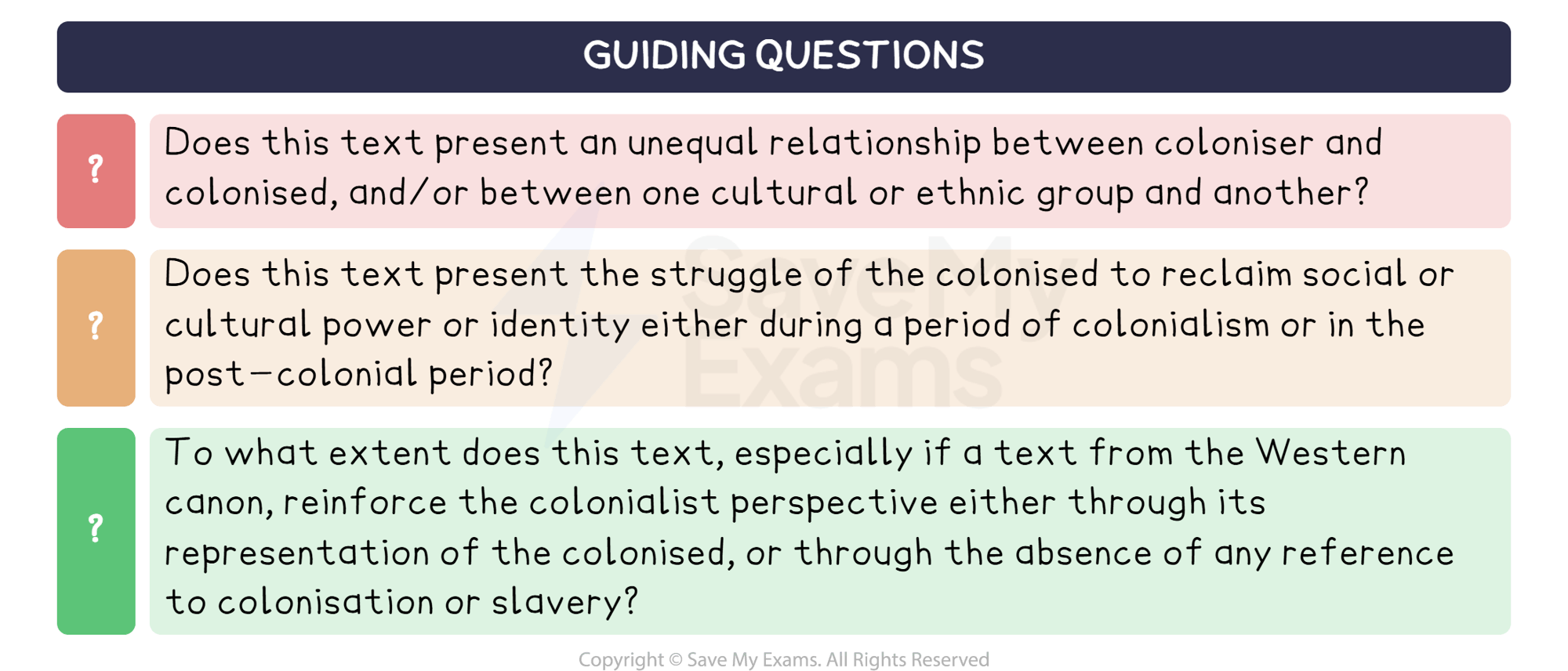
Texts may reinforce colonial attitudes or challenge and resist them
A key concept is “othering” where non-Western people are presented as different, inferior or “uncivilised”:
This often creates binary oppositions
Post-colonialist writers and critics aim to challenge dominant Western perspectives and reclaim cultural identity
How to apply post-colonialist theory to your IB text or body of work
Post-colonialist theory can help you to:
Explore global issues (for example, power, inequality and identity)
Analyse texts from a range of cultures and perspectives
In your HL Essay you could:
Analyse how texts represent different cultures, identities and power relationships between groups
Explore whether a text reinforces stereotypes or challenges them
Examine how language and imagery contribute to “othering” or resistance
Examiner Tips and Tricks
Try to practise “reading against the grain”. This means questioning ideas or perspectives that are usually accepted in a text.
For example, in Jane Eyre, you might examine the silences and omissions about Rochester’s life in the Caribbean. A post-colonial reading could challenge these gaps and encourage new interpretations of the novel.

Unlock more, it's free!
Join the 100,000+ Students that ❤️ Save My Exams
the (exam) results speak for themselves:

Was this revision note helpful?