Themes (DP IB English A: Language and Literature: HL): Revision Note
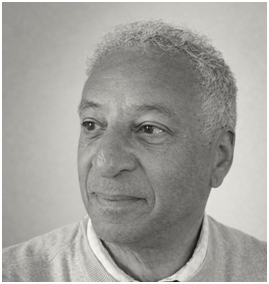
Born a Crime recounts Trevor Noah’s childhood during the final years of apartheid and the transition that followed. Through autobiographical episodes, Noah examines how racial classification, language politics and cultural divisions shaped daily life. His use of humour alongside critical reflection exposes both the absurdity and the violence embedded in apartheid society.
Across the memoir, Noah shows how political systems shape personal identity. Recurring experiences involving race, religion, education and family life demonstrate how individuals negotiate power structures. These thematic patterns allow readers to see the memoir as both a personal narrative and a critique of systemic inequality.
Understanding how themes connect individual stories to wider social issues supports strong IB analysis of Noah’s exploration of identity, race, power and resilience.
Below are some themes that could be explored in Trevor Noah’s memoir Born a Crime. Here you will find sections on:
Racism and identity
Language and power
Motherhood and parental influence
Examiner Tips and Tricks
High-level IB responses treat themes as evolving conceptual arguments rather than simple topics. Criterion A rewards precise knowledge of the text, while Criterion B rewards analysis of how Noah’s narrative voice, episodic structure and use of humour construct meaning. Strong responses trace how themes develop across multiple anecdotes and evaluate how authorial choices shape Noah’s social commentary.
Racism and identity

Racism and identity are central themes in Born a Crime and play a major role in Trevor Noah’s life. Noah presents his experiences within a society structured by racial division to show the reader how apartheid and its legacy shape his sense of identity and belonging.
Knowledge and evidence
Trevor Noah’s memoir centres on the consequences of apartheid racial classification:
His birth results from a relationship between a Black South African woman and a white Swiss man
Apartheid law prohibited interracial relationships:
Noah’s existence therefore violates the Immorality Act and related legislation regulating race
Noah introduces the theme of racism and identity immediately in the opening chapter when he writes:“I was born a crime”:
This statement establishes the central paradox of the memoir
A child’s birth usually represents joy and family continuity, but under apartheid, Noah’s birth represents legal transgression
Noah’s additional reflection reinforces this tension: “Where most children are proof of their parents’ love, I was the proof of their criminality”:
This highlights how apartheid law transforms ordinary human relationships into political violations
Love, family formation and parenthood become subject to legal punishment
Noah presents racial classification as something that controls daily movement and behaviour:
As a child, Trevor cannot openly walk with his mother because their relationship violates apartheid law
He explains that he had to move separately from Patricia in public spaces to avoid suspicion
This demonstrates how apartheid policed not only space but also personal relationships
Noah uses physical separation as a symbol of apartheid’s psychological impact:
When Patricia makes Trevor walk ahead of her, this moment represents more than safety
It symbolises how apartheid forces families to hide their love in order to survive
Noah therefore shows how political systems shape emotional experiences
Noah presents identity as socially constructed through Trevor’s school experiences:
Trevor struggles to belong because he does not fit neatly into racial categories
Black students view him as different due to his appearance and speech
White students remain socially distant due to racial boundaries
Noah demonstrates how Trevor adapts by navigating multiple identities:
Trevor learns to move between groups rather than belong fully to one which reflects his broader survival strategy of adaptability
Noah therefore presents identity as flexible rather than biologically determined
These experiences reveal the ideological contradictions of apartheid:
The system claims race is fixed and scientific though Trevor’s existence demonstrates the instability of these categories
Therefore Noah exposes apartheid as a system based on artificial social divisions
What is Noah’s intention?
Noah exposes the irrational nature of apartheid racial classification:
Humour highlights the absurdity of racial divisions while still acknowledging their violence
The memoir encourages readers to question socially constructed racial categories and to critically examine systems that present inequality as natural or inevitable
Personal anecdotes reveal how political systems shape everyday family life
Examiner Tips and Tricks
Examiners reward responses that explore how Patricia Noah functions both as a fully developed character and as a symbolic representation of resilience and resistance. Strong analysis should examine how Noah uses personal anecdotes to illustrate her values, particularly her emphasis on independence, education and moral strength. Responses should also consider how her influence shapes Trevor’s development and reinforces key themes such as survival, agency and resistance to oppression. When preparing your Paper 2 responses, this character can also support comparison with other parental figures who shape protagonists through guidance, discipline or moral example.
Language and power

Language occupies a central role in Noah’s understanding of South African society. South Africa contains multiple linguistic communities including Afrikaans, English, Zulu, Xhosa, Tswana and Sotho. Each language carries cultural associations and social expectations.
Knowledge and evidence
Noah presents language as a powerful social tool that shapes identity and belonging:
From childhood, Trevor recognises that the way he speaks influences how others categorise him socially
His racial identity often places him outside fixed social groups, but his linguistic ability allows him to move between them
Noah therefore presents communication as a way of actively constructing belonging rather than passively accepting exclusion
Noah demonstrates how language can challenge rigid racial boundaries:
He reflects, “Maybe I didn’t look like you, but if I spoke like you, I was you.”
This observation reveals the contradiction at the centre of apartheid, which claims race is fixed while social experience proves identity can be negotiated
Noah therefore exposes how racial divisions depend on social perception rather than biological certainty
Noah presents multilingualism as a form of social awareness:
Trevor explains that he learned several African languages because different groups would only trust those who understood their culture
His linguistic knowledge allows him to avoid conflict and gain acceptance across communities
Noah therefore suggests that survival depends on observation, learning and adaptability
Noah shows that language can create trust and human connection:
Trevor recognises that speaking to someone in their own language demonstrates respect
This reflects his understanding that communication signals cultural understanding rather than difference
Noah therefore presents language as a way of building relationships within a divided society
Noah presents code-switching as a deliberate survival strategy:
Trevor adapts his speech depending on his surroundings and the people he encounters
This behaviour demonstrates his awareness that identity is partly shaped through interaction
Noah therefore presents communication as a form of social intelligence developed through experience
Patricia Noah demonstrates the political power of language:
Trevor describes how his mother speaks Afrikaans when confronting white authority figures
Because Afrikaans is associated with government power during apartheid, her choice of language disrupts racial expectations about authority
Noah therefore presents her linguistic confidence as a quiet challenge to racial hierarchy
Noah uses autobiographical narration to show how knowledge develops over time:
The adult narrator reflects on childhood experiences with greater understanding
This structure allows Noah to show how meaning is constructed through reflection as well as experience
Noah therefore presents knowledge as something shaped through interpretation rather than immediate understanding
What is Noah’s intention?
Noah demonstrates that communication influences identity and belonging:
Language disrupts rigid racial hierarchies as multilingual ability becomes a form of cultural knowledge and social power
The memoir illustrates how individuals navigate complex social systems
Examiner Tips and Tricks
Examiners reward responses that analyse how Noah presents language as a force shaping identity and belonging, particularly through Trevor’s ability to move between social groups using multilingual communication. Strong responses also explore how language connects to power structures within apartheid, especially where communication reflects authority, resistance or social hierarchy. You may also consider how Noah’s use of retrospective autobiographical narration shapes how these experiences are presented. When preparing Paper 2 responses, this theme can also support comparison with other texts that explore how language influences identity, social mobility or belonging.
Motherhood and parental influence

Knowledge and evidence
Noah presents Patricia Noah as the central moral and intellectual influence in his childhood:
Her independence and strong personal beliefs shape Trevor’s understanding of the world
Noah presents her as the figure who most strongly challenges the limitations imposed by apartheid
Through this characterisation, Noah develops the idea that individual strength can exist even within oppressive systems
Noah presents Patricia’s decision to have a mixed-race child as an act of resistance:
Under apartheid law, interracial relationships were criminalised through legislation such as the Immorality Act
Noah explicitly frames his birth as illegal, reinforcing the idea that his existence itself represents defiance of racial ideology
This allows Noah to present Patricia as someone who refuses to accept racial categories as morally legitimate
Noah therefore uses Patricia to show how resistance can take personal as well as political forms
Noah presents Patricia as intellectually shaping Trevor’s independence:
She encourages Trevor to think for himself rather than accept social rules without question
Her parenting reflects a belief that intellectual independence offers protection within an unjust society
Noah therefore presents education and critical thinking as tools of survival rather than simply academic achievement
Noah presents education as a deliberate strategy of empowerment:
Patricia exposes Trevor to reading, language and discussion from an early age
This reflects her belief that knowledge expands Trevor’s future opportunities beyond the restrictions of apartheid
Noah suggests this intellectual development allows him to move more confidently between cultural environments
Through this, Noah presents education as a form of long-term resistance to structural limitation
Noah presents religion as a source of discipline and resilience:
Trevor describes attending multiple church services each Sunday
While these moments are often narrated with humour, they also demonstrate Patricia’s belief in moral structure and personal discipline
Noah presents faith as something that provides Patricia with psychological strength rather than passive acceptance
Religion therefore becomes part of her strategy for enduring hardship
Noah presents Patricia as morally courageous in the face of domestic abuse:
His portrayal of her relationship with Abel reveals how violence operates within private as well as public spaces
Noah shows how control within the household reflects broader themes of power and domination present in apartheid society
Patricia’s eventual decision to leave the relationship demonstrates her refusal to accept oppression in any form
Noah therefore reinforces her characterisation as defined by agency rather than victimhood
Noah presents Patricia as a model of resilience:
Throughout the memoir she responds to adversity through determination rather than resignation
Her actions consistently prioritise Trevor’s safety, education and independence
Noah therefore presents her as embodying the values of strength, adaptability and moral conviction
Through Patricia, Noah develops the idea that resistance operates through everyday choices:
Her parenting, religious commitment and personal decisions all demonstrate forms of quiet resistance
Noah suggests that survival within oppressive systems often depends on persistence rather than open confrontation
Patricia therefore represents how personal strength can challenge structural injustice through consistent moral action
What is Noah’s intention?
Noah presents Patricia as a symbol of resilience and independence:
Her parenting encourages curiosity and critical thinking
Religious belief provides moral structure within an unjust society
Patricia represents personal resistance against oppressive systems
Examiner Tips and Tricks
IB Examiners reward responses that explore how Patricia Noah functions both as a fully developed character and as a symbolic representation of resilience and resistance. Strong analysis should examine how Noah uses personal anecdotes to illustrate her values, particularly her emphasis on independence, education and moral strength. Responses should also consider how her influence shapes Trevor’s development and reinforces key themes such as survival, agency and resistance to oppression. When preparing Paper 2 responses, this character can also support comparison with other parental figures who shape protagonists through guidance, discipline or moral example.
Sources
Noah, T. (2016) Born a Crime: Stories from a South African Childhood. London: John Murray.

Unlock more, it's free!
Join the 100,000+ Students that ❤️ Save My Exams
the (exam) results speak for themselves:

Was this revision note helpful?