Optimum Population & the Level of Urbanisation (Cambridge (CIE) A Level Economics): Revision Note
Exam code: 9708

The optimum population
Optimum population is defined as the population size at which output per head - and therefore average living standards - is maximised, given a country's existing resources and technology
Overpopulation occurs when there are more people in a country or region than can be supported by its resources and technology and leads to
Higher levels of pollution
Higher crime rates
Higher unemployment or underemployment
Higher levels of food and water shortages
Higher pressure on services such as hospitals and schools
Underpopulation occurs when there are more resources available than the population can use effectively and may lead to
Fewer people paying tax which can lead to higher taxes
Underused resources, which can lead to wastage
A shortage of workers
Lower levels of exports and production, which affects the wealth of an area
Fewer customers for goods and services
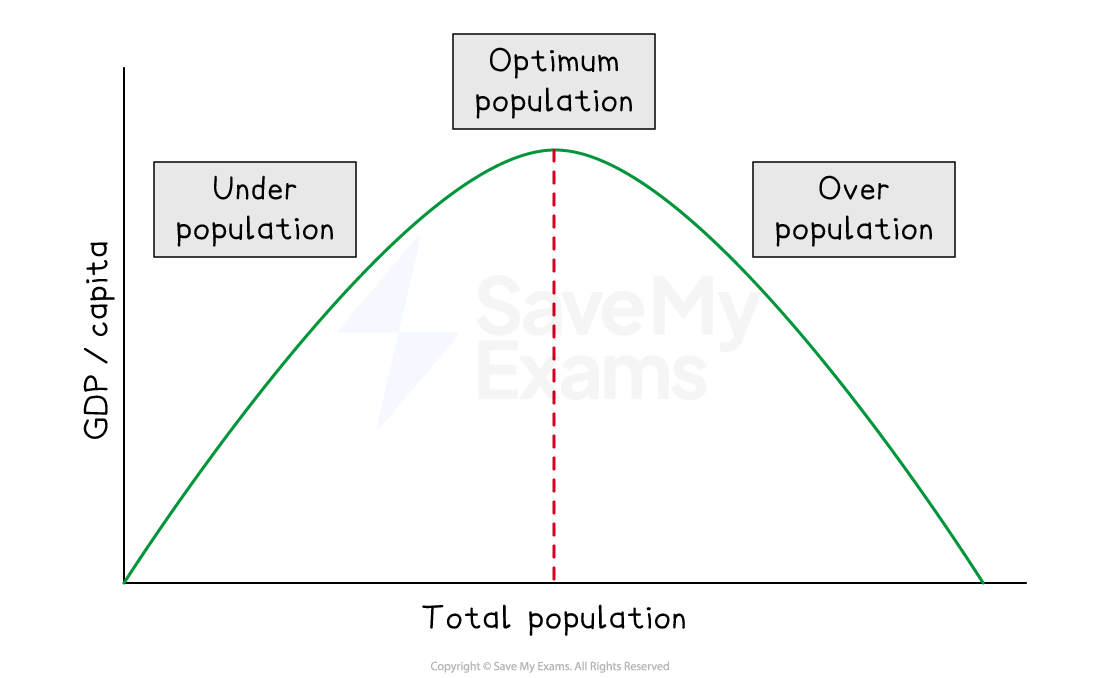
The optimum population results in the highest standard of living
There are not so many people or so few resources that the standard of living falls
There are enough people to develop the resources of the country
Limitations of the concept
Output per head is an imperfect measure of living standards - the distribution of output matters
The optimum is never precisely observable in practice
Technology can continuously expand the productive capacity of a given population, making the concept dynamic and difficult to apply
Level of urbanisation
Urbanisation is defined as the process by which an increasing proportion of a country's population lives in urban areas - cities and towns - rather than rural areas
It is measured as the percentage of the total population living in urban settlements
Urbanisation is strongly correlated with economic development
High-income economies typically have urbanisation rates above 80%, while low-income economies may be below 40%
Causes of urbanisation
Rural-urban migration
Individuals move from rural areas to cities in search of higher wages, better employment opportunities and improved access to services
This is the primary driver of urbanisation in developing economies
Natural population growth in cities
Urban birth rates exceeding urban death rates add to city populations independently of migration
Reclassification
As settlements grow, areas previously classified as rural are reclassified as urban, raising measured urbanisation rates without actual migration
Consequences of urbanisation
Positive | Negative |
|---|---|
|
|
|
|
|
|
|
|
Urbanisation and development
Low-income economies tend to have lower urbanisation rates but are urbanising rapidly
Sub-Saharan Africa is the fastest urbanising region in the world
The relationship between urbanisation and development is not automatic
Rapid urbanisation without corresponding industrial growth produces "urbanisation without development", characterised by large informal sectors and urban poverty rather than rising productivity
Case Study
Indonesia — urbanisation and Jakarta, 1990–2023
The context
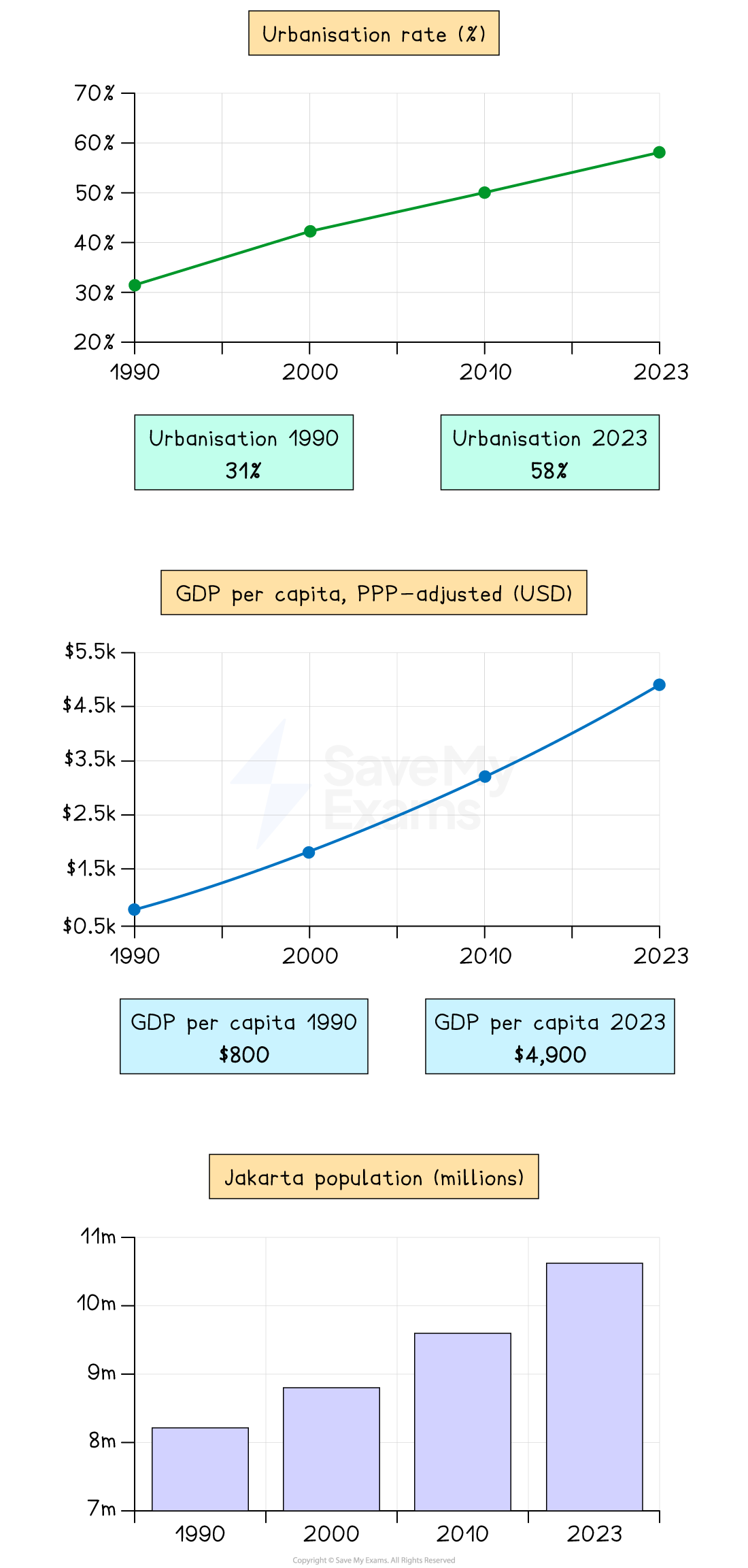
Indonesia's urbanisation rate rose from approximately 31% in 1990 to 58% by 2023, driven primarily by rural-urban migration into Jakarta and other major cities as manufacturing and services expanded.
Actions taken
Rural workers migrated to Jakarta in search of higher wages in manufacturing, construction and the informal service sector
The government invested in urban infrastructure but consistently struggled to match the pace of population growth
In 2019 the government announced plans to relocate the capital to Nusantara in Borneo, partly in response to Jakarta's chronic overcrowding, flooding and land subsidence
Outcomes
Agglomeration in Jakarta raised productivity and incomes, contributing to Indonesia's GDP per capita rising from around $800 in 1990 to over $4,900 by 2023
However, rapid urbanisation outpaced formal job creation — Jakarta's large informal sector and sprawling low-income settlements illustrate "urbanisation without development"
Environmental costs, including severe air pollution, regular flooding and sinking land, undermined living standards for many urban residents despite rising average incomes
Examiner Tips and Tricks
The optimum population is a theoretical concept - examiners will penalise students who treat it as a fixed or measurable number. Always emphasise that it shifts with technology and capital accumulation, and that it cannot be observed directly in practice.
For urbanisation questions, the key evaluation point is that rapid urbanisation does not automatically produce development - where urban growth outpaces industrial job creation, the result is an expansion of the informal sector and urban poverty rather than rising productivity.

Unlock more, it's free!
Join the 100,000+ Students that ❤️ Save My Exams
the (exam) results speak for themselves:

Was this revision note helpful?