Quotas, Embargoes & Red Tape (Cambridge (CIE) A Level Economics): Revision Note
Exam code: 9708

Import quotas
An import quota is a physical limit on the volume of a good that can be imported over a given time period
Unlike a tariff, a quota does not automatically generate government revenue - any revenue depends on how import licences are allocated
The effect on domestic price, output and employment is similar to a tariff - domestic price rises, domestic output rises, imports fall
However a quota gives the government certainty over the volume of imports - a tariff does not, since import volumes depend on the price elasticity of demand
Impact of an import quota
Domestic price rises above world price as supply of imports is restricted
Domestic producers benefit from the higher price and expand output - employment rises
Domestic consumers pay higher prices and reduce consumption - consumer surplus falls
There is a net welfare loss, as with a tariff, but no guaranteed government revenue
Foreign exporters may benefit if they capture the quota rent (the difference between world price and domestic price on their restricted exports)
Embargoes
An embargo is a complete ban on trade with a particular country or in a particular good
It is the most extreme form of protectionism - imports fall to zero
Domestic prices rise significantly as foreign supply is removed entirely
Consumer welfare falls sharply; domestic producers benefit if domestic alternatives exist
Embargoes are typically imposed for political or strategic reasons rather than economic ones - e.g. sanctions on Russia following the 2022 invasion of Ukraine
They carry a high risk of retaliation and can severely disrupt supply chains
Excessive administrative burdens (red tape)
Excessive administrative burdens are non-tariff barriers that make importing more costly, time-consuming or complex without imposing a direct tax
Examples include lengthy customs procedures, complex licensing requirements, excessive product testing and certification, burdensome documentation requirements
They act as a hidden tariff - raising the effective cost of imports without appearing as formal protectionism
Particularly common in agricultural trade - e.g. phytosanitary regulations that disproportionately burden foreign producers
Difficult for trading partners to challenge through the WTO as they are often disguised as legitimate regulatory requirements
Case Study
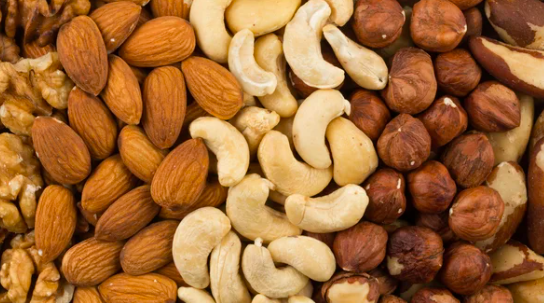
EU aflatoxin limits and African groundnut exports
The context
Aflatoxin is a naturally occurring mould toxin that thrives in the warm, humid conditions common across sub-Saharan Africa
The EU sets a maximum of 4 ppb of total aflatoxins in groundnuts - three times stricter than the international Codex Alimentarius standard of 15 ppb and five times stricter than the US limit of 20 ppb
Actions taken
The EU enforces its limits under WTO sanitary and phytosanitary rules, requiring all groundnut imports to be tested and certified before entry
African exporters must invest in expensive testing and certification infrastructure - compliance costs that many small producers cannot afford
Outcomes
Between 2005 and 2020, 579 African shipments were rejected at EU borders, with groundnuts accounting for 88% of rejections
Critics argue the standard operates as disguised protectionism - excluding African producers who meet internationally recognised safety standards
Worked Example
Two statements describing forms of protectionism a government can use are listed.
Statement 1: There is a total ban on imports
Statement 2: All imported goods have to be of a specified standard
Which combination correctly describes these two statements?
Statement 1 | Statement 2 | |
|---|---|---|
A | Administrative barrier | Import quota |
B | Administrative barrier | Embargo |
C | Embargo | Administrative barrier |
D | Embargo | Import quota |
Answer: C
Worked solution
Statement 1 describes a total ban on imports - this is the definition of an embargo, the most extreme form of protectionism, which prohibits all trade in a good or with a specific country
Statement 2 describes a specified standard that all imported goods must meet - this is an administrative barrier (excessive red tape), a non-tariff barrier that raises compliance costs without imposing a direct tax or physical limit on volumes
Options A and B incorrectly label a total ban as an administrative barrier - an administrative barrier slows or raises the cost of trade but does not ban it entirely
Option D incorrectly identifies a specified standard as an import quota - a quota sets a physical volume limit, not a quality or compliance requirement
Examiner Tips and Tricks
When asked to compare the effectiveness of these tools, always consider the certainty of outcome.
A quota gives the government certainty over import volumes but not price; an embargo gives complete certainty over volumes but carries the highest risk of retaliation; administrative barriers are the hardest for trading partners to challenge through the WTO because they are disguised as legitimate regulatory requirements rather than formal trade restrictions.
Note that embargoes are rarely imposed for purely economic reasons - they are typically political instruments. If an exam question asks you to evaluate an embargo as a tool of protectionism, always acknowledge this distinction and consider whether the economic costs of the embargo - higher domestic prices, reduced consumer surplus, risk of retaliation - are justified by the political or strategic objective being pursued.

Unlock more, it's free!
Join the 100,000+ Students that ❤️ Save My Exams
the (exam) results speak for themselves:

Was this revision note helpful?
