Substitutional Alloys (College Board AP® Chemistry): Study Guide

Substitutional alloys
A substitutional alloy forms between atoms of comparable radius
Atoms of the substituting element can take the place of some of the original metal's atoms in the lattice
Brass, composed of copper and zinc, is an example of a substitutional alloy
Diagram of a substitutional alloy
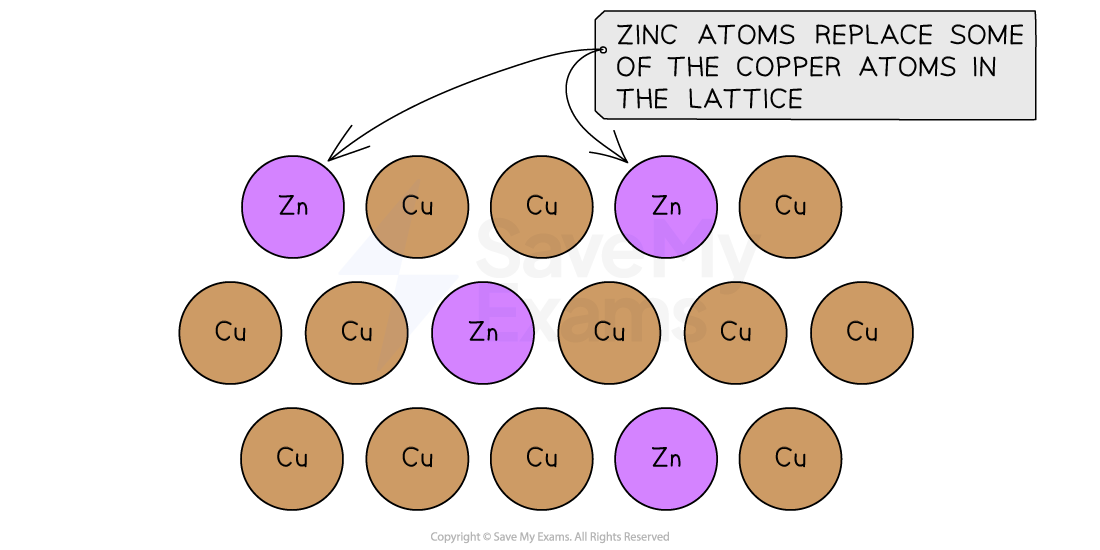
Brass: zinc atoms occupy some of the positions in a lattice of copper atoms
Worked Example
Sterling silver is an alloy of silver and copper. The atomic radius of silver is 165 pm and the atomic radius of copper is 145 pm.
Explain why sterling silver is better classified as a substitutional alloy than as an interstitial alloy.
Answer:
Silver and copper atoms have similar radii (165 pm and 145 pm)
Copper atoms are too large to fit into the spaces between silver atoms, so they take the place of some silver atoms in the lattice
Sterling silver is therefore a substitutional alloy
Examiner Tips and Tricks
Justify 'substitutional' or 'interstitial' with the atomic radii.
Chief readers did not credit answers that classified sterling silver by the difference in mass between Ag and Cu: size, not mass, decides.

Unlock more, it's free!
Join the 100,000+ Students that ❤️ Save My Exams
the (exam) results speak for themselves:

Was this revision note helpful?
Build on this topic