Alexander III: Reaction and Repression, 1881–1894 (AQA A Level History: Component 1: Breadth study): Revision Note
Exam code: 7042

Summary
Alexander III became Tsar in 1881
He was convinced that his father’s reforms had fatally weakened the autocracy
His Manifesto of Unshakeable Autocracy in April 1881 rejected any move towards constitutional government
Konstantin Pobedonostsev, his chief ideologue, provided the intellectual foundation for reaction
He promoted “Orthodoxy, Autocracy, and Nationality” across government, religion and education
Alexander III’s counter-reforms between 1881 and 1890 reversed key elements of Alexander II’s liberalisation
These included university autonomy, zemstvo independence and press freedom
The Land Captains Act of 1889 and the revised Zemstvo Act of 1890 restored noble authority over the countryside
Despite greater repression, the counter-reforms had limited practical reach
Administrative confusion below the provincial level meant imperial authority was weaker in practice than Alexander III intended
Historians disagree over how far Alexander III marked a break from his father’s approach
Figes presents Alexander III as representing a fundamental reaction against reform
Lynch argues that the regime’s continued reliance on coercion revealed deeper continuity in tsarist rule
Alexander III’s personality, beliefs & political philosophy
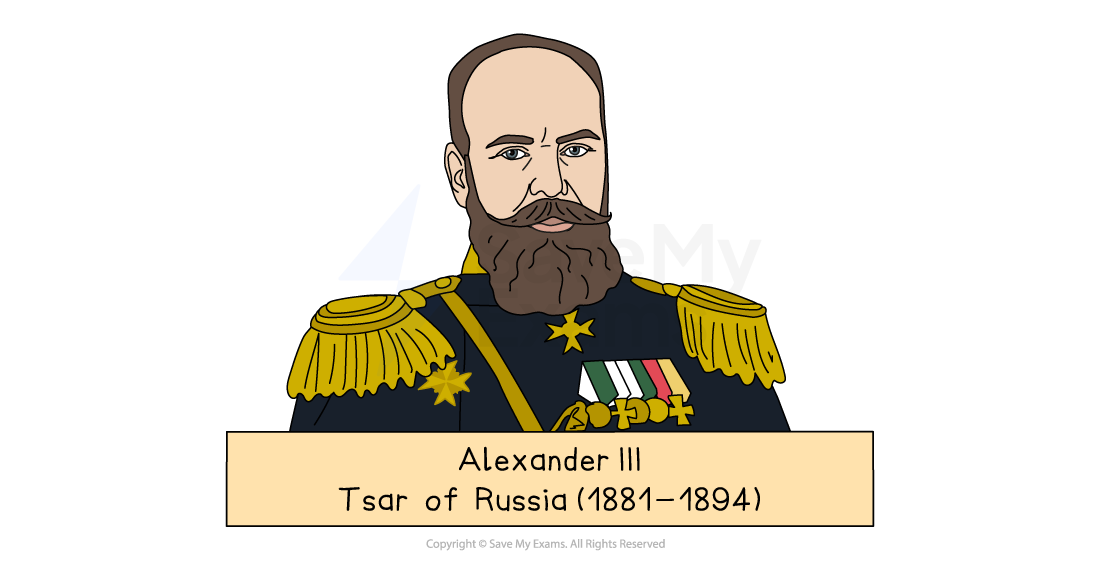
Alexander III came to power in March 1881 following the assassination of his father
In his eyes, Alexander II's reforms had undermined the sacred foundations of tsarist authority
He believed reform had directly encouraged the revolutionary violence that killed Alexander II
His first instinct was to reverse his father's legacy, not build on it
In almost every way, Alexander III was the opposite of his father
He was physically imposing, blunt in manner, and deeply suspicious of Western liberal ideas
He disliked debate and distrusted advisers who offered competing views
He had no intellectual curiosity about reform and saw dissent as disloyalty, not legitimate criticism
His political philosophy rested on three pillars: "Orthodoxy, Autocracy, and Nationality"
He regarded the tsar's absolute authority as God-given and entirely non-negotiable
The Russian Orthodox Church was central to his vision of legitimate rule and social order
Russian nationalism, he believed, was the binding force that should unite the empire
He saw Alexander II's reforms as a dangerous experiment that had awakened rather than satisfied popular expectations
His first major act was the Manifesto of Unshakeable Autocracy (April 1881)
This directly rejected the Loris-Melikov proposals for limited popular representation
It made clear to Russia and to Europe that no constitutional concessions would follow
The liberal minister Loris-Melikov resigned immediately
The more conservative Count Ignatiev replaced him
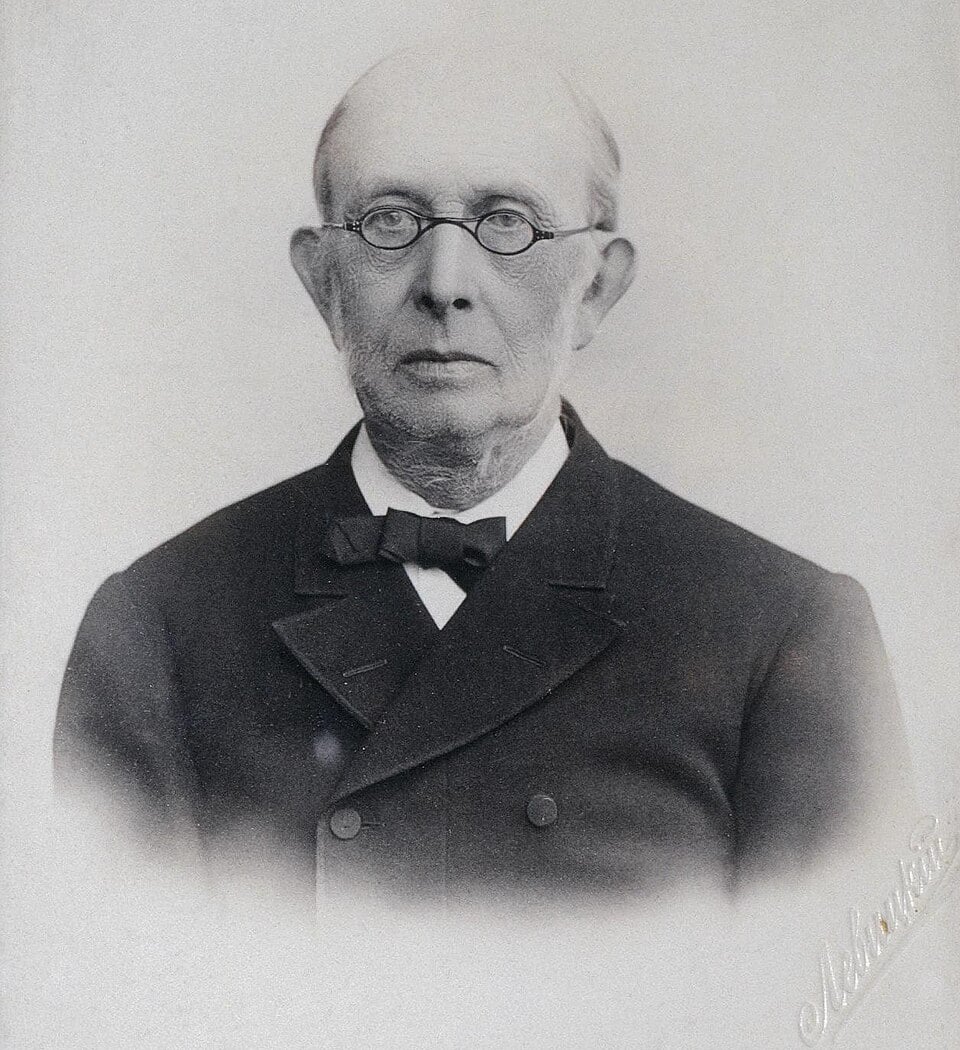
Konstantin Pobedonostsev was Alexander III's most influential minister and chief ideologue
He served as Over-Procurator of the Holy Synod, the senior state official overseeing the Russian Orthodox Church
He had tutored both Alexander III and the future Nicholas II
He believed democracy was the "great lie of our time", regarding parliamentary government as fundamentally corrupt
He drafted the Manifesto of Unshakeable Autocracy
He then provided the intellectual justification for every major counter-reform that followed
Examiner Tips and Tricks
Do not treat Pobedonostsev as interchangeable with Alexander III. They shared a reactionary worldview, but they were not the same. The Tsar's convictions were instinctive: rooted in fear, religiosity, and a personal hatred of disorder. Pobedonostsev's were systematic: an elaborated theory of why autocracy and Orthodoxy were superior to Western liberalism.
Examiners reward answers that treat Alexander III as a political actor in his own right, not simply a mouthpiece for Pobedonostsev's ideas. Both men shaped policy, but the Tsar made the final decisions.
Alexander III’s counter-reforms: politics, education & the Okhrana
The counter-reforms were systematic rather than piecemeal
Unlike Alexander II's later reactionary measures, these formed a coherent programme of reversal
They targeted every institution that had gained autonomy since 1855
The aim was to reassert central authority and restore the social hierarchy that Alexander II's reforms had disrupted
Politics and local government
The Statute on Police Surveillance (1881) expanded the state's power to detain citizens without trial
Any person judged "suspected" of political unreliability could be arrested and exiled administratively
No court appearance or formal charge was required
This gave the Interior Ministry vast discretionary powers over individual freedoms, as officials could exile suspected political opponents without a formal trial
The Land Captains Act (1889) replaced elected zemstvo officials in rural areas with appointed Land Captains
Land Captains were drawn from the local nobility and answered directly to the Interior Ministry
They could overturn decisions made by peasant assemblies, impose fines, and order arrests without reference to a court
This directly reversed one of the most significant outcomes of Alexander II's 1864 zemstvo reform
The elected peasant voice in local governance was effectively eliminated
The Zemstvo Act (1890) restricted who could vote in zemstvo elections
Property requirements for noble voters were lowered, sharply increasing noble representation
Peasant representatives lost the right to elect their own members directly
Governors were given new powers to veto zemstvo decisions they considered politically undesirable
Education
The University Charter (1884) stripped universities of the autonomy granted under Alexander II in 1863
Universities lost the right to govern themselves and appoint their own staff
Student unions and independent organisations were banned
Fees were raised sharply to price out students from non-privileged backgrounds
The Delyanov Circular (1887) restricted access to secondary education by social class
Sometimes called the "cooks' children circular", it directed school directors to prevent children of servants, coachmen and small traders from attending secondary schools
The aim was to prevent the growth of an educated lower class that might challenge the social order
In practice, it produced anger and resentment rather than stability
Press and censorship
New censorship regulations in 1882 gave the Interior Ministry power to close any publication
Editors could be personally banned from publishing, not just their papers
A consultative commission involving three ministries had to approve major newspapers
Books and journals on political and social topics faced tightened pre-publication review
The Okhrana
Alexander III significantly expanded the Okhrana, the state's secret police force
The Okhrana operated through a network of agents across Russia and in European cities with large Russian exile communities
It monitored revolutionary groups, liberals and anyone suspected of political unreliability
Its main methods in this period were surveillance and interception of mail
Examiner Tips and Tricks
Be specific when referring to the reforms; use their name and date. The Statute on Police Surveillance (1881), the University Charter (1884), the Land Captains Act (1889), and the Zemstvo Act (1890) are the four you must know precisely. Vague references to "reversing Alexander II's reforms" without naming the mechanism consistently attract lower marks.
Note also the order in which the counter-reforms appeared. The most aggressive political measures came first (the 1881 Manifesto and police statute), followed by educational restrictions, then the local government reforms of 1889 and 1890. This sequence matters for analytical answers: Alexander III consolidated central power before attacking the localities.
The extent & impact of Alexander III’s counter-reforms
The counter-reforms achieved their immediate political aim: no revolution occurred during Alexander III's reign
The People's Will organisation was effectively destroyed through arrests and executions
No significant revolutionary organisation emerged to replace it until the 1890s
The short-term suppression of opposition was real and substantial
However, the administrative impact of the counter-reforms was deeply confused in practice
Land Captains created constant friction with surviving zemstvo bodies
Provincial governors, central ministry agencies, and elected bodies all operated in the same areas with overlapping powers
Instructions from different ministries frequently contradicted each other, producing paralysis rather than order
Figes argues that effective imperial power 'stopped at the 89 provincial capitals', below that level, no real state administration existed
The educational counter-reforms produced unintended consequences
The number of university students fell in the short term, as the regime intended
But, underground student networks and secret discussion groups became more active, not less
Radicalisation moved off campus and became harder to monitor
Alexander Ulyanov, the older brother of Lenin, was executed in 1887 for a student plot to assassinate Alexander III
The nobility did not recover real political power despite the Land Captains Act
Land Captains were appointed noble agents of the state, not autonomous political figures
The underlying economic decline of the Russian nobility continued throughout the 1880s
The counter-reforms gave nobles administrative roles but not the independent political voice they had held before the emancipation era
In the long term, the counter-reforms stored up serious problems for Nicholas II
The refusal to reform created a widening gap between the government and the educated society
Opposition became more organised rather than less, as radical groups adapted to greater repression
The social tensions that erupted in the 1905 Revolution were rooted in the contradictions of Alexander III's reign
The Great Famine of 1891–92 exposed serious weaknesses in Alexander III’s economic policies
Vyshnegradsky prioritised grain exports to raise money, even when food supplies were under pressure
Around 375,000 to 500,000 people died, and the state struggled to organise relief
The crisis increased criticism of the regime and encouraged interest in Marxist ideas
Alexander III’s reign also saw growing repression of Jewish communities
The May Laws of 1882 tightened restrictions in the Pale of Settlement
"Attempts were made to re-impose the leaden hand of central government in all those areas of the Empire's affairs where a degree of local or institutional particularism had been allowed to creep in. The power of the local nobility, never entirely lost, was reasserted through a number of measures which adjusted their regulations concerning membership and organisation of the zemstva."
A. Wood, The Romanov Empire (2007)
Examiner Tips and Tricks
Examiners reward consideration of the extent and impact of the counter-reforms, not merely their existence. The strongest answers identify the gap between Alexander III's intentions and what the reforms actually achieved.
A sharp analytical point is that the counter-reforms created administrative chaos rather than the clean autocratic control Alexander III wanted. The regime was attempting to govern a vast empire without the administrative capacity to do so effectively. That is a structural weakness, not just a policy failure.
How different was Alexander III to Alexander II?
This is one of the more frequently examined comparisons in the course
Some historians see a fundamental rupture between the two reigns
Others argue that the structural problems of Tsarism created deeper continuities than the contrast in policy suggests
Alexander III represented a fundamental break from his father's approach
The ideological contrast between the two tsars was stark and deliberate
Alexander II accepted, reluctantly, that some reform was necessary to preserve autocracy
Alexander III rejected reform entirely as a threat to autocracy
Where Alexander II saw reform as a tool of survival, Alexander III saw it as a source of the crisis
The legislative programme of the 1880s systematically dismantled what Alexander II had built
The zemstvo, the reformed law courts, university autonomy, and press freedoms were all rolled back
Earlier concessions to ethnic minorities were also reversed, especially after the 1863 Polish rebellion
The regime treated minority nationalism as a threat to imperial unity
Russification increased through tighter control of education, administration and religion
Alexander II had never attempted a reversal on this scale, even in his most reactionary years after 1866
The Land Captains Act was a direct structural replacement of the 1864 zemstvo reform, not a restriction of it
The personal style of rule was completely different
Alexander II was willing to consult ministers, permit debate, and allow cautious experimentation
Alexander III made decisions without ministerial discussion and treated unsolicited advice as insubordination
Alexander II had considered the Loris-Melikov reforms; Alexander III dismissed them within weeks of his accession
Key historian
"Alexander III greatly increased the government's powers over the zemstva and municipal bodies. Alexander saw this as a way of moving closer to the fantasy of ruling Russia directly from the throne. But the result was confusion in the provincial administration: the governors, the agencies of the central ministries and the elected local bodies were all set against each other. The power of the Imperial government effectively stopped at the 89 provincial capitals where the governors had their offices."
O. Figes, A People's Tragedy (1996)
Figes argues that Alexander III's ambition was a genuine rupture with Alexander II: it was the "fantasy" of direct personal autocracy that his father never pursued
The word "fantasy" is analytically useful: it signals that the break was real in intention but self-defeating in execution
The administrative chaos Figes describes is a direct consequence of Alexander III's determination to reverse his father's reforms
Underlying continuities in tsarist governance limited the real differences
Both tsars relied ultimately on the same tools: the police, the army and administrative exile
The mechanisms of repression did not change fundamentally between the two reigns
Alexander III added to these tools and expanded them, but he did not create a qualitatively different system of control
The Okhrana existed before Alexander III
He enlarged it, but the secret police was already a feature of autocratic governance
The counter-reforms had less practical impact than their ambition suggested
Provincial administration remained fragmented and ineffective despite the Land Captains Act
The nobility did not recover meaningful political power
Below the provincial level, the state's reach was as limited under Alexander III as it had been under Alexander II
The structural problem of Tsarism persisted under both rulers without resolution
Neither tsar resolved the fundamental tension between the need to modernise Russia and the determination to preserve autocracy
Both ruled an empire too large and diverse to govern effectively from the centre
The opposition that grew under Alexander III had its roots in the frustrations created by Alexander II's incomplete reforms
Key historian
"The reaction that began under Alexander III and continued into the reign of Nicholas II oppressed but did not destroy opposition to the tsarist regime. Indeed, despite greater police surveillance, opposition became more organised. A number of political parties, ranging from moderate reformers to violent revolutionaries, came into being. The government's policies of reaction and Russification combined to produce a situation in which many political and national groups were becoming increasingly frustrated by the mixture of coercion and incompetence that characterised the tsarist system."
M. Lynch, Reaction and Revolutions: Russia 1881 – 1924 (1992)
Lynch's argument emphasises continuity of dysfunction rather than fundamental change
The phrase "coercion and incompetence" applies equally to Alexander II's later years and to Alexander III's entire reign.
For Lynch, the real continuity is structural: both tsars faced the same dilemma and neither solved it
This makes the contrast between them a matter of degree rather than kind.
Examiner Tips and Tricks
A strong answer will recognise that both rulers were autocrats by conviction. The real difference was in method: Alexander II used selective reform to shore up autocracy from above; Alexander III used systematic restriction to prevent any challenge from below. Whether this constituted a fundamental break or a shift in tactics within the same system is the core debate.

Unlock more, it's free!
Join the 100,000+ Students that ❤️ Save My Exams
the (exam) results speak for themselves:

Was this revision note helpful?
