The Purges of the 1930s: The Great Terror and Its Consequences (AQA A Level History: Component 1: Breadth study): Revision Note
Exam code: 7042
Summary
The Great Purges (1936-38) were Stalin's campaign of mass arrest, show trials and executions across Soviet society
The murder of Sergei Kirov in December 1934 gave Stalin the pretext to launch the Terror
Three Moscow show trials destroyed the Old Bolsheviks
Zinoviev and Kamenev were executed in 1936
Bukharin was executed in 1938
The army was hit hard
Three of five marshals were removed
Around half the officer corps were removed
The Yezhovshchina spread terror to ordinary citizens through quotas, denunciations and the NKVD
By 1939, Stalin held unchallenged personal power
Millions had been arrested, imprisoned or killed
Historians debate whether Stalin’s terror continued Leninist repression or transformed it into something new
Brown stresses continuity with the one-party dictatorship Lenin created
Thurston argues Stalin’s terror was reactive, fear-driven and less controlled than it appeared
Causes of the purges: why did Stalin launch the Great Terror?
Stalin's insecurity: the crisis of 1932
By 1932, Stalin's position was less secure than it appeared
His wife, Nadezhda Alliluyeva, took her own life in November 1932
Famine and strikes brought open criticism of the Five-Year Plan and Stalin's leadership
The Ryutin Affair showed opposition reaching into the Party elite
Martemyan Ryutin circulated an appeal calling for Stalin's removal
Stalin reportedly wanted Ryutin executed
He was overruled by the Politburo
The 17th Party Congress, 1934
At the 1934 Congress, Stalin declared that the opposition had been defeated
He received around 150 negative votes in the Central Committee
Only three negative votes were officially recorded
Sergei Kirov, the Leningrad Party leader, appeared popular
He received a lengthy ovation
He was associated with a more moderate line
Some within the Party wanted to ease pressure after collectivisation
Loyalists such as Molotov and Kaganovich firmly backed Stalin
The trigger: the Kirov murder, December 1934
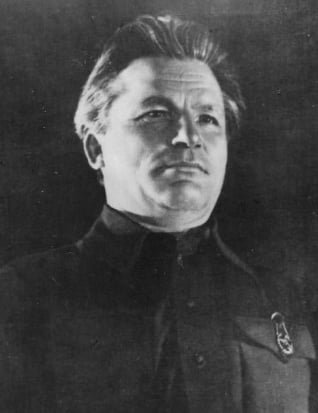
Kirov was shot dead in Leningrad on 1 December 1934
His killer, Leonid Nikolayev, was officially described as a disgruntled Party member acting alone
Some historians argue that Stalin may have ordered the attack to justify the purges
Stalin officially blamed a "Trotskyite conspiracy"
A decree issued the next day gave the NKVD wider powers
It allowed suspects to be arrested and shot quickly
Around 6,500 people were arrested under this decree in December 1934
This opened the way to the wider Terror that followed
Stalin's deeper aims
The Terror served Stalin's political purposes
It removed potential rivals
It targeted anyone linked to past opposition
It used the idea of a "sharpening class struggle" to justify hunting hidden enemies
It also enforced obedience
Fear spread across the Party and the state
Opposition became extremely dangerous
Examiner Tips and Tricks
A pretext is not the same as a cause. The Kirov murder set the Terror in motion, but strong answers also explain Stalin’s insecurity after 1932 and his aim of removing potential rivals.
Avoid treating one assassination as the whole explanation. Link the trigger to Stalin’s longer-term need to secure his power.
What groups were targeted in the purges?
The Old Bolsheviks: the three Moscow show trials
Public show trials destroyed Lenin's original revolutionary elite
Charges were based on fabricated conspiracies with the exiled Trotsky
Show trial | Year | Key accused | Outcome |
|---|---|---|---|
Trial of the Sixteen | 1936 | Zinoviev, Kamenev and 14 others | All were found guilty and executed |
Trial of the Seventeen | 1937 | Radek, Pyatakov and others | 13 executed, the rest sent to labour camps |
Trial of the Twenty-One | 1938 | Bukharin, Rykov and 19 others | All executed |
The Red Army
Between May and June 1937, Stalin turned on the army's high command
Marshal Tukhachevsky and seven other senior commanders were shot for "espionage"
Of 767 high command officers, 512 were executed
The purge removed much of the military leadership
Three of five marshals, all eight admirals and all eleven war commissars were removed
Historians agree this was linked to Stalin's growing paranoia
It left the USSR without a capable high command shortly before the German invasion of June 1941
The Party, minorities and ordinary citizens
The Terror spread beyond the Party leadership and the army
Around 70% of the 1934 Central Committee were arrested and shot
An estimated 1,108 of 1,966 delegates to the 1934 Congress were arrested
Minority nationalities suffered heavily
Around 350,000 were tried
This included 140,000 Poles
Professional and technical groups were also targeted
Managers, engineers and scientists lost their posts
Many were executed
The NKVD itself was purged
Yagoda was tried
More than 23,000 officers were tried
Relatives and colleagues of the accused were also arrested, exiled or shot
Examiner Tips and Tricks
Be precise about who was targeted and when. The Terror moved outward in stages: from the old Party elite, to the army, then to ordinary citizens. Use named victims and figures to show the scale.
The Great Terror (Yezhovshchina), 1936–1938
From the Party to the people
From 1936, the Terror widened from the elite into mass repression
This period is known as the Great Terror
It is also known as the Yezhovshchina, named after Nikolai Yezhov, NKVD chief from September 1936
Yezhov replaced Yagoda
Yagoda was accused of not pursuing the "conspiracy" hard enough
The quota system, 1937
In July 1937, a Politburo order set arrest quotas for each region
Local NKVD officers had to find a set number of "anti-Soviet elements"
Targets now included artists, scientists, managers and administrators
Denunciation and fear
Citizens were urged to denounce the "hidden enemies"
People watched colleagues, friends and even family members for "oppositional thoughts"
Arrests became continuous and random
People feared a knock at their door
Victims were shot or sent to the Gulag
The end of Terror, 1938-1939
The pace slowed after late 1938
The Terror began to damage the state
Industry and administration had lost too many skilled people
Stalin made Yezhov the scapegoat for "excessive zeal"
Lavrentiy Beria replaced Yezhov as NKVD chief
The 18th Party Congress in 1939 declared the "mass cleansings" over
Around 1.5 million cases were reviewed
Over 450,000 convictions were quashed
An estimated 327,000 people were released from the gulags
Examiner Tips and Tricks
The Yezhovshchina is what makes this phase distinctive. The quota system turned terror on the whole population, not just the Party.
Political consequences of the purges
Stalin's unchallenged power
By 1939, Stalin held supreme personal power
His old rivals and the Old Bolsheviks had been destroyed
Almost no one with a stronger claim to lead than Stalin remained
Trotsky, the last major rival, was murdered in Mexico in 1940
He was reportedly killed with an ice pick to the head
A weakened state on the eve of war
The army had lost much of its experienced leadership
This left the USSR exposed when Germany invaded in 1941
Industry and administration had lost skilled managers and specialists
This particularly affected munitions
A society reshaped by fear
Terror changed how ordinary people behaved
People obeyed because punishment was certain but unpredictable
Many felt they were always being watched
Faith in Stalin preserved
Yezhov, not Stalin, was blamed for the suffering
The release of prisoners helped restore faith in Stalin and the system
Stalin emerged with near-total control over the Party and the population
Examiner Tips and Tricks
Separate the political consequence from the human cost. Stalin gained unchallenged power, but the army, the Party and society paid a heavy price.
The best answers weigh whether the Terror strengthened or weakened the regime, rather than just listing what happened.
How different was Stalin’s use of terror to Lenin’s?
This type of question asks you to compare two phases of communist terror
Both used the secret police to crush opposition
They differed in scale, target and purpose
Feature | Lenin’s Red Terror (1918–1921) | Stalin’s Great Terror (1936–1938) |
|---|---|---|
Context | Civil war emergency | Peacetime |
Main targets | Class enemies: the bourgeoisie, Whites and rival parties | The Party, the army and ordinary citizens |
Instrument | The Cheka | The NKVD |
Scale | Thousands, during the civil war | 700,000 killed, millions arrested |
Purpose | Defend the revolution | Secure Stalin’s personal power |
Stalin's terror continued on from Lenin
Lenin created the machinery and the logic of terror
He established the Cheka
He launched the Red Terror in 1918
He built the one-party state and banned factions in 1921
These tools later helped Stalin
Stalin used them during the show trials
The NKVD grew directly out of Lenin’s Cheka
On this view, the difference from Lenin was one of scale, not kind
Key historian
“Some of the earlier purges were a logical consequence of the choice of the Soviet leadership not to embrace universally recognised democratism, but to impose its will, and many harsh policies, on the population by dictatorial decree. Other purges … went well beyond the logic of communist rule.”
A. Brown, The Rise and Fall of Communism (1994)
Brown supports a continuity argument
Terror was built into the one-party dictatorship created under Lenin
However, Stalin took it much further
Stalin's terror completely transformed Lenin's
Stalin's terror was different in scale, target and nature
Lenin's terror hit class enemies during a Civil War emergency
Stalin turned inward on loyal communists and the army in peacetime
The scale was far greater, reaching hundreds and thousands of deaths
It may also have been less controlled than Lenin's terror
On this reading, it became an arbitrary system, not a precise tool
Key historian
“Stalin was not guilty of mass murder from 1934 to 1941 and did not plan or carry out a systematic campaign to crush the nation. This fear-ridden man reacted and overreacted to events. His power was constrained, which contributed to his anxiety and tendency to govern by hit-and-run methods.”
R. Thurston, Life and Terror in Stalin’s Russia, 1934–1941 (1996)
Thurston gives a revisionist view
Stalin’s terror was not a controlled instrument like Lenin’s Red Terror
It was a reactive system that escaped full control
Examiner Tips and Tricks
Compare Lenin’s and Stalin’s terror on scale, purpose and method. Then decide whether Stalin’s terror was a continuation of the Red Terror or a transformation of it.

Unlock more, it's free!
Join the 100,000+ Students that ❤️ Save My Exams
the (exam) results speak for themselves:

Was this revision note helpful?
