Russia in 1855: Political, Social and Economic Conditions (AQA A Level History: Component 1: Breadth study): Revision Note
Exam code: 7042
Summary
Russia in 1855 was a vast autocratic empire, but its huge scale, poor communications and ethnic diversity made central control difficult
The Tsar ruled through the support of the Russian Orthodox Church, the nobility and the feudal social structure
Serfs made up over 80% of the population
They were legally bound to their lords, tied to the land and excluded from political life
Russia's economy was overwhelmingly rural and pre-industrial
It had an 11:1 village-to-town ratio and almost no internal market
The Tsar held virtually unlimited, legally unchecked power
No constitution, no parliament, and no elected assembly existed to limit his authority
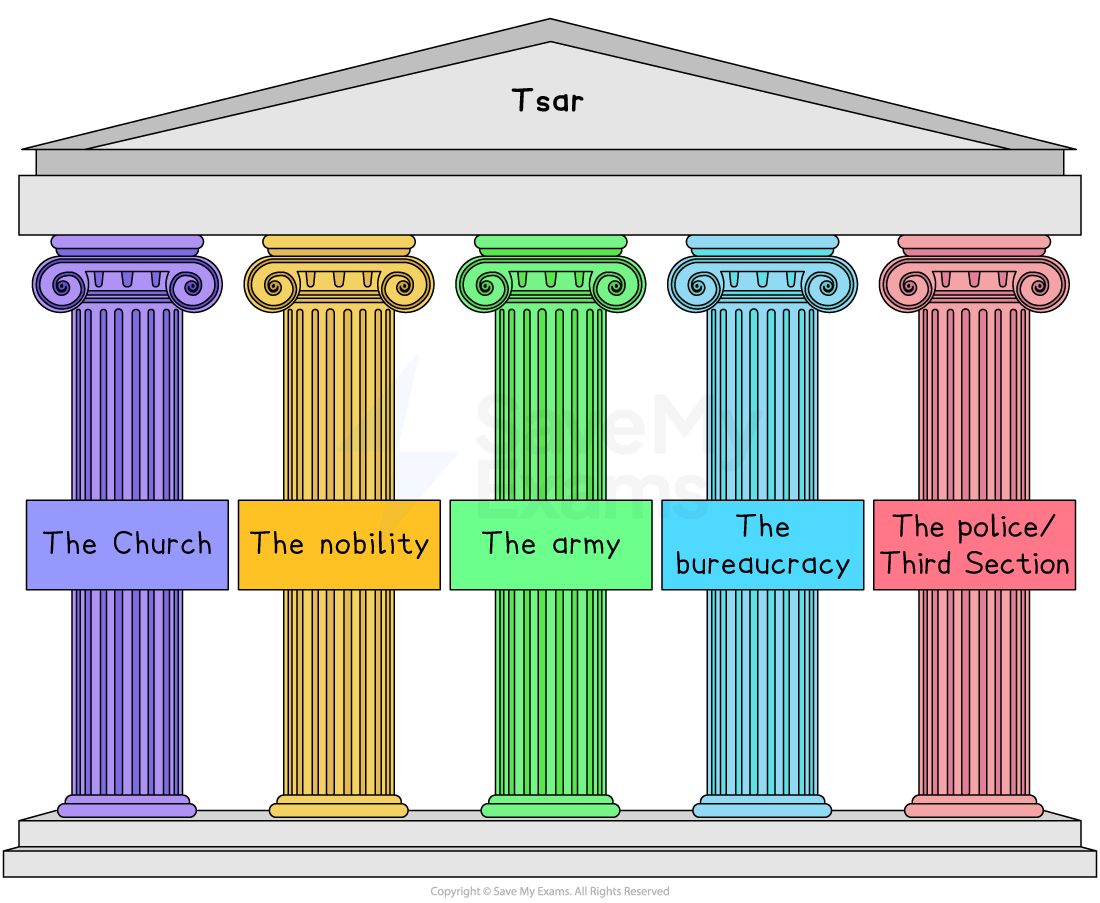
Five key pillars upheld tsarist rule: the Church, the nobility, the army, the bureaucracy and the secret police
Historians debate whether Tsarism in 1855 was stable or already deeply flawed
Christian presents it as a coherent system
Service argues it was structurally dysfunctional and unable to govern an empire in need of change
The geography & structure of the Russian Empire
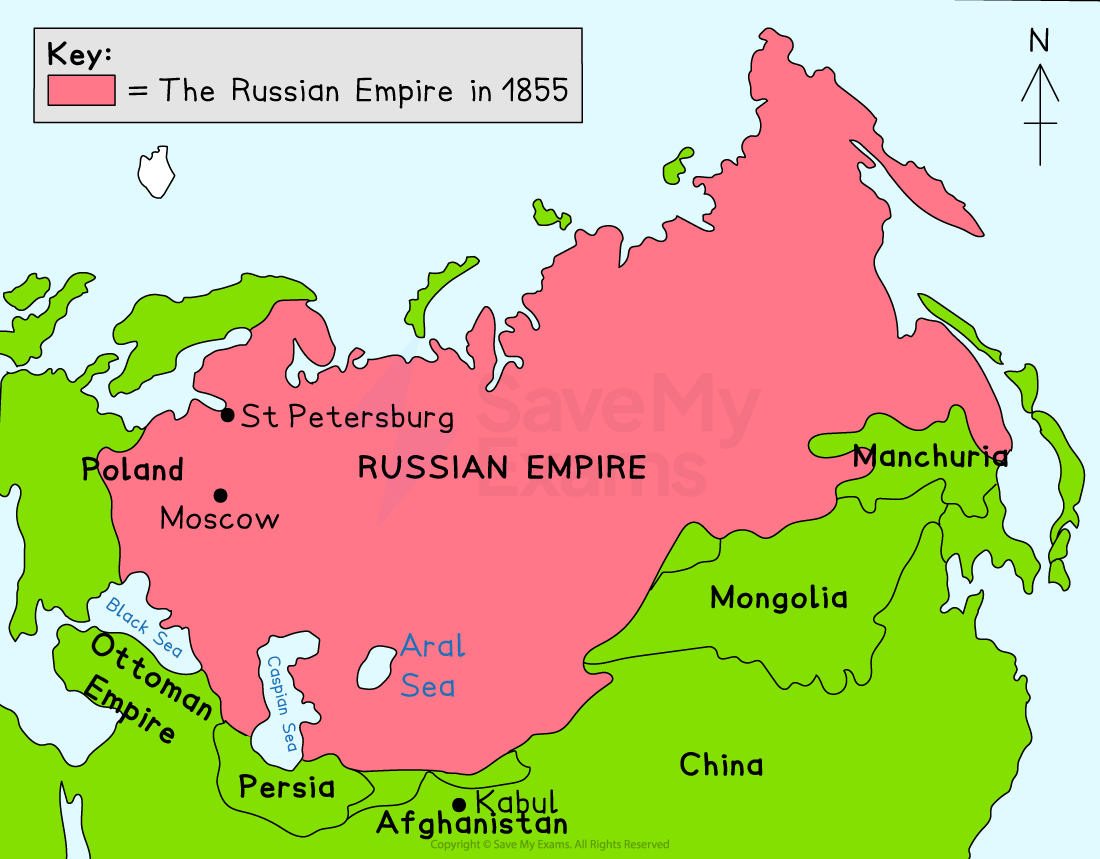
Russia was a vast empire of around 21 million square kilometres, covering roughly twice the size of Europe and around one-sixth of the world’s land surface
It stretched from Poland in the west to the Pacific Ocean in the east
It stretched from the Arctic in the north to the borders of Afghanistan and China in the south
This made Russia one of the largest and most difficult empires in the world to govern
The empire’s population was unevenly spread across this huge territory
Less than a quarter of the landmass lay in European Russia
Around three-quarters of the population lived there
Much of the rest of the empire was inhospitable, including tundra, forest and barren terrain north of the 50th parallel
This made farming, settlement and transport difficult in many regions
The size and diversity of the empire created serious problems for central control
Communications were slow and unreliable, especially in remote regions
This made it difficult for the tsarist government to enforce authority across the empire
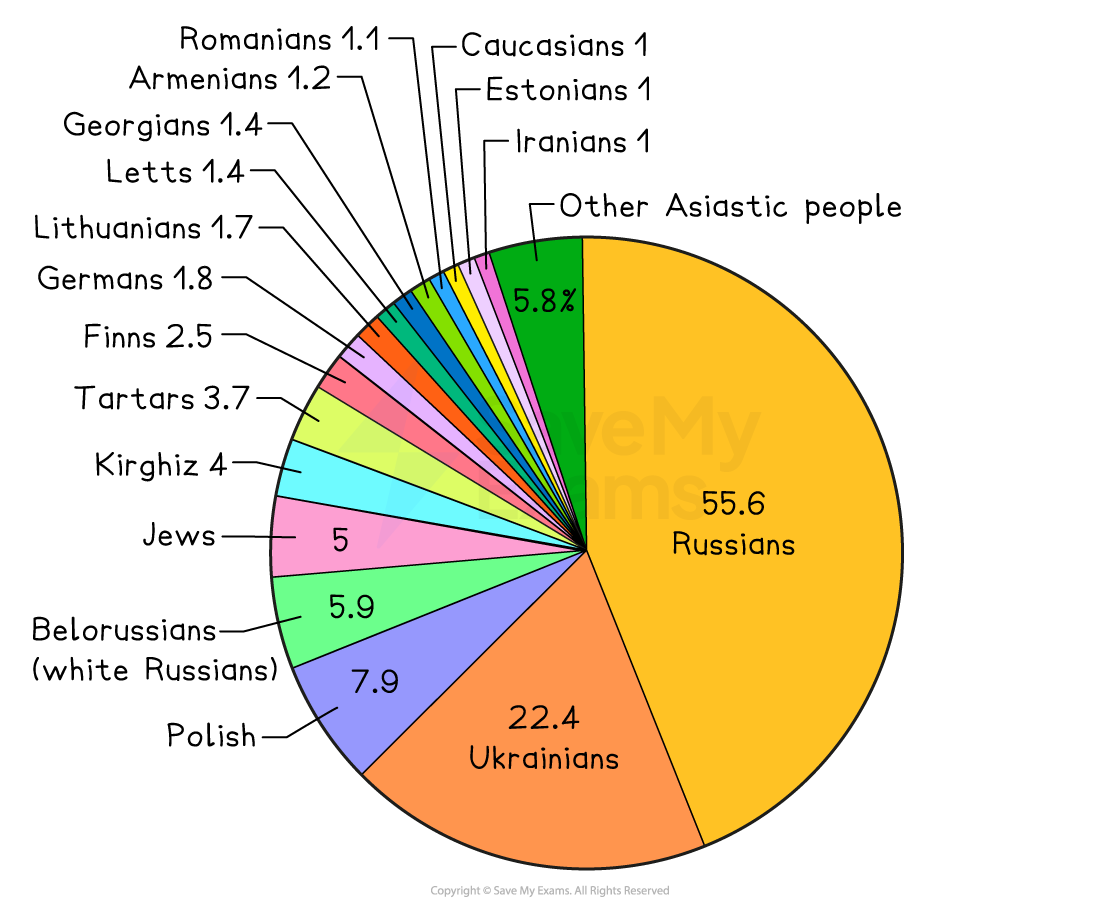
The empire contained over 100 ethnic groups, with their own cultures, languages and, in some cases, religions
Many people identified more strongly with their local community or ethnic group than with the Russian Empire as a whole
Social conditions in Russia: serfdom & the class structure
Serfdom
Over 80% of the Russian population were serfs
These were men, women and children classified as the legal property of their owners rather than as citizens of the state
Serfs could be bought and sold
They were subject to beatings and could not marry without their lord's permission
They were also liable for conscription into the army
They needed internal passports to leave their estate or travel for work, which allowed landlords and the state to control their movement
Privately owned serfs (just over half of all serfs) were divided into two types
Obrok: paying dues in cash or goods to their lord
Barshchina: providing direct labour service on the lord's land
The remainder were state serfs, paying taxes and rent directly to the state
All serfs worked communal strips of land within the village commune (mir), under rules set by village elders
The communal system removed individual initiative and prevented improvement
Individual serf families worked scattered strips, limiting agricultural productivity
Most serfs:
Had no or little formal schooling and so were likely to be illiterate
Were deeply religious
Were living close to subsistence
Were regarded by tsarist officials as broadly hostile to change
The class structure
Society was essentially feudal
This means it was based on birth, land and service, with no coherent middle class comparable to those developing in Western Europe
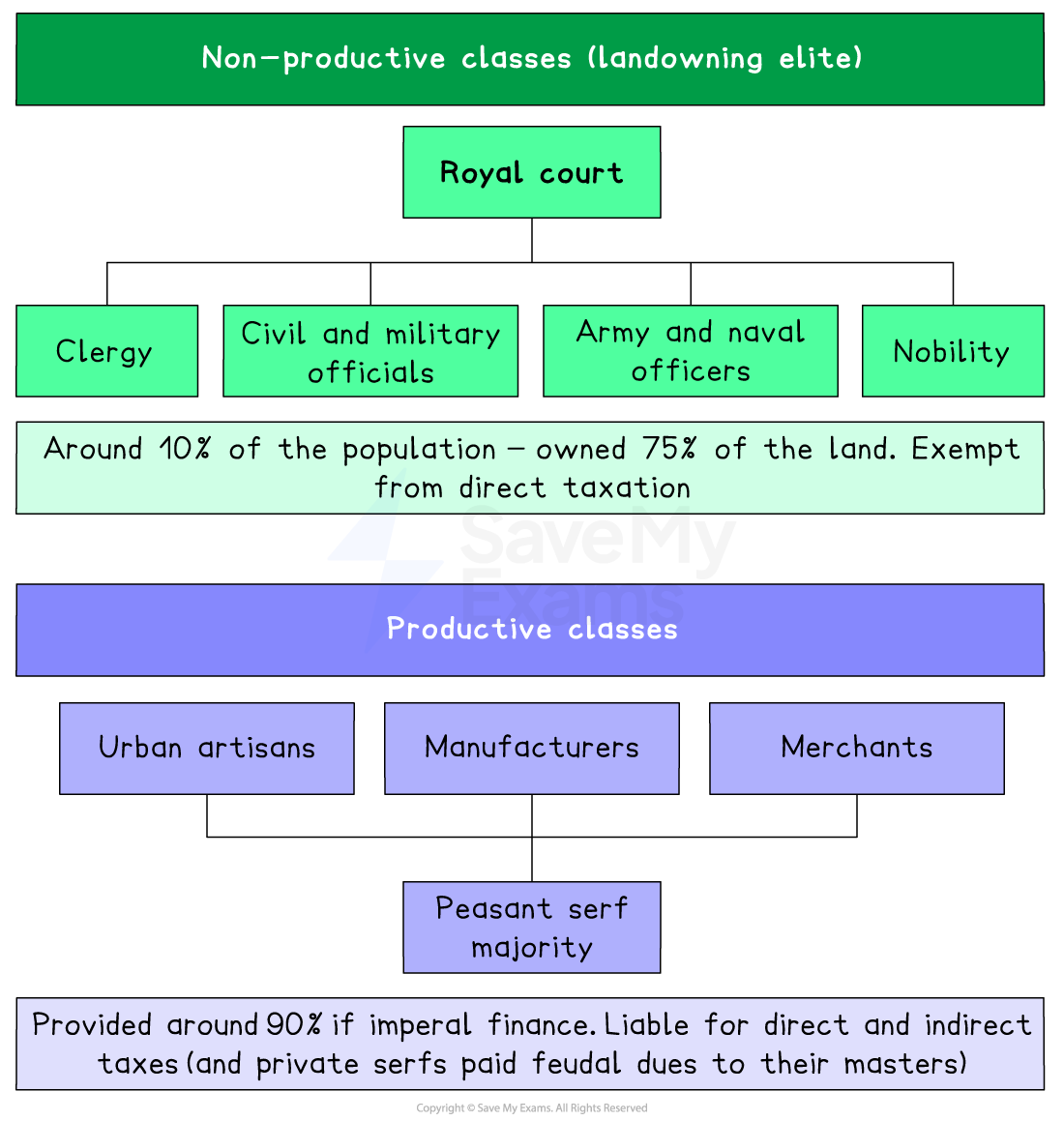
Non-productive classes (around 10% of the population) owned around 75% of the land and were exempt from direct taxation
This included the royal court, clergy, nobility, civil and military officials, as well as army and naval officers
Productive classes bore the tax burden
The peasant serf majority provided around 90% of imperial tax revenue
A small intelligentsia was beginning to emerge by the 1850s
Educated professionals, predominantly sons of nobles, engaging with Western liberal ideas and debating the need for political change
Examiner Tips and Tricks
Examiners reward students who understand serfdom as a complex institution rather than a single uniform experience. Privately owned serfs living under barshchina faced very different conditions from those paying obrok, and both differed from state serfs.
When you later analyse Alexander II's emancipation, these distinctions matter: the strongest answers assess the Edict's impact on each group separately, not on 'the peasants' as a whole.
Economic conditions in Russia: agriculture, industry & trade
Agriculture
Russia’s economy was overwhelmingly rural
There was an 11:1 village-to-town ratio, compared with 2:1 in Britain
Most people lived and worked in the countryside
Agriculture relied on serf labour and communal farming systems
The mir enforced traditional farming practices
This gave peasants little reason or ability to innovate or improve yields
Starvation was common in bad harvest years, as most serfs survived on what they could grow
Communal patterns meant little capital was invested in land improvement or tools
Russia was one of Europe’s major agricultural exporters, but this masked deep structural weaknesses
Production was extensive, meaning output increased by using more land and labour
It was not intensive, meaning yields per acre remained low
This meant Russia could export grain, but its farming methods remained inefficient
Industry and trade
By 1855, Britain, Belgium, France and the German states were already industrially advanced
Russia had almost no comparable industrial base
Most production still came from agriculture rather than factories
Russia possessed vast reserves of timber, coal, oil and gold, but poor communications left most of this potential untapped
Many resources were difficult to access or transport
Siberia remained remote, sparsely populated and poorly integrated into the economy
There was almost no internal market
In many areas, money was rarely used
Goods were often bartered rather than bought and sold
This limited the growth of trade between different parts of the empire
The serf-based economy suppressed the forces that usually drive economic growth
Wage-earners could not easily form a labour market
There were few entrepreneurs able to invest capital in productive activity
There were few consumers able to create demand for manufactured goods
Political conditions in Russia: autocracy & the lack of reform
The Tsar and autocracy
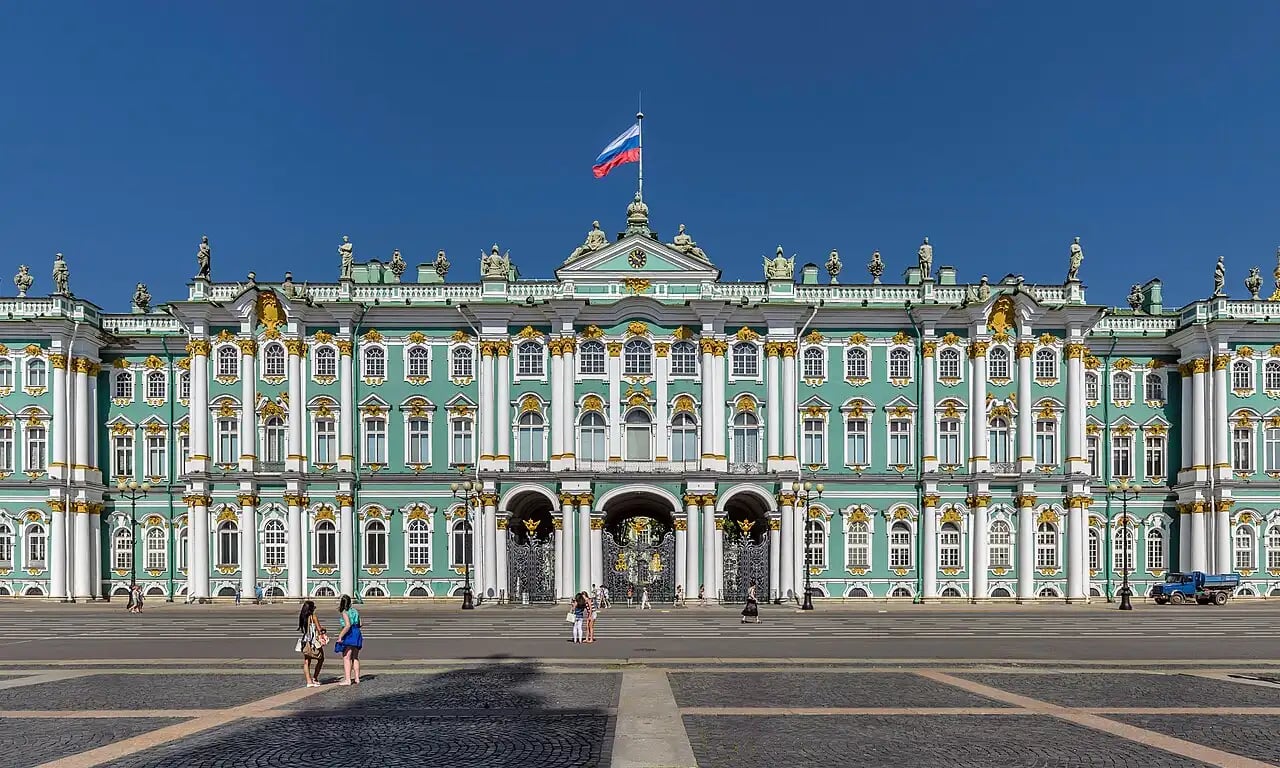
Russia was an autocratic empire, meaning the Tsar held absolute political power
The Tsar was the ruler of the state and the nominal head of the Russian Orthodox Church
His authority was presented as God-given
This made opposition to the Tsar seem like opposition to both the state and religion
The Tsar's imperial edicts (ukazy) were the law of the land
No constitution constrained the Tsar's authority
No parliament challenged his decisions
No elected national assembly could question his power
“The Emperor of all the Russias is an autocratic and unlimited monarch; God himself ordains that all must bow to his supreme power, not only out of fear but also out of conscience."
Collected Laws of the Russian Empire, Nicholas I, 1832
The machinery of government
Three bodies advised the Tsar, but all were chosen by him and none held independent power
The Imperial Council or Chancellery: 35 - 60 nobles providing personal expert advice
The Council of Ministers: 8 - 14 ministers responsible for government departments
The Senate: Designed to oversee government workings, but largely redundant by 1855
Provincial governance relied on the nobility:
Nobles served as governors and local officials across Russia's 50 provinces
They helped keep order and enforce the Tsar’s authority on their estates
This meant local government depended on loyalty to the Tsar rather than elected representation
The bureaucracy was large, slow and highly centralised
Officials were organised into 14 ranks
Orders passed downward only, with no mechanism for information to travel back upward
The system was riddled with corruption and incompetence
However, it was the only administrative network capable of passing orders through the empire
The lack of reform under Nicholas I, 1825–1855
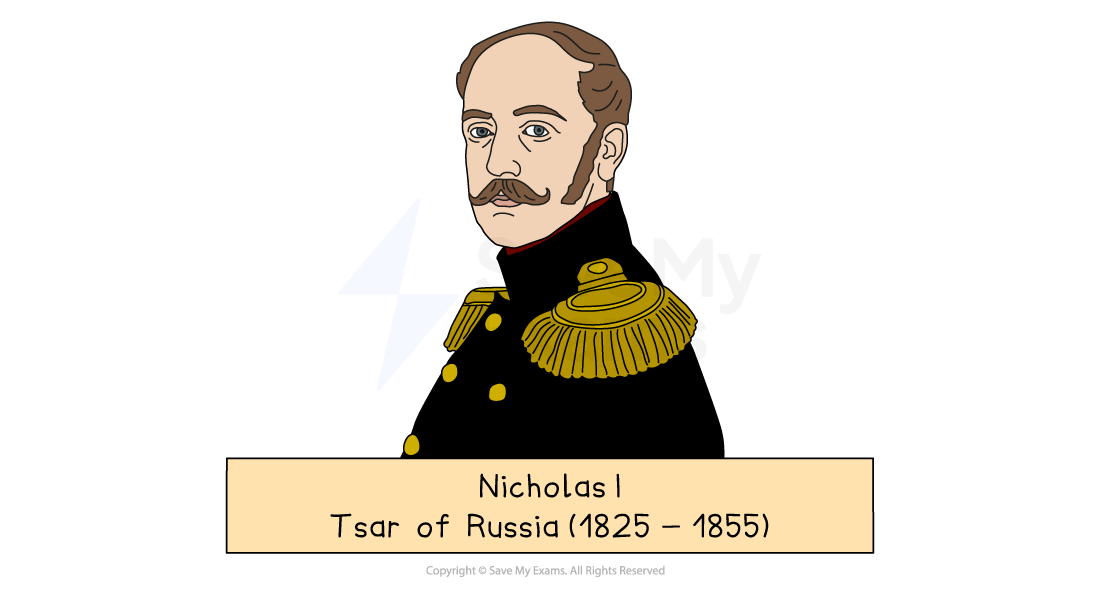
Nicholas I's reign opened with the Decembrist Uprising of December 1825
Some army officers wanted political reform and limits on autocracy
The army quickly crushed the uprising
Nicholas saw the revolt as proof that liberal ideas were dangerous
Nicholas became convinced that Western liberal ideas posed a major threat to Russia, he pursued a consistent policy of repression over reform
He tightened censorship
He expanded the secret police
He established the Third Section in 1826 to monitor political opposition
He deliberately tried to distance Russia from the liberal ideas spreading across Western Europe
His reign ended in military defeat in the Crimean War
The defeat exposed Russia’s weak army, poor communications and outdated administration
It brought the need for reform directly to Alexander II’s attention
The pillars of tsarism: how was autocracy maintained?
The Church
The Russian Orthodox Church presented the Tsar as God’s chosen ruler on earth
Russians were taught to show loyalty to the Tsar as part of their religious duty
They were also encouraged to accept their earthly conditions as part of God’s will
This helped make obedience to the Tsar seem natural and sacred
The Church was closely controlled by the state
The Holy Synod governed the Russian Orthodox Church
It was supervised by an Over-Procurator appointed by the Tsar
This placed Church appointments, finances and education under state influence
Religious obedience was especially important in a largely illiterate peasant society
Priests helped spread messages of loyalty, obedience and acceptance
This made the Church one of the most effective ways of reinforcing autocracy
The nobility
The provincial government was dominated by the nobility
Nobles served as provincial governors, officials and landowners across Russia’s 50 provinces
They were expected to keep order in the provinces and on their estates
The nobility had not been legally required to serve the state since 1785
However, many nobles still felt a strong obligation to support the Tsar
Their wealth, status and privileges depended on the survival of autocracy and serfdom
This made them a key pillar of the regime
The army
The army helped protect the Tsar from both foreign enemies and internal unrest
Over 1 million conscripted serfs served in the army by the mid-nineteenth century
Many soldiers were conscripted from the peasantry
Service was extremely harsh and could last for 25 years
The army absorbed a huge amount of government spending
Military spending took up around 45% of the government’s annual budget
This showed how much the regime relied on force to preserve order
The army could also be used as a tool of repression
Soldiers could be used to crush unrest, riots and revolts
Cossack units were often used for policing, frontier defence and suppressing disorder
This made the army one of the most visible symbols of tsarist power
The bureaucracy
The bureaucracy helped the Tsar pass orders across the empire
Civil servants were organised into 14 ranks under the Table of Ranks
Officials were expected to obey orders from above
This reinforced a culture of hierarchy and obedience
The system was highly centralised
Orders passed downward from the Tsar and the central government
There was no effective mechanism for information to travel back upward
This meant the Tsar often had no reliable picture of conditions across the empire
The bureaucracy was often corrupt and inefficient
However, it was still essential to the running of the empire
It allowed the tsarist regime to impose authority across a vast territory
The police and the Third Section
Russia developed into a police state under Nicholas I
This meant the government used censorship, surveillance and punishment to control the population
Freedom of speech and the press were tightly restricted
Political meetings and strikes were forbidden
Travel and education were closely monitored
The Third Section, established in 1826, acted as the Tsar’s secret police
It ran a network of agents and informers
It had wide powers of surveillance, arrest and exile
It targeted anyone suspected of anti-tsarist behaviour
The Third Section helped deter organised opposition
Agents and informers were widely feared
This made it harder for critics of the regime to organise openly
It strengthened autocracy by making political dissent dangerous
Examiner Tips and Tricks
Russia in 1855 is not usually a standalone exam topic. It is the foundation for later questions, especially on Alexander II’s reforms and failures. When writing about reform after 1855, always think about what Alexander II inherited: autocracy, serfdom, economic backwardness, weak communications and the huge scale of the empire. These earlier details help explain why reform was so difficult. However, always check the date range in the question carefully so you do not include irrelevant material.
How effectively did Tsarism function as a system of government by 1855?
Use the evidence below to build your own argument
The question asks how effectively Tsarism functioned as a system of government by 1855
This means you need to consider both:
How successfully the regime maintained control
How far the system was already storing up problems for the future
Evidence that Tsarism functioned effectively as a system of government
The Decembrist Uprising of 1825 was crushed without lasting consequences
This showed the regime’s ability to suppress organised dissent
The five interlocking pillars of Tsarism reinforced one another
The Church, nobility, army, bureaucracy and secret police all helped maintain autocratic control
This left little space for organised opposition to develop
The Third Section maintained effective surveillance across the empire
It had wide powers of surveillance, arrest and exile
Its network of agents and informers made political opposition dangerous
The serf majority was kept politically passive
Religious obedience encouraged loyalty to the Tsar
Geographic isolation and illiteracy limited political awareness
This made it difficult for peasants to organise collectively
No constitutional or parliamentary challenge to tsarist authority had materialised
There was no constitution to limit the Tsar’s power
There was no parliament or elected national assembly
The regime, therefore, faced no legal challenge from within the political system
Russia remained a recognised Great Power in 1855
It had the largest army in Europe
It had a long record of successful territorial expansion
This made the regime appear powerful and stable before the full impact of the Crimean War became clear
Key historian
“Most of the structures present in mid-nineteenth-century Russia were still typical of the pre-modern world. A small ruling group, unified by the structures of autocracy, lived off resources mobilised directly from a large agrarian population through the system of serfdom. Most of the peasant population lived lives little different from those of the Middle Ages. The family, the household and the village were the crucial institutions of rural life.”
D. Christian, Imperial and Soviet Russia (1986)
Christian argues that the autocratic system was internally coherent within its own pre-modern terms
The Tsar successfully extracted resources from an agrarian population through structures that had functioned for centuries, generating no serious challenge from below
Evidence that Tsarism was structurally dysfunctional and ineffective at governing an empire in need of change
The bureaucracy was corrupt, one-directional and incompetent
Orders passed downward from the Tsar and the central government
There was no reliable mechanism for information to travel back upward
This meant the Tsar often had no accurate picture of conditions across the empire
Real problems were often unacknowledged at the centre
The army absorbed 45% of government spending but remained outdated
It relied heavily on conscripted serfs serving 25-year terms
It was large, but poorly equipped and technologically behind its rivals
This meant military strength was less effective than it appeared
The serf-based economy limited economic growth
It generated no strong internal market
It created few wage-earners
It produced few entrepreneurs with capital to invest
Russia’s economic backwardness was therefore structural, not accidental
Nicholas I’s reliance on repression and surveillance revealed insecurity rather than strength
Censorship, secret policing and exile were used to contain opposition
Confident regimes do not usually require such extensive control networks
This suggested tsarism depended on fear rather than genuine consent
Serfdom created deep structural resentment among over half the population
Serfs had few legal rights and little control over their own lives
There was no political mechanism available to address their grievances
This meant resentment could build without being resolved peacefully
Key historian
“The Russian Empire was deeply divided between the government and the Tsar's subjects; between the capital and the provinces; between the educated and the uneducated; between Western and Russian ideas; between the rich and the poor; between privilege and oppression; between contemporary fashion and centuries-old custom. Most people (and over 90 per cent of the emperor's subjects were born and bred in the countryside) felt that a chasm divided them from the world inhabited by the ruling elites. Russia was an empire, but national consciousness was only patchily developed, and local traditions and loyalties retained the greatest influence. National consciousness was not a dominant sentiment among Russians.”
R. Service, History of Modern Russia (1997)
Service emphasises that Russia's profound structural divisions, geographic, social and intellectual, made effective central governance almost impossible
What appeared to be tsarist stability was a fragile equilibrium held together by deference and repression rather than genuine loyalty
Examiner Tips and Tricks
The AQA A-level Tsarist and Communist Russia exam does not require you to learn historians' interpretations in this section of the course.
However, to achieve top grades in A-level history, it is recommended that you do wider reading. Read extracts from historians to understand the key areas of debate around topics covered in the course. This will help you to form your own opinions, ready to answer essay questions in the exam.

Unlock more, it's free!
Join the 100,000+ Students that ❤️ Save My Exams
the (exam) results speak for themselves:

Was this revision note helpful?
