Agricultural Collectivisation: Stalin’s War on the Peasants (AQA A Level History: Component 1: Breadth study): Revision Note
Exam code: 7042

Summary
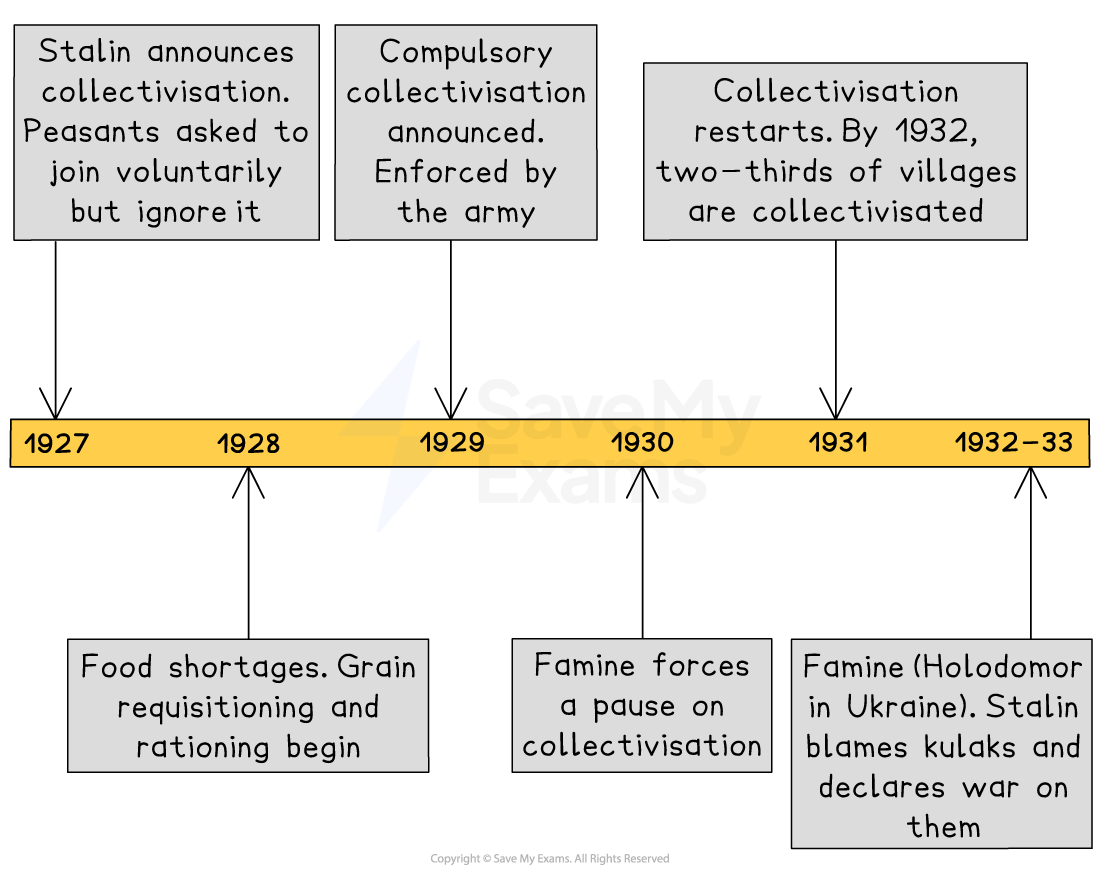
From 1929, Stalin forced peasants off their own land and into collective farms
This ended the New Economic Policy (NEP) in the countryside
Collectivisation aimed to secure grain for the towns and for export
This would help to fund industrialisation
It also tightened state control over the peasants
Resistance, livestock slaughter and relentless grain requisitioning helped cause the devastating famine in 1932-33
This included the Holodomor in Ukraine
By 1941, almost all peasant households were collectivised
The state controlled the food supply
However, the peasantry paid a heavy price
Historians debate whether collectivisation was a brutal but effective tool of Soviet modernisation, or a catastrophic war on the peasantry
Christian argues that collectivisation extended state power and strengthened the regime
Cohen sees collectivisation as a virtual civil war against the peasantry
Reasons for collectivisation: why did Stalin target agriculture?
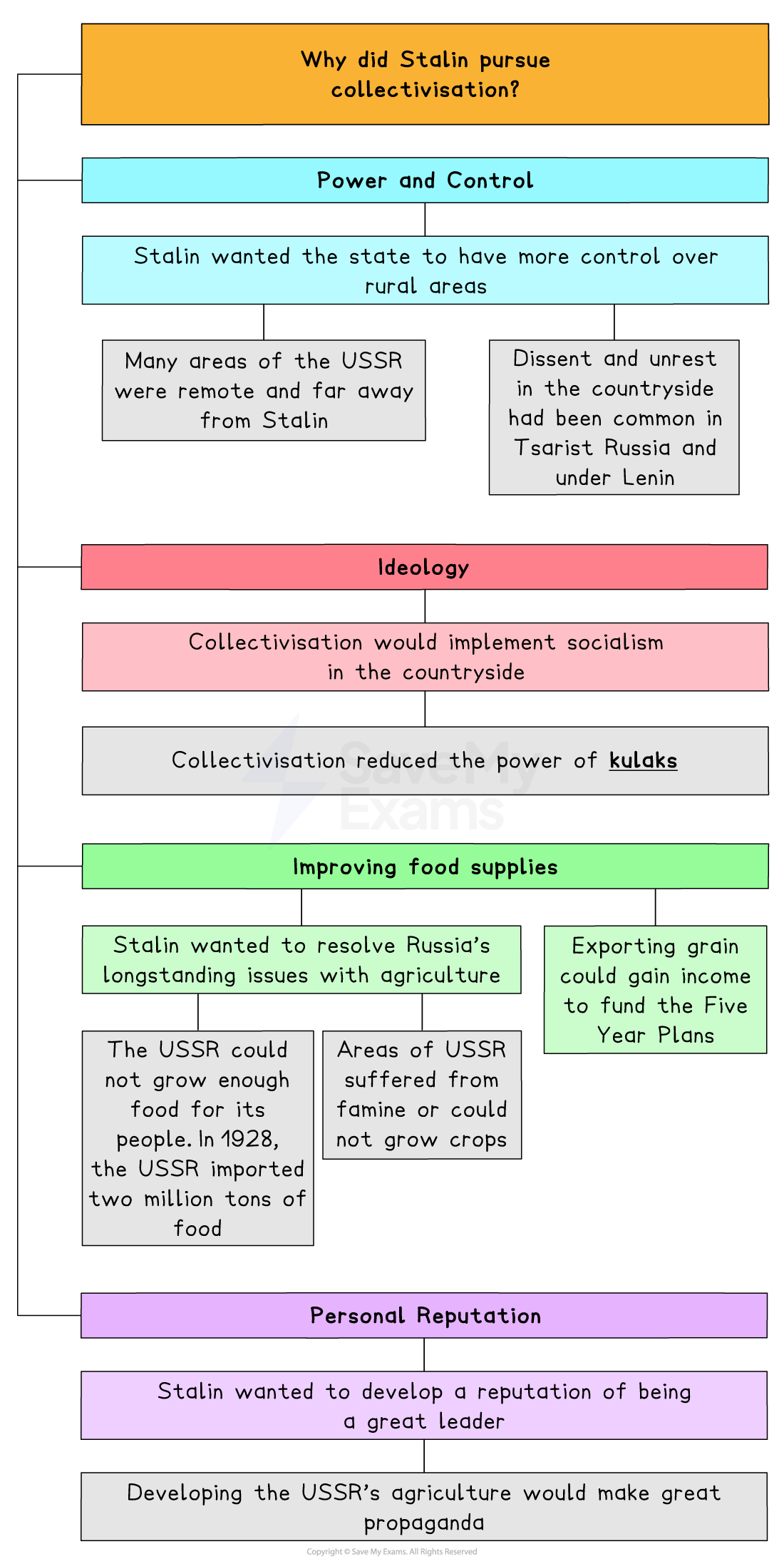
Economic reasons
Rapid industrialisation under the Five-Year Plans depended on a reliable grain supply
Surplus grain was needed for export
This would help pay for foreign machinery and the technology industry
A fast-growing industrial workforce in the towns had to be fed
By 1927, the peasants were still not producing or selling enough grain to the state
Despite a good harvest in 1926, requisitioning collected only around 50% of the grain expected
Officials suspected peasants of hoarding grain to push up prices
The grain procurement crisis of 1927-28 brought rationing to the cities
Low state collections threatened the food supply of expanding industrial towns
This convinced Stalin that the NEP could not deliver the grain that industrialisation demanded
Ideological and political reasons
The free market created by the NEP was seen as letting the peasant profit at the worker's expense
Better-off peasants were attacked as petty-bourgeois
They were accused of holding back the move to socialism
Collective farming would socialise the countryside
This fitted communist aims
It also reduced the power of the kulaks
Collectivisation promised the state direct control over grain and the peasants
Large farms made requisitioning easier
They also broke the independence of the village
Stalin called the shift the "Great Turn"
It marked a decisive break from the NEP from 1928
The same Great Turn drove rapid industrialisation through the Five-Year Plans
Examiner Tips and Tricks
Do not confuse collectivisation with the Five-Year Plans. Both began in 1928, but they targeted different sectors: the plans drove industry, while collectivisation reorganised agriculture.
The process of collectivisation: kolkhozes and sovkhozes
How collectivisation worked: kolkhozes and sovkhozes
Most peasants were placed in a kolkhoz
This was a collective farm on state-owned land
Peasants farmed the land together and paid no rent
They delivered fixed quotas to the state
Any surplus was shared among the families
The amount depended on the work each family had done
Each household was allowed to keep a small private plot
A smaller number worked on a sovkhoz
This was a state-owned farm
Workers were paid wages
The state made all major decisions
Harsh laws kept peasants tied to the collectives
A law introduced in August 1932 made stealing from a collective farm punishable by ten years and, later, by death
Internal passports were introduced in 1932 to stop peasants from leaving the land
Many peasants came to see collectivisation as a "second serfdom"
Stage one: 1929 to 1930
In December 1929, Stalin launched forced collectivisation across the Soviet Union
In January 1930, he ordered a quarter (25%) of grain-farming areas to be collectivised that year
The secret police, the Red Army and Party work brigades from cities forced peasants to join
Dekulakisation ran alongside collectivisation
It was used to frighten poorer peasants into the kolkhozy
By March 1930, around 58% of peasant households had been collectivised
This was achieved through a mixture of force and propaganda
'Dizzy with Success' and the pause
On 2 March 1930, Stalin published an article called "Dizzy with Success"
He blamed local officials for being over-eager
He shifted responsibility for peasant hostility onto them
A brief return to voluntary collectivisation was allowed after the harvest
Numbers collapsed almost at once
By October 1930, only around 20% of households were still collectivised
Stage two: 1931 to 1941
A second, steadier drive began in 1931
It continued through the decade
Around 2,500 Machine Tractor Stations (MTS) were set up
They supplied and maintained machinery
They also policed the countryside
They made sure grain quotas were collected
Collectivisation became almost total over the decade
50% of households were collectivised by 1931
This rose to 70% by 1934 and 83% by 1935
The figure reached 90% by 1936 and effectively 100% by 1941
Examiner Tips and Tricks
Use the key terms precisely. A kolkhoz was a collective farm whose members shared the surplus. A sovkhoz was a state farm whose workers earned wages. The MTS supplied machinery and watched over the villages.
Dekulakisation: the destruction of the kulaks as a class
Who were the kulaks?
Officially, a kulak was a peasant who owned two horses and four cows or more
In practice, local officials applied the label differently
Previously, it was a term to describe a rich peasant
During collectivisation, anyone who resisted could be branded a kulak
Stalin blamed the kulaks for the grain shortages of the late 1920s
He claimed they held back supplies to drive up prices
The liquidation of the kulaks
In December 1929, Stalin announced he would "annihilate the kulaks as a class"
The Red Army and the OGPU were used to identify, execute or deport them
Kulaks were said to make up about 4% of peasant households
In reality, around 15% of households were destroyed
About 150,000 of the richer peasants were forced to migrate north and east to poorer land
Across the campaign, dekulakisation removed around ten million of the most successful farmers
The cost of dekulakisation
Dekulakisation stripped the land of its most experienced and productive farmers
Its purpose was not only to punish the rich
It also terrified poorer peasants into the collectives
Many peasants destroyed their own property rather than hand it to the state
Between 1929 and 1933, around 25-30% of cattle, pigs and sheep were slaughtered
Livestock numbers did not return to their pre-collectivisation levels until 1953
Examiner Tips and Tricks
Dekulakisation was not a side issue. It drove collectivisation forward by using terror as a warning to other peasants.
Be precise about scale. The state claimed kulaks were a small minority, yet the campaign destroyed a much larger share of households and removed many of the most capable farmers from the land.
Impacts of collectivisation: famine, resistance and the Holodomor
Economic impacts
The state achieved its central aim of controlling the grain supply
Grain procurement and exports rose
This helped fund and feed industrialisation
Agricultural productivity stayed low for years
Collectives were badly organised
They were often run by Party activists who knew little about farming
There were too few tractors, too little fertiliser and too few animals to pull ploughs
Grain output remained weak
It did not exceed its pre-collectivisation levels until after 1935
Small private plots became vital to feeding the country
They produced around 52% of vegetables
They produced 70% of meat
They produced 71% of milk
Resistance in the countryside
Peasants resisted collectivisation throughout the campaign
They attacked officials
They hid or destroyed crops
They slaughtered their livestock
Many used passive resistance
This meant they produced only enough food for their own needs
The famine and the Holodomor, 1932 to 1933
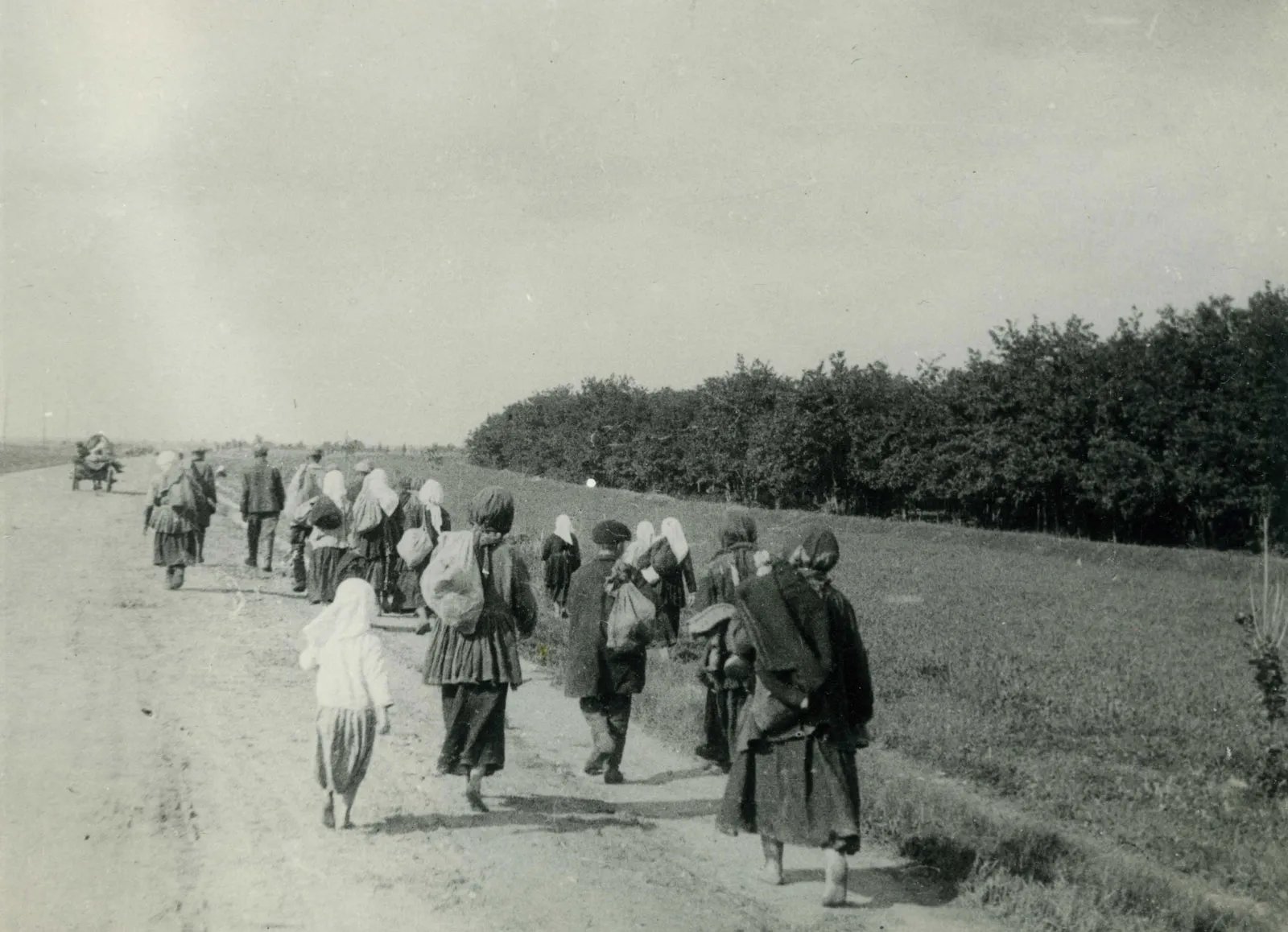
Drought in October 1931 combined with dekulakisation and relentless requisitioning
By the spring of 1932, famine had appeared in Ukraine
It then spread to the northern Caucasus
The famine of 1932-33 was one of the worst in Russian history
The state continued to seize grain and export it while the peasants starved
It is estimated that around 5-8 million peasants died
In Ukraine, the famine became known as the Holodomor
This means "death by hunger"
The historian R. Conquest argues it was a deliberate policy aimed at Ukraine, which had strongly resisted collectivisation
Others see the deaths as the catastrophic consequence of unrealistic quotas, rather than as a planned act
Political impact
Collectivisation gave the state firm control over the countryside
MTS staff and Party officials monitored the villages closely
By 1941, the peasantry had lost its independence
The state controlled the food supply
Examiner Tips and Tricks
The cause of the Holodomor is contested. Strong answers can set out both readings: that the famine was a deliberate weapon against Ukraine, and that it was the disastrous result of impossible grain quotas.
Keep the human cost and the regime’s aims together. The state met its goals of control and grain, but at a price counted in millions of lives.
How damaging was collectivisation to the USSR?
Collectivisation transformed the Soviet countryside
Historians disagree over whether it was a success for the regime or a disaster for the country
Much depends on whether damage is measured against Stalin’s aims or against the human and economic cost
Collectivisation was a brutal but effective tool of Stalinist modernisation
It gave the state direct control of grain for the first time
Procurement and exports rose
This helped pay for and feed rapid industrialisation
It broke the independence of the peasantry
Party control extended into every village
By 1941, almost all farming was collectivised
The state gained permanent control of the food supply
Judged on its own aims, the regime achieved much of what it wanted
Key historian
“Collectivisation helped remilitarise the Party and led to a rapid expansion of the police and of the labour camp system. The atmosphere of crisis created by collectivisation, the purges and fears of foreign attack generated a paranoid mood which strengthened the leadership.”
D. Christian, Imperial and Soviet Russia (1986)
Christian argues that collectivisation was more than an economic policy
It extended the regime’s coercive power
It helped consolidate Stalin’s control
Its political effect strengthened the Soviet state
Collectivisation was a human and economic catastrophe
It helped trigger a famine that killed millions
This included the Holodomor in Ukraine
It destroyed the most productive farmers and damaged agriculture for years
Around a quarter to a third of all livestock was slaughtered
Numbers did not recover until 1953
Grain output did not exceed its pre-collectivisation levels until after 1935
It alienated the peasantry
Many saw collectivisation as a "second serfdom"
They had little reason to work hard
It was the private plots, not the collectives, that kept the country fed
Key historian
“It was not, for example, merely coercive peasant policies, but a virtual civil war against the peasantry, not merely police repression, or even civil war-style terror, but a holocaust by terror that victimised tens of millions of people for 25 years.”
S.E. Cohen, Bolshevism and Stalinism (1977)
Cohen places collectivisation at the centre of Stalinist violence
He treats it as a war against the peasantry
This stresses the vast human cost of the policy
Examiner Tips and Tricks
Define what “success” means before judging. Set the regime’s aims, control of grain, feeding the towns and funding industry, against the famine, lost output and broken peasantry.

Unlock more, it's free!
Join the 100,000+ Students that ❤️ Save My Exams
the (exam) results speak for themselves:

Was this revision note helpful?
