Treatment of National Minorities in the USSR (AQA A Level History: Component 1: Breadth study): Revision Note
Exam code: 7042

Summary
The Bolsheviks won support from national minorities by promising self-determination
This was set out in the Decree on the Rights of the Peoples of Russia in November 1917
Self-determination was abandoned during the Civil War
Finland broke away
Georgia was crushed by force in 1921-22 on Stalin's orders
The USSR was created in December 1922 as a federation of "equal republics"
In practice, Moscow kept tight control
The republics could be "coerced" by the centre
The 1920s brought real concessions to national minorities
Native languages were promoted
A Jewish "national homeland" was created in 1926
Legal anti-Semitism ended
Under Stalin, the 1930s saw a shift towards a single "Soviet identity"
Russian was made compulsory in schools in 1938
National leaders were purged
Minorities were deported
Historians debate whether Soviet rule was a genuine break from tsarism or Russian domination in a new form
Lenin’s Decree of Nationalities and Treatment of Minorities
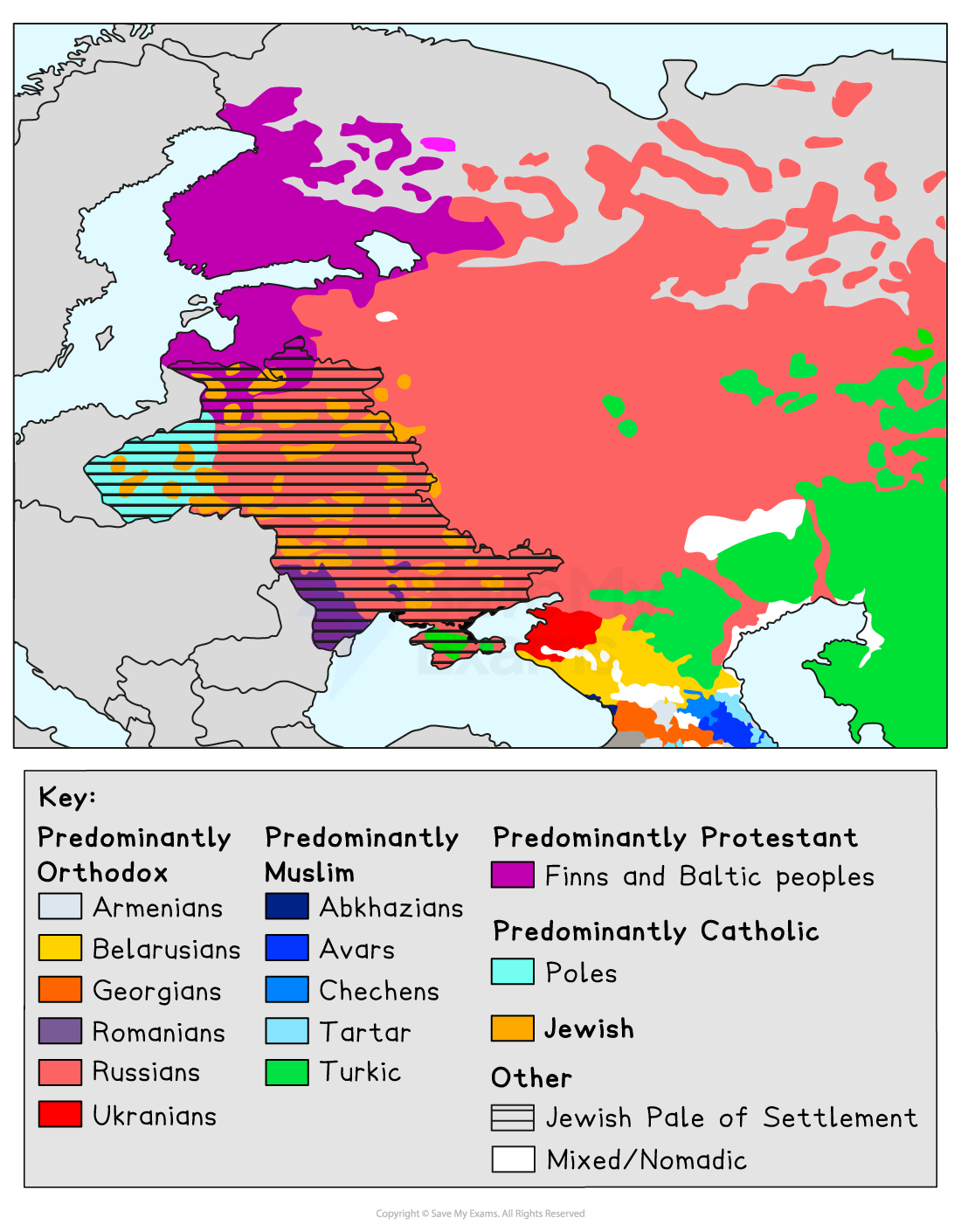
An empire of many peoples
The Bolsheviks inherited a vast and multi-ethnic empire
Around half the population was non-Russian
It contained Slavic, Turkic, Caucasian, Baltic and Jewish peoples
Marxism treated nationalism as a tool of the old ruling class used to divide the workers
In theory, workers of every nation shared the same class interests
The promise of self-determination
The Bolsheviks won power partly through minority support
They promised minorities the right to self-determination
This was delivered in the Decree on the Rights of the Peoples of Russia in November 1917
It gave minorities the right to self-determination, including the right to break away
It encouraged separatist movements, especially in Finland, the Baltic and the Caucasus
Some groups acted quickly
In December 1917, Finland chose independence
An elected Rada (parliament) was also set up in Ukraine
Self-determination abandoned in the Civil War
During the Civil War, the regime could not afford to lose key regions
Displays of national culture were still allowed
Native languages were still allowed
However, independence movements were branded "counter-revolutionary"
Stalin oversaw minority policy as Commissar of Nationalities
Georgia's bid for independence was crushed by the Red Army in 1921-22 on Stalin's orders
Georgia became a key example of promise versus practice
Stalin had assured Lenin that the Mensheviks had already been overthrown by the Georgian people
Lenin and Trotsky were shocked to learn that the Communists were crushing a popular, independent socialist regime by force
Lenin condemned Stalin's harsh handling of his own native province
Building the USSR, 1922
In December 1922, the USSR was created
It replaced the Russian Soviet Federative Socialist Republic (RSFSR)
It was presented as a federation of republics
Lenin won the argument with Trotsky for a federation of republics on "equal footing"
He opposed direct rule from Moscow
He argued that direct Moscow control would look too much like tsarist imperialism
In practice, the difference was limited
The republics were kept under very strict central control
Their governments acted like regional branches of Sovnarkom
They could be "coerced" from the Communist Party leadership in Moscow
Concessions in the 1920s
In the 1920s, the regime made real concessions to national minorities
Major nationalities, including Jewish people, were given separate representation within the Communist Party
Literacy campaigns encouraged the use of national languages
Jewish minorities gained important rights after centuries of tsarist persecution
Anti-Semitic laws were abolished in 1917
Yiddish became an accepted language
In 1926, Soviet Jews were given a "national homeland" in the far east
It became an autonomous republic in 1934
By 1941, about a quarter of that region's population was Jewish
Examiner Tips and Tricks
Track policy from promise to practice. Georgia is your best single example: a region was promised self-determination, then crushed by force within four years.
Stalin and the ‘Soviet Identity’: Russification Under Communism
The turn to centralisation
From the early 1930s, Stalin's policy shifted towards centralisation
Separate ethnic identities were tolerated far less than in the 1920s
The regime pushed a single "Soviet identity"
In practice, "Soviet identity" often meant Russian dominance
Russians were placed at the head of the "family of nations"
Russification in practice
Leaders of the republics were purged if they challenged Moscow
They were accused of being "bourgeois nationalists"
Russian became the common language of the USSR
From 1938, learning Russian became compulsory
The 1936 Constitution
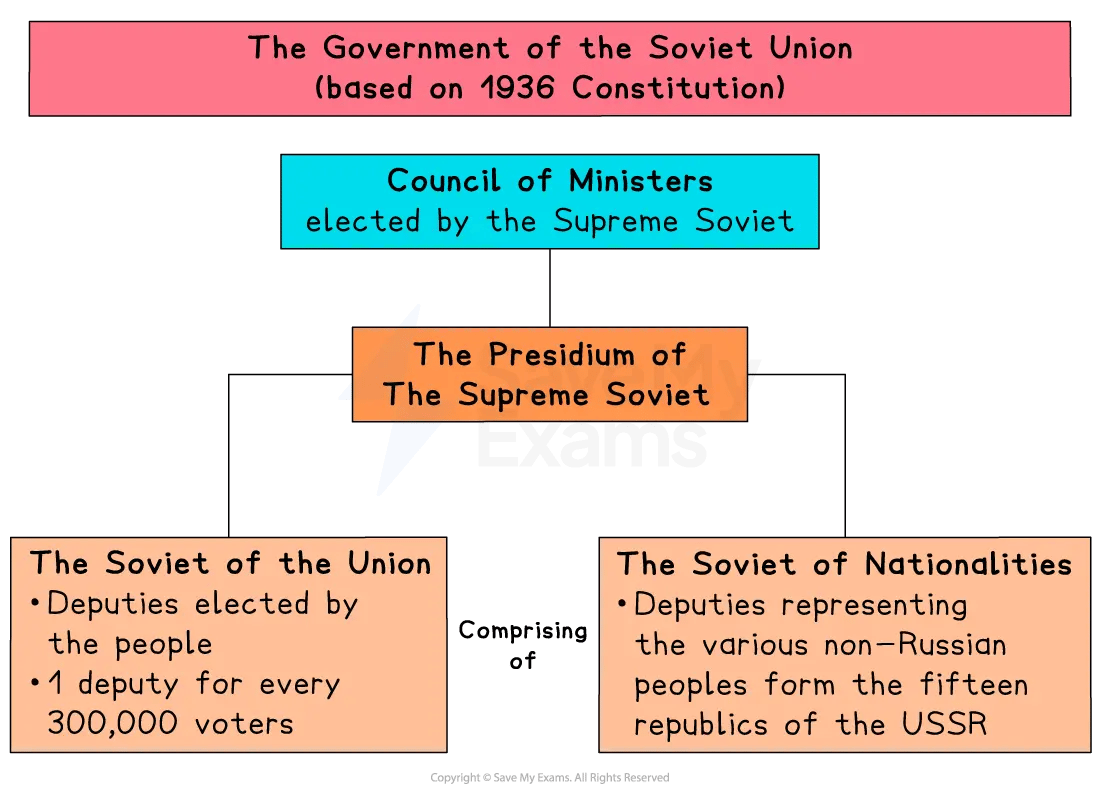
The 1936 Constitution, drafted by Bukharin, presented the USSR as a federation of 11 republics
It claimed to be "the most democratic in the world"
The new Supreme Soviet had two chambers
The Soviet of the Union
The Soviet of Nationalities
Each republic had its own supreme soviet
The constitution promised support for national cultures
These were meant to be "national in form, socialist in content"
In practice, these rights were largely ignored
Moscow controlled the republics' budgets
Union law came first
Regional independence remained very limited
The right to leave the union was nominal
During the Great Purge, national communist leaders in the republics were removed if they were seen as putting local interests above loyalty to Moscow
Deportations and reviving anti-Semitism
Stalin began deporting non-Russians in the 1930s
These were mostly internally forced migrations
They began with the Finns (1929-31 and 1935-39)
Then the Poles from Belorussia, Ukraine and European Russia (1932-36)
In 1937, the Koreans in the Russian Far East were deported
Stalin also divided Central Asia into five separate republics
Muslim ethnic groups were forced to migrate
This weakened loyalty to any single Muslim state
Anti-Semitic attitudes revived in the 1930s
This was especially clear in rural areas during the campaigns against "saboteurs"
The regime officially opposed racial discrimination
Most campaigns were political rather than racial
Deportations of whole peoples became far more common during the Second World War
Examiner Tips and Tricks
For comparisons with tsarism, show how “some were more equal than others” in Soviet society.
Use examples of who gained and who lost. A Russian-speaking Party member could rise through the Soviet system, while a deported Korean farmer or purged Georgian leader could not.
How Different Was the Life of Minorities Under Soviet Rule Compared to Tsarism?
Comparing minority life under the tsars and the Soviets means weighing real change against real continuity
Change: ways life genuinely improved
Soviet rule began by promising what tsarism had denied
The right to self-determination was granted in the November 1917 decree
Jewish minorities saw the clearest change
Under the tsars, Jewish people had been confined to the Pale of Settlement and restricted by laws such as the May Laws (1882)
The Soviets abolished anti-Semitic laws in 1917
They accepted Yiddish
They created a Jewish "national homeland" in 1926
Native cultures were supported in the 1920s
National languages were promoted through literacy campaigns
Major nationalities gained separate representation within the Communist Party
The USSR was deliberately built as a federation of republics
This avoided the appearance of direct rule from Moscow
Direct rule would have echoed tsarist imperialism
Continuity: ways Soviet rule echoed tsarist domination
Self-determination was abandoned when it threatened the state
This echoed the tsars' resistance to national independence
Georgia's independence was crushed by force in 1921-22
Stalin's "Soviet identity" revived Russian dominance
Russian was made compulsory in schools from 1938
Russian was the only language of the Red Army
Russians sat "firmly at the head" of the "family of nations"
Repression of national groups continued and intensified
National leaders were purged as "bourgeois nationalists"
Minorities were deported
Rural anti-Semitism revived in the 1930s
Behind the federal structure, Moscow kept tight central control
The republics could be "coerced"
This echoed the way the tsars had ruled their empire
Examiner Tips and Tricks
Reach a clear judgement, but only after setting real change against real continuity. The best answers keep the argument running throughout, rather than saving it for the final paragraph.

Unlock more, it's free!
Join the 100,000+ Students that ❤️ Save My Exams
the (exam) results speak for themselves:

Was this revision note helpful?
