Stalin and the Great Patriotic War, 1941–1945 (AQA A Level History: Component 1: Breadth study): Revision Note
Exam code: 7042

Summary
Operation Barbarossa, launched on 22nd June 1941
It caught Stalin by surprise, throwing Soviet forces into chaos
After the initial shock of invasion, Stalin concentrated authority through Stavka and the State Defence Committee (GKO)
The planned economy was rapidly militarised
Around 1,523 factories were moved east
Soviet output overtook Germany's by 1943
The human cost was immense
The USSR suffered an estimated 25 million or more deaths
Labour conditions were brutal
The USSR became a superpower after the victory, which also served to defend the Stalinist regime
However, it also deepened Stalin's paranoia by 1945
Historians debate whether Stalin's wartime leadership helped or hindered the USSR
Freeze suggests Stalin's role as a symbol of unity and his improvement as a strategist
Volkogonov stresses Stalin's pre-war blunders and the suffering caused by Soviet leadership
Stalin’s political power during the Second World War
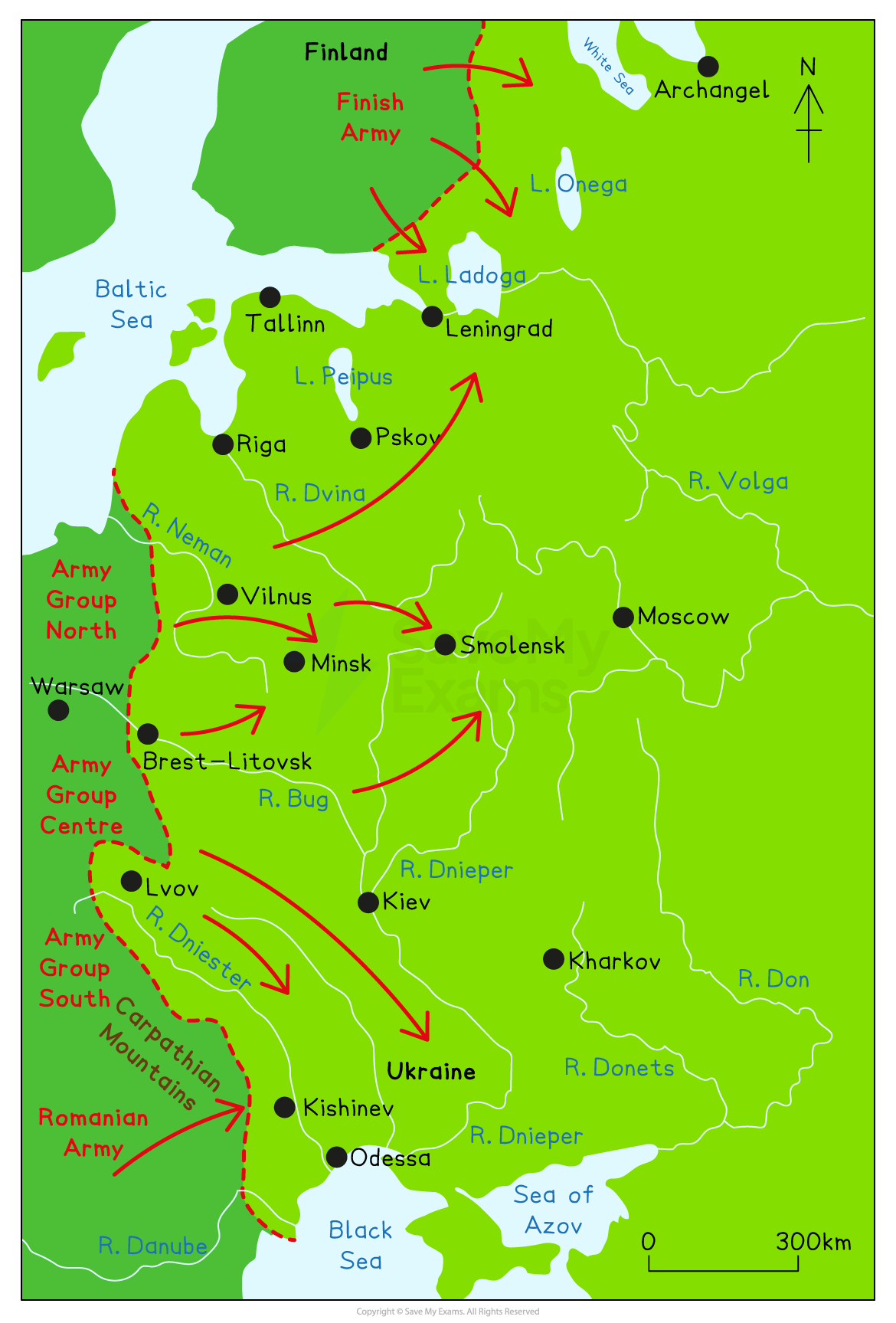
The German invasion, June 1941
Germany launched Operation Barbarossa on 22nd June 1941
This broke the Nazi-Soviet Pact
Three million soldiers, 3,580 tanks and 7,184 artillery guns entered the USSR
The German blitzkrieg advanced towards Leningrad, Moscow and the south
The Red Army collapsed in chaos
By 28th June, the Germans had captured Minsk
Soviet forces were badly disorganised
Stalin was caught off guard despite warnings from his own agents and Britain
Stalin assumed the Nazi-Soviet pact had bought "breathing space" to rebuild Soviet defences after his purges of the Red Army generals
The USSR was still far from ready for war in the summer of 1941
Stalin's collapse and recovery
Stalin's first order was to demand the German air force be destroyed
He left the public announcement to Molotov, who declared, "the enemy will be smashed, victory will be ours"
Stalin, after this order, personally withdrew to his dacha
He was not seen in public for ten days
Authority remained unclear until a Politburo delegation persuaded him to return
From July 1941, all political and military power was concentrated in Stalin's hands
His speech on the 3rd July called for unity in a "life and death" struggle for the USSR
A wartime command structure
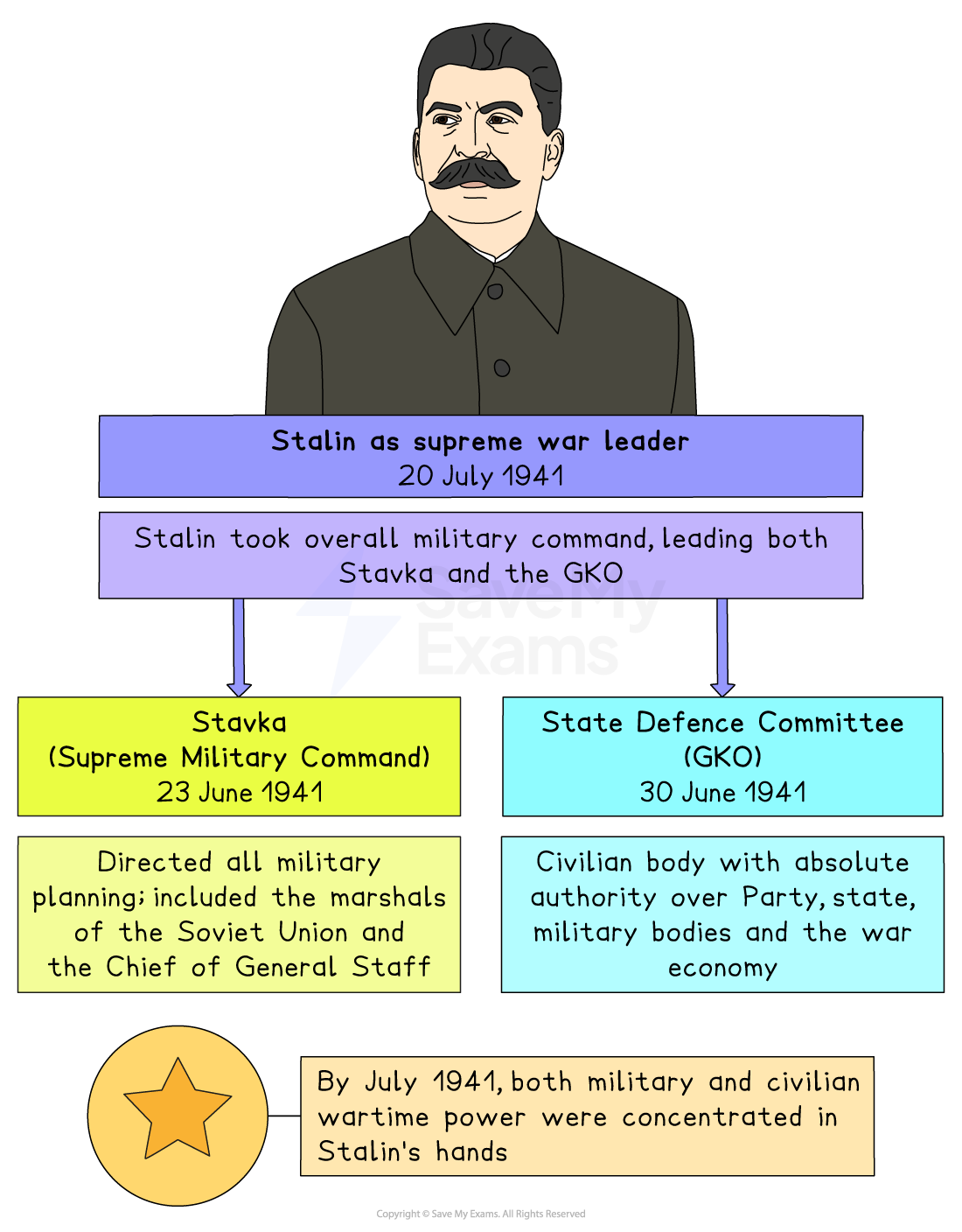
Stalin learned to delegate planning to the General Staff after the disastrous start
Incompetent commanders were removed, including old allies such as Voroshilov and Budyonny
Talented officers were recalled from the Gulags to lead the war effort
Stalin came to rely on Georgi Zhukov, who defended Moscow in 1941 and took Berlin in 1945
Wartime opposition
There was no open opposition to Stalin
However, the NKVD did not relax its vigilance
In occupied minority regions, some welcomed the Germans as liberators
Some people in Estonia, Lithuania, Belorussia (Belarus) and Ukraine became collaborationists
Andrey Vlasov's Russian Liberation Movement reached 50,000 men fighting the Red Army
Over a million Soviet citizens, including 250,000 Cossacks, joined the German side
Nazi racial ideology wasted this potential support
German brutality in Belorussia (Belarus), including a policy to kill 75% of the population, instead fuelled partisan resistance
Inside the USSR, control still rested on pre-war terror tactics
Order 227, “Not One Step Back”, was issued in July 1942
It banned unauthorised retreat and ordered harsh punishment for panic, desertion or withdrawal without permission
Across the war, around 150,000 Soviet soldiers were sentenced to death, although some sentences were commuted to penal units
Penal battalions were used for soldiers and officers accused of cowardice or poor discipline
They were often given extremely dangerous tasks, such as clearing minefields, with casualty rates of around 50%
Examiner Tips and Tricks
Questions on this period want the political impact of war, not a battle narrative. Track the brief collapse in late June 1941, then the concentration of power through Stavka and the GKO.
Use the officer corps as your link back to the 1930s. The purges had gutted the Red Army, but keep that as context and stay focused on the 1941 to 1945 window.
Economic impacts of the Second World War on the USSR
The scale of the crisis
The German advance seized the USSR's richest economic regions
Occupied territory held:
63% of the USSR's coal
68% of the USSR's iron
58% of the USSR's steel
45% ofthe USSR's railways
41% of the USSR's arable land
Stalin declared a wartime economy on 30th June 1941
A scorched-earth policy denied the Germans farmland and supplies as they advanced
Relocating industry east
Between July and November 1941, 1,523 entire factories were moved east with their workers
They were rebuilt in the Urals, Siberia, Kazakhstan and Central Asia
New furnaces at Magnitogorsk were built in just eight months
The command economy switched to war production faster than the Western allies could
Military spending rose from 29% to 57% of the budget by the end of 1942
Munitions reached 76% of all production
3,500 new industrial enterprises were built in the Urals during the war
Out-producing Germany
Output | 1940 | 1942 | 1944 |
|---|---|---|---|
Weapons | 30,200 | 130,300 | 72,200 |
Tanks | 4,800 | 24,100 | 20,500 |
Aircraft | 8,200 | 29,900 | 19,100 |
Ammunition | 63 million | 238 million | 109 million |
By mid-1943, Soviet output overtook Germany's in both quantity and quality
The T-34 tank and Katyusha rocket launcher were among the best weapons of the war
Food and foreign aid
Food was the hardest problem
The 1942 grain harvest was only a 1/3 of 1940s
Strict rationing and collective-farm quotas kept the population alive
Women, the elderly and children kept farm output going
Lend-Lease aid from the West supplemented domestic production
The USA supplied 11 billion dollars of aid
It sent 6,430 planes, 3,374 tanks and 5 million tonnes of food
427,000 of the USSR's 665,000 wartime vehicles came from overseas
Examiner Tips and Tricks
The economy is a story of restructuring and survival. Weigh the achievement against the cost: the planned economy helped relocate industry and out-produce Germany, but it depended on brutal labour discipline and concealed Western aid.
Use precise figures, such as 1,523 relocated factories or the budget shift to 57 per cent military spending. Do not drift into the 1930s Five-Year Plans; the wartime economy built on them, but it is a separate spec point.
Social impacts of the Second World War on the USSR
Total war on the home front
The Great Patriotic War became a total war that reshaped daily life
A December 1941 law mobilised all men aged 16 to 55 and women aged 16 to 45
The working day rose to 12 hours
The working week rose to 70 to 77 hours
Absence from work was treated as desertion and punishable by death
The human cost
Soviet losses were on a scale no other country suffered
Around 8.5 million Red Army soldiers were killed between 1941 and 1945
Estimates of 25-27 million deaths were seen in total across the USSR
Over a quarter of these deaths were caused by starvation
Living conditions rapidly declined for civilians
Acute housing and fuel shortages spread disease
Relocated workers lived in huts and tents through the bitter winter of 1941-42
Gulag labour produced around 15% of Soviet ammunition
The camp death rate was 25% in 1942
Women and the family
Women carried the home front and fought at the front
By 1945, over half of all workers and four-fifths of land workers were female
Over half a million women served in the armed forces as:
pilots
snipers
tank commanders
A July 1944 law tried to reverse the falling birth rate
Taxes rose on those with fewer than two children
Divorce was restricted
Reinforced existing restrictions on abortion
Mothers of more than two were named "heroines of the Soviet Union"
These measures reversed earlier Soviet attitudes to women and the family
Religion, culture and patriotism
Stalin relaxed control to harness national feeling
The Orthodox Church was reopened
The Patriarchate was restored to lift morale
Banned writers such as Akhmatova and composers like Shostakovich worked again
Culture was used to support the war effort
Shostakovich's Symphony No. 7, "Leningrad", was performed during the siege in 1942
Propaganda built on "Holy Mother Russia" rather than communist ideology alone
Pravda printed violently anti-German letters to inspire sacrifice
In 1943, the Internationale was replaced by a new national anthem
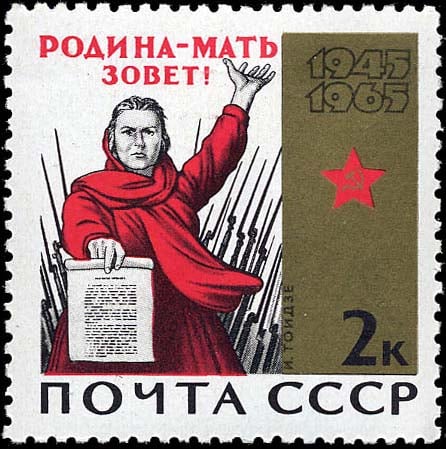
Partisans and the occupied population
Partisans fought a guerrilla war behind German lines
These were 300,000 by 1943
This rose to a million or more by 1945
Many partisans were women
German reprisals were brutal
Thousands of innocent villagers were massacred
Examiner Tips and Tricks
Keep the social section focused on lived experience, not a list of decrees. The key point is how war transformed ordinary lives: 12-hour days, mass female labour, a religious revival of convenience and staggering loss.
Use the human cost precisely. The wartime relaxation of controls on women, the Church and culture was real social change, but it served the war effort rather than showing a true softening of the regime.
Did success in the Second World War help or hinder the USSR?
Victory in 1945 transformed the USSR's international standing
Historians disagree over whether the war strengthened the Soviet system or left lasting damage beneath the triumph
The war helped the USSR
Victory helped the USSR emerge as a global superpower
The Red Army liberated and then dominated eastern Europe as satellite states
By May 1945, the USSR was the leading power in Europe
The war strengthened the Stalinist system and belief in communism
Over 5 million candidate members and 3.6 million members joined the Party during the war
Around half the military were Party members by 1945
This was up from 15% in 1941
Stalin could present victory as proof of the system's superiority
He emerged as national hero
His leadership was placed beyond question
Key historian
“One cannot disregard Stalin’s positive contributions. First, for many Soviet citizens, he became a symbol of national unity, an embodiment of the spirit of resistance. Certain of his speeches and writings are said to have rallied the people and given invaluable boosts to their morale. Second, so great was the Terror that he inspired at the highest levels of Party and State that a rebuke from him, let alone a threat, could elicit impressive performances from factory managers and generals alike. Finally, although Stalin committed military blunders throughout the war, he improved as a strategist.”
G. Freeze, Russia, a History (1997)
Freeze admits Stalin made errors
However, he argues that Stalin’s leadership was still a genuine asset
This supports the view that the war strengthened both Stalin and the Soviet system
The war hindered the USSR
The human and material cost was catastrophic
An estimated 25-27 million Soviet citizens died
1,200 towns and 70,000 villages were destroyed
25 million people in the western provinces were left without proper housing
Victory embedded coercion rather than erasing it
Stalin saw triumph as proof that harsh, direct mobilisation worked
The 66-year old leader was in no mood for reform
Stalin emerged more paranoid than before
Returning prisoners of war were treated as tainted by Western contact
After 1945, the regime began returning to the methods of the 1930s
Key historian
“Immersed as he was in an atmosphere of spy-mania of his own making, Stalin was clearly unable to evaluate the various kinds of information arriving in the Kremlin on the eve of the war. Nor was there the possibility of sober collective judgement while he was the subject of such total adulation. He believed that his judgement and wishes coincided with the real needs of the Party and the country which he ruled like an absolute monarch. The appalling suffering inflicted on the Soviet people in the war was no less the result of German force and treachery than of major mistakes by the Soviet leadership.”
D. Volkogonov, The Rise and Fall of the Soviet Empire (1999)
Volkogonov argues that Stalin’s pre-war blunders and cult of personality worsened the catastrophe
This supports the view that the cost of victory was deepened by failures of Soviet leadership
Examiner Tips and Tricks
This is an extract-style debate. Identify each historian’s overall argument first, then weigh it with your own knowledge rather than reading line by line.
The judgement is open. The war made the USSR a superpower and vindicated the system, but it cost tens of millions of lives and hardened the regime. Strong answers hold both sides in view, because “help” and “hinder” are not mutually exclusive.

Unlock more, it's free!
Join the 100,000+ Students that ❤️ Save My Exams
the (exam) results speak for themselves:

Was this revision note helpful?
