Russia Under the Provisional Government, 1917 (AQA A Level History: Component 1: Breadth study): Revision Note
Exam code: 7042

Summary
Power was split between the Provisional Government and the Petrograd Soviet, an unstable arrangement called dual power
The Provisional Government had formal responsibility for governing
The Soviet held real influence over soldiers and workers
Lenin returned in April 1917, rejecting cooperation with the Provisional Government
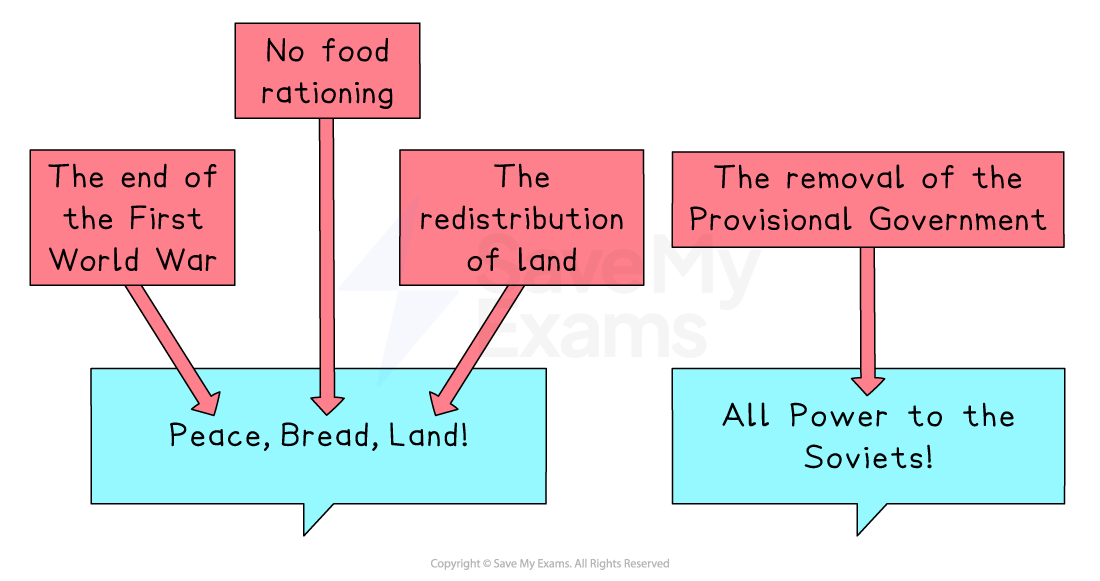
He demanded peace, land and bread and all power to the soviets
The Bolsheviks recovered quickly from early setbacks
The July Days briefly discredited them
The Kornilov Affair rearmed and revived them within weeks
The Provisional Government lost support because it failed to solve Russia's key problems:
It continued Russia's involvement in the First World War
It delayed land reform
This alienated soldiers, workers and peasants
Historians debate whether the Provisional Government could ever have restored order
However, most stress that continuing the war was the decision that doomed it
Issues with dual power: Provisional Government vs Petrograd Soviet
A divided inheritance: legitimacy without force
Dual power meant two bodies claimed authority over the same country
The Provisional Government held legal authority but had no legal, elected basis
Most people saw it as a committee of the wealthy
The Petrograd Soviet held the real loyalty of the soldiers and workers
Yet it chose not to take formal responsibility for governing
Why the arrangement was unstable: Order No. 1
The Soviet's Order No. 1 was the structural fault line
It told soldiers to obey the Provisional Government only when the Soviet agreed
This gave the Soviet effective control of the army and railways
The result was responsibility without power for the Provisional Government
The government had formal authority but could not command the armed forces
The Soviet had real force but refused to take governing responsibility
Disagreements appeared within weeks over the war and public order
The government wanted to discipline deserters and restore order in the towns
The Soviet encouraged workers and peasants to assert their new rights
Examiner Tips and Tricks
The previous revision note covers how dual power was created. This one is about its problems, so focus on why the arrangement could not work rather than retelling how it formed.
Order No. 1 is the single most useful fact here. It explains in one stroke why the Provisional Government never controlled the soldiers it claimed to govern. Use it as evidence, not just background.
Lenin’s return and the April Theses, 1917
The return of Lenin, April 1917
Lenin returned to Petrograd from exile in Switzerland on 3 April 1917
The Germans helped with his route, hoping he would pull Russia out of the war
He travelled in a sealed train with 31 fellow revolutionaries
The April Theses
Lenin set out a radical programme that broke with every other party
Power should be transferred to the soviets, not the Provisional Government
The war should be brought to an immediate end
All land should be taken over by the state and given to the peasants
The demands were summed up in two unforgettable slogans
'Peace, bread and land' spoke directly to the soldiers, workers and peasants
'All power to the soviets' ruled out any cooperation with the government
A mixed reception at first
Even many Bolsheviks thought Lenin had lost touch with reality
Some feared his demands would do more harm than good
There were allegations that he was being paid by the Germans
The Bolsheviks were still a small minority party in early 1917
They only had about 26,000 members and trailed the other socialists
Lenin's persistence won over the party's Central Committee by late April
Examiner Tips and Tricks
Lenin's two famous slogans are excellent to drop into an essay and easy to remember, too!
The July Days and the Kornilov Affair, 1917
The July Days: a rising too soon
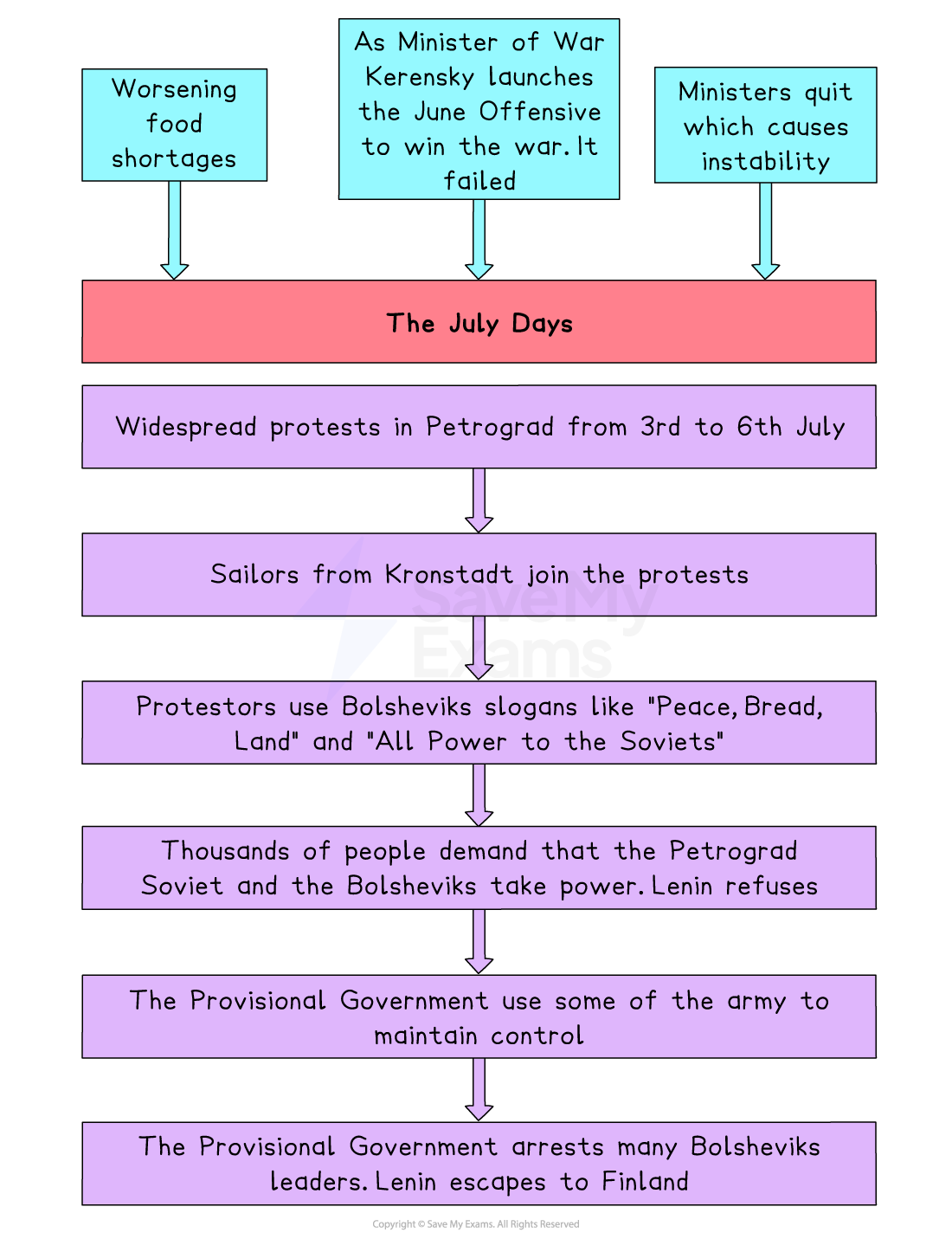
In early July, armed crowds poured onto the Petrograd streets
Grain prices had doubled between February and June 1917
586 factories had closed, with the loss of around 100,000 jobs
Some 20,000 armed Kronstadt sailors joined workers chanting Bolshevik slogans
The demonstrations failed and rebounded badly on the Bolsheviks
Troops loyal to the Soviet Union dispersed the crowds
Warrants were issued for Bolshevik arrests; Trotsky was jailed and Lenin fled to Finland
The government published claims that Lenin was a German agent, and his reputation fell
Kerensky replaced Prince Lvov as Prime Minister in July 1917
For a moment, it seemed the Bolshevik threat had passed
The Kornilov Affair: the turning point
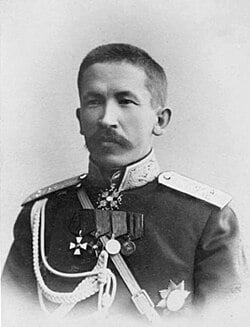
General Kornilov became Commander-in-Chief in July 1917
The frightened elites hoped he would crush the Soviets and restore order
In late August, he ordered troops to march on Petrograd
He intended to break the Soviet and set up a military dictatorship
Kerensky panicked and turned to the very people he had just jailed
He released imprisoned Bolsheviks and armed the Soviet Red Guards
Railway workers cut Kornilov's supply lines and the coup collapsed
The affair handed the Bolsheviks a decisive advantage
They were now armed, organised and seen as defenders
Kerensky looked weak, having needed the Bolsheviks to save him
Examiner Tips and Tricks
The strongest answers treat the Kornilov Affair as the turning point. Within weeks of the July Days nearly destroying them, the Bolsheviks were rearmed and rehabilitated by Kerensky himself.
Link the two events together. The July Days show how close the Bolsheviks came to failure; Kornilov shows how the government's own panic rescued them.
Why was the continuation of the First World War fatal for the Provisional Government?
The fatal choice to keep fighting
The government chose to stay in the war, against the wishes of the people
Milyukov's note promising to fight on triggered mass anti-war demonstrations
Milyukov and Guchkov were forced to resign in the resulting crisis
During the war, the June 1917, the Kerensky Offensive in Galicia ended in heavy defeat
The failed advance destroyed morale and deepened anti-war feeling
An army that would no longer fight
Desertion turned from a problem into a collapse
There were over 365,000 desertions in just three months, from March to May 1917
The government brought back the death penalty to try to hold the front together
Economic misery and the land question
The war wrecked the economy and the government could not feed the towns
Prices stood at 300% of 1914 levels by January 1917
They reached 755% by October, despite an eight-hour day
Refusing to redistribute land lost the government the support of the countryside
The government insisted land reform must wait for the Constituent Assembly
Peasant land seizures spread from 34 districts in March to 325 in July
Delaying elections fed suspicion that the government was clinging to power
An electoral commission was set up in May, with elections promised for November
Examiner Tips and Tricks
Examiners want an analysis of why the Provisional Government failed, not a narrative of events from April to October. Link the April Theses, July Days and Kornilov Affair to the growing Bolshevik advantage.
Could the Provisional Government have restored order to Russia?
You must weigh evidence to answer this common, hypothetical question
It had a genuine chance, and its failures were its own choices
The government enjoyed real legitimacy in the spring of 1917
It was accepted by the civil service, the officers and the old order
The First All-Russian Congress backed it by 543 votes to 126 in June
Its fatal problems flowed from decisions, not fixed circumstances
Leaving the war was possible, but the government chose to fight on
Land reform could have been started rather than postponed until after the elections
Its rivals were weak for much of the year
The Bolsheviks were a minority and badly damaged in July
The pressures it faced made order almost impossible
Dual power left the government unable to enforce any decision
Order No. 1 meant it never truly commanded the army
The war drained every resource needed to govern
Mass desertion and economic collapse were beyond quick repair
Prices at 755% of 1914 levels left the towns hungry and angry
Popular expectations had run far ahead of what any government could deliver
Peasants seized land and soldiers left the front without waiting for orders
Examiner Tips and Tricks
A balanced answer can recognise both: the government inherited an almost impossible situation, yet its choice to continue the war narrowed its options still further. Many historians, therefore, stress that order was not lost in a single moment but slipped away as each decision deepened the crisis.

Unlock more, it's free!
Join the 100,000+ Students that ❤️ Save My Exams
the (exam) results speak for themselves:

Was this revision note helpful?
