Khrushchev and De-Stalinisation: Reform and the Secret Speech (AQA A Level History: Component 1: Breadth study): Revision Note
Exam code: 7042

Summary
After Stalin died in March 1953, power passed to a collective leadership before Khrushchev outmanoeuvred his rivals
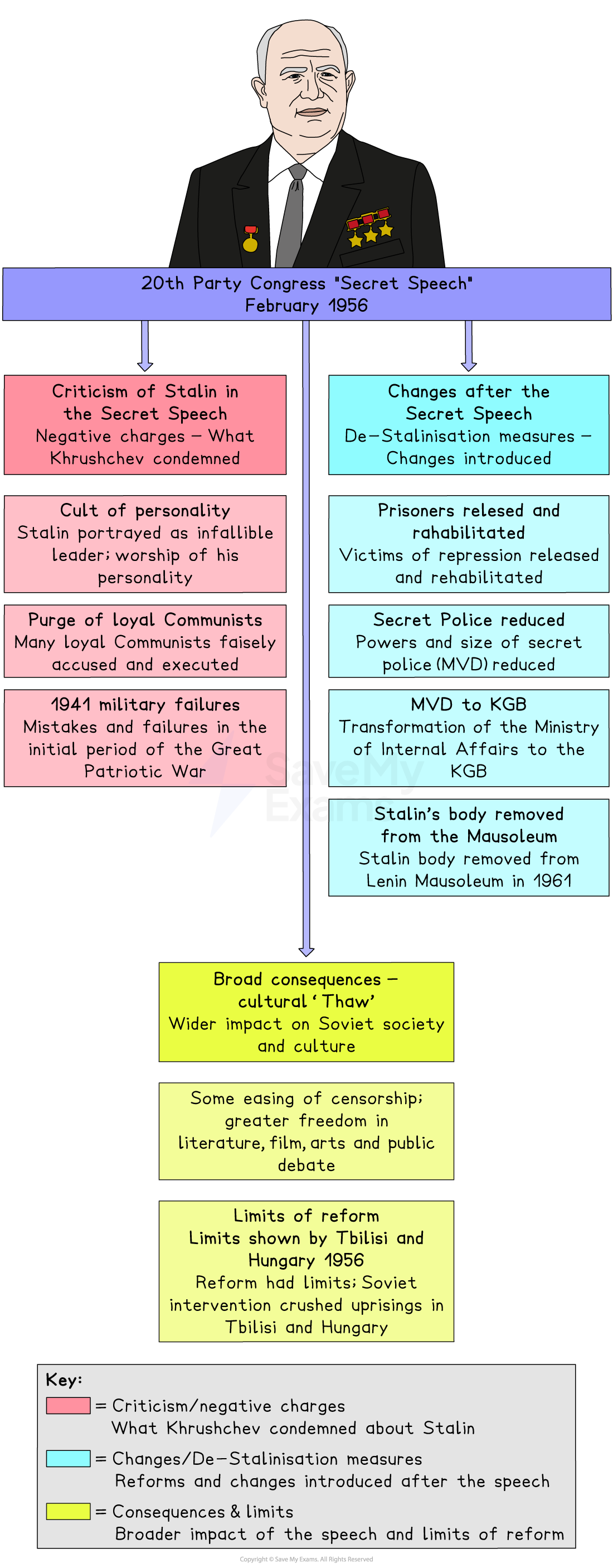
At the 20th Party Congress in February 1956, Khrushchev delivered the ‘Secret Speech’
He denounced Stalin’s cult of personality and the purges
The Anti-Party Group tried to remove Khrushchev in 1957
However, he survived by appealing to the Central Committee
De-Stalinisation released and rehabilitated prisoners, cut back the secret police and restored the Party’s authority
The reforms were real but limited
Repression continued, Hungary was crushed in 1956, and the one-party state stayed intact
Historians debate how far de-Stalinisation broke with the Stalinist past
McCauley sees a genuine reform that ended mass terror and relaxed Soviet life
Brown argues it left the one-party dictatorship fundamentally intact
Stalin’s legacy: what did Khrushchev inherit?
A superpower built on terror
Stalin’s death in March 1953 left the USSR transformed into a military superpower after victory in 1945
His rule had also entrenched fear, repression and a vast forced-labour system
The Gulag held millions of political prisoners by the early 1950s
High Stalinism had revived terror through:
A Party reduced to a rubber stamp
Under Stalin, Party and state bodies had become "rubber-stamping organisations"
This meant they depended on one man
The cult of personality had made Stalin's authority almost sacred
This created a problem for Stalin's heirs
The Party had to distance itself from Stalin
However, it could not destroy its own legitimacy
An unresolved succession
Stalin named no successor
This left a power vacuum at the very top
Examiner Tips and Tricks
Use Stalin’s legacy as your baseline. Almost every judgement about Khrushchev depends on measuring change against what Stalin left behind.
Khrushchev’s rise to power after Stalin’s death
Collective leadership, 1953
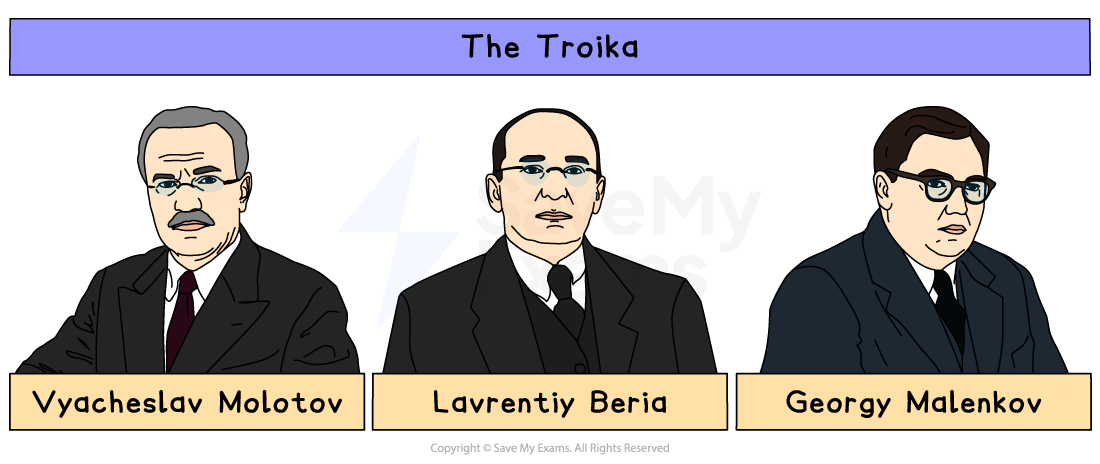
Stalin's death produced a collective leadership, rather than a single successor
Power initially sat with a troika of Lavrentiy Beria, Georgy Malenkov and Vyacheslav Molotov
These were the three most senior figures at the moment of Stalin's death
Real power, though, ran through four men, each with a different base
Georgy Malenkov led the government as Chairman of the Council Ministers
Lavrentiy Beria controlled the Secret Police (the MVD)
Vyacheslav Molotov, the veteran Foreign Minister, was a senior Stalinist hardliner
Nikita Khrushchev held the Party Secretaryship, using it to appoint his own supporters
The contest for supreme power narrowed to Malenkov, Beria and Khrushchev
Each controlled a major power base: government, security and the Party
Molotov had no such base; he was a rival on policy, not a contender to lead permanently
Khrushchev would deal with him when the Anti-Party Group struck in 1957
The fall of Beria
Beria moved fastest to reform, releasing prisoners and easing repression
His control of the police and the power of his office alarmed the others
Khrushchev, Malenkov and the military conspired against him
Beria was arrested in June 1953 and executed on the 23rd December 1953
He was accused of "criminal anti-Party and anti-State activities" and of working for British intelligence
Outmanoeuvring Malenkov
Malenkov pushed a "new course"
This favoured consumer goods
Khrushchev backed heavy and light industry together
Khrushchev sold himself as an agricultural expert
He launched the Virgin Lands Scheme in 1954
Its early success helped rally the Party behind him
Malenkov was forced to resign as head of government in February 1955
He was replaced by Nikolai Bulganin
Examiner Tips and Tricks
Examiners reward precise knowledge of the power struggle after 1953. Show that Khrushchev did not simply inherit power.
Track how he used the Party Secretaryship, and the removal of Beria and Malenkov, to climb to the top.
The 20th Party Congress & the ‘Secret Speech’, 1956
A speech in closed session
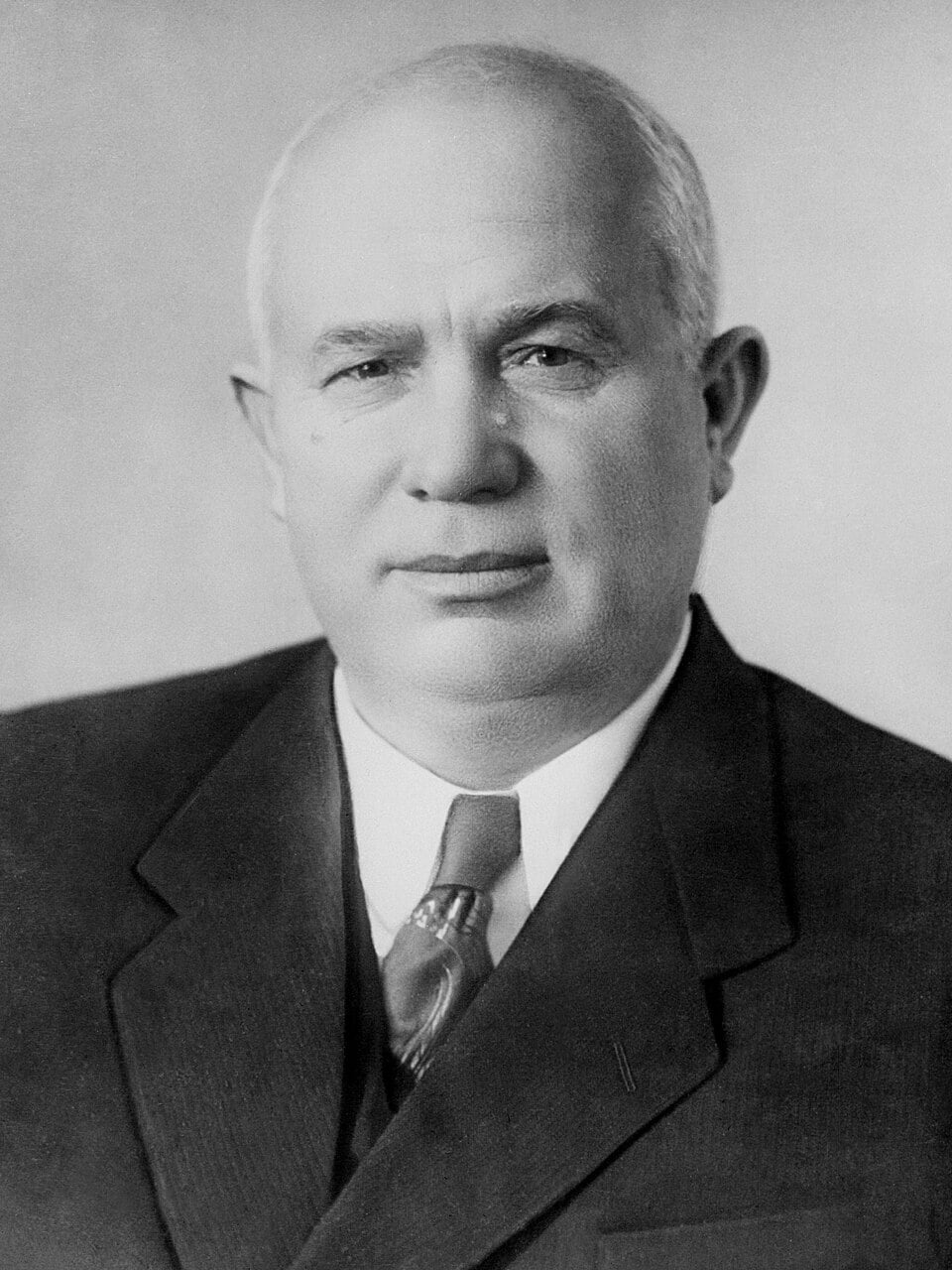
On the 25th February 1956, Khrushchev addressed a closed session of the 20th Party Congress
The speech was titled "On the Cult of Personality and its Consequences"
None of the 1,400 delegates were allowed to ask questions
Khrushchev drew on a Central Committee commission into Stalin's abuses
The charges against Stalin
Khrushchev accused Stalin of causing "tremendous harm to the cause of socialist progress"
His main charges were:
the cult of personality
Stalin's breach of Lenin's principle of collective leadership
the purges and execution of loyal Communists, including Old Bolsheviks
the murder of Kirov
military failure during Operation Barbarossa in 1941
ignoring warnings of the German invasion
What Khrushchev did not attack
The speech was carefully limited
It protected both the Party and Khrushchev himself
Khrushchev did not criticise:
the one-party state
the command economy
communist ideology
He condemned the purging of loyal Communists
However, he did not condemn the terror against ordinary citizens
This protected men like Khrushchev who had themselves benefitted from the Stalinist system
How secret was it?
The speech was never officially published in the USSR
However, it quickly leaked
Copies filtered down through the Party, even reaching the West
A young delegate Mikhail Gorbachev, was deeply affected by it
The speech inspired unrest in:
Tbilisi (Georgia)
Poland
Hungary
Khrushchev used force to crush these risings
This illustrated the limits of his reformism
Examiner Tips and Tricks
Do not treat the Secret Speech as a total rejection of Stalin. Its silences matter as much as its accusations.
Strong students note that Khrushchev attacked the cult and the purges of Party members but preserved the one-party state, planned economy and communist ideology.
The Crisis of 1957: The Anti-Party Group
The challenge to Khrushchev
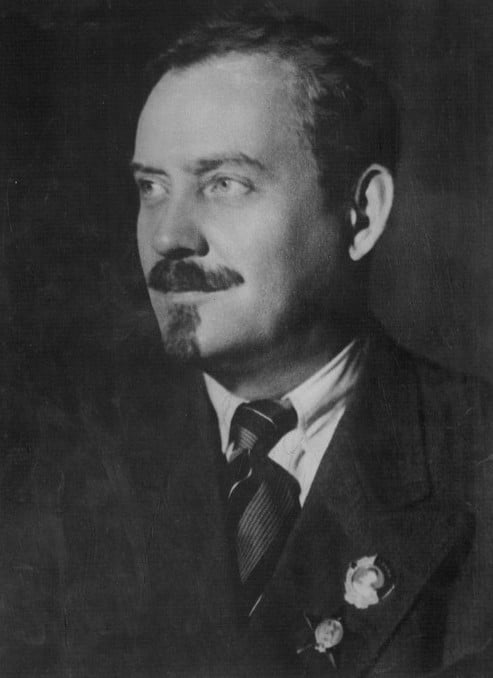
In 1957, senior figures tried to remove Khrushchev from his position of power whilst he was abroad
The "Anti-Party Group" included:
Vyacheslav Molotov
Georgy Malenkov
Lazar Kaganovich
They accused Khrushchev of:
damaging Party unity
reckless criticism of Stalin
A majority of the Presidium voted for his dismissal
How did Khrushchev survive?
Khrushchev insisted the decision belonged to the Central Committee
He argued that it did not belong to the Presidium
This returned to the Leninist principle that smaller bodies of power answered to their parent body
Khrushchev made sure loyal members were flown to Moscow to outvote his rivals
Marshal Zhukov gave decisive military backing
The Central Committee overturned the Presidium
The plotters were expelled
They were sent to minor posts far from Moscow
They were not executed
Consolidating power
The crisis left Khrushchev stronger
It revealed a less violent style of politics
Khrushchev remained wary of rival power bases
He dismissed Zhukov in October 1957
He removed Bulganin in 1958
He then combined the Party and government leadership
Opposition later regrouped and brought him down in 1964
Examiner Tips and Tricks
The 1957 crisis is strong evidence that politics had changed since Stalin. Despite using similar methods to gain power, Khrushchev demoted and exiled his opponents rather than having them executed.
The process of de-Stalinisation: how far did Khrushchev go?
Releasing and rehabilitating prisoners
Khrushchev dismantled the worst of the terror state
51,439 prisoners were released from the Gulag in June 1956
Many victims of the purges were formally rehabilitated
Some after their deaths
Reforming the secret police
The coercive machinery of the Stalin era was cut back
The secret police was reduced and reorganised into the KGB
It had narrower powers than before
A partial revival of independent courts moved law away from police control
Restoring the Party
Khrushchev rebuilt the Party as the centre of power, as it had been in the 1920s
Collective leadership replaced one-man rule through the Presidium
Party membership grew from 7 million in 1956 to 11 million by 1964
This rose from 3.6% to 4.8% of the population
This broadened the Party's base
It reduced the weight of senior bureaucrats
Democratisation and decentralisation
From 1957, Khrushchev tried to open up and decentralise the system
In 1962, the Party was split into urban and rural sections
Fixed terms limited how long officials could serve
Local soviets and comrade courts took on more minor matters
The limits of reform
De-Stalinisation was inconsistent and never threatened the system itself
Repression continued and dissent was still punished
Unrest in Hungary was crushed by force in 1956
Khrushchev developed his own, milder cult of personality
Examiner Tips and Tricks
Be precise about what changed and what did not. De-Stalinisation ended mass terror and freed prisoners, but it left the one-party state, planned economy and censorship in place.
Avoid exaggerating the reforms. Khrushchev did not dismantle the system. The structure he inherited largely survived him
How successful was de-Stalinisation?
Historians disagree over whether de-Stalinisation was a genuine break with Stalinism or whether it was a limited adjustment that preserved dictatorship
De-Stalinisation was a genuine break
Mass terror ended, and the labour camps were emptied of political prisoners
Politics became far less lethal
Opponents were demoted, not executed
The Party regained real authority and the law gained some independence
Everyday Soviet life became freer and less fearful than under Stalin
Key historian
‘[Khrushchev] wanted to break the mould of Soviet politics and to narrow the gap between the leadership and the masses… it emptied the labour camps and gave a new meaning to socialist legality and it introduced some fresh air into the world of Soviet culture…’
Adapted from M. McCauley, Khrushchev and Khrushchevism (1987)
McCauley stresses the scale of genuine change
De-Stalinisation reduced fear and gave Soviet citizens a real, if limited, relaxation
De-Stalinisation left the dictatorship intact
The one-party state, the command economy and censorship all survived
Repression continued
Hungary was crushed by force in 1956
Khrushchev never questioned the system that had enabled Stalin
He built his own personality cult, showing the old habits continued
Key historian
‘After decades of adulation for Stalin, communists had to come to terms with the fact that Stalin was, to put it bluntly, a mass murderer… What he did not do at either of those de-Stalinising congresses was to call into question the political system which had allowed Stalin and the Secret Police to get away with their atrocities.’
Adapted from A. Brown, The Rise and Fall of Communism (2009)
Brown highlights the limits
The attack fell on Stalin personally, while the structures of the one-party dictatorship were left untouched
Examiner Tips and Tricks
A strong line is that de-Stalinisation was real but bounded: it changed how the system behaved without changing the system itself.

Unlock more, it's free!
Join the 100,000+ Students that ❤️ Save My Exams
the (exam) results speak for themselves:

Was this revision note helpful?
